
The Übermensch
I want to teach men the sense of their existence which is the Übermensch, the lightning out of the dark cloud.
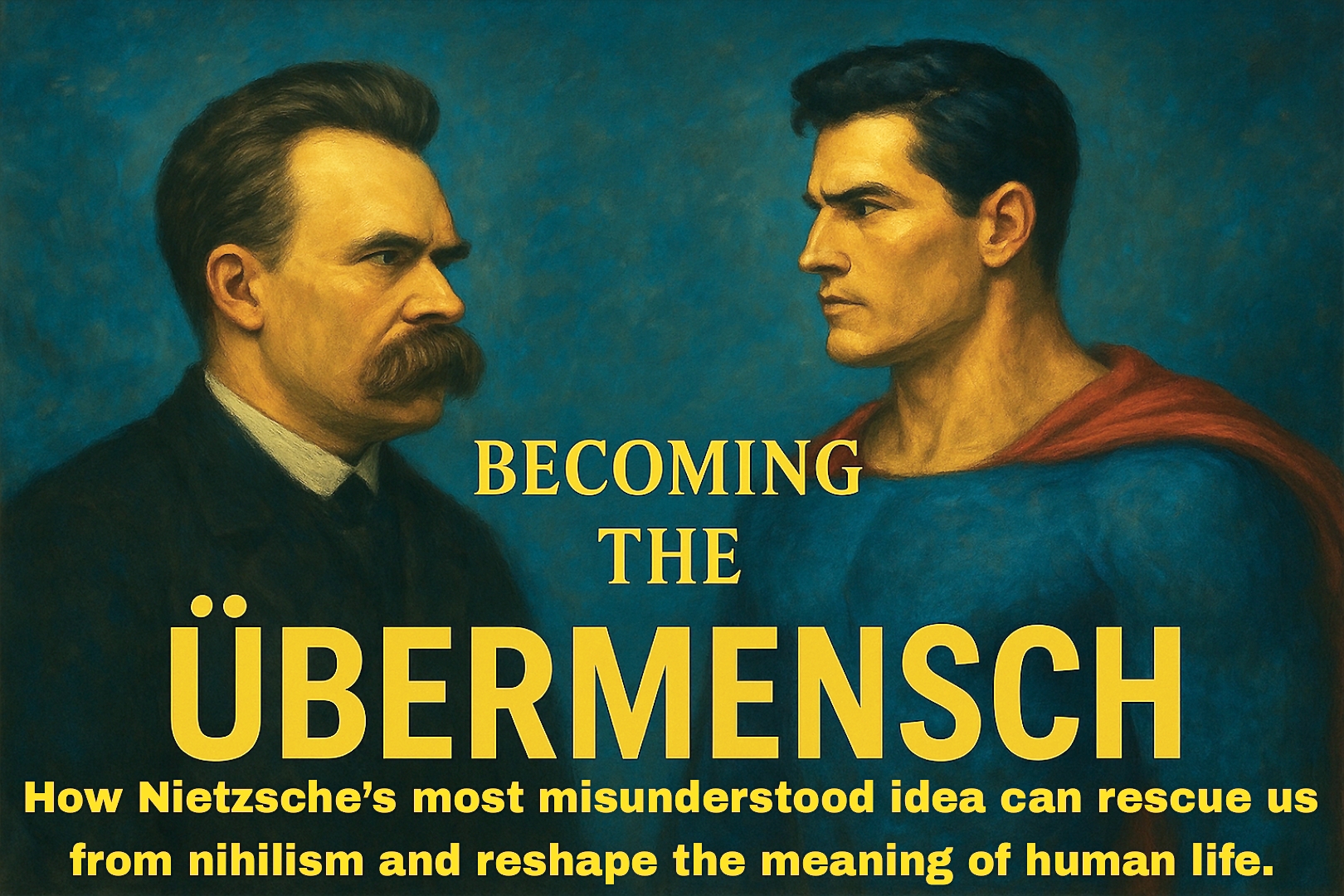
Ah, the Übermensch, the domain of philosophers, revolutionaries, and edgy teenagers. This has got to be one of Nietzsche’s most famous ideas but perhaps also his most misunderstood one. The Übermensch is often characterized as just a very strong guy or a kind of alpha type who sits at the top of our current societal hierarchy. But as we will see, these descriptions are at best incomplete and at worst deeply misleading.
The truth is that Nietzsche had far, far greater plans for what he saw as the next evolution of mankind. The Übermensch is a happy, creative, and powerful character whose ultimate aim is to move us from a world of religious values to a strong, original, and joyful philosophy. Here we'll learn some characteristics of the Übermensch that Nietzsche describes, dispel some common myths, and ultimately show how this radical conception of what humanity can aspire to can help us in our own lives.
As always, I encourage you to read Nietzsche for yourself to get your own interpretation of this concept. The key text to bear in mind here is Thus Spake Zarathustra. This video is just my understanding, which will be colored by my own cognitive biases and will inevitably leave something out. The Übermensch, even more so than most of Nietzsche's philosophy, is described in flowery and poetic language, which makes it open to many interpretations. It's worth reading Nietzsche for yourself. Get your own insights unblemished by my understanding.
But first, why should we even think the Übermensch is possible?
For that, we need to look into the background of the death of God.
Your support isn’t just a donation, it’s a small act of will, a vote for better thinking in a noisy world. 👇🏻☕
https://buymeacoffee.com/philosophyvault
God is Dead but We Are Not
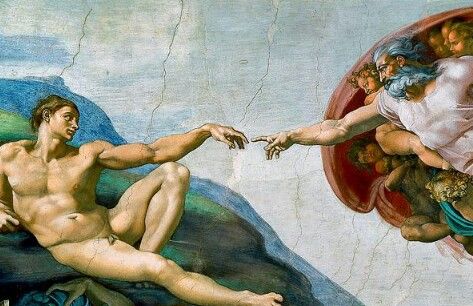
"God is dead and we have killed him."
Perhaps Nietzsche's most famous quote, but what most people don't know is its significance in his wider philosophy and especially in his conception of the Übermensch.
For Nietzsche, until the 19th century, the force sustaining our moral values was religion. If you had a moral quandary, you asked your local priest. You did not dare answer these questions for yourself or attempt to create your own values. And in Europe, the dominant moral system was Christianity, with its primary values being loving your neighbor and loving the powerless.
And this reliance on religion made sense. Humanity was submitting to a higher being and understandably following their orders. But change was on the wind. The rise of atheism and modern science after the Enlightenment meant the existence of God itself was being questioned.
This is what Nietzsche means by "God is dead."
It means religion can no longer support our moral values.
Mankind will have to make them for itself.
This situation creates problems, from nihilism to existential despair. Nietzsche says it can lead to humanity’s collapse into a character he calls the Last Man.
The Last Man is the epitome of mediocrity. They do not strive for anything great. They are robbed of courage and tenacity. They pursue comfort, avoid danger, and trudge from day to day in meaningless existence. They are nihilists who despise action.
Nietzsche views this almost like a doomsday scenario, the ultimate waste of mankind's potential. For him, there needs to be an alternative. And that alternative is the Übermensch.
The purpose of the Übermensch is to move beyond humanity as it currently exists. They reshape the world as they see fit, forging new morals and new values. Many of these values center around one great aim: the affirmation of material life.
One aspect of religion Nietzsche found irritating was its tendency to make the material world secondary to a higher spiritual plane, heaven and hell. Nietzsche thought this encouraged us to waste the great gift of life.
The Übermensch does the opposite:
They live with a great love for reality, embracing fate and life with gratitude.
They're not hungry for wealth or hierarchy, present hierarchies aren’t worth ascending. They want to change the values of society, not climb its old ladders.
Nietzsche does not spell out exactly what these new values will be. He sees himself as setting the stage for future philosophers who will craft them.
So the question becomes:
How does the Übermensch come about?
The Metamorphoses of the Übermensch
The word Übermensch is often translated as "Superman," which conjures up misleading images. Strength is emphasized, and Nietzsche definitely saw strength as essential, but not sufficient.
In Thus Spake Zarathustra, Nietzsche says the transformation from human to Übermensch comes in three stages:
1. The Camel
The camel is strong enough to bear all the challenges of the world. They seek the hardest tasks and rejoice in overcoming them. They are like the David Goggins of 19th-century philosophy.
But the camel does not question values. They accept society’s morals as correct. They have strength but not creativity.
2. The Lion
Here the purpose becomes clearer. The lion destroys the old values.
“The lion replaces ‘Thou shalt’ with ‘I will.’”
The lion rejects inherited morality. They tear down values wherever they find them. To us, the lion might seem like a psychopath or at least a rebellious nihilist. But Nietzsche believes this destructive stage is essential.
However, the lion cannot create new values. It can only clear space.
3. The Child
This is the most interesting transformation. The child represents creativity and innocence.
With the old world cleared away, the child creates new values, joyfully, playfully, with the freedom of a toddler drawing a new universe. Here we see values Nietzsche cherished: joy, innocence, playfulness, creativity, and love of life.
Interpretation varies on whether we ourselves must pass through these metamorphoses or whether we are simply preparing the world for future Übermenschen.
The Characteristics of the Übermensch
The Übermensch is difficult to describe because Nietzsche presents them as a mix of qualities that sometimes contradict.
They must be powerful, physically at times, but more importantly, spiritually.
They must be rebellious, rejecting dominant moral systems.
They must be creative, forging values from their own will, uncorrupted by external influence.
The Übermensch essentially plays the role of a self-created god, deciding for themselves what is right and valuable. They must have freedom and independence.
Lastly, and most surprisingly, the Übermensch has a deep love for the world and mankind.
Despite Nietzsche's reputation as a harsh egoist, the Übermensch does not create new values out of hate or cruelty. They do it out of love, a belief that their will can save humanity from nihilism and spark a new era.
The Joyful Philosopher
"If you want to be happy, don’t aim for happiness."
Nietzsche has been called many things, radical, existentialist, madman, but he is also a philosopher of joy.
He is constantly exploring new ways to find happiness, laughter, and love of fate. One of his books is literally titled The Gay Science, “the joyful science.”
The Übermensch does not seek happiness directly. They seek suffering and pain, not from masochism but to:
“Rejoice at their own strength.”
Nietzsche does not see suffering as bad. He sees it as essential. We should love our suffering, embrace it, even kiss it, because the land of suffering is the only territory left to conquer if we want deeper joy.
Seeking happiness is like flirting, it only works if you don’t fear rejection.
For Nietzsche, true joy comes only when we no longer fear suffering.
What Next?
Reading Nietzsche is like consulting a wise but slightly imprecise oracle. There is wisdom, but not always direct instructions.
He warns us of the Last Man, who seeks only comfort and becomes a sluggish nihilist.
He teaches us that overcoming ourselves is not just for grand philosophers but for anyone striving for greatness.
And he shows us how to find joy in difficult places, reclaiming the spark of childhood.
For all his reputation, Nietzsche would ultimately bow his head to the wisdom of a child, and that’s rather beautiful.
As always, I encourage you to read Nietzsche for yourself. The key text is Thus Spake Zarathustra.
Your support isn’t just a donation, it’s a small act of will, a vote for better thinking in a noisy world. ☕👇🏻
https://buymeacoffee.com/philosophyvault
Thenx For Being Part of Philosophy Vault If you find single value helpful do share and subscribe Philosophy Vault.