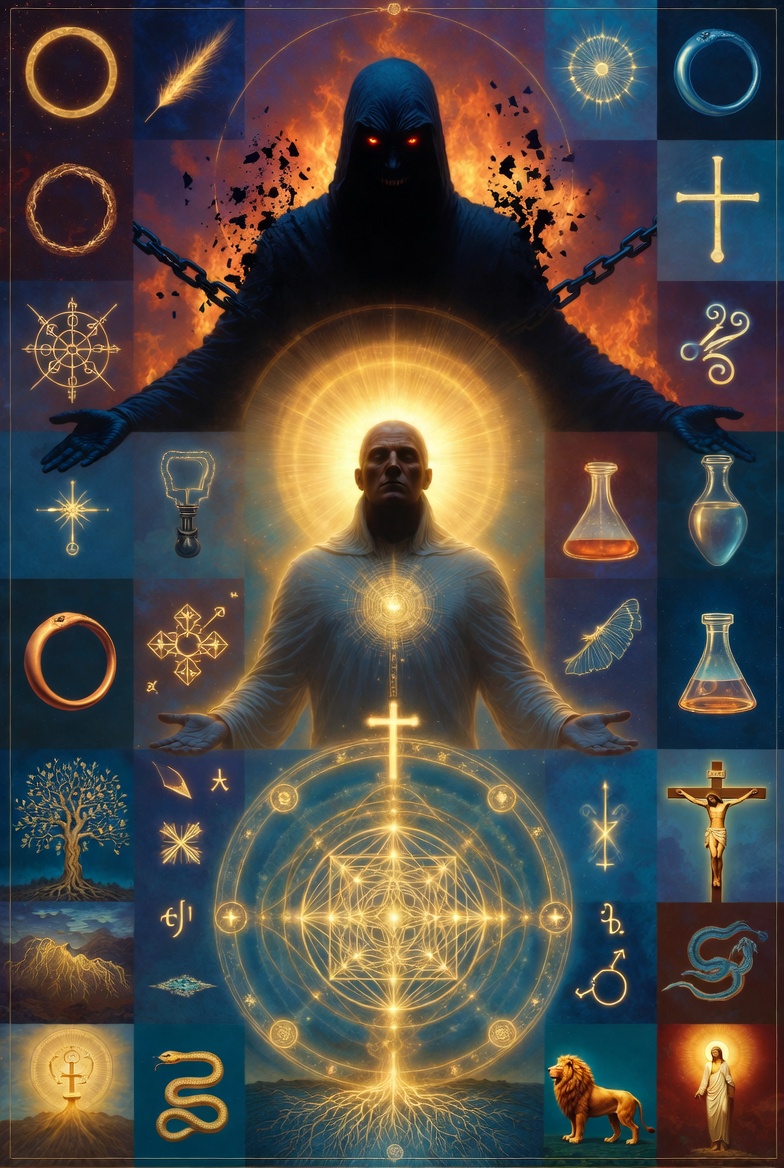

Carl Jung did not describe a specific, singular role for "the chosen" (or "the chosen one") as a central concept in his core psychological theories in the same way popular modern interpretations (especially in self-help, spiritual, or motivational content) often portray it.
Jung's work focuses heavily on individuation—the lifelong psychological process of becoming one's true, whole self by integrating conscious and unconscious elements, including confronting the shadow, anima/animus, and ultimately aiming toward the Self (the archetype of wholeness). This path is open to anyone willing to undertake it, but it is demanding, often isolating, and involves significant suffering, inner conflict, and transformation. In his writings (especially in The Red Book / Liber Novus, his personal confrontation with the unconscious), Jung occasionally uses language evoking being "chosen" in a symbolic or visionary sense:
In dialogues with inner figures (like Philemon or his soul), there are passages where the soul is addressed as "the chosen one among women" or "God-bearer," drawing on Marian/Christian symbolism (e.g., echoing the Ave Maria's "blessed art thou among women"). This is more allegorical and tied to the anima (the feminine soul-image in men) than to literal chosen individuals.
In some alchemical and Christian-symbolic discussions, Jung notes how the "descent of the spirit" or incarnation stops at the "living body of the Chosen One" in Christian projection (referring to Christ), while alchemy extends transformation to all. He contrasts collective religious projection with the individual path.
Jung viewed figures like Christ as archetypal symbols of the individuated Self—not as prescribing a special class of "chosen ones" with a unique role for others to follow blindly. Instead, he emphasized that every person has the potential (and often the call) to realize their own unique wholeness, which indirectly serves the collective by advancing consciousness.Modern online content (YouTube videos, podcasts, Medium articles) frequently reframes Jungian ideas to claim that "the chosen ones" are special people who suffer more, face trauma/shadow work, carry ancestral burdens, achieve individuation first, or act as spiritual forerunners for humanity. These often blend Jung with New Age, manifestation, or Christian motivational themes (e.g., "God's plan for the chosen one," "why chosen ones suffer," "marks of the chosen"). While they draw on real Jungian elements—like the suffering involved in individuation, the hero's journey parallel, or the rarity of deep psychological work—they exaggerate or invent a privileged "chosen" class/role that Jung himself did not articulate in those terms.In short: Jung saw the deepest psychological/spiritual development as an elite/difficult path ("the chosen few" in the sense that few pursue it seriously), but its role is personal integration and realization of the Self, not a messianic or externally assigned destiny to save/lead others. The "chosen" motif appears symbolically in his visionary material, but the emphasis remains on individual responsibility rather than predestined specialness.