

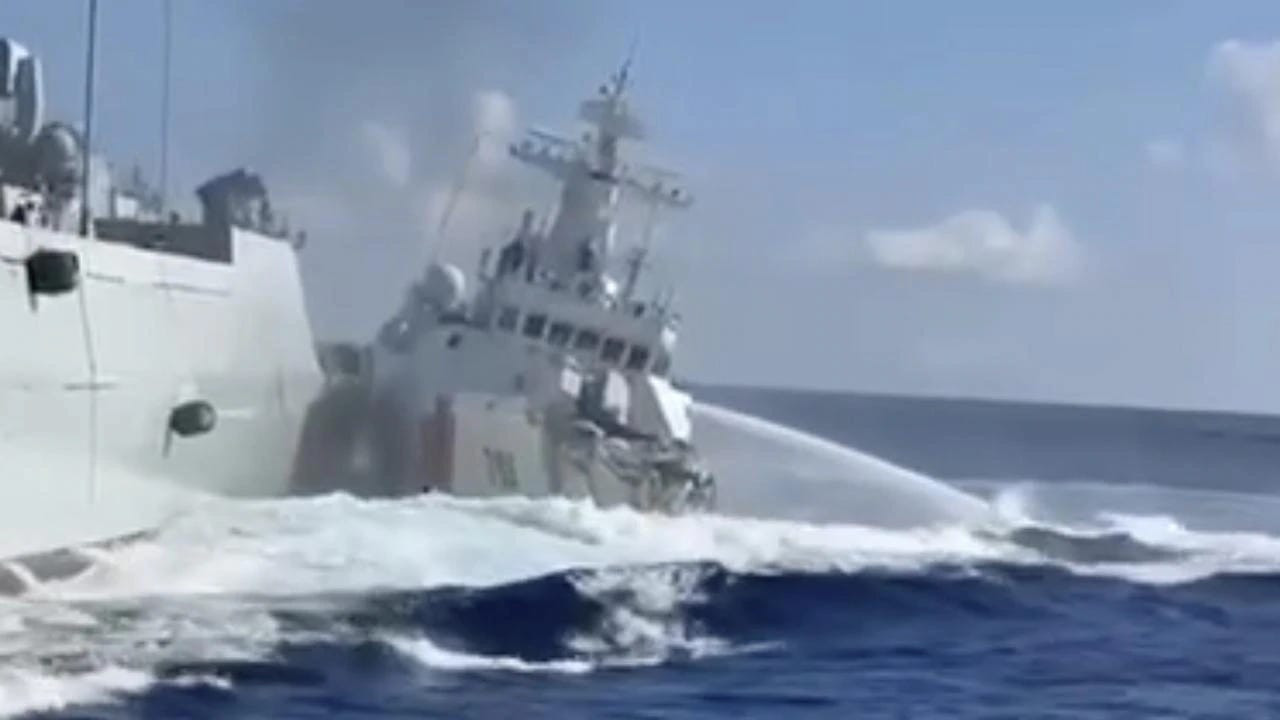
A significant portion of the countries in or along the Pacific Basin, particularly in the western Pacific, have been targets of intimidation and unlawful unilateral territorial claims by the People’s Republic of China. These nations likely observed with satisfaction as a China Coast Guard vessel and a People’s Liberation Army Navy ship pursued a Philippine Coast Guard vessel, using a water cannon and aggressive tactics, before colliding. The Chinese Coast Guard ship sustained considerable damage, with its bow crumpled upon impact, while the Chinese naval vessel was also damaged, albeit to a lesser extent. The Philippine Coast Guard vessel emerged undamaged from the incident, which occurred on Monday, August 11th. Notably absent from the headlines was the fact that China employed its navy to pursue and intimidate a Philippine government ship operating within its internationally recognized Exclusive Economic Zone, marking a significant escalation in the region. In light of this escalation, Australia initiated its largest deployment outside the country since the East Timor crisis of 1999, conducting a joint exercise with the Philippines in the West Philippine Sea.
Pegasus Research Substack is a reader-supported publication. To receive new posts and support my work, consider becoming a free or paid subscriber.
The exercise, titled “Exercise Alon 2025,” commenced on August 15th and is set to continue until August 29th. While the exercise was planned prior to the incident on August 11th, it responds to the escalating tensions in the region stemming from China's aggressive behavior and threats toward its neighbors, particularly the Philippines, Taiwan, and Japan. Australia’s Ministry of Defence has indicated on its website that this exercise represents the “…largest overseas joint force projection activity that Australia has conducted within our region in recent history.”
The exercise will involve 3,600 personnel from Australia, Canada, the Philippines, and the United States. The Australian Defence Force will contribute 1,600 personnel, who will operate in and around the Philippine islands of Palawan, which is near several territorial disputes between China and the Philippines, as well as Luzon. This will include the deployment of a combined headquarters in coordination with the Philippine Western Command in Palawan.
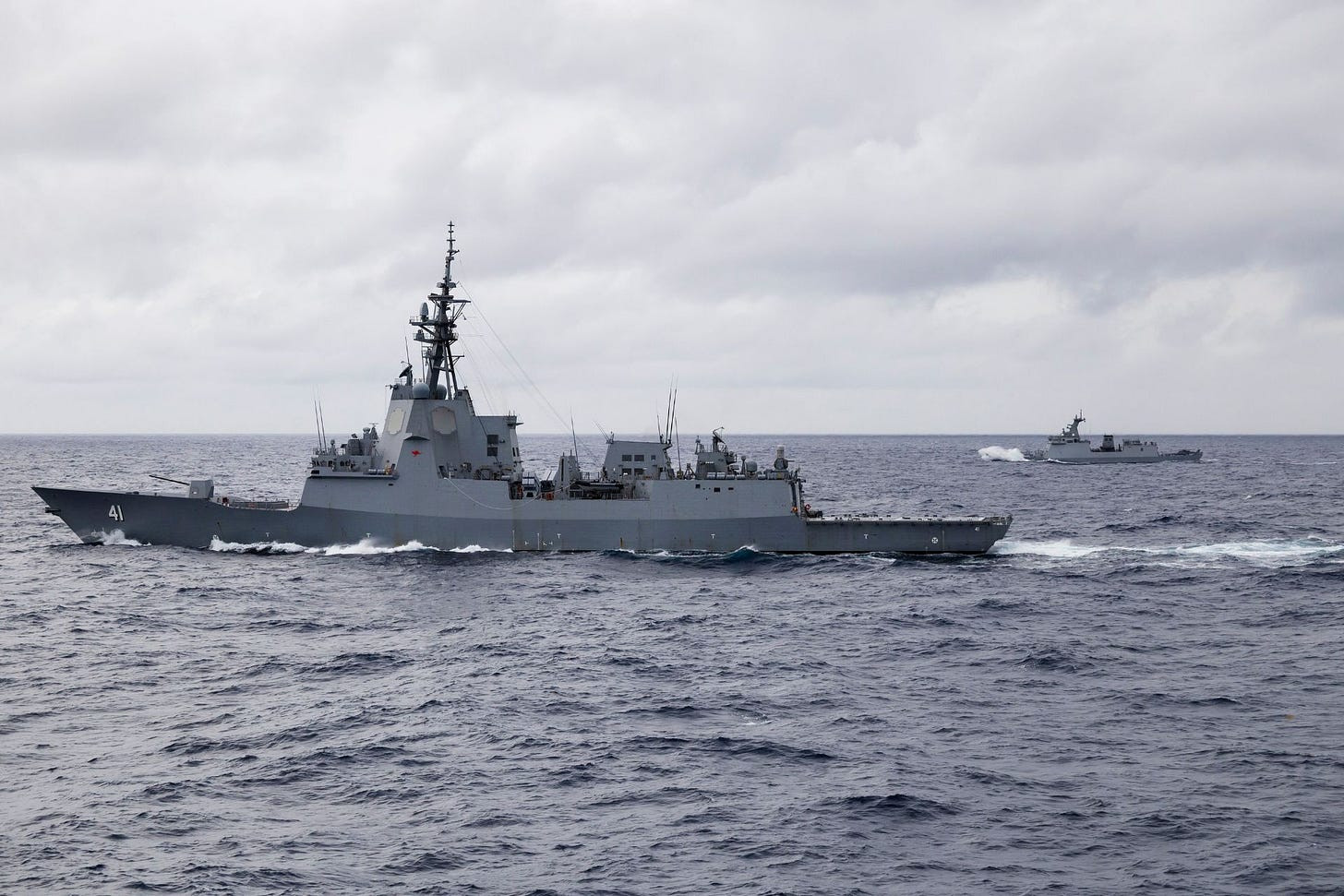
The Australian Army will deploy elements from the Royal Australian Regiment, including infantry, cavalry, artillery, combat engineers, and medical services. The guided missile destroyer HMAS Brisbane and its MH-60R Seahawk helicopter will represent the navy for force entry operations against the hostile shores of an enemy.
Air assets deployed will include F/A-18F Hornets, EA-18G Growlers, and C-130J Hercules, along with support from an Australian-deployed P-8A Poseidon stationed on Palawan. Additionally, aerial tankers and transports will support the exercise.
The Philippines will deploy 1,525 personnel from the army, air force, and marine corps, as well as a Jose Rizal guided missile frigate. The Royal Canadian Navy will supply a frigate, the HMCS Ville de Quebec, along with its CH-148 Cyclone helicopter. Additionally, the U.S. Marine Corps will send 350 marines from the Marine Rotation Force - Darwin, along with an MV-22B Osprey.
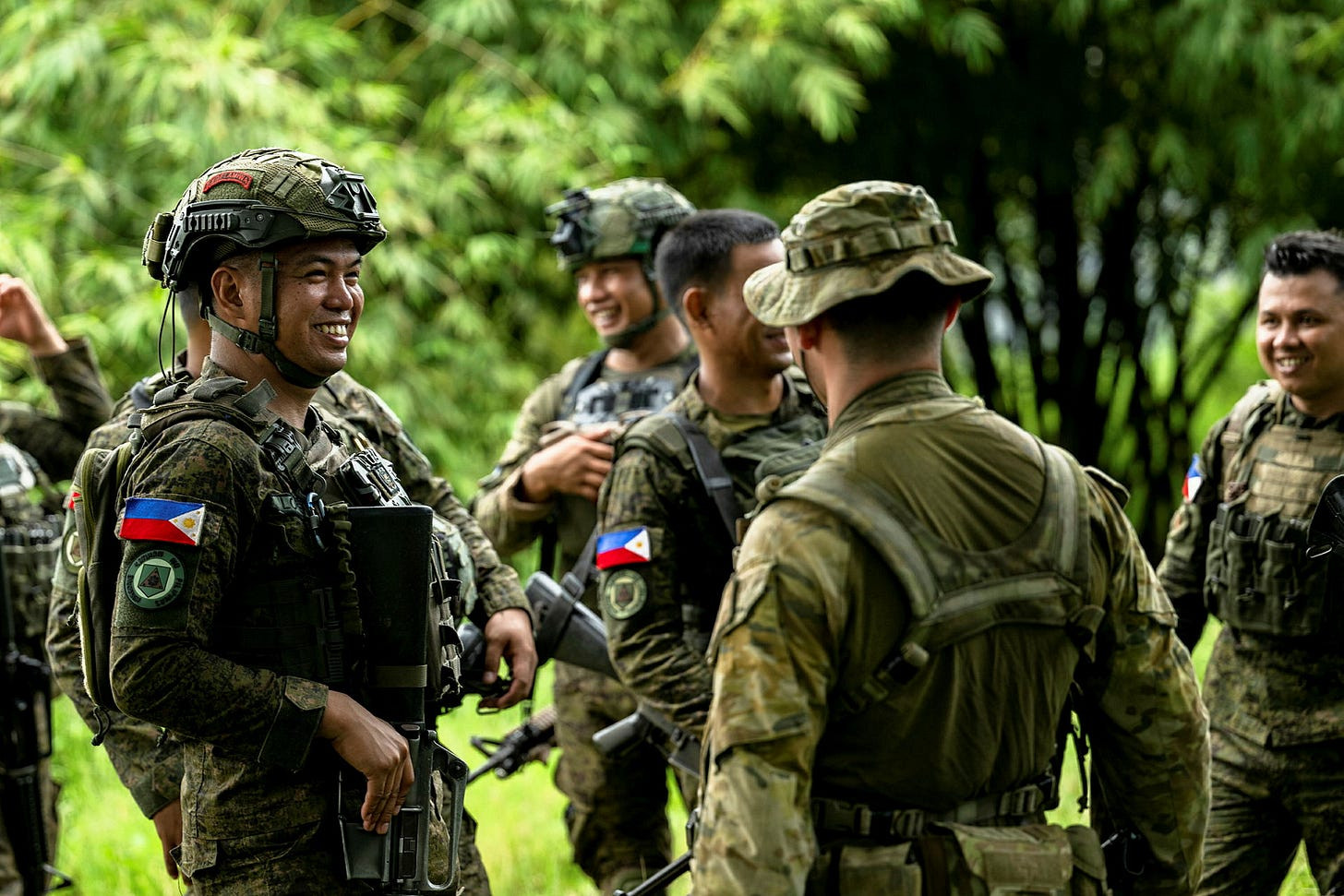
The exercise will encompass a live fire exercise, conducted in both land and maritime training ranges. It will also include cyber defense, joint force projection, special operations exercises, and airlift operations.
Although this exercise represents Australia's largest deployment in 26 years, it is not the largest exercise the Philippines has recently participated in under President Ferdinand Marcos Jr., who has adopted a more assertive approach in challenging China's territorial claims. This exercise suggests that Australia views the security situation in the West Philippine Sea as nearly comparable to the East Timor crisis from a security perspective. Furthermore, it underscores how military exercises have evolved in recent years, transitioning from basic teamwork and displays of support to now featuring joint command centers collaborating with the Philippine armed forces.
The recent months in the Philippines have been marked by political upheaval, particularly surrounding former Philippine President Rodrigo Duterte's arrest by the International Criminal Court, which could only have happened with President Marcos's consent. Additionally, there is the now-suspended impeachment of Vice President Sara Duterte. Meanwhile, China is facing its own challenges, as the 4th Plenary Session of the 20th Communist Party of China Central Committee has been postponed from August to October due to rumors of power struggles within the country and concerning Xi Jinping's presidency. Despite these internal political issues in both nations, disputes continue in the West Philippine Sea over territorial claims. This situation suggests that the political uncertainties in China will not alter the outcome of the 4th Plenary Session or change China's approach in the region, including its illegal claims over the South China Sea.
The exercise also demonstrates that, like Australia, the Philippines views the situation in the West Philippine Sea as a crisis it will not back down from, continuing to receive support from countries in the region alarmed by China's actions. While the collision of two Chinese ships may provide some satisfaction to a country engaging in aggressive and reckless behavior, it is crucial to recognize that the increased use of the People's Liberation Army Navy (PLAN) represents a significant escalation. Furthermore, exercises like Alon 2025 and ongoing capability upgrades for the Philippines and its allies will be vital in establishing a credible deterrent in the region.
Research or support me through Patreon, Buy Me A Coffee or Ko-Fi.
References:
https://www.defence.gov.au/defence-activities/exercises/alon
https://www.nytimes.com/2025/08/07/world/asia/philippines-vice-president-impeachment.html
https://english.www.gov.cn/news/202507/30/content_WS6889c65fc6d0868f4e8f48bf.html
https://www.thinkchina.sg/politics/chinas-leadership-test-high-stakes-fourth-plenum