

Photo by Daniel Bernard on Unsplash
South Korea faces a security dilemma on the Korean Peninsula that cannot be easily resolved with the security options that were previously available to it.
Pegasus Research Substack is a reader-supported publication. To receive new posts and support my work, consider becoming a free or paid subscriber.
The issue of declining birth rates in the developed world is not confined to a single region, as North America, Europe, and much of Asia are grappling with this challenge. In several countries, the falling birth rate has reached crisis levels, with South Korea recording the lowest rate in the developed world at 0.72 births per woman, significantly below the 2.1 births needed to sustain a population. The reasons behind the declining birth rates in South Korea share similarities with those in other affected countries, including the high cost of living, which can be intensified by insufficient government support and the weakening of traditional family support structures. Additionally, South Korea faces unique factors that may not be as prevalent elsewhere, such as intense pressure to excel professionally and academically, leading to a preference for career advancement over marriage.
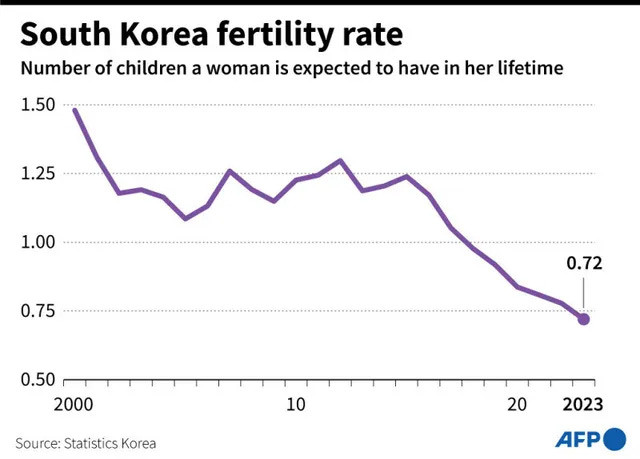
These factors are intensified by prioritizing lifestyle choices over family, alongside a female population increasingly pursuing professional achievements beyond traditional societal roles. As a result, there has been a noticeable delay in marriage and childbearing, with many individuals choosing to forgo both marriage and children altogether. In addition to contributing to an aging population and the long-term effects on government social services and healthcare, this trend has also created a precarious national security situation in a country that remains technically at war with its unstable and nuclear-armed neighbor, North Korea.

Photo by Võ Mạnh Đức on Unsplash
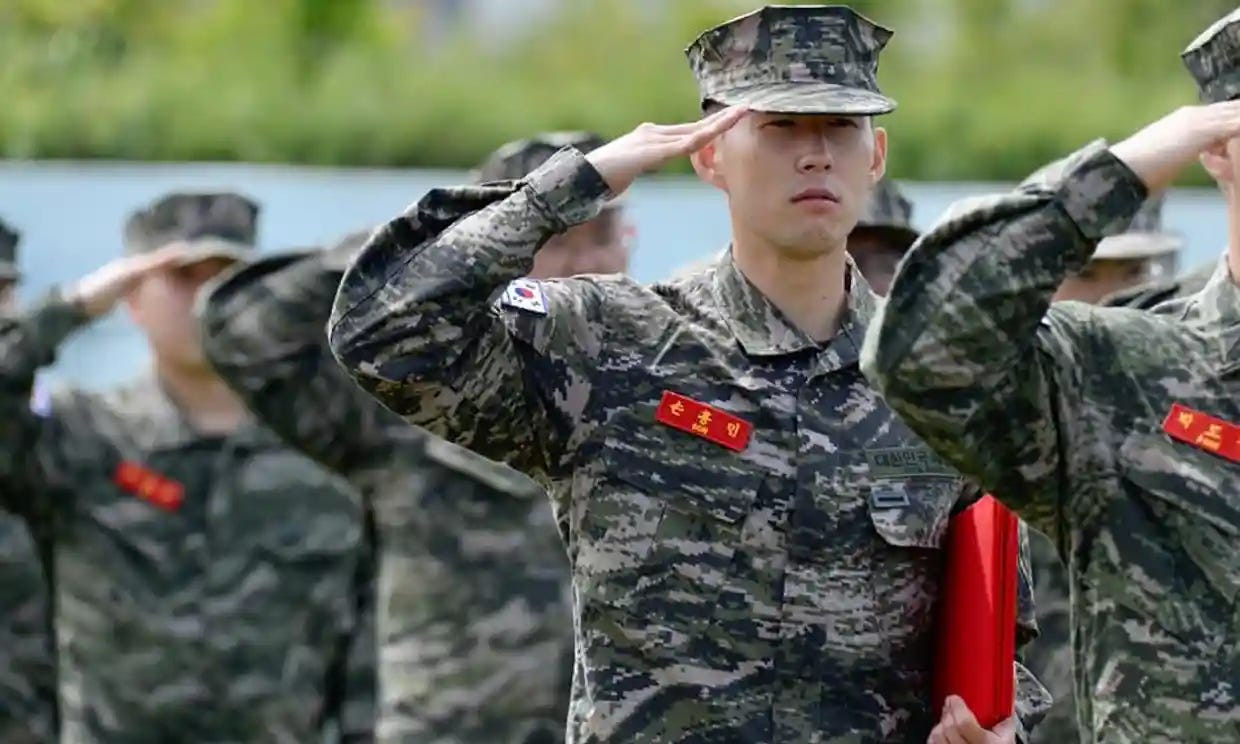
Japan and Germany serve as examples of countries facing demographic challenges similar to, though not as severe as, those in South Korea. Both nations have struggled to increase the size of their armed forces due to a declining population eligible for military service. Currently, neither country has a conscription system, which means military recruiters must compete with the private sector to persuade a shrinking pool of young people to consider military careers. In contrast, South Korea does implement conscription, requiring nearly every able-bodied male citizen aged 18 to 28 to serve in the military for a period of 18 to 21 months. Upon completing active duty, individuals continue in reserve service until the age of 45, participating in periodic training cycles.
The South Korean system eliminates the need for military recruiters to persuade eligible individuals to join the military, unlike all-volunteer forces such as those in Japan and Germany. However, even with conscription, the situation is becoming critical due to demographic challenges. The South Korean army has reported that it is currently short by 50,000 soldiers to meet minimal security levels. Overall, the South Korean military has shrunk by 20% in the past six years, reflecting a significant reduction in the population of military-aged males. The active-duty military currently has 450,000 members, down from 563,000 in 2019 and 690,000 in the early 2000s. The South Korean defense ministry indicates that the population of eligible males has decreased by 30% in the same six-year period. The South Korean military must defend against a North Korean military that numbers 1.2 million.
The South Korean military, similar to the civilian sector, can benefit from technological advancements that enable the use of fewer personnel while increasing productivity. In military terms, heightened productivity typically translates to greater lethality (both indirectly and directly). Smart weapons, drones, and automation can enhance lethality and allow for a reduction in manpower requirements. However, while improvements in these areas can decrease the need for personnel, they cannot eliminate it entirely. For instance, although automation and technology can enhance airpower to target and destroy the enemy—and potentially act as a deterrent—these systems cannot occupy ground, whether by preventing enemy access or reclaiming territory. This presents a significant challenge for South Korea, which must maintain forces to monitor and defend the Demilitarized Zone.
The nature of the threat to South Korea has evolved as North Korea has successfully tested nuclear weapons and has made threats to use them against South Korea, Japan, and the United States. More concerning than the nuclear weapons themselves is the progress North Korea has made in developing delivery systems for these weapons, including longer-range and more reliable missiles, both land-based and submarine-based. Intelligence assessments suggest that North Korea has not yet perfected the process of mounting warheads onto missiles, particularly its longer-range systems. Despite this apparent gap, it seems that North Korea is actively working on both nuclear first and second strike capabilities. Additionally, there are indications that North Korea may be receiving technical assistance from Russia, possibly in exchange for its support in Russia’s war in Ukraine, which could be adapted for military purposes.
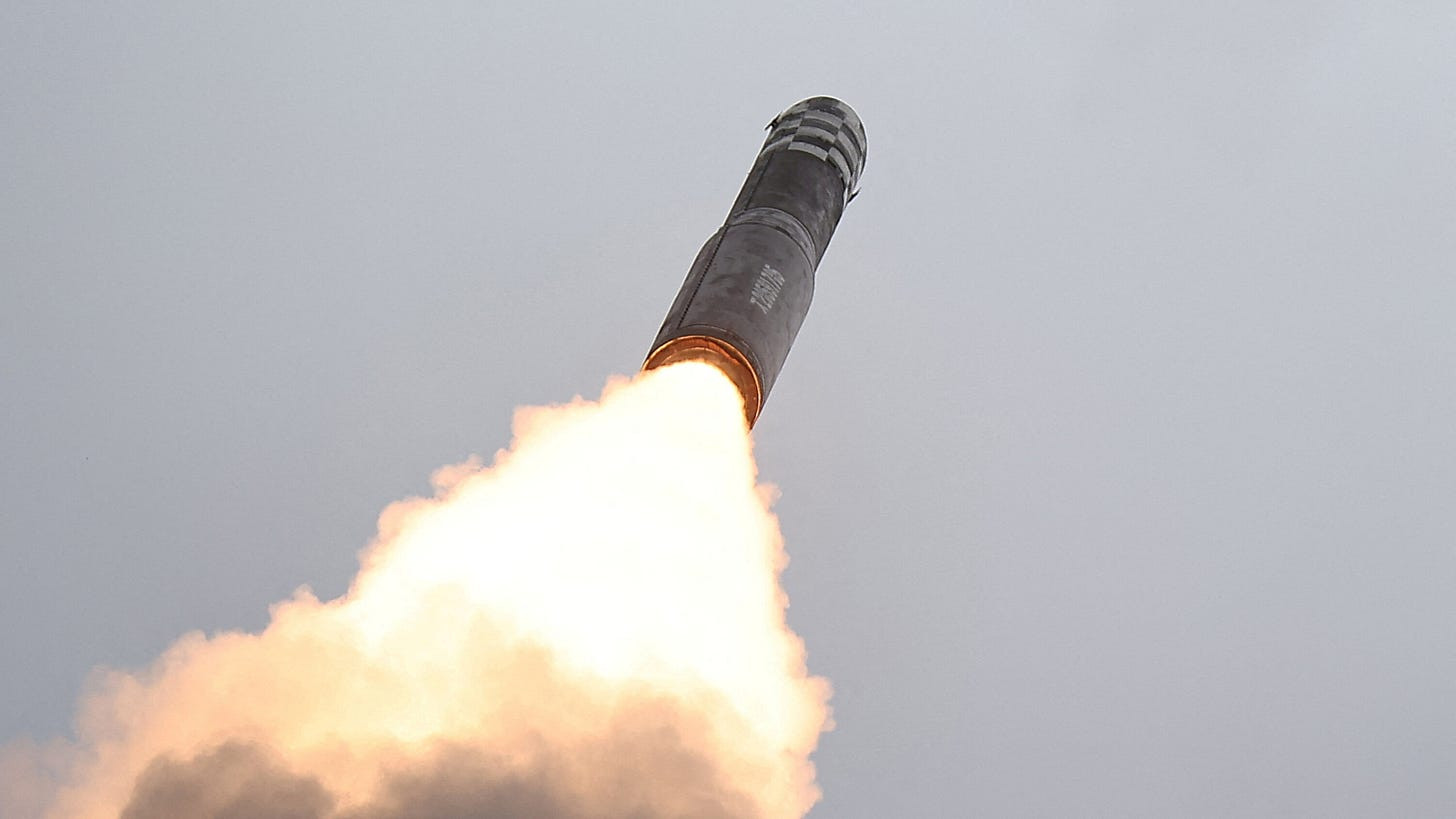
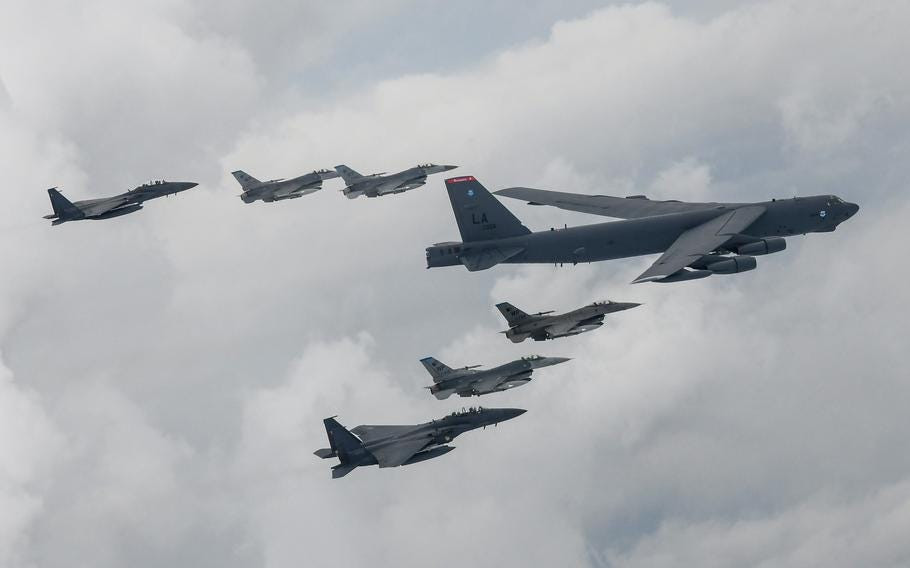
The North Korean nuclear program and its apparent intention to integrate these weapons into its military strategy have deteriorated the security situation on the Korean Peninsula. This situation has not improved even after the election of the more dovish Lee Jae Myung as the South Korean president. South Korea has urged the United States to redeploy nuclear weapons to the Korean Peninsula, which were withdrawn in 1991. The United States has resisted this request but has allowed nuclear submarines to visit South Korea and has conducted overflights of nuclear-capable bombers during joint exercises with South Korea. In April 2023, the U.S. agreed to a public statement of support known as the Washington Declaration, which asserted that the U.S. would respond decisively in the event of a nuclear attack against South Korea. However, this declaration fell short of South Korea's expectations, as it did not provide a clearly defined statement regarding a U.S. nuclear response to a North Korean nuclear attack.
The South Korean dilemma is twofold: its demographic crisis is impacting its conventionally armed forces, and it faces a nuclear-armed neighbor that routinely threatens to use those weapons against its country. Both factors put South Korean security at risk, and neither is easily remedied; the demographic issue has no straightforward solution, and the U.S. has not provided the requested nuclear security guarantees. The situation has reached a critical point, particularly regarding public nuclear threats, as 76% of South Korean citizens support the development of an independent nuclear deterrent. It is not a significant leap to conclude that a South Korean nuclear program could mitigate the security risks stemming from a manpower shortage caused by demographic changes and serve as a deterrent against the North Korean threat.
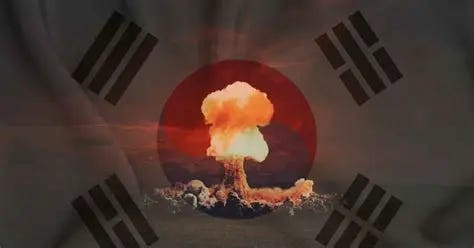
The primary issue holding South Korea back is the political will to decide whether to disregard the Nuclear Non-Proliferation Treaty (NPT), which it signed in 1975. This decision could lead to potential economic retaliation from both China and the United States, both of which have publicly opposed a South Korean nuclear program. Despite this challenge, the South Korean government has made significant progress by garnering public support for a domestic nuclear program. Additionally, South Korea possesses both civilian and research nuclear programs and has been reported by the IAEA to have achieved 77% uranium enrichment, which is significantly above the level required for civilian-grade reactor fuel and just below the 90% threshold needed for nuclear weapons. The country also has a sophisticated arms industry, meaning many of the technical requirements for a rapid nuclear breakout are already in place, along with public backing for such an initiative.
A nuclear-armed South Korea would bring certain advantages, particularly by allowing the country to reduce its active military personnel requirements. It is assumed that this shift would lead to a reorientation of its security posture from a strictly conventional stance to a hybrid approach, relying more on nuclear deterrence to deter North Korea and, to a lesser extent, China. This reduction in manpower needs could be popular, as fewer men would be conscripted into military service, thereby increasing the pool of eligible individuals for the private labor force. Additionally, South Korea could become less reliant on the U.S. nuclear umbrella, enabling it to pursue a more independent foreign policy that does not necessarily require appeasing Washington. While this is not to suggest it would take such a path, it would certainly open up options that are not currently available.
The goals of the Nuclear Non-Proliferation Treaty should be preferential rather than creating conditions that make nuclear weapons a solution to security issues. In the case of South Korea, an ironclad nuclear umbrella guarantee could address the security concerns for the country; however, the U.S. nuclear umbrella is not a solution for every scenario. Would the U.S. have considered offering Pakistan a nuclear umbrella in the 1970s as a deterrent against India? Or to Iran to deter Israel? The combinations become absolutely absurd to expect nuclear powers to provide umbrellas as a viable answer.
It was inevitable that the technologies developed in the 1940s to create the first atomic bomb would eventually become accessible to more states over the decades, regardless of any military or economic controls aimed at slowing the spread of nuclear technology from nuclear states to non-nuclear ones. The international security landscape has never fully embraced the concept of establishing a deterrent to prevent countries from pursuing nuclear weapons or providing security guarantees that would make nations feel secure enough to refrain from seeking them. It is questionable whether most governments and people would even desire such a world order. So, where does that leave the world?
The nuclear genie cannot be stuffed back into the bottle; this is not an option unless a global entity emerges to promote peace and eliminate the need for nuclear weapons. The death toll of up to 85 million people during World War II led to the creation of the United Nations, aimed at preventing future conflicts. However, it was insufficient to persuade countries to relinquish their sovereignty, which would be necessary for the U.N. to wield any meaningful authority in stopping wars. The historical performance of the U.N. suggests that the founders made a wise choice in this regard. A worldwide missile defense system, even if technically feasible, would not provide a solution, as some power or organization would need to oversee it. Similar to the concept of an all-powerful U.N., the prospect of universal acceptance and loss of sovereignty would likely be unacceptable to many, if not most, countries. There is no universally benevolent nation or organization that could gain global trust.
The unfortunate answer in the short term is that some form of Mutual Assured Destruction may have to be a default in a world of proliferation. This would need to be combined with the efforts of large countries, organizations, or alliances focused on preventing the “battle of annihilation,” ensuring that nations do not feel their existence is threatened by adversaries in conflict. While this is an imperfect solution, nuclear proliferation is a pressing issue. If countries aim to prevent the use of nuclear weapons, they must create strategic deterrence, such as MAD, and pursue conflict resolution before a conflict escalates, or work swiftly to establish a ceasefire.
The question pertains to South Korea, which perceives its security as threatened by the significant challenges of demographic decline and the presence of a nuclear-armed neighbor with which it is technically at war. This neighbor has declared a nuclear policy that includes a willingness to use its weapons and is actively developing multiple strike options. The risks are evident for South Korea; however, unlike many other countries, it possesses the capability for a nuclear breakout in a relatively short timeframe and seems to have public support for a nuclear weapons program. The responsibility to manage the increasing pressure for nuclear proliferation lies with the global community, and a strategy to address this issue must be considered. This also implies a reliance on the assumption that nuclear-armed countries will act rationally, which means that South Korea's nuclear deterrence strategy will depend on North Korea acting in a rational manner. That should be comforting.
Research or support me through Patreon, Buy Me A Coffee or Ko-Fi.
Reference:
https://www.csis.org/analysis/how-china-views-south-koreas-nuclear-debate
https://www.newsweek.com/south-korea-population-crisis-shrinks-military-2111711
https://www.bbc.com/news/articles/c79llljy4qeo
https://worldpopulationreview.com/country-rankings/birth-rate-by-country
https://www.bbc.com/news/articles/c20wg50l563o
https://www.mma.go.kr/eng/contents.do?mc=mma0000839
https://www.armscontrol.org/factsheets/arms-control-and-proliferation-profile-north-korea
https://kr.usembassy.gov/042723-washington-declaration/
https://www.cato.org/commentary/why-south-korea-wants-nuclear-weapons-now-more-ever
https://world-nuclear.org/information-library/country-profiles/countries-o-s/south-korea
https://www.armscontrol.org/act/2004-10/iaea-probes-seouls-nuclear-program