

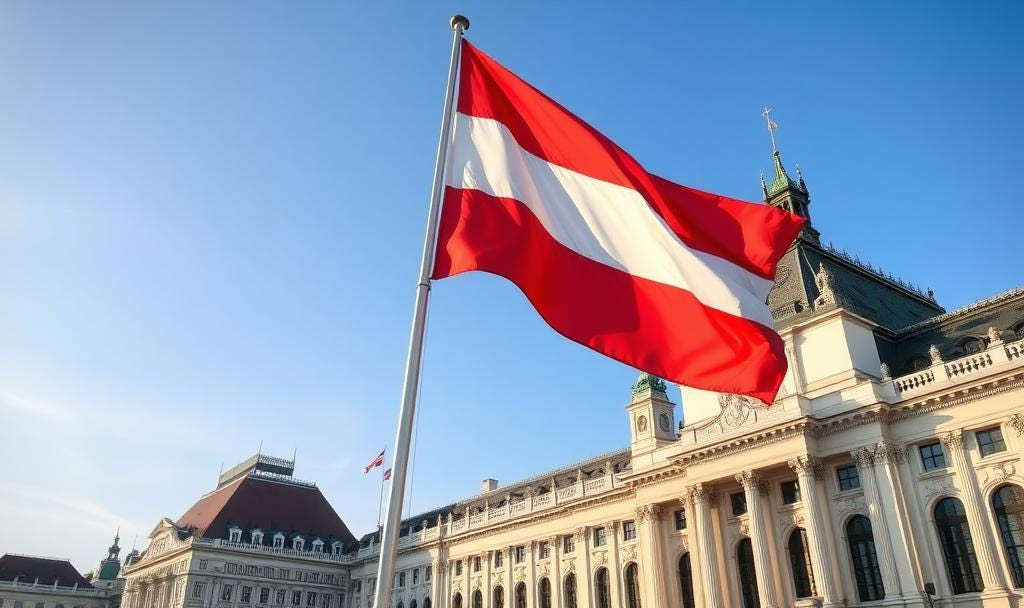
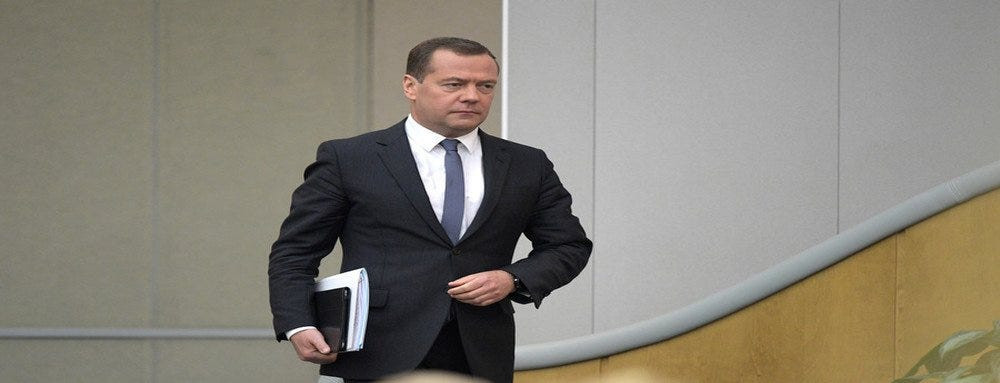
Recently, Dmitry Medvedev, the deputy chairman of Russia’s Security Council and a close ally of President Putin, has re-entered the political arena with another provocative statement aimed at threatening another country. This follows his recent nuclear threat against the U.S., which resulted in the redeployment of two ballistic missile submarines closer to Russia. This time, however, the threat is directed at Austria, a central European nation.
Pegasus Research Substack is a reader-supported publication. To receive new posts and support my work, consider becoming a free or paid subscriber.
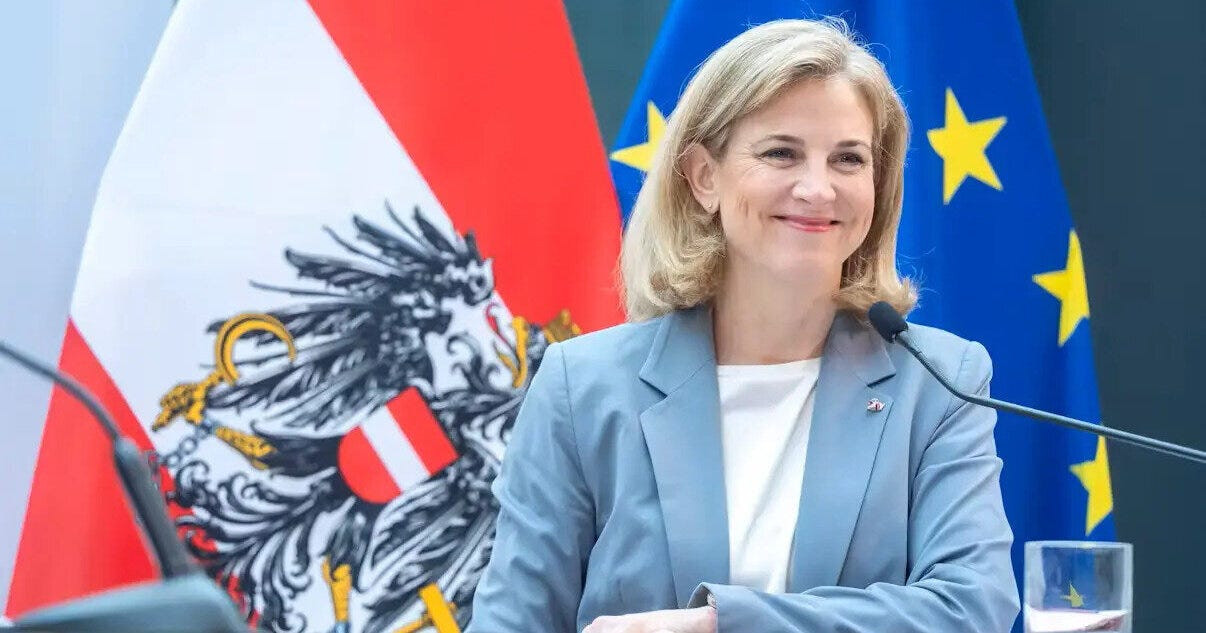
In July, Austrian Foreign Minister Beate Meinl-Reisinger stated in an interview with the German newspaper Die Welt am Sonntag that the country’s long-held neutrality would not safeguard it, citing the context of the Ukraine War as justification. Her statement suggested that Austria should consider joining NATO, similar to the decisions made by formerly neutral Sweden and Finland. This proposal sparked significant controversy within both the Austrian parliament and the public, raising questions about the future of Austrian neutrality.
In response, Mr. Medvedev hyperbolically labeled the idea a “NATO Anschluss,” referencing the Nazi annexation of Austria in 1938. Despite the extreme rhetoric and seemingly absurd threats, one must consider whether Mr. Medvedev is correct in his assessment.
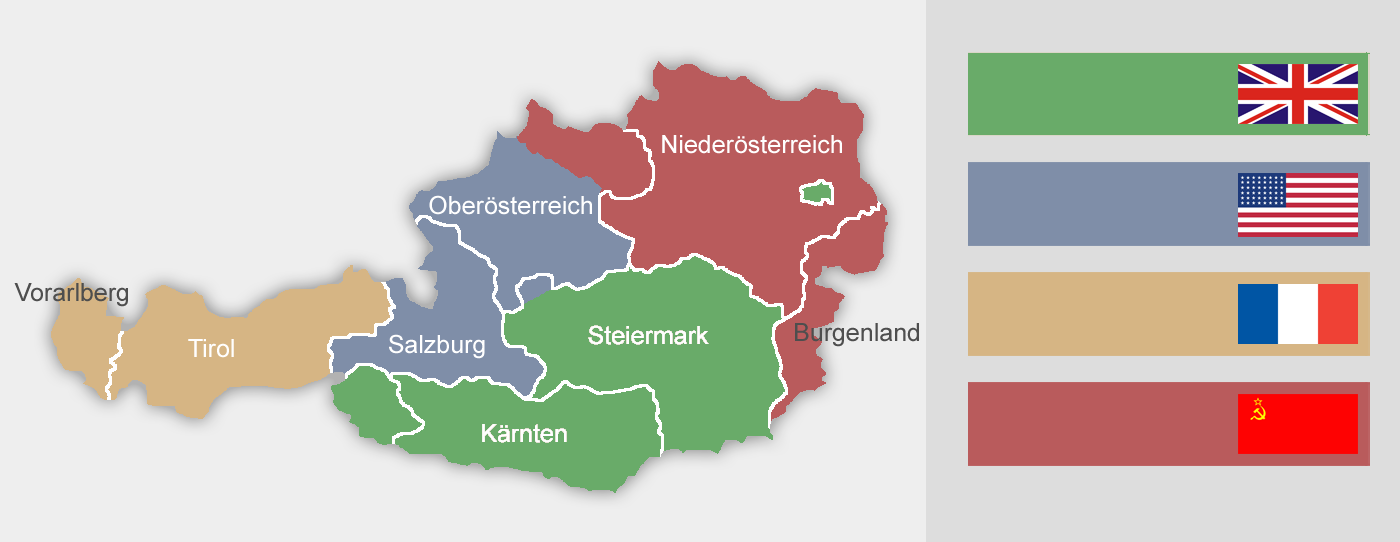
Austria was occupied at the end of World War II by the Allied powers, and like Germany, it was divided into four occupation zones controlled by the U.S., the Soviet Union, the United Kingdom, and France. In 1955, the four occupying powers reached an agreement with Austria to lift the occupation and grant it full sovereignty through the signing of the Austrian State Treaty. This treaty served as the permanent peace agreement between Austria and the Allied powers, officially ending the war and the occupation. In exchange for the Soviet Union's agreement to sign the treaty, Austria had to accept a declaration of neutrality and incorporate it into its constitution. Throughout the Cold War and the post-Cold War periods, Austria has maintained its neutrality and has served as a common hub for international organizations, including OPEC and OSCE. It also hosts United Nations agencies, such as the International Atomic Energy Agency (IAEA).
Foreign Minister Beate Meinl-Reisinger, in her statement regarding the examination of Austrian neutrality, acknowledged that there is no majority support in Austria for altering the country’s status as a declared neutral state. Over the decades, Austria has upheld its public neutrality while gradually aligning itself more closely with Western countries. As a member of the European Union, Austria has observed the EU's pursuit of a more significant role in European defense, particularly in response to the Russian invasion of Ukraine in February 2022. Additionally, Austria is covered by the EU’s mutual defense clause, which was established through the Lisbon Treaty of 2007 and mandates that EU member states assist any member whose territory has been attacked. Although the European Union is not a member of NATO, it regularly participates in NATO summits and has been actively advocating for increased defense spending across Europe since 2022.
Austria is a member of NATO’s Partnership for Peace program, which allows it to engage in joint training exercises and adopt NATO standards. In 2024, NATO reported over 3,000 transport movements and more than 5,000 overflights across Austrian territory. Additionally, Austria participates in the German-led European Sky Shield Initiative, aimed at establishing a missile defense system to safeguard infrastructure against aerial threats, including missiles and drones, as seen in the Ukraine War. Despite its declared neutrality, Austria has gradually moved closer to collective defense agreements with NATO and the European Union. These actions have been voluntary; the Partnership for Peace program with NATO was a political choice, and as a member of the European Union, Austria held the power to veto the Lisbon Treaty, preventing its implementation. It is not unreasonable to assert that Austria’s political leaders have progressively undermined official state neutrality in the post-Cold War era.
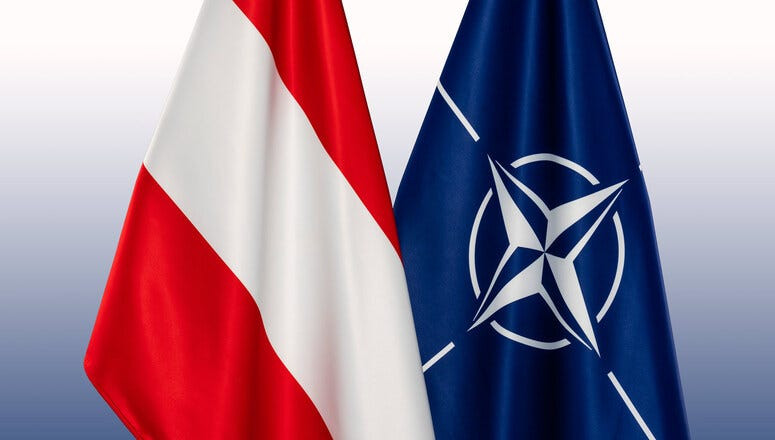
Deputy Medvedev stated that if Austria chooses to join NATO, it would face the same Russian backlash that Finland and Sweden have experienced following their NATO membership. Unlike Sweden and Finland, which share both land and maritime borders with Russia in the Baltic Sea, Austria has no direct borders with Russia and is surrounded by NATO member countries, as well as the neutral nations of Switzerland and Liechtenstein. Consequently, Russia would find it difficult to exert pressure on Austria, apart from pursuing political isolation and advocating for the removal of U.N. offices there through the U.N. Security Council. A more significant point made by Mr. Medvedev, which he should have emphasized to enhance his credibility, is that Austria cannot join NATO or renounce its neutral status without the unanimous consent of Russia (the successor to the Soviet Union concerning most international treaties), as well as the United States, the United Kingdom, and France.
Austria could choose to ignore the State Treaty of 1955 and unilaterally declare an end to its neutrality, requesting NATO membership; there isn’t much Russia could do in response, primarily due to the geographical distance. However, Austria remains dependent on Russian natural gas for its energy needs, making it vulnerable, like much of Europe, to an overreliance on inexpensive Russian energy. Additionally, a unilateral declaration would violate the Vienna Convention on the Law of Treaties, which could undermine the West's claim to a rules-based order, making all treaties seem as valuable as the paper they are written on. Furthermore, such a move would necessitate a change to the Austrian Constitution, and there appears to be limited public support for abandoning neutrality in favor of collective defense, with polls indicating that only about 14% of the population supports the idea of participating in collective defense.
The statements made by Foreign Minister Meinl-Reisinger and Deputy Medvedev regarding neutrality and NATO membership can be viewed as “unforced errors.” The political climate in Austria does not support any substantial rejection of neutrality, and Russia did not need to resort to exaggerated responses when international law is on its side. If Russia aims to be perceived as a reasonable actor on the international stage—which may be a lost cause in Western Europe but not in the Global South—it should heed Joe Friday’s advice for Mother Russia and focus on “Just the facts, ma’am.” Even when Russia is correct regarding signed agreements, it manages to undermine its own credibility.
Research or support me through Patreon, Buy Me A Coffee or Ko-Fi.
References:
References:
https://www.newsweek.com/putin-ally-russia-warns-austria-nato-retaliation-2120745
https://2001-2009.state.gov/r/pa/ho/time/lw/107185.htm
https://tvpworld.com/88062165/analysis-austria-questions-neutrality-but-nato-still-far-off
https://centraleuropeantimes.com/austria-should-consider-nato-membership-meinl-reisinger-2/