

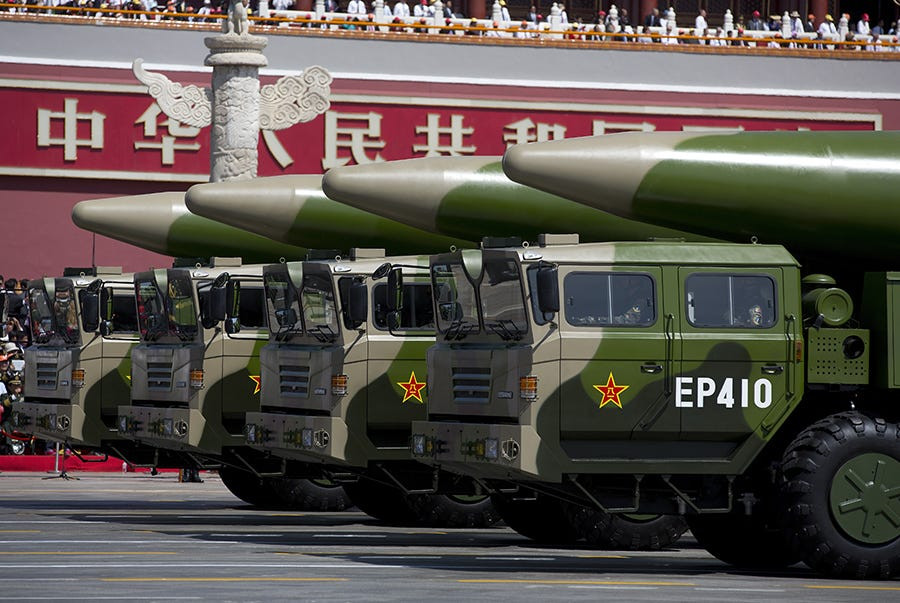
The People’s Republic of China joined the nuclear club on October 16, 1964, when it detonated a 22-kiloton nuclear device at its Lop Nur test site as part of Project 596. The bomb utilized 15 kilograms of weapons-grade Uranium-235, producing an explosive yield roughly equivalent to the U.S. “Fat Man” nuclear weapon dropped on Nagasaki, Japan, in August 1945. The Chinese nuclear program was initially supported by the Soviet Union; however, the Soviets withdrew their assistance and advisors in 1960 due to the Soviet-Sino split that year. Under Mao Zedong, the Chinese continued the program, leveraging the information, education, and equipment left behind by the Soviets to independently develop the bomb. China's subsequent nuclear policy diverged from the nuclear arms race between the Soviet Union and the United States that intensified in the 1960s and 1970s. However, it now appears that China is pursuing a nuclear weapons buildup to challenge the dominance of the U.S. and Russia.
Pegasus Research Substack is a reader-supported publication. To receive new posts and support my work, consider becoming a free or paid subscriber.
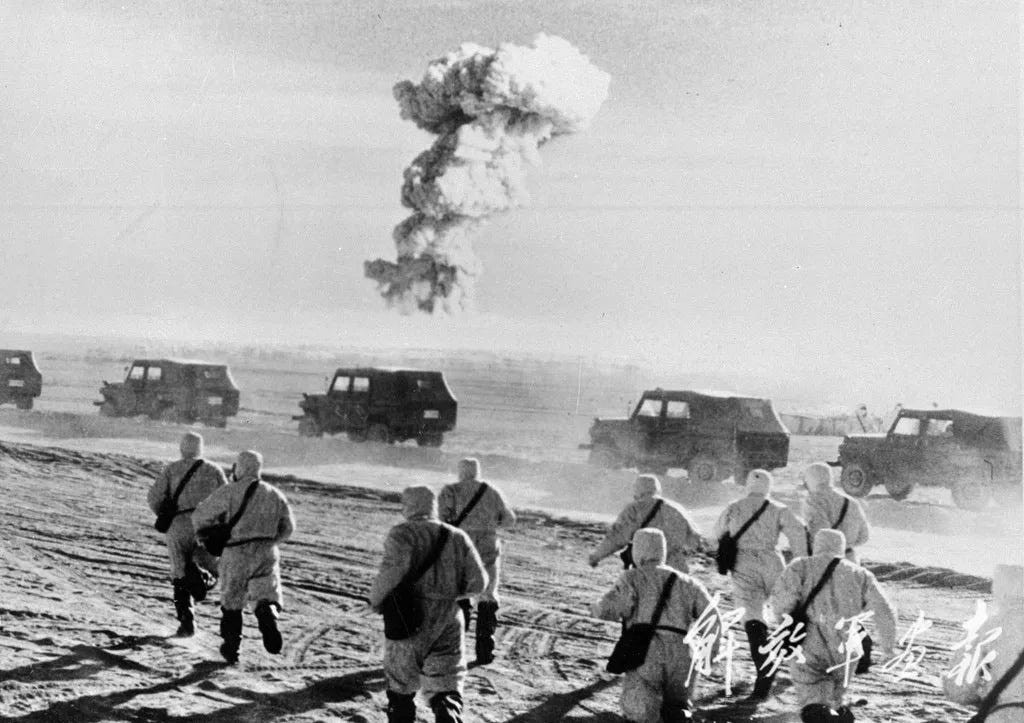
China’s first nuclear test
The Chinese Communist Party (CCP) adopted a strategy known as "minimal deterrence," a concept that President Jimmy Carter also considered prior to his inauguration in 1977. The Chinese maintained a stockpile of roughly 200 nuclear warheads, which were intended to deter any state from launching an attack by ensuring the ability to inflict unacceptable casualties on any aggressor, whether through conventional or nuclear means. These weapons provided a second-strike retaliatory capability and were supported by a declared “no first use” policy.
The CCP has abandoned minimal deterrence, though it has not made this public, and has been rapidly building up its nuclear arsenal. It is clear to world observers that minimal deterrence is no longer a national policy. The Chinese nuclear arsenal is estimated to have reached 600 warheads by the end of 2024 and is increasing at a rate of 100 warheads per year. This rate of production far exceeds that of any other nuclear-armed power. The Chinese arsenal now overshadows those of other nuclear powers, with the exception of Russia and the United States, both of which maintain larger arsenals with first and second strike strategic capabilities, as well as a range of tactical nuclear weapons.
It is unclear what China’s intent is regarding its nuclear buildup. If the goal is to achieve parity with the United States, it is on track to reach that target by 2035. This year is significant, as Chinese Premier Xi Jinping has stated that China aims to become a “world-class” military power and to be on par with the U.S. However, this objective is not limited to nuclear weapons but encompasses overall military capability. The United States and Russia are each limited to 1,550 deployed nuclear warheads under the New START agreement, also known as START II. At the current production rate, China is projected to reach this arsenal size of 1,550 warheads by 2035, thereby achieving parity with both Russia and the U.S. in deployed nuclear weapons, although not in total nuclear weapons, as the U.S. and Russia maintain significantly larger non-deployed arsenals.
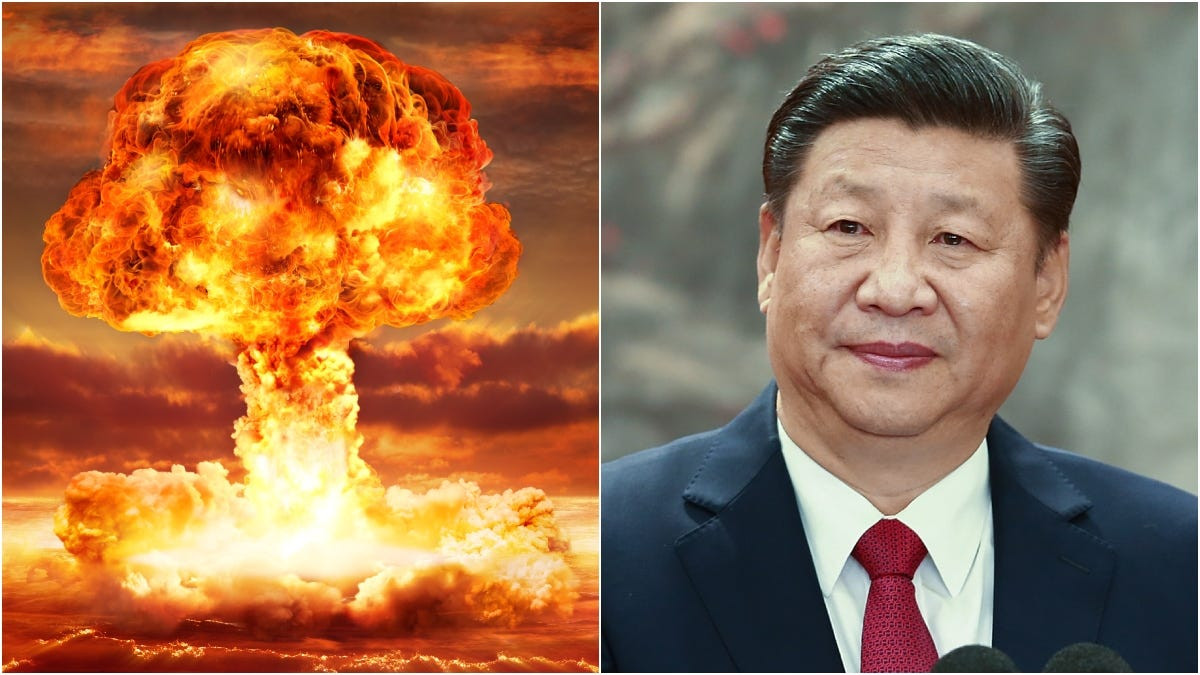
Achieving nuclear parity with the U.S. and, to a lesser extent, Russia is a crucial aspect of attaining overall military parity. Nuclear parity would enable the CCP to ensure that any conventional military advancements cannot be undermined by nuclear threats. This objective is not unreasonable and has been most recently illustrated by the Ukraine War. Although Russia possesses a military advantage over Ukraine, it lacks the same edge over Ukraine’s Western supporters. Russia has leveraged its extensive nuclear arsenal to threaten Ukraine's supporters with nuclear retaliation if they increase their military assistance to Ukraine in its efforts to defeat Russia on the battlefield or pose a threat to the Russian regime itself.
Nuclear parity with the U.S. will also aid in China's goal to establish regional hegemony by exploiting the traditional fears of U.S. allies under the U.S. nuclear umbrella. This was particularly evident in Europe during the Cold War when countries like France questioned whether the U.S. would be willing to risk its homeland to defend Europe in the event of a Soviet nuclear attack on cities like Paris or London. This fear emerged after the U.S. lost its nuclear monopoly and the Soviets achieved near parity in nuclear capabilities. Today, similar concerns exist in Tokyo and Seoul. If Beijing attains parity with the U.S. in nuclear forces, could this threat lead the U.S. to reconsider the potential costs of maintaining its nuclear umbrella? Such nuclear parity would enable China to tap into the anxieties of U.S. allies and potentially create a rift between the U.S. and its regional partners for China to exploit.
It is not clear that parity is the intended goal. The START II treaty is set to expire in February 2026, and it seems unlikely that it will be renewed or renegotiated in the current geopolitical climate. The United States withdrew from the Anti-Ballistic Missile Treaty in 2001 and is now pursuing, along with Western Europe, an anti-missile shield to protect their cities and infrastructure. Additionally, the U.S. exited the Intermediate Range Nuclear Forces Treaty in 2019 due to threats from China and violations by Russia. Although Russia also withdrew, it publicly stated that it would not deploy intermediate-range weapons, thereby maintaining the treaty limits. Recently, on August 5, 2025, Russia announced its withdrawal from the treaty in response to U.S. public deployments of nuclear submarines closer to its territory. This action was a reaction to nuclear threats directed at the U.S. by Dmitry Medvedev, the Deputy Chairman of the Security Council of the Russian Federation and former president of Russia.
The point is that, in the current geopolitical environment, treaties limiting nuclear buildups and the political commitment to uphold them seem to be faltering. This suggests that China's nuclear arsenal might not be capped at 1,550 warheads; instead, China could be inclined to engage in an arms race in order to match any U.S. or Russian buildup that operates outside of arms limitation treaties. The Chinese Communist Party (CCP) could be motivated to expand its arsenal without limits, as this would deter the U.S. or Russia from using their larger nuclear capabilities to exert leverage over China. Similar to North Korea, a more extensive nuclear arsenal provides a country with greater options in any potential arms race. Additionally, the CCP has dismissed the concept of a bipolar world order, aiming instead to create a multipolar world. This shift would complicate the management of historical nuclear alliances, which were based on a bipolar framework, making it much more challenging, if not impossible.
During the Cold War, the tensions characterized by the East versus West rivalry, dominated by two superpowers, made negotiating arms treaties relatively straightforward. France and the United Kingdom's nuclear arsenals were included in the totals being negotiated, even though neither country was a direct party to most of these negotiations and were not bound by the agreed limits. With China developing its arsenal to achieve deployed parity within a decade, it is unlikely that any strategic arms reduction treaties can be negotiated without China's involvement, and the inclusion of a third party would further complicate such discussions. Despite this complexity, any negotiations must involve all parties, as the alignment of one party with another could significantly alter the strategic nuclear balance. If China and Russia, in their "friendship without limits," manage to develop a deployed strategic arsenal that exceeds that of the U.S. by 2035, or if China decides to "acquire" significant portions of Russian Siberia for defensive depth and resources, Russia could find itself at a disadvantage facing a combined, yet independent, U.S. and Chinese nuclear threat.
The British and the French are currently exploring the use of their combined nuclear arsenals, which consist of about 515 warheads, to defend Europe and reduce reliance on the U.S. nuclear umbrella. If Russia opts to proceed with a nuclear buildup, France and the U.K. may be compelled to follow suit, while countries like Poland might consider pursuing their own nuclear programs. India could also find itself threatened by an expanding Chinese nuclear arsenal, alongside the existing nuclear threat from Pakistan, which could incentivize it to augment its own nuclear capabilities and delivery systems. If China escalates tensions with Seoul and Tokyo—both of which are already under the North Korean nuclear threat—these countries might distance themselves from dependence on the U.S. nuclear umbrella. Chinese actions could drive them to seek their own nuclear programs instead of aligning with China. This scenario would heighten strategic dangers as the proliferation and fragmentation of nuclear powers increase. The likelihood of successfully negotiating nuclear limitation treaties that ensure parity between these powers appears unlikely in such an environment.
There are additional concerns regarding the pursuit of increased nuclear arsenals. Russia may face challenges in protecting its far eastern territory if China becomes more territorial and resource-driven, potentially considering the occupation of sparsely populated areas of Russian Siberia. A robust nuclear arsenal could serve as a deterrent for Russia to safeguard its vast eastern lands. Meanwhile, China may have motivations beyond mere parity to expand its nuclear capabilities. The Chinese population is already in decline and experiencing a demographic crisis, with projections indicating that the mainland population could drop to under a billion by 2100, possibly falling to as low as 500 million. A significant nuclear arsenal would help China maintain its current holdings, especially as it becomes increasingly difficult to support a larger conventional military force amid a steep population decline. This situation unfolds as India, the most populous nation and a strategic rival to China, is expected to continue growing through 2100.
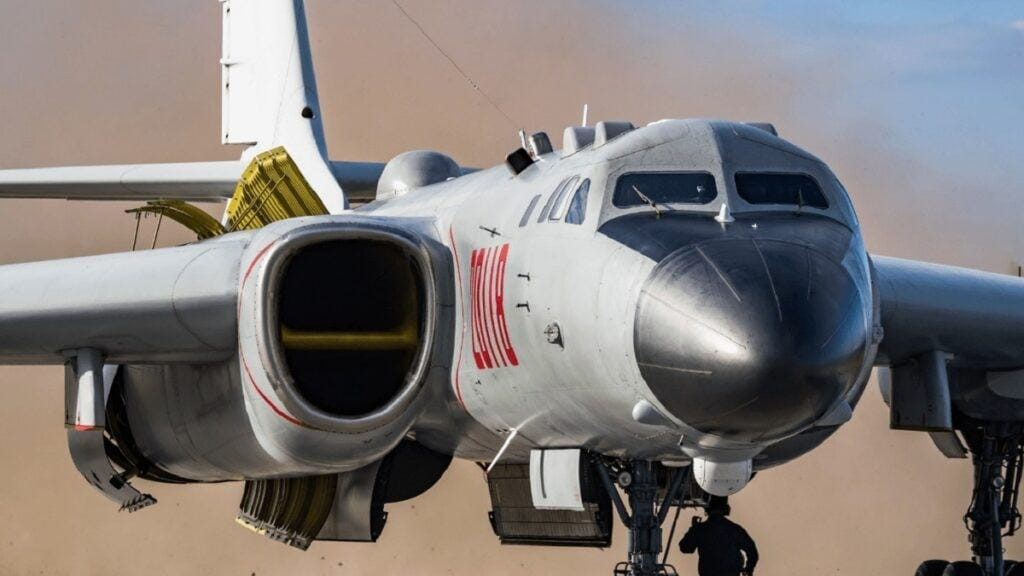
It is intentionally unclear what motivates the CCP’s nuclear buildup and its ultimate objectives. The world faces significant challenges, already strained by the repercussions of the Ukraine War and China’s assertive non-nuclear ambitions, as the agreements established during the Cold War to reduce nuclear tensions appear to be deteriorating. The likelihood of re-establishing such agreements, even if political leaders were inclined to pursue them, seems nearly impossible, given that China has opted to disrupt the nuclear status quo that facilitated those agreements in the post-Cold War era. During the Cold War, in the absence of substantial nuclear treaties, the concept of Mutual Assured Destruction served as an unofficial policy to preserve peace between the East and the West. However, is that strategy still viable now that a third party has entered the equation? This situation becomes even more complex when smaller nuclear-armed rivals could instigate a conflict, potentially drawing larger powers into a war, much like the dispute between Serbia and Austro-Hungary escalated into a broader conflict in August 1914.
China and the CCP leadership are a difficult group to sympathize with based on their performance both domestically and internationally. However, they are not necessarily wrong in abandoning minimum deterrence from the perspective of their national interests. Yes, they made a decision that is currently unclear in intent, and it is potentially destabilizing as it removes the nuclear status quo that has existed since the Cold War. They did this within an international system that has not rejected the concept of nuclear first use. Any major power that rejects the idea of no first use—both in rhetoric and in capability—will immediately find itself at a disadvantage compared to other nuclear powers. China was once willing to accept this dynamic, but as they seek to extend their influence globally, they have had to abandon minimum deterrence in favor of developing a first-strike capability that could eventually rival that of the U.S. and Russia within a decade. A potential solution to this dilemma could be the universal adoption of minimum deterrence by all nuclear powers, but achieving such an agreement in today’s political climate appears to be unattainable.
Research or support me through Patreon, Buy Me A Coffee or Ko-Fi.
References:
https://armscontrolcenter.org/countries/china/
https://foreignpolicy.com/2025/08/05/china-nuclear-weapons-launch-policy-strategy/
https://www.belfercenter.org/publication/chinas-nuclear-weapons-strategy-and-modernization-program
https://engelsbergideas.com/notebook/inside-chinas-dangerous-nuclear-game/
https://thebulletin.org/premium/2025-03/chinese-nuclear-weapons-2025/
https://www.state.gov/new-start-treaty
https://www.aljazeera.com/news/2025/8/5/what-is-the-missile-treaty-russia-has-walked-out-of-and-why