
 An artist's rendering of the Los Angeles Memorial Coliseum, which will host the track & field competition at the 2028 Olympics. This will mark the third time the storied venue will host the track & field competition (courtesy LA 28).
Tuesday (10 November), World Athletics (graphic courtesy World Athletics) released the qualifying standards for the 2028 Los Angeles Olympic Games. If you were to take a quick glance at the standards, your gut instinct is to think to yourself, "no way in hell very many people are going to hit that!"
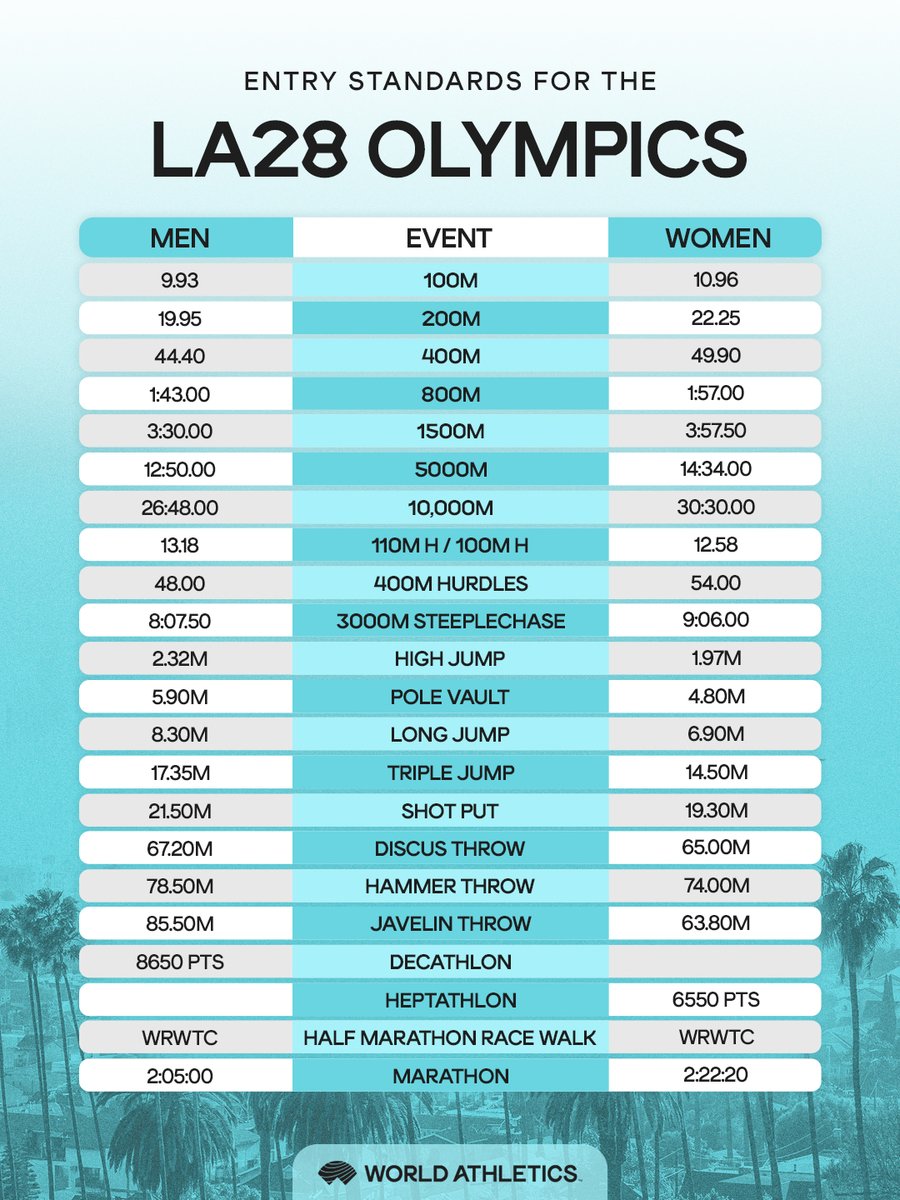 And, to be perfectly honest, World Athletics wants to keep it that way, given the fact that LA 28 is allocating track and field 1810 total spots for the sport.
For the Los Angeles Olympics, it's World Athletics' intent that 40 percent of the qualifying field, taking into account the maximum of three athletes per country (federation) comes through the qualifying standards, with the other 60 percent coming from the world rankings.
With the world rankings a point of emphasis as the pathway to a spot on the line to Los Angeles, this means that to accumulate world ranking points, you have to compete in World Athletics Continental Tour Bronze level or higher meets that are on the World Athletics calendar.
So, Joe or Jane Doe can't try to hit an Olympic qualifier at the Wamego all-comers track meet.
Thanks to good friend Rich Perelman, who was the press officer for the Los Angeles Olympic Organizing Committee in 1984, and the publisher of The Sports Examiner, which follows the Olympic movement, here are some numbers to look at.
These numbers include the qualifying standards, the number of quota places in each event, and the number of athletes who hit the mark in 2026:
Men:
● 100 m: 9.93 for 50 quota places (26 achieved this in 2026)
● 200 m: 19.95 for 40 (19)
● 400 m: 44.40 for 48 (21)
● 800 m: 1:43.00 for 48 (9)
● 1,500 m: 3:30.00 for 45 (5)
● Steeple: 8:07.50 for 30 (9)
● 5,000 m: 12:50.00 for 42 (10)
● 10,000 m: 26:48.00 for 27 (0)
● Marathon: 2:05:00 for 70 (46)
● 110 m hurdles: 13.18 for 40 (21)
● 400 m hurdles: 48.00 for 40 (15)
● High Jump: 2.32 m for 32 (4) [7-7 1/4]
● Pole Vault: 5.90 m for 32 (13) [19-4 1/4]
● Long Jump: 8.30 m for 32 (11) [27-2 3/4]
● Triple Jump: 17.35 m for 32 (7) [56-11 1/4]
● Shot Put: 21.50 m for 32 (10) [70-6 1/2]
● Discus: 67.20 m for 32 (21) [220-6]
● Hammer: 78.50 m for 32 (17) [257-6]
● Javelin: 85.50 m for 32 (10) [280-6]
● Decathlon: 8,650 for 24 (2)
Women:
● 100 m: 10.96 for 50 quota places (24 achieved this in 2026)
● 200 m: 22.25 for 40 (18)
● 400 m: 49.90 for 48 (15)
● 800 m: 1:57.00 for 48 (12)
● 1,500 m: 3:57.50 for 45 (13)
● Steeple: 9:06.00 for 30 (8)
● 5,000 m: 14:34.00 for 42 (14)
● 10,000 m: 30:30.00 for 27 (1)
● Marathon: 2:22:20 for 70 (78)
● 100 m hurdles: 12.58 for 40 (21)
● 400 m hurdles: 54.00 for 40 (15)
● High Jump: 1.97 m for 32 (8) [6-5 1/2]
● Pole Vault: 4.80 m for 32 (11) [15-9]
● Long Jump: 6.90 m for 32 (10) [22-7 3/4]
● Triple Jump: 14.50 m for 32 (11) [47-7]
● Shot Put: 19.30 m for 32 (14) [63-4]
● Discus: 65.00 m for 32 (14) [213-3]
● Hammer: 74.00 m for 32 (18) [242-9]
● Javelin: 63.80 m for 32 (7) [209-4]
● Heptathlon: 6,550 for 24 (4)
What folks fail to realize when only looking at the standards as a stand-alone item, the field will be filled to the target number per event through the world rankings if not enough people qualify from the standards. In the event that more than the quota qualify for an event (the women's marathon is already beyond the quota if we're using the 2026 world list), only universality spots will be added. That means nobody gets in on world rankings.
Just for fun, if we were to use the 2026 world list to see who hit the standards, here's the list of athletes with Washington ties who have it, keeping in mind that the qualifying period opens on June 19, 2027:
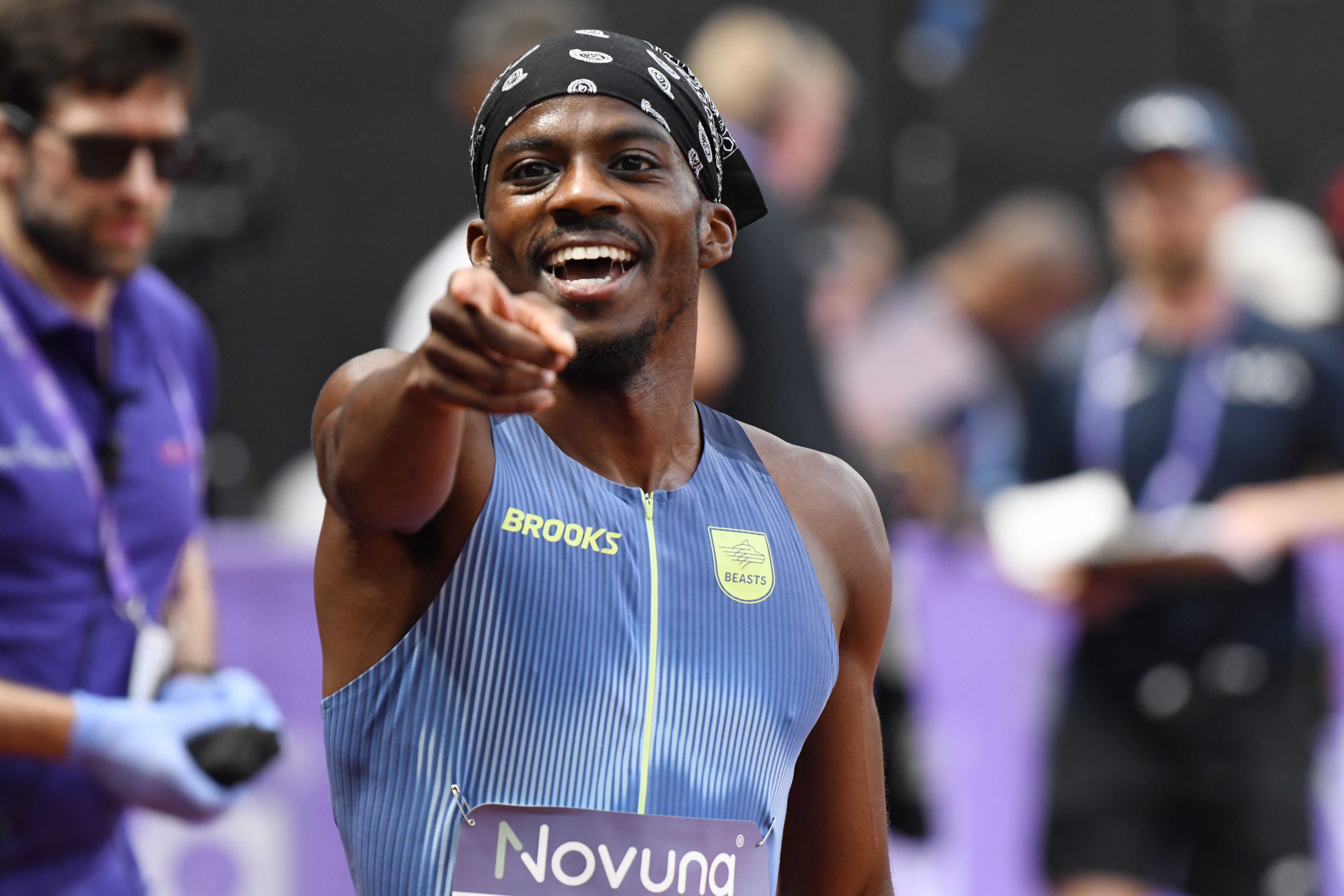 Brandon Miller (Paul Merca photo), Brooks Beasts, 800m (1:42.19)
Josh Kerr, Brooks Beasts, 1500m (3:27.62)
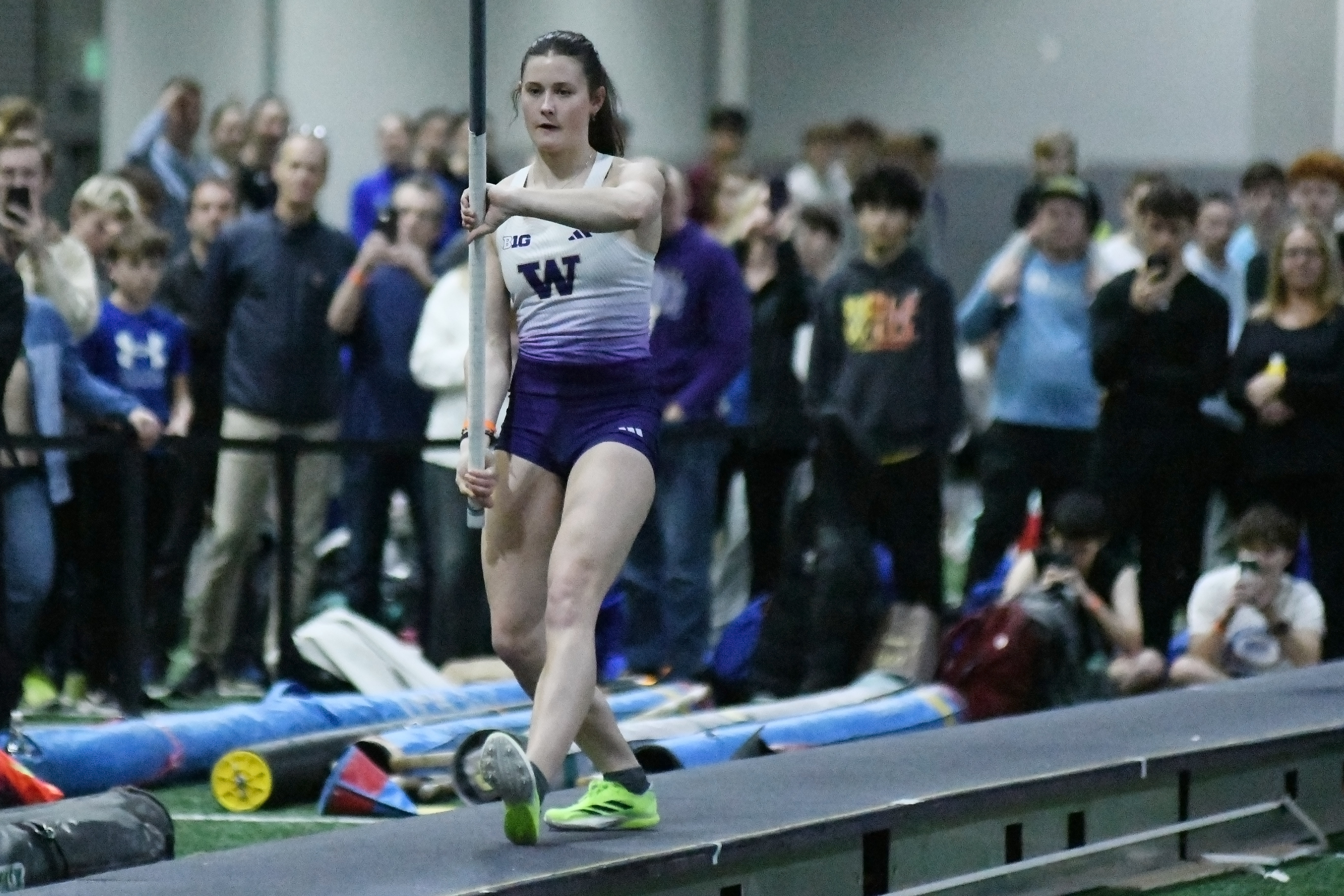 Hana Moll (Paul Merca photo), Washington, pole vault (16-1.25/4.91m)
Amanda Moll, Washington, pole vault (15-10.5/4.84m)
Katie Moon, Nike, pole vault (15-9/4.80m)
Jessica McClain, Brooks, marathon (2:22:42)* finished second at NYC Marathon, which is a World Athletics Platinum Level race. McClain achieved the mark on November 1st, the first day of the LA 28 qualifying period.
For those of you who follow the race walk, there is no time qualifying standard. The top 12 finishers in each event at the World Athletics Race Walking Team Championships in Hefei, China, on April 9, 2028, automatically qualify for LA28. If an athlete declines their spot, the quota reallocates via the world rankings.
The remaining allocation of 36 places will go strictly off the world rankings during the qualifying period.
Marathon fans, the qualifying period began November 1st, and ends on April 30, 2028. It should be noted that a top five finish in one of the World Marathon Majors races, plus any World Athletics Platinum level races, counts as having met the qualifying standards.
Some key dates:
December 19, 2026: Start of the qualification and ranking period for 10,000m, Combined Events, Race Walks and Relays.
June 19, 2027: Start of the qualification and ranking period for all individual events (except 10,000m, Marathon, Combined Events and Race Walks.
June 17-22, 2028: US Olympic Trials, Eugene. Note that any national championships that begin by the end of the qualifying period of June 18th but ends on June 22nd will count for qualifying purposes.
June 18, 2028: End of qualification and ranking period for all events (except Marathon).
My take: Athletes, coaches, and agents will have to plan their competition schedules around World Athletics Continental Tour Bronze level meets and higher once the qualifying period opens on December 19 (10000, walks, combined events) or June 19th (all other track & field events).
For American athletes, meets such as the NACAC and Pan Am Games next year, which generally the top tier athletes tend to skip, will take on added significance on the road to both Beijing for next year's world championships and the Los Angeles Olympics.
Continental championship meets such as NACAC and the Pan Am Games are, next to the world championships and Olympics and Diamond League meets, among the top tier of meets where athletes can rack up extra world ranking points.
The only thing about having to get into World Athletics Continental Tour Bronze and higher meets is that the vast majority of those meets are outside the USA and Canada, which will put the pressure on American and Canadian athletes (and for that matter, athletes not based in Europe) to go overseas to get into those tiers of meets.
From a domestic standpoint, this will also put the onus on meet directors in the USA and Canada to designate their meets as a Continental Tour Bronze meet or higher, which includes offering a minimum of $25,000 of prize money.
While looking up the dates of next year's NACAC Championships (June 25-27, venue TBA; was supposed to be in Tijuana, Mexico), and the Pan Am Games track & field competition in Lima, Peru (August 2-7), I noticed that the track & field dates for the Pan Am Games are one week after the end of the US championships in Eugene, which are July 23-26th.
In a future post, I'll go through the 2026 world rankings to see roughly what the point levels will be to be inside the top (number of allocated spots for each Olympic event), accounting for the three per country maximum per event.