

Choosing between winter, all-season, and all-weather tires can feel like picking a jacket for a forecast that changes every ten minutes. The right answer depends on temperature, snow, ice, road maintenance, and how much driving you do when conditions turn ugly.
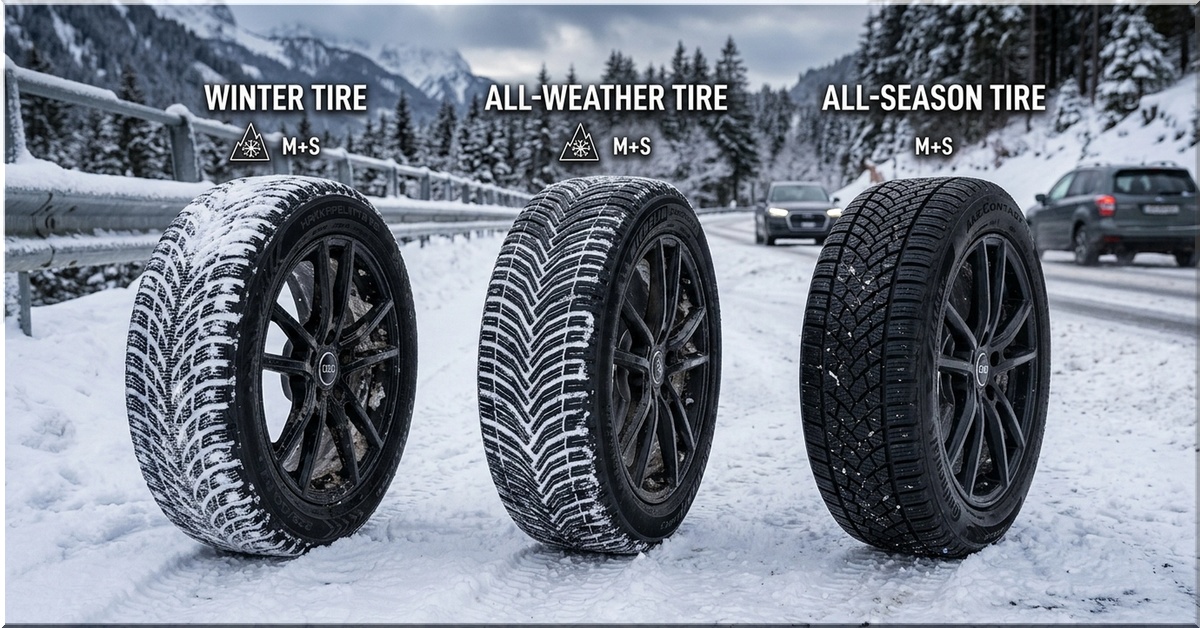
The short answer
Here is the practical version:
Choose winter tires for frequent snow, ice, freezing temperatures, steep roads, rural routes, or unplowed streets.
Choose all-weather tires for mild winters, occasional snow, slush, and year-round convenience.
Choose all-season tires for warm climates with little or no winter weather.
The word “all” causes much of the confusion. All-season tires do not perform equally in every season. All-weather tires sit closer to winter tires, while still working year-round. Dedicated winter tires provide the strongest cold-weather grip, but they require seasonal changes and storage.
Why temperature changes the answer
Tire rubber changes with temperature. As the air gets colder, an all-season tire compound becomes harder. That can reduce grip, braking performance, and cornering control.
Many tire specialists use 7°C, or about 45°F, as a useful point of reference. Below that temperature, a winter-focused compound stays softer and more flexible than a typical all-season compound. That difference affects how the tire meets the road.
Winter driving brings several challenges:
Cold, dry pavement.
Wet roads and freezing rain.
Loose snow.
Packed snow.
Black ice.
Slush hiding beneath standing water.
No single tread pattern handles every surface perfectly. Tire choice means matching the rubber and tread design to the conditions you face most often.
All-season tires: best for mild weather
All-season tires aim to deliver steady performance across spring, summer, and fall. They usually provide a quiet ride, good tread life, and dependable handling on dry and wet pavement.
They also tend to use a harder rubber compound. That helps the tread last through warmer months, but the compound may lose flexibility as temperatures fall.
Where all-season tires work well
All-season tires suit drivers who:
Live in a warm climate.
Rarely see snow or ice.
Drive mainly on clear, treated roads.
Want lower road noise and long tread life.
Prefer one tire set for most of the year.
Some all-season tires carry an M+S marking, meaning mud and snow. That marking does not equal the Three-Peak Mountain Snowflake rating. An M+S tire may offer some traction in light snow, but it has not passed the same snow-performance test used for 3PMSF tires.
Where all-season tires fall short
All-season tires may struggle when cold weather arrives. The problem grows on ice, packed snow, steep hills, and roads that receive little snow removal.
A vehicle may still move with all-season tires in light snow. Moving, however, is only one part of driving. Braking and turning also require grip. A tire that gets you moving may not stop or steer as well as you expect.
All-weather tires: the year-round middle option
All-weather tires aim to cover a wider temperature range than standard all-season tires. Their tread and rubber stay more flexible in cold weather, while the design remains suitable for dry and wet roads during warmer months.
Most all-weather tires carry the Three-Peak Mountain Snowflake symbol. The symbol shows that the tire passed a regulated snow-traction test. It does not mean the tire performs the same as a dedicated winter tire in every condition.
All-weather tires often include:
More grooves and sipes for snow and slush.
A tread pattern that clears water and loose snow.
A rubber compound suited to colder temperatures.
A 3PMSF rating for severe-snow service.
Enough dry-road stability for year-round use.
Who should choose all-weather tires?
All-weather tires can suit drivers who:
Live in a region with mild or variable winters.
See occasional snow and slush.
Drive mostly in cities or suburbs.
Use treated highways and main roads.
Want one tire set throughout the year.
Lack space or budget for a second set.
They offer a sensible option for someone who faces winter conditions but does not regularly drive through deep snow or severe ice.
That convenience comes with a trade-off. All-weather tires usually do not match dedicated winter tires for braking, cornering, and traction in harsh cold, deep snow, or persistent ice.
Winter tires: strongest choice for severe conditions
Winter tires use a cold-weather compound that stays flexible at low temperatures. They also feature tread patterns designed to create many biting edges in snow and ice.
You will often see:
Deep grooves.
Large tread blocks.
Dense siping.
Open channels for snow and slush.
A 3PMSF rating.
Studded or studless designs.
Winter tires can improve acceleration, braking, and steering in cold conditions. They work on dry pavement, too, but warm temperatures can make the soft compound wear faster and feel less precise.
Who should choose winter tires?
Dedicated winter tires suit drivers who:
Deal with frequent snow or ice.
Drive before roads receive treatment.
Travel on rural or mountain roads.
Face long periods below 7°C.
Need dependable braking in cold weather.
Cannot avoid driving during storms.
Commute early, late, or overnight.
If your route includes steep hills, packed snow, freezing rain, or untreated roads, winter tires deserve serious consideration.
Studded or studless?
Studded winter tires use small metal studs to improve grip on ice. They can help on frozen roads, but local laws may limit their use during certain months. Studs can also create more road noise and a rougher ride on clear pavement.
Studless winter tires use rubber compounds, sipes, and tread design to grip slippery surfaces. They often offer a quieter ride and strong performance on snow, ice, and clear cold pavement.
Check local rules before buying studded tires. The permitted dates and road restrictions vary by location.
A simple tire decision tree
Use these questions to narrow your choice.
1. Do you regularly drive in snow or ice?
If no, all-season tires may fit your needs.
If yes, continue to the next question.
2. Does your area get long, cold winters?
If yes, choose winter tires.
If no, all-weather tires may provide enough winter grip for your routes.
3. Do you drive on untreated roads?
If yes, winter tires offer a safer margin.
If no, all-weather tires may work well if your roads receive prompt snow removal.
4. Can you manage two tire sets?
If yes, pair summer or all-season tires with winter tires for stronger performance across the year.
If no, choose a 3PMSF-rated all-weather tire rather than assuming a standard all-season tire will handle winter safely.
5. Do you drive during storms or before roads get cleared?
If yes, select winter tires. Your schedule can turn a mild climate into a severe driving problem.
Four buying mistakes to avoid
Mistake 1: Treating “all-season” as a winter rating
The name describes a broad category. It does not promise strong snow or ice performance. Check the sidewall markings and the tire maker’s winter data.
Mistake 2: Buying only two winter tires
Install winter tires on all four wheels. Two winter tires can create uneven grip between the front and rear of the vehicle. That imbalance may make the car harder to control during braking or turns.
This applies to front-wheel-drive, rear-wheel-drive, and all-wheel-drive vehicles.
Mistake 3: Choosing by vehicle type alone
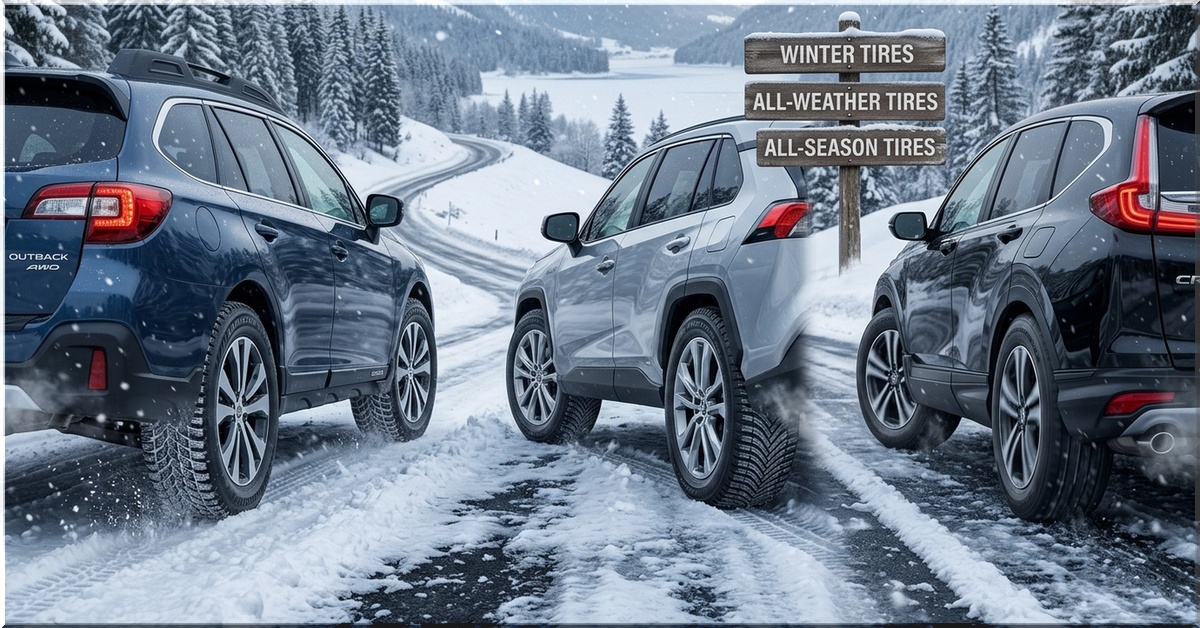
An SUV or all-wheel-drive vehicle still needs suitable tires. All-wheel drive can help a vehicle accelerate, but it does not replace tire grip during braking or cornering.
Mistake 4: Ignoring tread depth and pressure
A winter tire loses useful performance as its tread wears. Check tread depth before each season and inspect for cracks, uneven wear, or damage.
Cold air also lowers tire pressure. Use the pressure listed on the vehicle placard, usually found inside the driver’s door. Do not rely on the number molded into the tire sidewall; that figure shows the tire’s maximum permitted pressure, not the vehicle’s target.
How to choose with confidence
Use this five-step process:
Write down the lowest temperatures and worst conditions on your usual routes.
Check how often you drive on snow, ice, slush, and untreated roads.
Look for the 3PMSF symbol if you need certified snow performance.
Decide if the convenience of one set outweighs the performance of two sets.
Ask a qualified tire professional to confirm size, load rating, speed rating, and local rules.
Do not compare prices alone. Include mounting, balancing, storage, fuel use, tread life, and the cost of missing work after a minor winter collision.
Practical next steps
For warm regions with rare snow, start with a quality all-season tire. For mild winters and occasional snow, choose a 3PMSF-rated all-weather tire. For regular ice, deep snow, freezing temperatures, or untreated roads, choose four winter tires.
Before winter arrives, inspect your current tires, verify their markings, check their pressure, and schedule installation early. The best time to make a winter tire decision is before the first slippery morning forces the issue.