
https://www.nfsa.gov.au/stories/articles/collecting-deaf-history
 Language rights are human rights
In collaboration with NFSA curator Jillian Mackenzie, Deaf historian Dr Breda Carty AO searches through the collection for moments from d/Deaf community, history and culture – asking what happens when stories are missing or told through someone else's perspective?
National Week of Deaf People celebrates d/Deaf and hard-of-hearing people and communities across Australia. Coinciding with the International Week of Deaf People and the International Day of Sign Languages, it highlights d/Deaf culture, identity, achievements and sign languages (Auslan is the distinctive sign language used in Australia).
The 2026 theme – Declaring Deaf People's Human Rights – recognises that language rights are human rights. This idea resonates with the NFSA’s values, as we work to build a national audiovisual collection that reflects the breadth and diversity of Australian experiences.
Jillian MacKenzie on d/Deaf representation and the collection
As a curator, part of my role is ensuring people can see themselves and their communities represented in the collection. But what happens when those stories are missing? Or when they are told through someone else's perspective? For me, these questions came into focus when an Auslan interpreter asked: ‘Am I in your collection?’
The question sparked a research project exploring how Auslan and d/Deaf culture are represented in the NFSA collection. Early on, I was introduced to Dr Breda Carty AO, a Deaf historian and co-founder of Deaf History Collections, an online archive documenting almost 200 years of Australia's Deaf history.
Together, we’ve been examining the NFSA’s existing material, identifying gaps and exploring opportunities to strengthen the representation of d/Deaf stories, experiences and achievements. In doing so, we are working towards a collection that better reflects the history, richness and diversity of these Australian communities.
Dr Breda Carty AO on capturing language
Through the Deaf History Collections project, we’ve gathered records of deaf people’s lives in Australia, stretching from the days of convict arrivals to the 1990s. Photographs, documents, community magazines, physical artefacts, school records and government reports all preserve this heritage – and so do films.
Film and video are particularly important mediums for deaf people, as our language – Auslan – is visual and does not have a written form. Film, and later video, captures Auslan’s immediacy and expression best, potentially allowing us to even depict the language’s evolution. We can see how children and adults have used it over time, the regional variation across Australia, and how its register can change in different contexts.
Although we have sourced many old films from deaf-related organisations and individuals, it has been wonderful to work with Jillian and others at the NFSA to explore the vast collection of Australia’s audiovisual culture. Like many other marginalised groups in Australia, we have been amazed by what we’ve unearthed. Below you’ll find some select excerpts from the 1950s – and commentary on what they reveal about how others have portrayed us at different times in our history.
Deaf experiences and representation in the archive
From Silence to Speech (1955) documents the Princess Elizabeth Kindergarten for the Deaf and the Victorian School for Deaf Children. Shot at these residential and day schools, it includes footage of children in the classroom and the kindergarten’s director, Mrs T Ward MBE.
As with any historical record, the perspective here isn’t neutral. It challenges us to ask: whose perspective is this story told from? What interpretation does it give of deaf children’s lives, and what does it leave out? Viewed now, it raises the valuable opportunity of considering the types of content warnings that may be appropriate for records of deaf people’s experiences.
Please note: The following clip includes content which may be sensitive for some viewers. It contains historical oral education practices. People who have experienced this kind of education may find some of the content difficult. Others who have not been exposed to this content before may find it confronting and challenging.
For many deaf people, this film brings up uncomfortable, and possibly distressing, images of some aspects of their education. Despite the benign-looking backdrop, signing was often suppressed in these classrooms, and oral approaches to education were pursued regardless of whether they were effective for all children.
Today, the scenes of the repetitive drills and invasive physical manipulation of deaf children’s bodies are difficult to watch. In parts of the footage, teacher communication is obviously not understood by the students – a stark reminder that much of this education was wasted on many deaf children, something we still see the effects of today.
However, the film concludes with a brief acknowledgement that signing was an important part of these children’s communication and shows some beautiful scenes of children at the Victorian School for Deaf Children signing in their dormitories at bedtime.
These scenes may be unique for this time in Australian deaf history. Despite the probable staged setting, the children sign with a naturalness that is startling to observe – considering it took 30 years after this film for Australian Sign Language to be recognised by the Australian Government as a community language other than English in 1987 (it was recognised as the preferred language of the Deaf community in 1991). Many of the features that modern linguists describe are evident here; it’s an exceptional example of the potential research value of film records and the importance of preserving them.
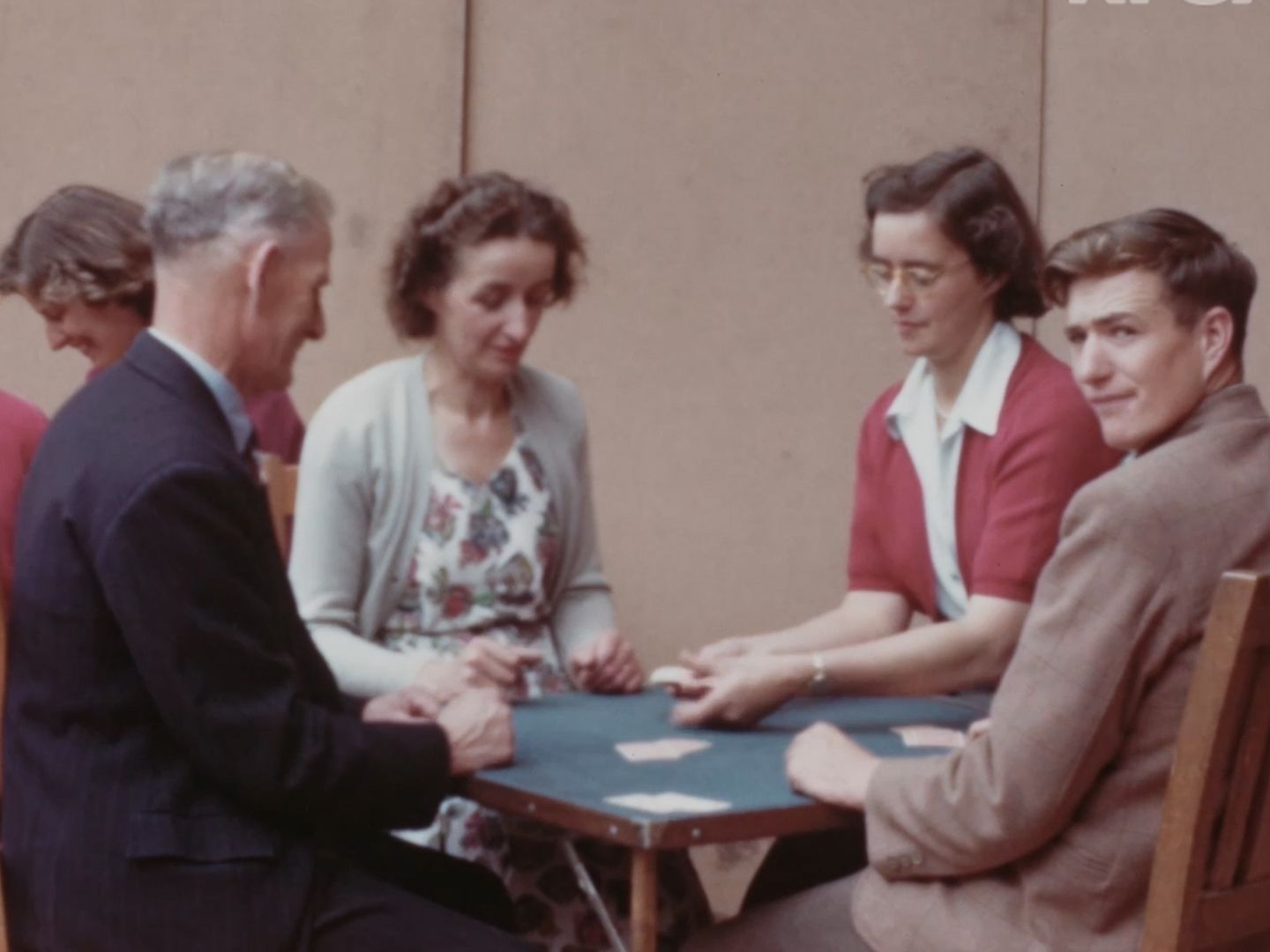
The next clip, filmed in the same decade, focuses on a group of deaf adults. For much of the 20th century, adult social gatherings often took place at ‘Deaf clubs’, connected with schools for deaf children. This extract shows deaf adults enjoying a social evening, playing cards and dancing – and commenting in sign language on the card games and the dancing! It’s a small glimpse of a broader history of deaf adults congregating to socialise, play sports, attend church services and share their lives, in many different settings over time.
Help build the collection
The NFSA is committed to building a collection that better reflects the experiences, stories and contributions of the Deaf, deaf and hard-of-hearing communities to Australian history and culture.
By sharing your creativity, knowledge and collections, you can help ensure that these stories are preserved, celebrated and accessible for future generations. Proudly Deaf and Auslan-led community leader and creative Ramas McRae unpacks how you can be part of this journey – watch the video below and learn more about offering items to the NFSA collection.