

Clinical Anesthesia Practice Article
Selective Sensory Anesthesia without Motor Block Following Intrathecal Bupivacaine: Clinical and Scientific Insights from a Case of Foot Debridement
1. Introduction
Spinal anesthesia has been a cornerstone of regional anesthesia for more than a century. It provides rapid onset, dense sensory and motor blockade, and is particularly suited for lower-limb surgeries. Classically, intrathecal administration of 0.5% hyperbaric bupivacaine (12–18 mg) produces reliable anesthesia, with loss of pain, temperature, touch, and motor function below the level of the block.
However, not all spinal anesthetics yield dense motor blockade. Some patients demonstrate adequate sensory block with preserved motor function — a phenomenon termed differential blockade. Though often mistaken for incomplete block, it may still provide excellent surgical anesthesia with benefits such as faster mobilization, less urinary retention, and reduced postoperative weakness.
This chapter examines a 28-year-old male undergoing foot debridement under spinal anesthesia with 2.8 mL of 0.5% hyperbaric bupivacaine, where only sensory anesthesia was achieved. We integrate clinical practice, anatomy, physiology, pharmacology, molecular neurobiology, and risk management strategies to highlight the significance of this outcome.
References
Brown DL. Spinal, epidural, and caudal anesthesia. In: Miller RD, Cohen NH, Eriksson LI, et al., eds. Miller’s Anesthesia. 9th ed. Philadelphia: Elsevier; 2020.
Butterworth JF, Mackey DC, Wasnick JD. Morgan & Mikhail’s Clinical Anesthesiology. 7th ed. New York: McGraw Hill; 2022.
2. Case Description
A 28-year-old male, 70 kg, 172 cm, ASA I, presented for right foot debridement following traumatic soft tissue infection.
Past medical history: No comorbidities, non-smoker, no prior anesthetics.
Pre-op status: Well hydrated; vitals stable; baseline HR 78 bpm, BP 118/74 mmHg.
Pre-op medications: None.
Anesthetic technique: Spinal anesthesia in sitting position at L3–L4 using a 25G Quincke needle.
Drug administered: 2.8 mL of 0.5% hyperbaric bupivacaine (14 mg).
Block assessment:
Sensory: T10 loss of pinprick and cold at 5 minutes.
Motor: Modified Bromage score 1 (mild weakness, able to move ankle/knee).
Pain: Absent during incision and throughout surgery.
Intraoperative course: Hemodynamically stable, no supplemental sedation required.
Postoperative course: Sensory block regressed in 150 minutes; motor function never fully lost; discharged from PACU within 3 hours.
This represents a selective sensory spinal block, providing adequate anesthesia without motor paralysis.
References
Wildsmith JAW, Armitage EN. Principles and Practice of Regional Anaesthesia. Edinburgh: Churchill Livingstone; 2019.
Tetzlaff JE. Clinical principles of spinal anesthesia. Anesth Analg. 2000;91(3):672–8.
3. Anatomical Considerations: Foot Innervation
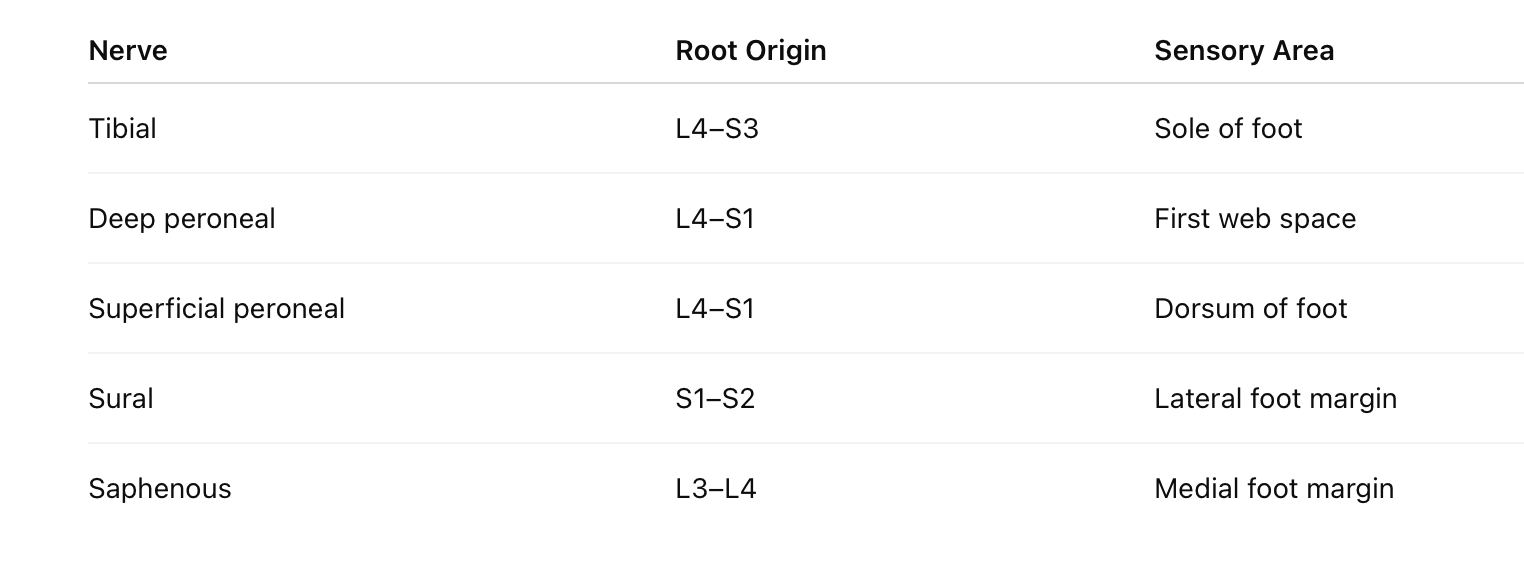
Foot sensory innervation arises from multiple lumbosacral nerve roots:
Tibial nerve (L4–S3) → plantar surface.
Deep peroneal nerve (L4–S1) → web space between first and second toes.
Superficial peroneal nerve (L4–S1) → dorsum of foot.
Sural nerve (S1–S2) → lateral margin.
Saphenous nerve (L3–L4) → medial side.
👉 A T10 sensory level ensures adequate anesthesia for debridement.
Table 1. Foot Innervation
References
Moore KL, Dalley AF, Agur AMR. Clinically Oriented Anatomy. 8th ed. Philadelphia: Wolters Kluwer; 2018.
Standring S, ed. Gray’s Anatomy. 42nd ed. London: Elsevier; 2020.
4. Physiology & Neurobiology of Differential Block
Fiber susceptibility to local anesthetics depends on size, myelination, and firing frequency.
Table 2. Fiber Susceptibility to Local Anesthetics
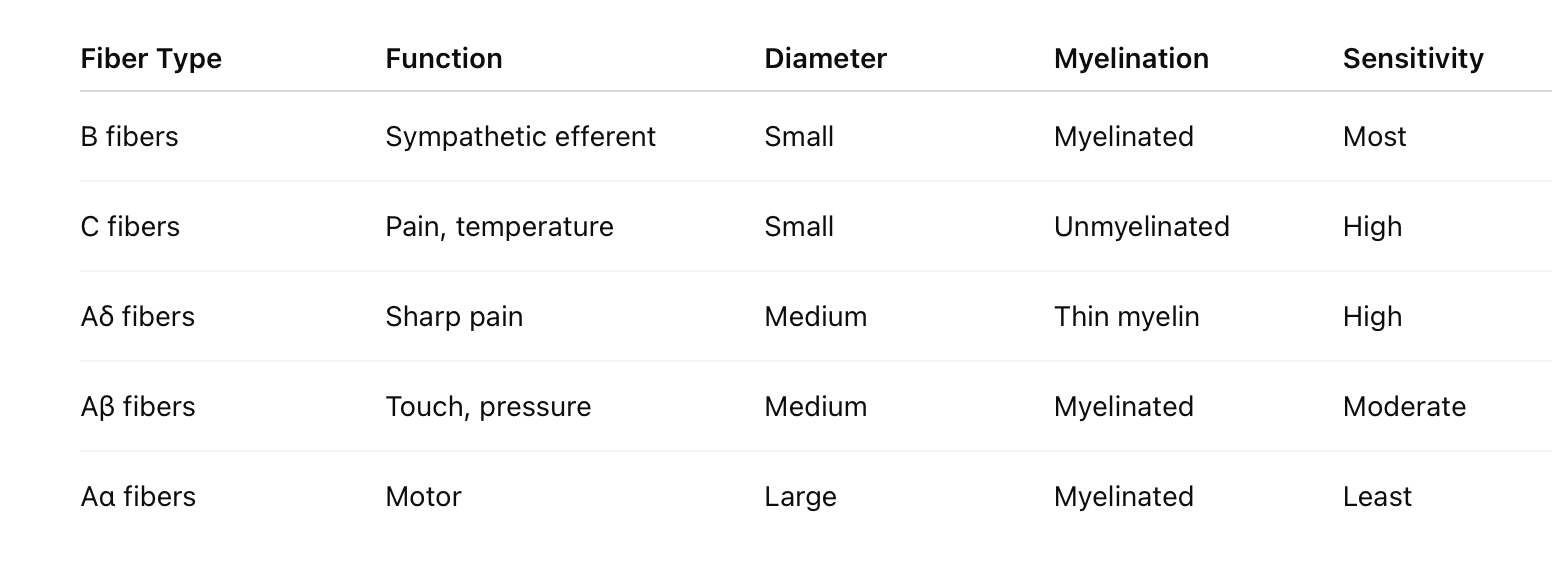
Mechanism: Blockade of voltage-gated sodium channels → inhibited depolarization. Small, less myelinated fibers require lower concentrations than large motor fibers, explaining sensory block without motor paralysis.
References
Fozzard HA, Sheets MF, Hanck DA. The sodium channel as a target for local anesthetic drugs. Front Pharmacol. 2011;2:68.
Gissen AJ, Covino BG, Gregus J. Differential sensitivities of mammalian nerve fibers to local anesthetics. Anesthesiology. 1980;53(6):467–74.
5. Molecular Pharmacology of Bupivacaine and Ion Channel Selectivity
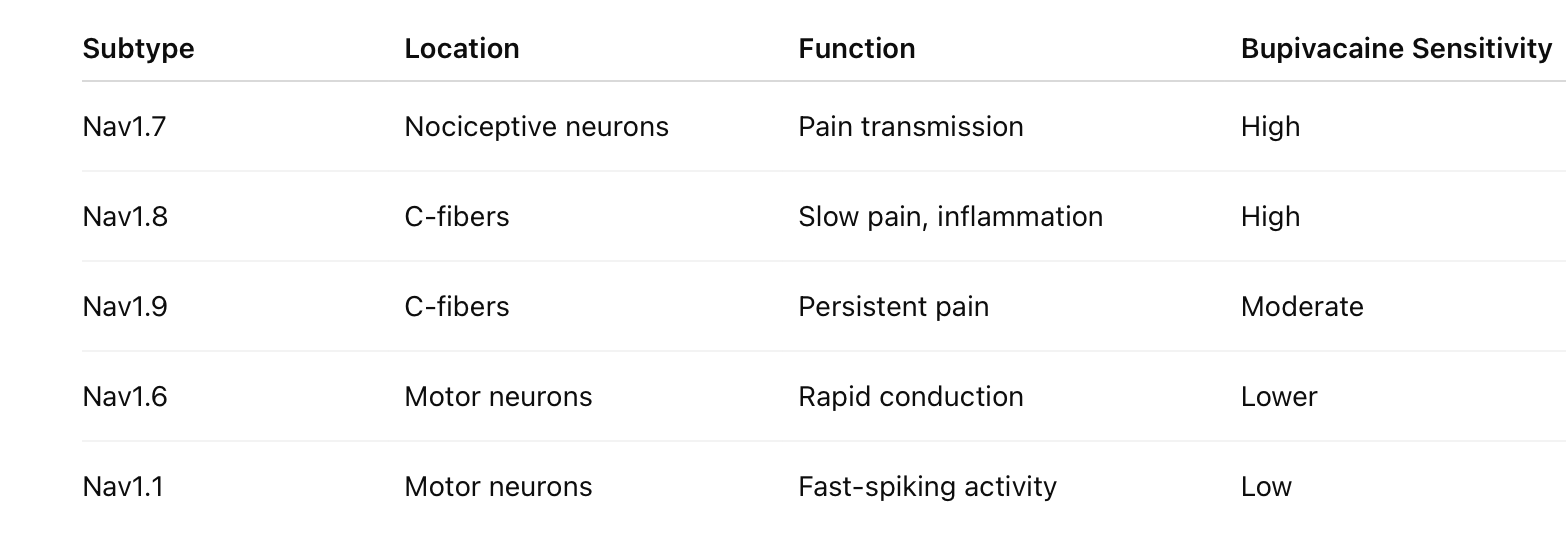
Bupivacaine blocks voltage-gated sodium channels (VGSCs) from the intracellular side.
Table 3. Sodium Channel Subtypes Relevant to Spinal Anesthesia
Other channels involved:
Potassium leak channels → stabilize resting potential, influencing block onset.
Calcium channels → modulate neurotransmitter release in dorsal horn; indirectly affected.
👉 This explains preferential sensory blockade.
References
Dib-Hajj SD, Yang Y, Black JA, Waxman SG. The Na(V)1.7 sodium channel: from molecule to man. Nat Rev Neurosci. 2013;14(1):49–62.
Renganathan M, Cummins TR, Waxman SG. Contribution of Nav1.8 sodium channels to action potential electrogenesis in DRG neurons. J Neurophysiol. 2001;86(2):629–40.
6. CSF Biophysics, Baricity, and Drug Distribution
Table 4. CSF Volume vs Block Height
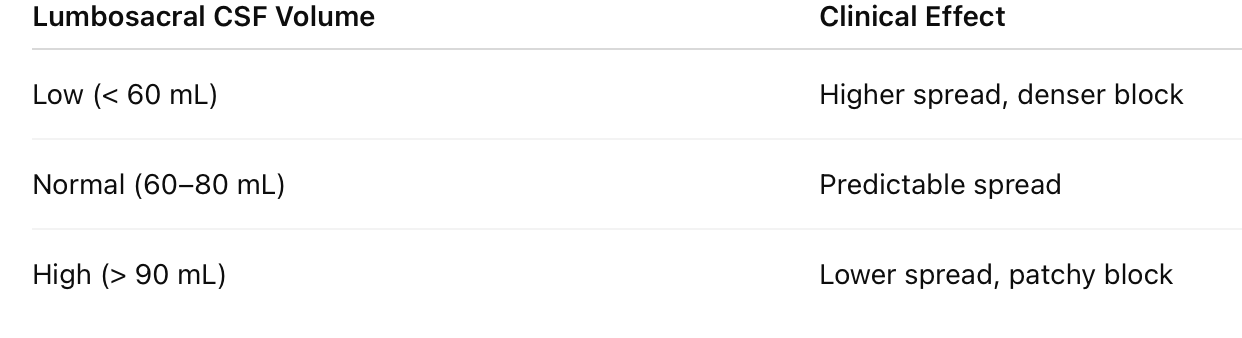
Table 5. Effect of Position on Hyperbaric Bupivacaine
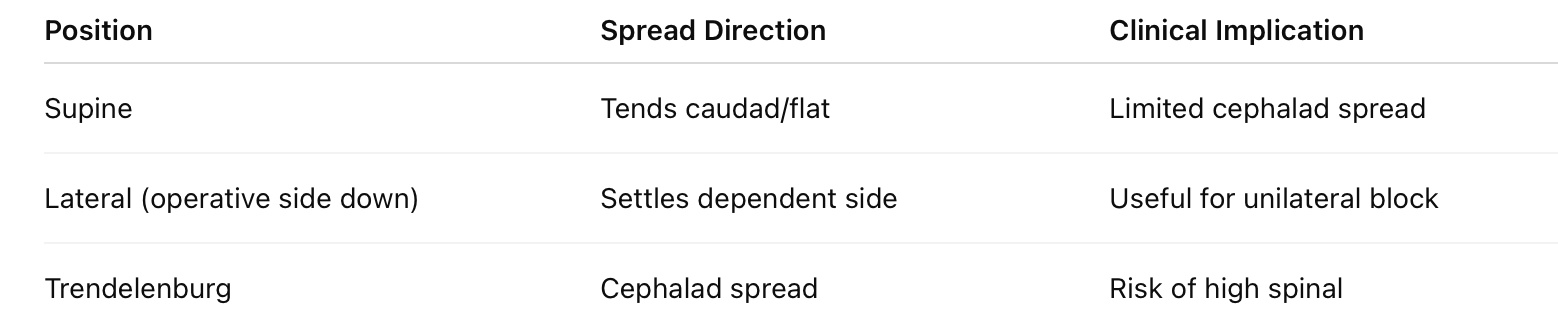
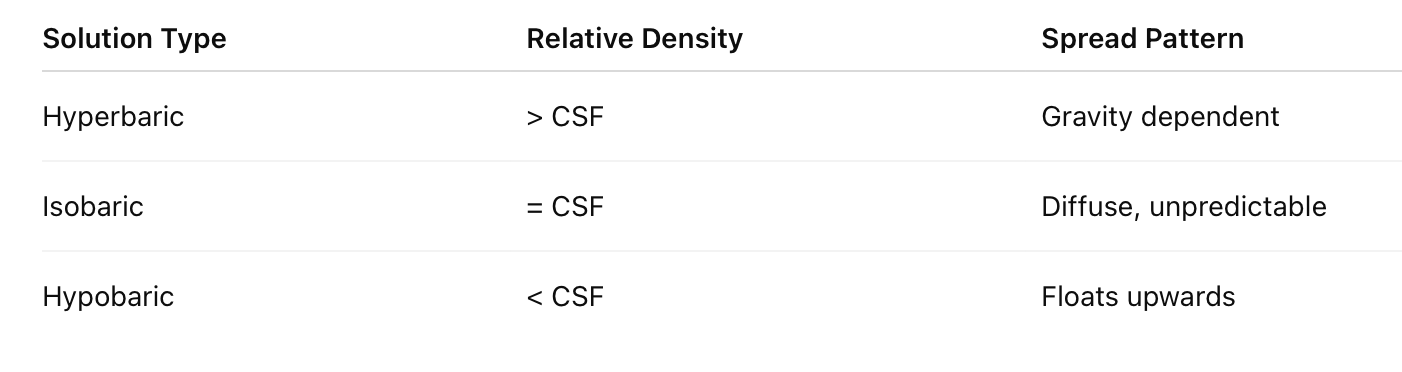
Table 6. Baricity Comparisons
References
Carpenter RL, Hogan QH, Liu SS, Crane B, Moore J. Lumbosacral cerebrospinal fluid volume is the primary determinant of sensory block extent. Anesthesiology. 1998;89(1):24–9.
Baciarello M, Brogly N, De Rosis E, et al. Intrathecal drug distribution: physiology and clinical implications. Reg Anesth Pain Med. 2021;46(9):747–56.
7. Comparison with Epidural and Other Techniques
Epidural differential block: Common, dose-dependent. Used in labor analgesia.
Low-dose selective spinal anesthesia: Small doses (5–7.5 mg bupivacaine ± opioid) intentionally create sensory-only blocks for ambulatory surgery.
Combined spinal-epidural (CSE): Allows a low-dose spinal (for sensory block) followed by epidural supplementation if motor block required.
👉 Our case mimics selective spinal anesthesia, even though a standard dose was used.
References
Bromage PR. Mechanism of action of extradural analgesia. Br J Anaesth. 1975;47 Suppl:199–212.
Gogarten W. Spinal anaesthesia for ambulatory surgery. Curr Opin Anaesthesiol. 2020;33(6):726–32.
8. Clinical Implications and Risk Mitigation
How to Assess Adequacy
Sensory testing: Pinprick, temperature, touch.
Motor testing: Bromage scale.
Autonomic testing: Monitor BP, HR for sympathetic block.
Risk Mitigation
If inadequate for incision → supplement with IV midazolam/fentanyl or local infiltration.
If deep tissue/bone manipulation planned → be prepared to convert to GA.
Documentation: Record sensory, motor, hemodynamic parameters — medico-legal importance.
References
Liu SS, McDonald SB. Current issues in spinal anesthesia. Anesthesiology. 2001;94(5):888–906.
Kallio H, Johnson C, Tikkanen I, et al. Spinal anesthesia for ambulatory surgery: current evidence. Reg Anesth Pain Med. 2022;47(3):169–77.
9. Case Integration: Lessons for Practice
Sensory-only spinal block is not a failure if surgical anesthesia achieved.
Ideal for foot debridement and other superficial procedures.
Requires close monitoring and readiness for conversion.
10. Key Clinical Pearls
Sensory > motor blockade can occur even with standard bupivacaine dose.
Mechanisms: fiber selectivity, sodium channel subtype sensitivity, CSF dilution, baricity distribution.
Always test and document sensory + motor levels.
Patient reassurance is essential when motor function persists.
Consider it a variant of selective spinal anesthesia.
11. Conclusion
This case demonstrates that spinal anesthesia with hyperbaric bupivacaine can yield adequate sensory anesthesia without motor paralysis. The phenomenon reflects the differential physiology of nerve fibers, molecular sodium channel subtypes, and CSF distribution dynamics. For selected surgeries such as foot debridement, sensory-only spinal anesthesia is not only safe and effective, but may also confer advantages in postoperative recovery. Understanding, documenting, and anticipating this outcome is critical for modern clinical anesthesia practice.