

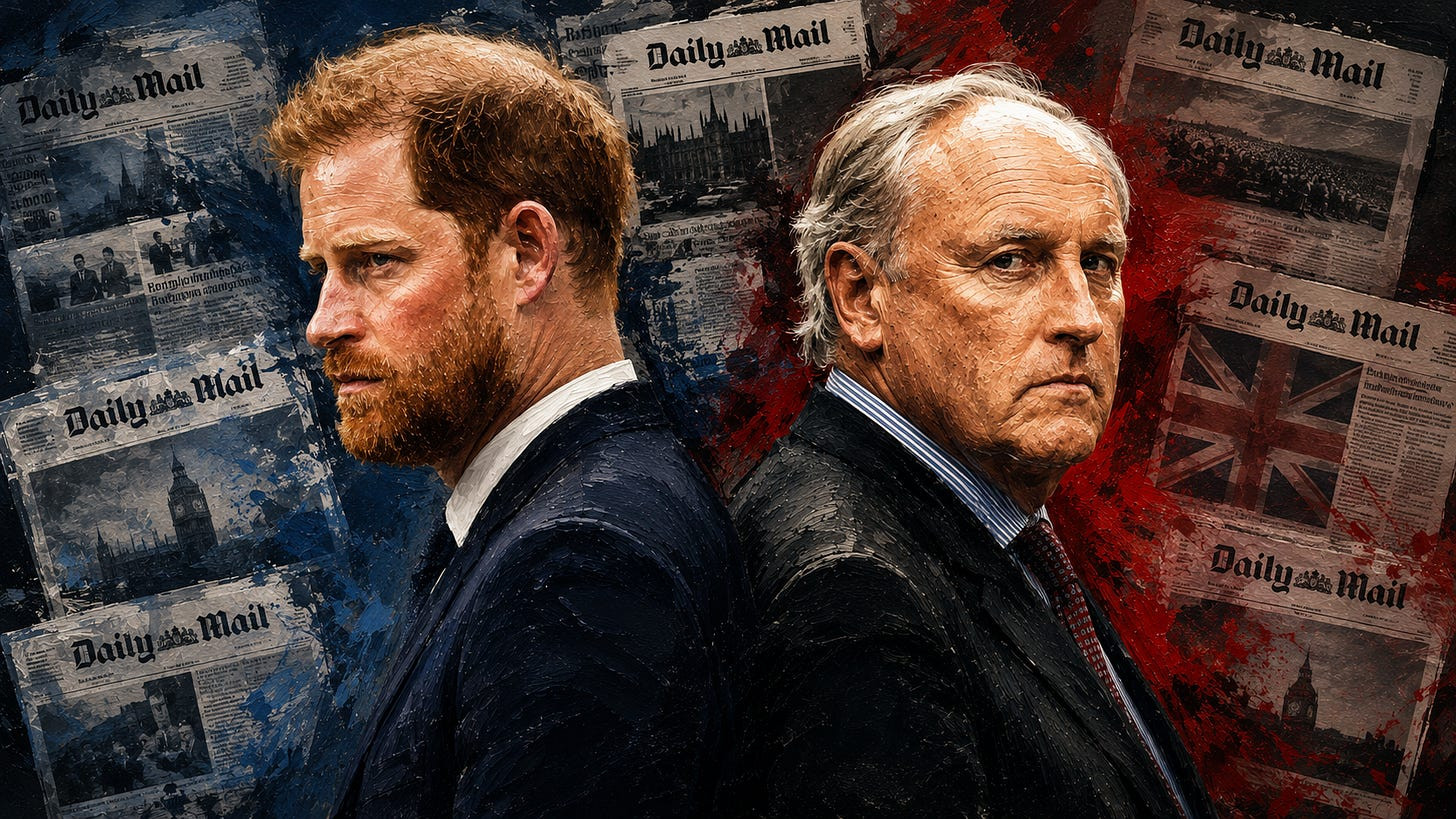
Such is the state of media illiteracy that many people do not even know who shapes their news — and, by extension, much of their opinions, assumptions and worldview. That, in itself, is deeply troubling. If the devil were controlling how you think, wouldn’t you want to know?
Most people in Britain do not. Many probably could not pick out some of the most influential newspaper editors of the last four decades from a crowd, despite the enormous role they have played in shaping public discourse. The Daily Mail remains one of the most read and influential newspapers in Britain, and while its senior editorial positions have been occupied by several figures over the years, none have been as defining or as influential as Paul Dacre.
Immediately after Prince Harry’s recent court loss against Associated Newspapers was announced, the accused press went on the attack. Prince Harry has made no secret of his hatred of the tabloids — a hatred that is not only understandable, but justified. After his January 2025 settlement and apology from Mirror Group Newspapers, and following his wider legal battles with the Murdoch press, those who follow the media landscape were waiting with bated breath to see how his case against Associated Newspapers, the owners of the Daily Mail, would unfold.
Meghan, the Duchess of Sussex, had already won her own case against the publisher in 2021, after a private letter she had written to her father was unlawfully published. It was a bitter blow to a paper with a long history of playing dirty, and one suspects they were ready to take revenge if they won this latest battle. For now, unless Harry appeals, it would appear they have.
In an interesting — and revealing — move, Paul Dacre appeared on camera to denounce Prince Harry and the other claimants, launching a scathing, highly personal and remarkably tacky attack. For a man who has spent decades shaping the British press from behind the scenes, the decision to step into the spotlight was striking. It was not merely a defence of a newspaper group. It felt like a declaration from a media class furious that anyone, even a prince, would dare to challenge the machinery that has protected, enriched and empowered them for decades.
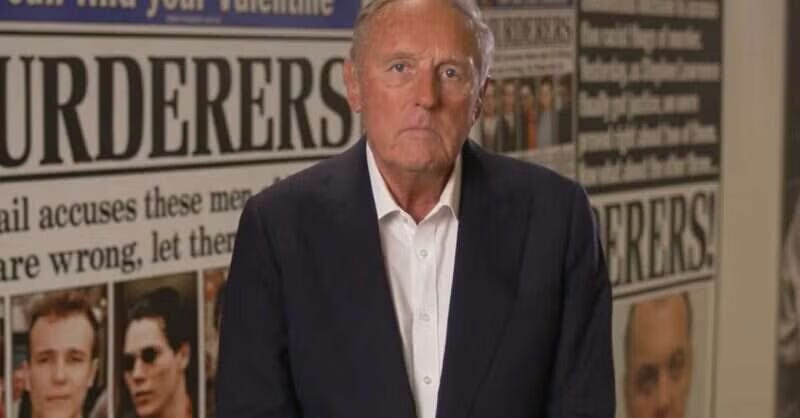 pictured: Paul Dacre giving statement on Prince Harry
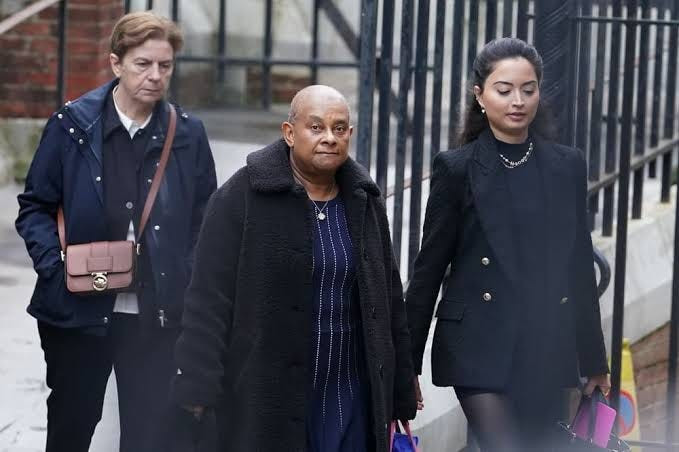
Prince Harry, Baroness Doreen Lawrence, Liz Hurley, Sadie Frost, Sir Elton John and his husband David Furnish, along with former Liberal Democrat MP Sir Simon Hughes, were among the claimants who failed to prove a series of allegations of unlawful information gathering against Associated Newspapers, the publisher of the Daily Mail.
After the judgment, Paul Dacre released a triumphant statement. “Four years ago, lawyers for Prince Harry, Doreen Lawrence and Elton John accused the Mail, in a blaze of publicity, of placing bugs in homes, cars, cafés and landline phones,” he said.
“We described these charges — some related to stories that were over 30 years old — as ‘lurid and preposterous’. Today, in what was a momentous victory for the Mail, the High Court dismissed every single one of the 97 claims.
“That is an overwhelming vindication of our journalism.”
But is it?
☕ buy me a coffee: https://www.buymeacoffee.com/onthegowithac☕
To answer that, one has to examine exactly what kind of journalism Dacre and his tabloid peers encouraged, defended and profited from. A legal victory does not automatically amount to a moral exoneration. The failure to prove specific allegations in court is not the same as proof that the wider culture was clean, humane or ethical. It simply means those claims did not meet the legal threshold required in that case. And when we are talking about the British tabloid press, particularly the era in which Dacre became one of its most powerful figures, the question has never only been whether every act could be proved in court. The deeper question is what sort of media culture was created when intrusion, humiliation, surveillance-adjacent reporting, moral outrage and personal destruction were treated not as unfortunate excesses, but as commercial strategy.
As editor of the paper from 1992 to 2018, and later as editor-in-chief within Associated Newspapers/DMG Media, Paul Dacre became one of the most powerful, feared and divisive figures in British journalism. His defenders see him as a brilliant newspaper man: commercially ruthless, instinctive, campaigning, and deeply in tune with “middle England.” His critics see him as the architect of a tabloid culture built on fear, moral outrage, personal intrusion, and political intimidation.
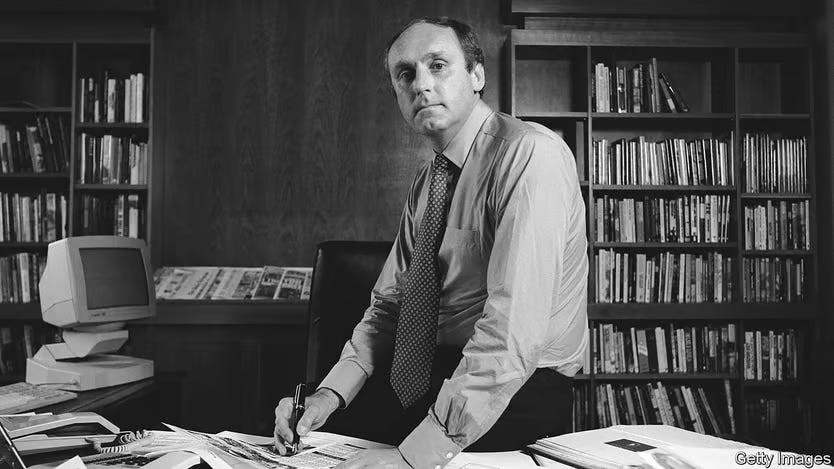
The clearest statement of Dacre’s journalistic philosophy came in his 2008 Society of Editors speech. Reflecting on his early life in newspapers, he wrote: “Dull doesn’t sell newspapers. Boring doesn’t pay the mortgage.” He followed that with an even more revealing statement: “Sensation sells papers.” That line matters because it explains so much of the controversy around him. Dacre’s Mail was not just a newspaper that reported scandal; it understood scandal, outrage and moral judgement as part of a business model. But that business model was one that put money over ethics, circulation over compassion, and influence over truth. It relied on the idea that public humiliation could be packaged as public interest, that private pain could be converted into profit, and that moral outrage could be sold back to readers as a form of civic duty. Under that logic, the question was not always whether a story was fair, proportionate or humane, but whether it would land, provoke, sell and dominate the national conversation. This is where the danger lies: when a newspaper becomes powerful enough to shape morality while operating according to the incentives of spectacle, it does not simply reflect public opinion — it manufactures it.
The most serious controversies around Dacre sit within the wider British press scandal that exploded in 2011: phone hacking, unlawful information gathering, private investigators, and the wider question of whether tabloid newspapers had built empires on stolen privacy. Strictly speaking, the central phone-hacking scandal began with the News of the World, where journalists accessed voicemail accounts belonging to celebrities, politicians, royals and, most shockingly, victims of crime. The Information Commissioner’s Office describes phone hacking as illicit access to voicemail accounts, and notes that the scandal led to the Leveson Inquiry into the “culture, practices and ethics” of the British press.
Dacre’s Daily Mail was not the newspaper at the centre of the original voicemail-hacking scandal. That distinction belongs overwhelmingly to News International titles, especially the now-closed News of the World. But the Mail became deeply entangled in the surrounding issue: not only whether journalists hacked phones, but whether they used private investigators, blagging, database searches, and other unlawful or ethically dubious methods to obtain private information. This is where Operation Motorman becomes crucial.
Operation Motorman was an investigation into a private investigator, Steve Whittamore, whose network supplied personal information to newspapers and magazines. The ICO’s 2006 report What Price Privacy Now? listed the Daily Mail at the top of the table, with 952 transactions linked to 58 journalists or clients. The Mail on Sunday was also listed, with 266 transactions linked to 33 journalists or clients. The Leveson Report later repeated those figures and made an important distinction: it did not say that every transaction was necessarily a criminal offence, but it did say journalists were significant customers of information that appeared to have been obtained illegally. Leveson added that where dozens of journalists at a title had sought to purchase personal information, “the inference that these practices were endemic within particular titles may be readily understood.”
That is the heart of the Dacre controversy around phone hacking: not that he was personally proven to have hacked phones, but that his newsroom existed inside a wider tabloid ecosystem where the private lives of public figures, victims and ordinary people could become raw material for circulation. Dacre consistently denied that Associated Newspapers practised phone hacking. In 2026, when he gave evidence in litigation brought by Prince Harry, Baroness Doreen Lawrence, Sir Elton John and others against Associated Newspapers, he again denied wrongdoing and described allegations against the publisher as “preposterous.” ITV reported that Dacre “emphatically” denied lying to the Leveson Inquiry, and quoted his earlier assurance that phone hacking “was not practised by the Daily Mail or the Mail on Sunday.”
☕ buy me a coffee: https://www.buymeacoffee.com/onthegowithac☕
The 2026 privacy case against Associated Newspapers was a major moment because it attempted to bring the Mail fully into the unlawful-information-gathering scandal. The claimants alleged activities including phone tapping, bugging, deception and illicit access to personal records. Associated Newspapers denied the claims. On July 7th July 2026, the High Court dismissed the case, with reports stating that the judge found the claimants had not proved unlawful sourcing on the balance of probabilities and that suspicion alone was not enough. That ruling was a huge legal victory for Associated Newspapers, but it does not erase the broader ethical controversy created by Operation Motorman, Leveson and the historic use of private investigators across Fleet Street. It means the specific claims in that case were not proven.
Dacre’s relationship with press regulation was also controversial. In 2008 he became chairman of the Editors’ Code of Practice Committee, which reviewed and revised the voluntary code overseen by the Press Complaints Commission; he stepped down as a member of the PCC to take that role. To critics, this looked like the press marking its own homework: one of the most powerful tabloid editors in Britain helping shape the rules by which papers like his would be judged. To supporters, it showed that someone who understood newspapers was best placed to defend press freedom while setting workable standards.
The privacy-law controversy is another major part of Dacre’s legacy. In his 2008 speech, he attacked what he saw as a creeping judge-made privacy law, especially through the decisions of Mr Justice Eady. Dacre argued that privacy law was helping “the corrupt and the crooked” sleep easily and damaging the ability of mass-market newspapers to sell papers. This was classic Dacre: he framed intrusive journalism not as voyeurism, but as democratic exposure. His critics would say that this was a convenient moral cover for selling humiliation. His defenders would say that without aggressive newspapers, the rich and powerful would hide behind lawyers.
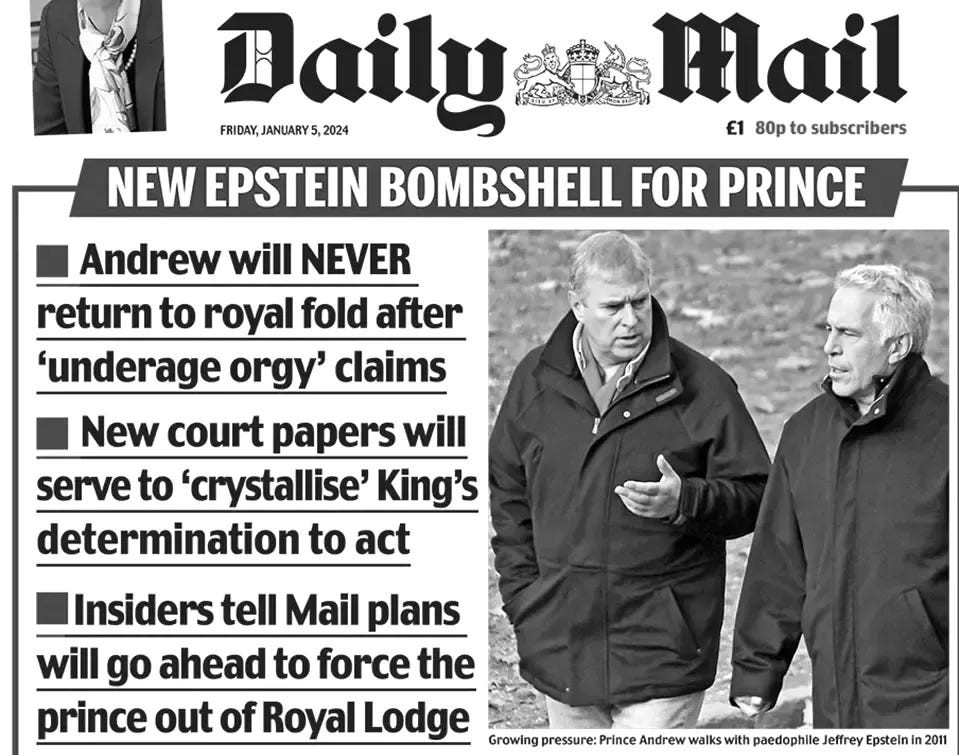
The public is not opposed to serious exposés on powerful people when those stories are genuinely in the public interest. Most people understand the value of journalism that uncovers corruption, hypocrisy, abuse of power or institutional failure. But that is very different from intrusive gossip dressed up as moral accountability, and tabloid editors like Paul Dacre often seem to collapse the two into the same category. The exposure of wrongdoing is not the same as the commodification of private pain, yet tabloid culture has long relied on blurring that line. It is also not lost on me that the same sections of the press that present themselves as fearless moral watchdogs can become remarkably quiet when the person in question is powerful, useful, well-connected or expensive enough to fight back.
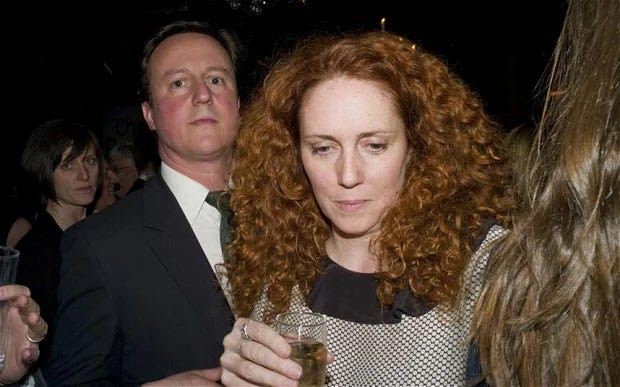
pictured: David Cameron and Rebekah Brooks
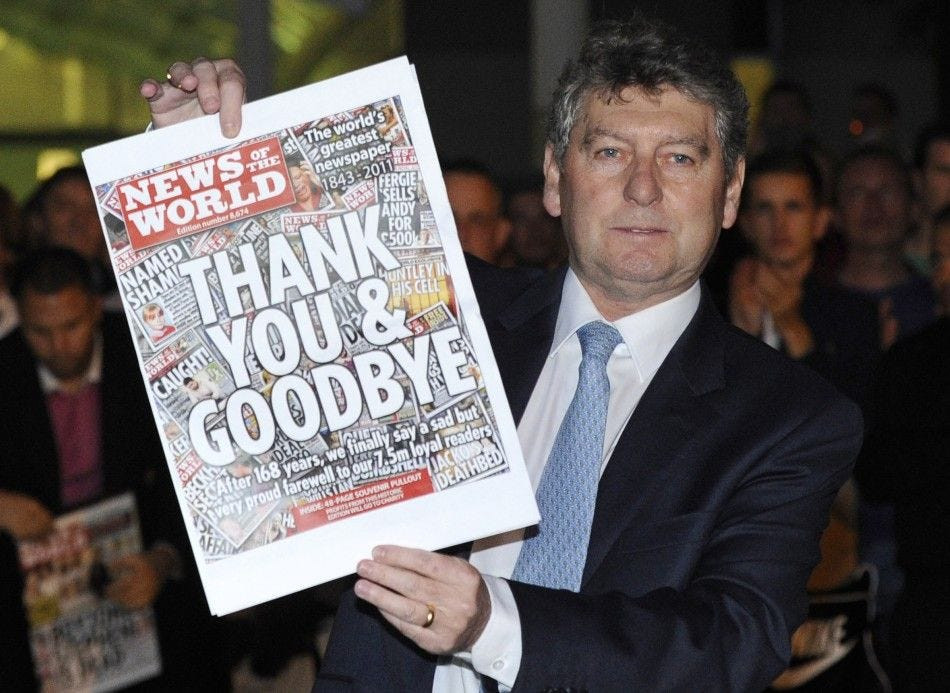
Rebekah Brooks is a useful example of that closeness, she was one of Rupert Murdoch’s most powerful newspaper executives, rising from the News of the World to become editor of The Sun and later chief executive of News International. Her career became inseparable from the phone-hacking scandal, not because she was ultimately convicted — she was acquitted — but because she was a senior figure in the Murdoch empire at the very moment that the public was forced to confront the scale of tabloid intrusion. The scandal led to the closure of the News of the World, exposed the grotesque methods used by parts of the press, and shattered the idea that tabloid power was merely cheeky, populist or harmless. Yet Brooks also moved comfortably within elite political circles. Former British Prime Minister David Cameron attended her 2009 wedding and regularly socialised with the Brookses as part of the so-called Chipping Norton set. It is difficult to accept the press’s self-image as a heroic outsider speaking truth to power when so many of its most powerful figures appear to be dining, networking and socialising with the very establishment they claim to scrutinise. Their outrage is often not principled; it is selective, strategic and aimed at those who are vulnerable enough to be made profitable.
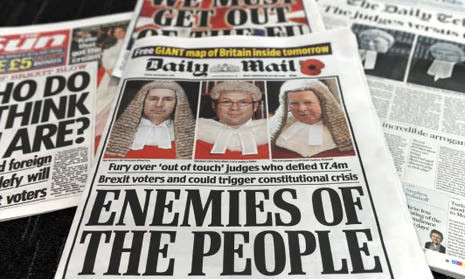
Then came Brexit. The Daily Mail under Dacre was one of the loudest pro-Brexit papers in Britain. Its most infamous post-referendum front page was “Enemies of the People,” aimed at High Court judges who ruled that Parliament had to vote before Article 50 could be triggered. Dacre later defended the decision, saying the headline could perhaps have been phrased better, but “the point needed to be made.” For critics, this was an extraordinary attack on judicial independence. For Dacre, it was a legitimate expression of public anger at elite obstruction. Either way, it showed the scale of his influence: a newspaper headline became a constitutional flashpoint.
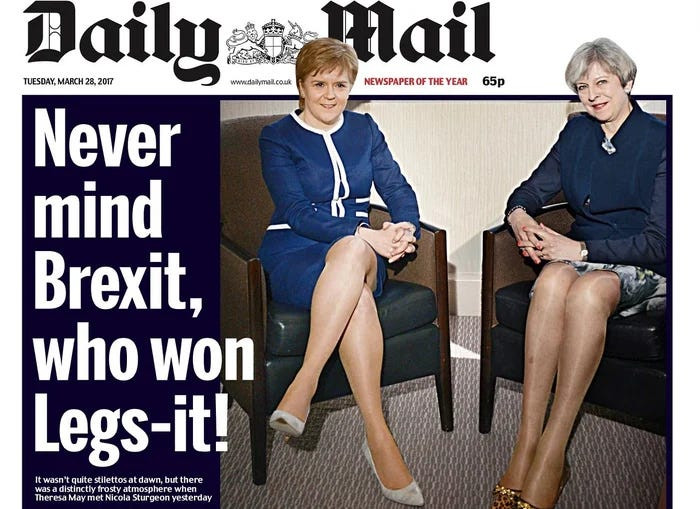
The Mail also faced repeated accusations of sexism under Dacre. One of the clearest examples was the 2017 “Legs-it” front page about Theresa May and Nicola Sturgeon. Instead of leading on the political substance of a meeting between the UK prime minister and Scotland’s first minister, the paper focused on their legs and clothing. More than 300 people complained to IPSO, while Nicola Sturgeon’s spokesperson criticised the coverage as reducing a serious political meeting to appearance. The Mail defended the piece as light-hearted and told critics to “get a life”; Dacre sanctioned the paper’s robust response to the backlash.
There is also a paradox in Dacre’s record: the Daily Mail did real campaigning journalism. The most famous example is the paper’s 1997 “Murderers” front page accusing five men of killing Stephen Lawrence, with the line: “If we are wrong, let them sue us.” Stephen Lawrence’s parents later praised the paper for going out on a limb and helping keep the case in public consciousness. But that legacy has since become far more complicated. Baroness Doreen Lawrence later became one of the claimants in the unlawful information-gathering case against Associated Newspapers, the publisher of the Daily Mail. In court, she alleged that the paper had not simply supported her family out of principle, but had used that support to gain credibility while, she claimed, gathering information about her through improper means. She said she felt “taken for a fool” and accused the paper of pretending to support her campaign for justice while benefiting from the moral authority of being seen to stand beside a Black family fighting institutional failure. Associated Newspapers strongly denied the allegations, and the High Court ultimately dismissed the claims, finding they had not been proved. But even though the claims failed legally, the allegation itself reveals why the Mail’s Stephen Lawrence legacy is so contested: what once looked like a rare act of tabloid courage has, for Lawrence herself, become entangled with a deeper sense of betrayal. The question is no longer simply whether the Mail helped the Lawrence family in 1997; it is whether that help also served the paper’s own reputation, influence and mythology as a fearless moral crusader.
Even after leaving the editor’s chair, Dacre remained controversial. His attempt to become chair of Ofcom, the UK media regulator, raised serious questions about political influence and regulatory independence. He failed the first interview process, ministers opened the door for him to try again, and he eventually withdrew. The Guardian reported that concerns had been raised about transparency and that the government had spent more than a year trying to ease his application. For critics, the idea of Paul Dacre chairing Ofcom was almost satirical: the great enemy of liberal regulation being placed in charge of a regulator.
Ultimately, Paul Dacre’s controversies come back to one question: what is the moral cost of a newspaper that believes sensation sells? Paul Dacre did not invent the darker arts of the British press. But he became one of their most successful defenders, refiners and beneficiaries. His career asks an uncomfortable question of British journalism: when a newspaper claims to speak for ordinary people, who protects ordinary people from the newspaper?
💕 SUPPORT OUR WORK 💕
☕ buy me a coffee: https://www.buymeacoffee.com/onthegowithac☕
➵ Become a channel member via buy me a coffee: https://www.buymeacoffee.com/onthegowithac/membership
➵ Become a channel member via Youtube: https://www.youtube.com/channel/UCpbm4lOq89kGbURh5XJt7gQ/join