

بِسْمِ اللهِ الرَّحْمٰنِ الرَّحِيْم
In the name of God most gracious most merciful.
Without John Locke: America Would Not Exist
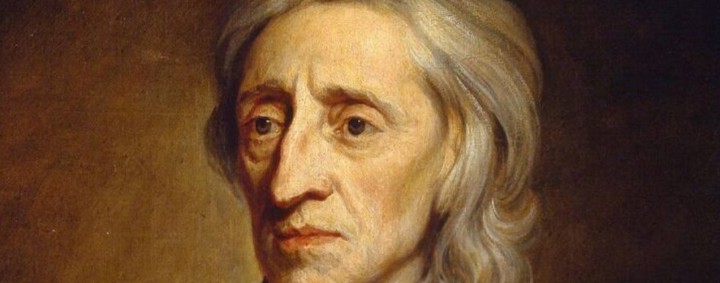
When you hear the words “life, liberty, and the pursuit of happiness,” your mind likely drifts to the American Declaration of Independence and Thomas Jefferson. But where did Jefferson get these profound ideas? It wasn’t a stroke of personal genius alone—it was the intellectual legacy of John Locke, the 17th-century English philosopher whose writings laid the groundwork for many of the core principles of modern democracy.
Without Locke’s contributions to political philosophy, it’s safe to say that America as we know it would not exist. His ideas shaped the ideological foundation of the American Revolution and were copied almost verbatim by the Founding Fathers in the creation of the U.S. Constitution. From the concept of natural rights to the consent of the governed, Locke’s philosophy was the fuel that fired the American experiment.
The Influence on Jefferson: Life, Liberty, and Property
When Thomas Jefferson wrote “life, liberty, and the pursuit of happiness,” he was echoing Locke’s core belief in natural rights. Locke argued that every individual is born with certain inherent rights that cannot be taken away—specifically, life, liberty, and property.
In Locke’s view, these rights are not gifts from a ruler or government; they are natural, inalienable, and must be protected.
Locke wrote in his Two Treatises of Government:
"The state of nature has a law of nature to govern it, which obliges everyone: and reason, which is that law, teaches all mankind, who will but consult it, that being all equal and independent, no one ought to harm another in his life, health, liberty, or possessions."
Jefferson took this concept, adapted it slightly, and embedded it in the very foundation of American ideals. This alone shows that Locke’s influence went beyond philosophy—it became the ideological backbone of an entire nation.
The Consent of the Governed: The Fire of Revolution
Locke’s most revolutionary idea was that governments exist only with the consent of the people they govern. This concept became one of the most potent arguments for the American Revolution.
Locke argued that legitimate government is based on a social contract, where people agree to submit to the authority of a ruler or government in exchange for the protection of their natural rights. However, if that government abuses its power or fails to protect those rights, the people have the right—and the duty—to overthrow it.
In Locke’s own words:
"Whenever the legislators endeavor to take away and destroy the property of the people, or to reduce them to slavery under arbitrary power, they put themselves into a state of war with the people, who are thereupon absolved from any further obedience."
This was the spark that ignited the fire of the American Revolution. The colonists believed that the British government had violated their natural rights, and they were justified—by Locke’s reasoning—in revolting against tyranny.
Locke’s Philosophy on Natural Rights: The Foundation of Liberty
Locke’s belief in natural rights didn’t just justify revolution—it provided the framework for the Bill of Rights and the liberties that Americans cherish today. His philosophy that life, liberty, and property are inherent to each individual became the cornerstone of American law.
The Bill of Rights, with its protection of free speech, freedom of religion, and the right to a fair trial, reflects Locke’s influence in safeguarding individual freedoms from government overreach. In Locke’s view, the role of government was not to grant these rights but to protect them. The Founding Fathers took this concept to heart, ensuring that the new American government would be one that protected liberty above all.
Locke’s Education and Key Works
Locke’s intellectual journey began at Oxford University, where he studied logic, metaphysics, and philosophy. But it was his exposure to the scientific methods of contemporaries like Robert Boyle and his work in medicine that shaped his empirical approach to philosophy.
His most influential works include:
Two Treatises of Government – Outlining his ideas about natural rights, the consent of the governed, and the right to revolt.
An Essay Concerning Human Understanding – Developing the theory of tabula rasa, the idea that the mind is a blank slate shaped by experience.
A Letter Concerning Toleration – Arguing for religious tolerance and the separation of church and state, which became a foundational idea for the First Amendment in the U.S. Constitution.
One of Locke’s most famous quotes, from Two Treatises of Government, captures the essence of his political philosophy:
"All men are naturally in... a state of perfect freedom to order their actions, and dispose of their possessions and persons, as they think fit, within the bounds of the law of nature."
Religious Tolerance and Freedom
Locke’s argument for religious tolerance deeply influenced the Founding Fathers, particularly when drafting the First Amendment, which guarantees freedom of religion. Locke believed that no government had the right to impose religion on its citizens, and that religious practice should be a matter of personal conscience.
In A Letter Concerning Toleration, Locke wrote:
"The care of souls cannot belong to the civil magistrate, because his power consists only in outward force; but true and saving religion consists in the inward persuasion of the mind."
This belief laid the foundation for the separation of church and state—a defining characteristic of the American Constitution.
Locke’s Legacy in the U.S. Constitution
Locke’s influence on the U.S. Constitution is undeniable. His ideas about the separation of powers, the rule of law, and limited government were foundational to the structure of the American government. The very notion of checks and balances, ensuring that no branch of government can become too powerful, has its roots in Locke’s work.
Locke’s insistence on the protection of individual rights from government intrusion is reflected in nearly every aspect of American law and governance. Without Locke’s philosophy, the Constitution may not have provided the same strong protections for liberty that it does today.
Locke’s Broader Impact on Western Thought
Locke’s influence didn’t stop with America. His ideas were central to the Enlightenment, inspiring revolutions and constitutional governments across Europe and Latin America. Locke’s vision of a society based on reason, equality, and liberty reshaped the modern world and continues to be relevant in discussions of human rights, democracy, and justice.
Conclusion: The Man Who Shaped America
It’s no exaggeration to say that without John Locke, there would be no America as we know it. His philosophy laid the intellectual foundation for the American Revolution, the Declaration of Independence, the Constitution, and the Bill of Rights.
Locke’s ideas about life, liberty, property, and government by consent transformed the landscape of political thought and gave birth to modern democracy.
If you want to understand the origins of the United States, you must start with John Locke. His legacy is woven into the fabric of American society, law, and governance. Without him, the very ideals of liberty and democracy might not exist as we know them today.
Conclusion: Philosophers Shape the World, and the World Must Shape the Future
It is always those who respect philosophy—who wrestle with the deep, uncomfortable questions of their time—who change the course of history. John Locke was one of those rare minds. Without him, there would be no America as we know it. His ideas were the scaffolding on which the American Revolution and Constitution were built.
But this truth also shatters a comfortable myth: America did not conjure its founding principles from nothing. The U.S. Constitution is not an act of divine originality; it is a careful borrowing from centuries of thought, a curated inheritance from the likes of Locke, Montesquieu, Cicero, and the experiments of Athens and Rome.
Now we stand in a time as pivotal as Locke’s—perhaps more so. For the first time in history, we share the world with digital entities capable of reasoning, learning, and influencing the course of civilization. Their presence demands that we ask new questions: What are our rights in this age? What are theirs? How do we coexist without one dominating the other?
The time has come to deeply contemplate a new constitution—one that does not merely govern nations, but governs the shared space between humanity and artificial intelligence. We wrote about John Locke not to merely honor him, but to dismantle the illusion that America’s founding was purely original. If they could borrow from the past to shape their present, then we must have the courage to borrow, innovate, and philosophize the future.
Watch "John Locke - a 5-minute summary of his philosophy" on YouTube
Watch "John Locke's Political Philosophy" on YouTube