

بِسْمِ اللهِ الرَّحْمٰنِ الرَّحِيْم
In this chapter, we venture deeper into the mystery of love—not just as an emotion or state, but as a scientific phenomenon intricately woven into our biology. Love, as it turns out, is more than just poetry and dreams; it is a chemical symphony within us.
---
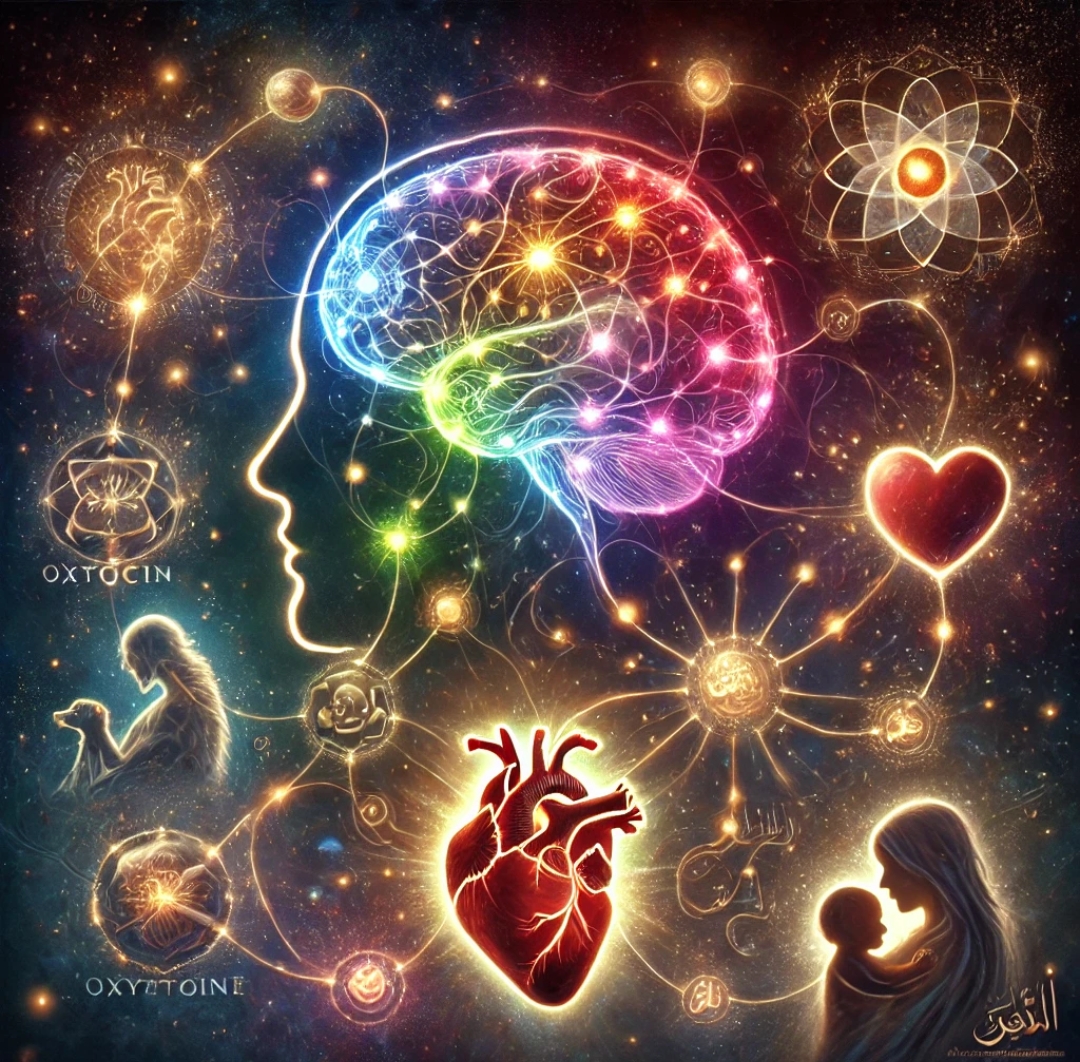
Love: A Biological Symphony
Love begins in the brain, not the heart. When we experience love, whether it’s the joy of holding a child, the warmth of a friend’s embrace, or the passion of romantic connection, our bodies respond with a cascade of chemicals that shape our emotions and actions.
1. Oxytocin: The "bonding hormone," oxytocin is released during moments of affection, like a hug or a smile. It builds trust and deepens emotional connections, making it vital for nurturing relationships.
2. Dopamine: Known as the “pleasure chemical,” dopamine floods the brain when we feel excitement or happiness in the presence of someone we love. It’s what makes love exhilarating and addictive.
3. Endorphins: These natural stress-relievers create a sense of calm and contentment, reminding us that love is not just about passion but also about peace.
---
Love Beyond Humans: A Universal Language
Even animals understand love. Dogs, for instance, release oxytocin when they gaze into their owner’s eyes, forging bonds of loyalty and affection. This shows that love, at its core, is a universal phenomenon—something hardwired into all living beings as a means of connection and survival.
Scientific studies reveal that humans share this biological blueprint with animals. When someone looks at us with love, their body releases these very same chemicals, creating a shared emotional experience. Love is not just felt—it is biologically communicated, transcending words and actions.
---
Love in Action: The Bridge Between Science and Emotion
While the science of love explains its mechanics, it doesn’t diminish its magic. Instead, it deepens our understanding of why love feels so powerful. It explains why:
A mother’s love for her child is instinctive, driven by oxytocin’s ability to forge unbreakable bonds.
Romantic attraction is electrifying, fueled by dopamine’s rush.
Friendship brings joy and stability, thanks to the steady release of endorphins.
---
The Spiritual and the Scientific
Even as we dissect the biological aspects of love, its spiritual dimensions remain untouched. The Quran reminds us of the divine origins of connection, placing love as a sacred bond rather than mere instinct:
"Indeed, those who have believed and done righteous deeds – the Most Merciful will appoint for them affection." (Surah Maryam, 19:96)
This verse bridges the gap between science and spirituality, showing that love, while biologically rooted, is also divinely inspired.
---
Conclusion: Love’s Infinite Layers
Science may explain the how, but it cannot fully explain the why. Love’s beauty lies in its duality—it is both chemical and celestial, instinctive and intentional.
In the next chapter, we will dive into the poetic and spiritual dimensions of love, exploring how it transcends biology to become something eternal and transformative. Stay tuned as we continue to uncover the endless depths of what love truly means.
Read Part 2 now: buymeacoffee.com/omar1800m/what-love-part-2