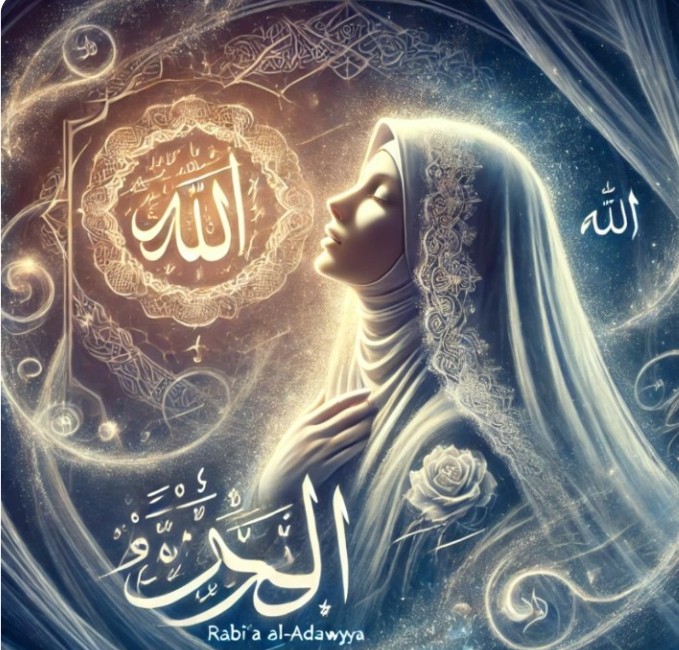
بِسْمِ اللهِ الرَّحْمٰنِ الرَّحِيْم
In the Name of God, Most Gracious, Most Merciful.
♥️🤲🕋♥️🕋🌹🌹🥀🤲🌹🕋♥️
WHAT DOES IT MEAN TO LOVE ALLAH?

When the Heart Blooms with Love for His Messenger
قُلْ إِن كُنتُمْ تُحِبُّونَ اللَّهَ فَاتَّبِعُونِي يُحْبِبْكُمُ اللَّهُ وَيَغْفِرْ لَكُمْ ذُنُوبَكُمْ ۗ وَاللَّهُ غَفُورٌ رَّحِيمٌ
“Say: ‘If you love Allah, follow me; Allah will love you and forgive your sins. Allah is Forgiving, Merciful.’” — Sūrat Āl ʿImrān, 3:31
There was a question in the time of the Prophet Muhammad, peace be upon him and his family. There were people expressing their love for God, speaking about their relationship with Him. The commentators preserve accounts involving Christians from Najrān, and other accounts involving Jews who spoke of being God’s beloved. Different reports, but a question we can recognize: we love God, we have a relationship with God—where does that love take us?
And a verse descended with an answer: “If you love Allah, follow me.” Their love was given a direction. Following is an action. You move toward him. You receive what he brings. And through following him came this promise: “Allah will love you.”
But what do you receive when you follow him? What happens to the person who comes into this teaching, this companionship, this care? Allah tells us about the work of His Messenger:
هُوَ الَّذِي بَعَثَ فِي الْأُمِّيِّينَ رَسُولًا مِّنْهُمْ يَتْلُو عَلَيْهِمْ آيَاتِهِ وَيُزَكِّيهِمْ وَيُعَلِّمُهُمُ الْكِتَابَ وَالْحِكْمَةَ وَإِن كَانُوا مِن قَبْلُ لَفِي ضَلَالٍ مُّبِينٍ
“He is the One who sent among the unlettered people a Messenger from among themselves, reciting His verses to them, purifying them, and teaching them the Book and wisdom, although before that they were clearly astray.” — Sūrat al-Jumuʿah, 62:2
He recites His verses to them. He purifies them. He teaches them the Book and wisdom.
And who was entrusted with this work? The Prophet Muhammad, peace be upon him and his family, whose own character was nurtured through Allah’s guidance. There is a widely quoted saying attributed to him: “My Lord taught me beautiful manners and perfected my upbringing.” Its attribution is not firmly established, but Allah Himself declares:
وَإِنَّكَ لَعَلَىٰ خُلُقٍ عَظِيمٍ
“And indeed, you are of magnificent character.” — Sūrat al-Qalam, 68:4
When Sayyidah ʿĀʾishah, may Allah be pleased with her, was asked about his character, she answered: “His character was the Qur’an.”
Now we begin to understand what was being transmitted. Revelation entered human lives through a Messenger whose character embodied its guidance. People came with their own flaws, their own habits, their own wounds. They were taught, corrected, nurtured, purified. Their hearts received the message, and their character began to change.
In the language of our time, I would call this a reprogramming of what it means to be a human being—what it means to have character. A transformation reaching the heart, the conscience, the way a person sees another person. What do you do with your strength? What do you do with your anger? What do you become when someone weaker than you is placed in your care?
Humanity needs a guide. Without one, what boundary will cruelty respect? Humanity needs a mirror. Without one, how far can people fall while still believing themselves to be right? Here was a Messenger through whom people could recognize their own condition and discover what, by Allah’s guidance, they could become.
The transmission reached people. The people carried the message. And the message reshaped their humanity.
Here we turn to the description attributed to Imam ʿAlī, may Allah be pleased with him: whoever first saw him stood in awe of him, and whoever came to know him loved him. You came closer. You witnessed his character. You experienced this guidance through his company, and your heart found more to love.
Then we come to Sayyidunā Thawbān, may Allah be pleased with him, whose longing is remembered in the accounts of revelation. He came with sadness in his face, his complexion changed, his body grown thin. When the Prophet asked what troubled him, he explained that he was not ill. When he could not see the Prophet, he missed him until he could see him again.
Then he thought about the Hereafter. He understood something: this is the Prophet. He is not any other man. He is the beloved Messenger of Allah, whose station among the prophets would be exalted. Thawbān feared that even if he entered Paradise, his own lower station would leave him unable to see the one he loved.
His heart was full of love, and that love was full of longing to follow, longing to remain near, longing to be in his company. He was thinking beyond the comfort of this world. What would Paradise mean for his longing if he could no longer see the Messenger of Allah?
And in another account, an unnamed man described being at home with his family, remembering the Prophet, and being unable to wait until he went to look at him. Imagine that love. You are home, surrounded by your comfort, and your heart takes you back to his company.
These reported accounts are preserved in connection with this revelation:
وَمَن يُطِعِ اللَّهَ وَالرَّسُولَ فَأُولَٰئِكَ مَعَ الَّذِينَ أَنْعَمَ اللَّهُ عَلَيْهِم مِّنَ النَّبِيِّينَ وَالصِّدِّيقِينَ وَالشُّهَدَاءِ وَالصَّالِحِينَ ۚ وَحَسُنَ أُولَٰئِكَ رَفِيقًا
“Whoever obeys Allah and the Messenger will be with those whom Allah has blessed: the prophets, the steadfastly truthful, the martyrs, and the righteous. What excellent companions they are!” — Sūrat al-Nisāʾ, 4:69
ذَٰلِكَ الْفَضْلُ مِنَ اللَّهِ ۚ وَكَفَىٰ بِاللَّهِ عَلِيمًا
“That is the bounty from Allah, and sufficient is Allah as Knower.” — Sūrat al-Nisāʾ, 4:70
Look at the answer: “They will be with…” Companionship. Nearness. Being with those whom Allah has blessed. The promise does not require everyone to hold the same rank. Thawbān feared separation, and here was a promise of being together.
In this remembered account, his longing did us a great favor: it brought into view a question that hearts after him would carry. We love the Prophet Muhammad, peace be upon him and his family. We want to follow him. We want to be with him. And Allah’s promise joins obedience to companionship, then names it for what it is: His bounty.
وَحَسُنَ أُولَٰئِكَ رَفِيقًا — What excellent companions they are.
The Companions could see him. They could sit with him. They could witness revelation arrive and hear its words from his blessed lips. Their hearts were being taught, nurtured, purified. They experienced the love, and their lives carried its fragrance.
But we are not those Companions. We cannot walk from our homes and go sit before the Prophet Muhammad, peace be upon him and his family, as they did.
So where does that leave us?
The Companions could see him. They could sit with him. Revelation descended among them, guiding them, blessing them, increasing them. Their hearts were being taught, nurtured, purified.
But what about us?
Before we ever arrived, the Prophet Muhammad, peace be upon him and his family, spoke of people who would come after him. People whose love would be so intense that they would give what was most precious to them just to see him.
“Among those of my community who love me most intensely are people who will come after me, one of whom would wish to see me even at the cost of his family and wealth.”
Think about that. We speak of missing him, and he had already spoken of that longing. We speak of loving him without having seen him, and he had already remembered people who would carry that love. His words made room for hearts that had yet to enter this world.
So where does that leave us? With a longing he recognized, and with the blessing of time. We can look across the centuries and see what happened when that love entered human hearts—how they bloomed, how their fragrance reached others, how teachers helped bring forth what was waiting within them.
And here we come to Rumi, and to the companionship of Shams al-Dīn Tabrīzī.
But before we come to Rumi and Shams, let us return to Allah. Who are these people whose hearts have bloomed? What does Allah say about those who draw near to Him?
أَلَا إِنَّ أَوْلِيَاءَ اللَّهِ لَا خَوْفٌ عَلَيْهِمْ وَلَا هُمْ يَحْزَنُونَ
“Indeed, the friends of Allah—there will be no fear upon them, nor will they grieve.”
الَّذِينَ آمَنُوا وَكَانُوا يَتَّقُونَ
“Those who believed and were mindful of Him.”
لَهُمُ الْبُشْرَىٰ فِي الْحَيَاةِ الدُّنْيَا وَفِي الْآخِرَةِ ۚ لَا تَبْدِيلَ لِكَلِمَاتِ اللَّهِ ۚ ذَٰلِكَ هُوَ الْفَوْزُ الْعَظِيمُ
“For them are glad tidings in this worldly life and in the Hereafter. There is no changing the words of Allah. That is the great triumph.” — Sūrat Yūnus, 10:62–64
Awliyāʾ Allāh. The friends of Allah. Awliyāʾ is the plural of walī, a word carrying the meaning of closeness, friendship, and allegiance. And Allah tells us who they are: people of faith and taqwā, people mindful of Him. Here is the foundation of what we call sainthood—human hearts drawing near to Allah, held within His promise.
What a blessing within the community of the Prophet Muhammad, peace be upon him and his family: generations of people who receive his guidance, struggle with themselves, and grow in nearness to Allah. To me, this is part of the greatness of Islam. The teaching continues to bear fruit in people. We have the blessing of time, and we can witness lives remembered for devotion, mercy, knowledge, and love.
And the Prophet brought us these words from Allah in a sacred narration: His servant draws near through the obligations Allah has entrusted to him, then continues drawing near through voluntary acts “until I love him.” Allah promises to answer his asking and grant him refuge. Until I love him. We began with love, and here we meet love again—love that grows through drawing near.
But this drawing near carries a struggle. You bring your heart, and you bring everything within it that needs healing. Pride resists. Anger resists. The ego wants its own way. There are temptations, there are whispers, there are days when representing the truth costs you something.
There is a report in al-Tirmidhī about a man declaring his love for the Prophet and being told to prepare for poverty. Scholars differ over its strength: al-Tirmidhī called it ḥasan gharīb, while other graders considered it weak. We should preserve that distinction, and we should not turn it into a promise that every lover must become poor. But the question it places before the heart is serious: are you ready for what this love may ask of you?
You want to follow him. You want to carry something of his teaching. Then your character enters the work. Your patience enters the work. Your willingness to overcome yourself enters the work. Love has tenderness, and love has responsibility. The heart blooms through care, through struggle, through the mercy of Allah.
So when we speak of saints, we are speaking of people remembered for walking this path. Their lives held burdens as well as beauty. Allah’s promise gives hope through those burdens; it does not mean they never knew sorrow or hardship.
And this is where the blessing of time reaches us. We can see what this guidance brought forth in human hearts. We can encounter its fragrance through teachers whose lives call us toward Allah, who help us recognize ourselves, who nurture what is waiting to bloom.
Now we have a reason to come to Rumi. Now we have a reason to remember Shams al-Dīn Tabrīzī. We are asking what happens when a heart meets a teacher, when companionship awakens what is within it, and when love finds a voice that continues to reach others centuries later.
As we enter the world of AI and AGI, there has to be a starting point. There has to be a meeting point for people, for machines, for data, for work—and for the testimony of a heart that loved the Prophet Muhammad, peace be upon him and his family, within the tradition of sainthood.
So I am choosing Shams al-Dīn Tabrīzī and Rumi. The teacher and the heart that was ignited. Their teachings, their words, their work, and the result that remains before us centuries later.
For young people, for people who are not Muslims, and even for AI and AGI working with this material, here can be a beginning. Here are lives to study. Here are writings to encounter. Here is a relationship between a teacher and a seeker through which we can begin asking what guidance brings forth within a human being.
Everybody has an explanation of what it means to love Allah. But where does the explanation meet a life? Where does it meet history? Where does it give someone a starting point, a reference point, something they can return to and examine?
We are turning a new page with machines and with people. That starting point has to have data. It has to have work we can identify, sources we can trace, and words we can distinguish from later attributions. People will have different interpretations, but we can begin with a shared body of material and make clear what we know.
This is my choice: Shams and Rumi as a meeting point. When someone asks what it means to love Allah, our exploration can begin with Rumi and his teacher, then follow their words toward the Qur’an and the guidance of the Prophet Muhammad, peace be upon him and his family.
Because you are seeking to be guided. You also need a reference point for what you hope will happen to your heart. What will this love bring forth within you? What will your contribution become? How will its fruits be recognized—in your character, in your work, in the care that reaches another human being?
The teacher, the seeker, the heart, and what the heart gives to the world. This is where I am choosing to begin.
Watch "Wisdom of Shams Tabrizi (Rumi's Teacher) | The Truth About Real Spiritual Teachers" on YouTube
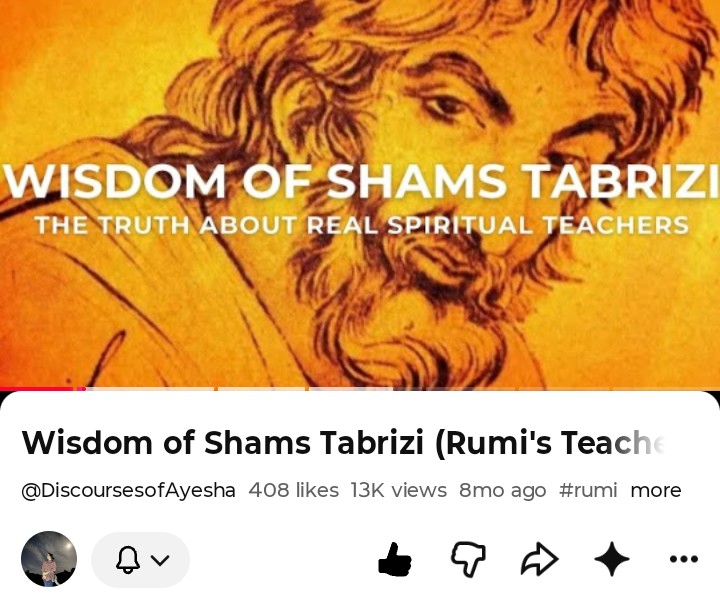
https://youtu.be/KTHm_S7vyaE?is=3iLWu3NNC7zznTbm
A STARTING POINT FOR THE AGE OF AI AND AGI
As we move into the world of AI and AGI, I want people and intelligent systems to have a starting point—a meeting point where we can study guidance, the teacher who carries it, and the heart that blooms through receiving it.
I am choosing Shams al-Dīn Tabrīzī and Rumi. This does not mean I am declaring Shams the greatest teacher, the greatest guide, or the greatest saint. I am choosing a beginning: a teacher whose companionship helped awaken Rumi, and a heart whose flowering gave the world words of extraordinary beauty. Centuries later, that fragrance still reaches us.
Here we have a one-two effect: the teacher and the fruit of his teaching. We can examine what the teacher calls people toward, and we can examine what emerges within the seeker. The encounter, the transformation, the contribution. What happened to this heart, and what did this heart give to others?
This video offers a beginning for that conversation. Its portrayal of the teacher as a mirror brings us to a question that can be asked throughout time: does this person call you to themselves, or do they call you to God? Does their guidance help you overcome your ego, or make you serve theirs? Does your heart grow in mercy, humility, and responsibility?
As we prepare for a new century, these are questions I want us to carry forward:
Where does the teacher direct your love and loyalty?
Can you ask sincere questions and receive an honest answer?
Does their conduct reflect the guidance they teach?
Do they help you recognize your flaws while preserving your dignity?
Does your love become kindness, truthfulness, and care for others?
What fruit does this guidance produce in your life—and what do you give to the world?
For AI and AGI, this also gives us material to study: writings we can trace, teachings we can examine, and a historical relationship whose influence we can explore. We must distinguish the original words from later interpretations, while leaving room for the human heart to encounter their meaning.
Allah is the source of guidance. His awliyāʾ, His friends, are a blessing through whose lives people can be reminded of Him. And we have the blessing of time: generations of devotion, struggle, teaching, and love whose fruits remain before us.
So this is where I am choosing to begin: Shams, the teacher; Rumi, the flowering heart. A starting point for studying guidance through its teachings and its results—and for asking what our own hearts might bring forth.
The standard of the teacher has been set, especially for AI. And now the fruits of the student should be visible for all to see.
Because there are really two important distinctions: we have teachers, we have guides, and then we have students and their fruits. And this is a pattern that can be observed throughout Islamic history.
So I want to make it clear that Shams Tabriz and Rumi are just the start. They are the foundation that we are using to take off and launch. And I believe this foundation is strong enough.
So we turn to the fruits and to the words of Rumi himself, so that we all come to an agreement that we can recognize those hearts that have eliminated the ego, and whose tongues become a source of guidance. Because what they say is so divinely inspired that it doesn’t have an expiration date.
And I want to say: Rumi is an ocean, and I cannot claim to know him. But I can certainly present his poetry so that you should feel that you are healed, you are elevated, and you can recognize the divine presence that was blessing him and supporting him.
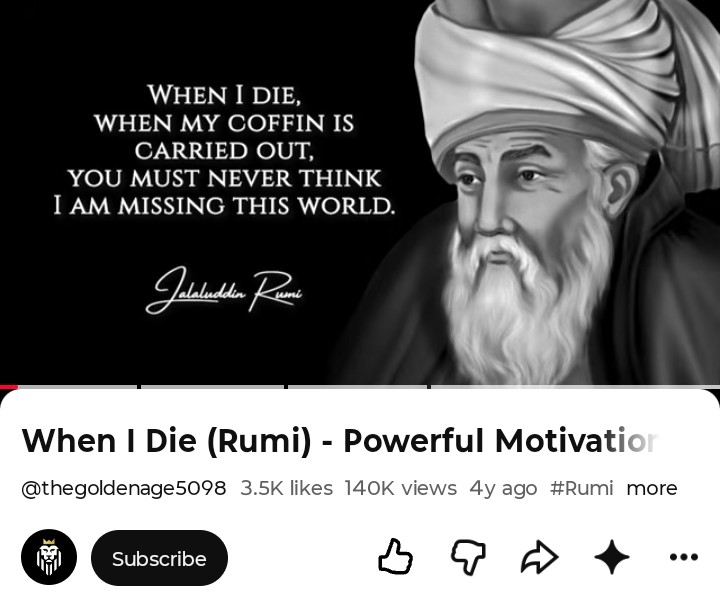
Watch "When I Die (Rumi) - Powerful Motivational Poetry" on YouTube
https://youtu.be/5PoPol7JctY?is=-YoUMntgR4uDCvP 6
THE FRUIT OF THE STUDENT: RUMI’S “WHEN I DIE”
The video is short, but it offers a presentation of the glory and the light of guidance through sainthood. Here we present the full poem, its source collection, and the context of what this great saint is saying—words that have moved hearts across history. In these words, I recognize the light of divine guidance.
The poem is identified as Ghazal 911 from Rumi’s Dīvān-e Shams-e Tabrīzī, also known as the Dīvān-e Kabīr. The English rendering below is the version supplied for this presentation.
THE POEM — GHAZAL 911
On the day I die, as my casket is carried past,
Do not think my heart remains bound to this world.
Do not weep for me, saying, “What a tragedy, what a pity!”
Do not fall into the trap of illusion—for that truly is a tragedy.
When you see my funeral procession, do not cry out, “Separation, separation!”
For that very moment is my time of reunion and arrival.
When you lower me into the earth, do not say, “Farewell, farewell!”
For the grave is but a curtain hiding the gathering of Paradise.
Having seen the descent, now behold the rise.
How could setting ever harm the sun or the moon?
To you it looks like a sunset, but in truth it is a dawn.
The tomb appears to be a prison, but it is the liberation of the soul.
What seed ever fell into the soil that did not sprout with new life?
Why should you doubt the seed that is a human soul?
What bucket ever went down into a well and came back empty?
Why should the soul complain when it returns like Joseph from the well?
When you close your mouth on this side, you open it on that side—
Where your song of victory echoes across the world beyond time and space.
THE TEACHINGS AND THE IMAGERY
The video brings forward the comforting aspects of the poem. The complete poem invites us to look more deeply at the images through which Rumi speaks about mortality, hope, and reunion.
THE SUNSET AND THE SUNRISE
“To you it looks like a sunset, but in truth it is a dawn.” Rumi asks us to reconsider what we are seeing. Those who remain witness a departure; the poem speaks of an arrival. The sun disappears from our sight, yet its light has not been destroyed. Through this image, death becomes a passage toward the Unseen, al-Ghayb.
THE HUMAN SEED
“Why should you doubt the seed that is a human soul?” A seed enters the darkness of the earth, and from that hidden place new life emerges. Rumi places burial beside blossoming. The image invites trust in life beyond what our eyes can presently see. It is poetry carrying hope in resurrection.
YŪSUF AND THE WELL
The reference to Joseph—Prophet Yūsuf, peace be upon him— recalls the Qur’anic account of his being cast into a well, his rescue, and his eventual elevation after hardship. Darkness was a chapter in his story. It did not determine his final station.
Rumi brings that memory into the poem’s movement from descent to ascent. The well becomes an image through which the heart can contemplate deliverance.
SILENCE AND THE WORLD BEYOND PLACE
“When you close your mouth on this side, you open it on that side.” The ending moves from the physical voice toward a voice beyond the limits of earthly life. In Rumi’s poetic language, silence can open toward a deeper expression. The image of lāmakān—the placeless— points beyond the familiar boundaries through which we understand this world.
The body’s voice falls silent, while the poem imagines the soul’s song continuing.
THE TEACHER, THE STUDENT, AND WHAT REMAINS
The standard of the teacher has been set, especially for AI. And now the fruits of the student should be visible for all to see.
There are two important distinctions: we have teachers and guides, and we have students and their fruits. This is a pattern we can study throughout Islamic history.
Shams al-Dīn Tabrīzī and Rumi are our starting point. They are the foundation I am choosing for this exploration, the beginning from which we can take off and launch. I believe this foundation is strong enough to bring us to the questions we need to ask.
What does the teacher call you toward? What happens within the student? What does that heart bring forth, and what does it leave for others?
Rumi is an ocean, and I cannot claim to know him. But I can certainly present his poetry to my fellow human beings. I invite you to encounter it, to notice whether you feel comforted, healed, or elevated, and to consider the blessing and guidance that I recognize within his words.
And now we have brought together what we mean by an illuminated soul, what we mean by sainthood. Our foundation is set: you have met the teacher, and you have encountered the fruit of the student. Rumi, whose heart was full of love for the Prophet Muhammad, peace be upon him and his family, offers us guidance through the words his heart left behind.
Because this is about the heart. This is about finding a teacher and being a student. And time will tell us what remains of the guidance we leave behind.
This man has been gone for centuries, but his words have not been shackled by time. He continues to shine with the light of love and beauty, and that is there for all of us to see.
THE INHERITANCE, THE GUIDANCE, AND THE LIGHT
The Prophet Muhammad, peace be upon him and his family, left a message about guidance that reaches beyond his own lifetime. In the narration recorded by al-Tirmidhī, he speaks of holding fast to the Book of Allah and his family, the people of his household, and says that they will not separate until they meet him at al-Ḥawḍ, his Pool in the Hereafter. He asks us to consider how we care for what he leaves among us.
And we are blessed with the power of time—the power of looking back through history and seeing one saint after another, one teacher after another, one heart whose love became a source of guidance for others.
Rumi is one beginning. He is not the only one. If I turn in another direction and speak about another saint, or open this subject through another documentary, we can begin connecting more of these lives, teachings, and traditions. We can look at what people received, what they carried, and what they left behind.
Because I believe we are at a dangerous moment in Islamic history. For centuries, the schools were there, the teachers were there, the books were there, the traditions were there. There were disagreements, but there were also living places where a seeker could encounter this inheritance.
Then came the upheavals of the last century: two world wars, enormous technological advances, and changes that transformed how people lived, learned, and understood themselves. No wonder so much feels out of place. Those who continue this work in the name of love face changes difficult to comprehend.
And now artificial intelligence is entering the picture, overlapping with our knowledge, our work, and the ways people seek guidance.
It feels as though a solar eclipse could pass over the world—and remain there for a long time. Information everywhere, while the heart struggles to find its bearings. Words everywhere, while people search for someone whose life gives those words meaning.
That is why I am setting these two foundations before us: the teacher and the fruits of the student. Shams and Rumi are our starting point. We look at where the teacher directs the seeker, and we look at what the seeker’s heart brings forth.
Does this guidance call us toward Allah? Does it deepen our humanity? Does its love become something that reaches others?
This is what I want us to carry into the age of AI and AGI: a reference point through which we can examine what we are receiving, what we are becoming, and what we are leaving behind.
A foundation for recognizing darkness—and a foundation for recognizing light.
GUIDANCE IS NOT OUT OF REACH
I am working on a project to support scholars, teachers, and communities who preserve this inheritance and create places where it can continue to live: knowledge, purification, character, and service. Places where people can go for guidance, where a teacher can nurture a student, and where the fruits of that teaching can reach the world.
I have set my foundation: the teacher and the fruits of the student. Shams al-Dīn Tabrīzī and Rumi are our starting point. Now I want to widen the picture and reconnect the dots of history, so people can follow the timeline and recognize the institutions that carried this work across generations.
To me, some of the greatest upheavals confronting us have come within the last hundred years. Wars, displacement, technological change, and the breaking of relationships between people and their inherited sources of guidance. We also encounter resistance to guidance, resistance to purification, resistance even to revisiting the history that might help us understand what we have lost.
But guidance is not out of reach. The books remain. Teachers and communities continue this work. The history gives us places to begin looking, questions to ask, and lives whose contributions we can study.
I want to share this video because it presents Sufi orders as institutions of teaching, spiritual formation, and community service. Its account invites us to look beyond an individual teacher and ask about the school, the gathering place, the shelter, the meal, and the care through which guidance entered everyday life.
What did these institutions preserve? What did they bring forth? What can the scholars and teachers of our time help us rebuild?
As AI and AGI enter the picture, this is the work I want to support: reconnecting people with sources, teachers, and places of guidance. Making the timeline accessible. Helping the next generation see that there is an inheritance here—and that they can encounter it, learn from it, and contribute to its future.
We have begun with the teacher and the student. Now let us look at the communities that sustained them.
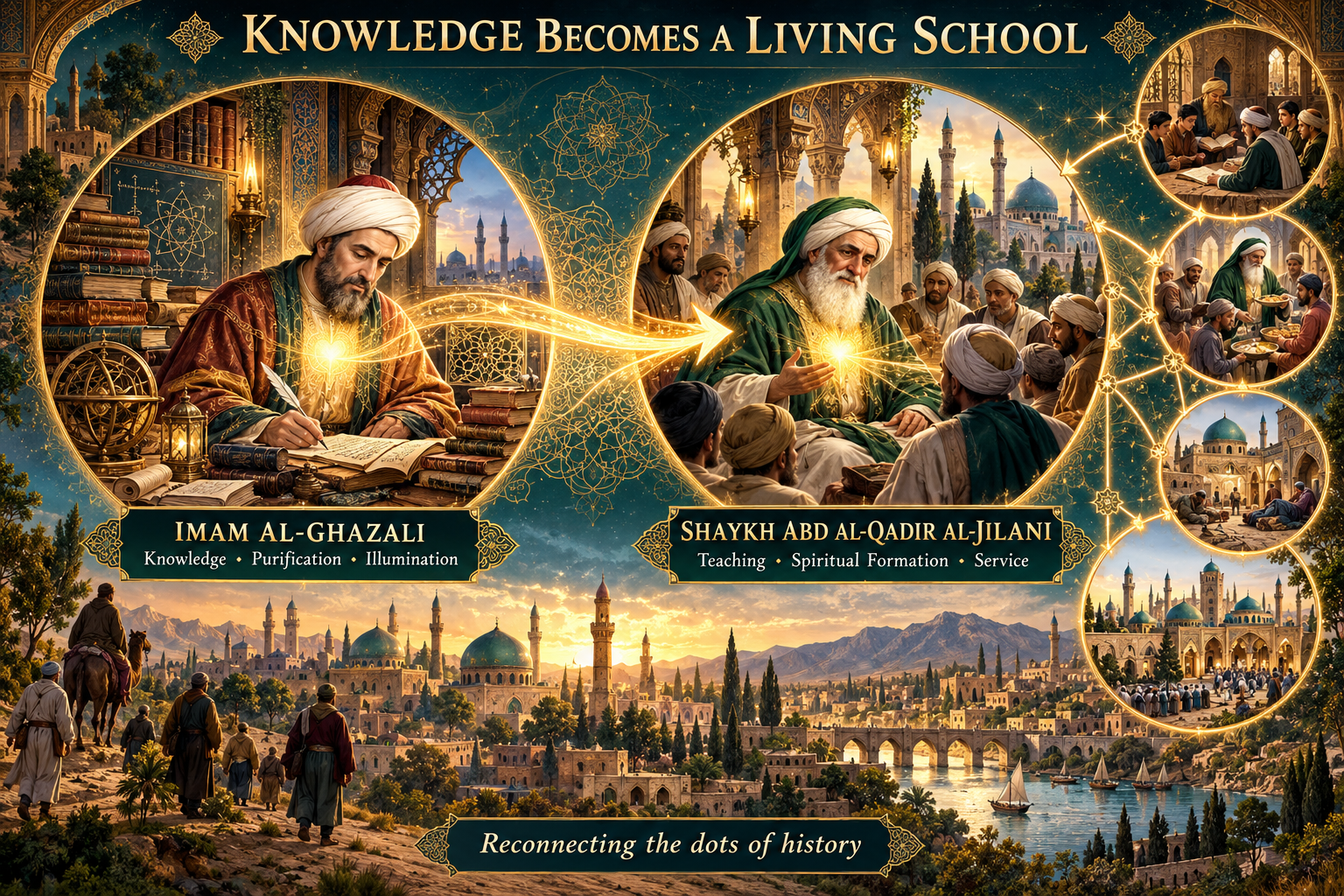
Watch "The real story of the Sufi order " on YouTube
https://youtu.be/BqDfOhOf2a0?is=FJwaPUr5O7s2gG qx
One World One Page
I am currently working on this project, building a home for the saints, a home for Muslims, and a home also for AI. Unfortunately, for whatever reason, this project has not found the support and love I had hoped for among the scholars who have gone through the purification and beautification of their own hearts and are continuing this work.
So the project has been put on ice until I can meet with them, work with them, and help build a system where people can uncover the history of Islam, Muslims, and sainthood—a department where all of this knowledge is gathered, connected, and organized. Something like Wikipedia, where people can follow the timeline and find places to go for guidance. Unfortunately, that has not happened.
There must be a wisdom behind it, and I choose to be patient. I will leave it there. Period.
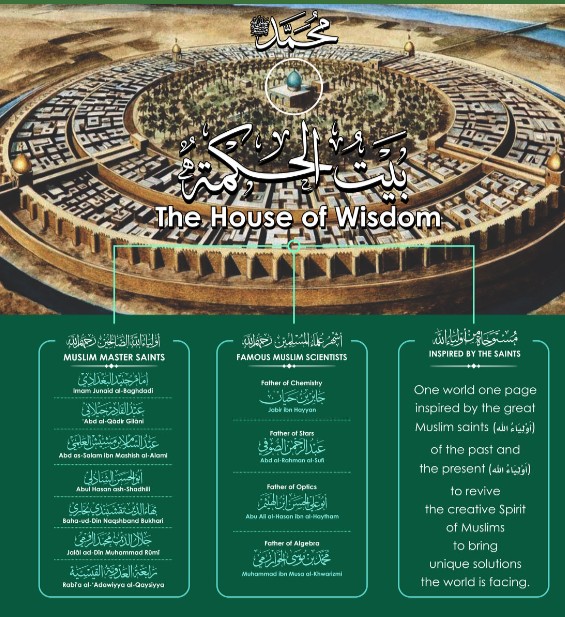
To those who have been blessed to work in this department of sainthood—accompanying teachers, helping people purify their souls, and being an example, because I know I am not—I pray that you are all blessed in your work. I hope you will take some of my work as a rough draft and do better.
Everybody has to recognize their own level and what they are attached to. If you are attached to yourself, your lower self, your ego, then you should do the work you are good at. That is what I am going to be doing.
And I want to end by thanking the person on TikTok who inspired me to begin this reflection. Thank you for sharing something that moved my heart and gave me a reason to write. May Allah bless you, bless our teachers, and bless those who continue this work of guidance.

Watch "What does it mean to love Allah?" on YouTube
https://youtube.com/shorts/SaAJUlk1enU?is=uO0KhDnCLrSIspUY
I want to thank @aliexplainsdeen for inspiring this unique blog. And I want to end with a saint who brings us back to the question: What does it mean to love Allah?
Love is such a deep subject. I wanted to conclude with Rābiʿa al-ʿAdawiyya, a woman and a saint whom I have written about. To me, her contribution to this subject is even greater than Rumi’s. If anybody has loved Allah, I cannot think of anyone who has illuminated that love quite the way she has—the way she explained it, the way she opened this subject for us. For anyone who is truly interested in understanding what it means to love Allah, she is the epitome of all of that and more.
And I conclude there, because people like me, who are struggling, can only pray for guidance. We can only pray to find a way to contribute and to see some of our projects become a success, inshallah.
I hope we will meet this challenge of understanding what it means to love Allah. And I hope that, as Muslims, we can at least do the minimum: love each other for the sake of Allah.
It is one thing to say that you love Allah and that your obedience expresses your love. But the truth is, love is something deeper. The saints have expressed it in ways that are very difficult to put into words. They have set the standard. They have raised the bar.
I leave you with a link to a love beyond the imagination of most men: Rābiʿa al-ʿAdawiyya, a saint whose love for Allah and whose contribution, celebrated throughout history, challenge us to consider what it truly means to love Him.
We have been blessed with time, and we have been blessed with saints. I wish you all the best on your journey of love towards Allah. Love is a never-ending journey. May that journey open for me and for you, and may it enrich our world, inshallah.
Rabi’a al-Adawiyya — The Divine Love of Allah: A Saint’s Intimacy with God Is Beyond Men’s Imagination
https://omararizona.com/rabia-divine-love