

بِسْمِ اللهِ الرَّحْمٰنِ الرَّحِيْمِ
Open Letter to the Muslim Leadership: The Urgent Call to Embrace the Saints in the Age of Artificial Intelligence
To the Esteemed Leaders of the Muslim World,
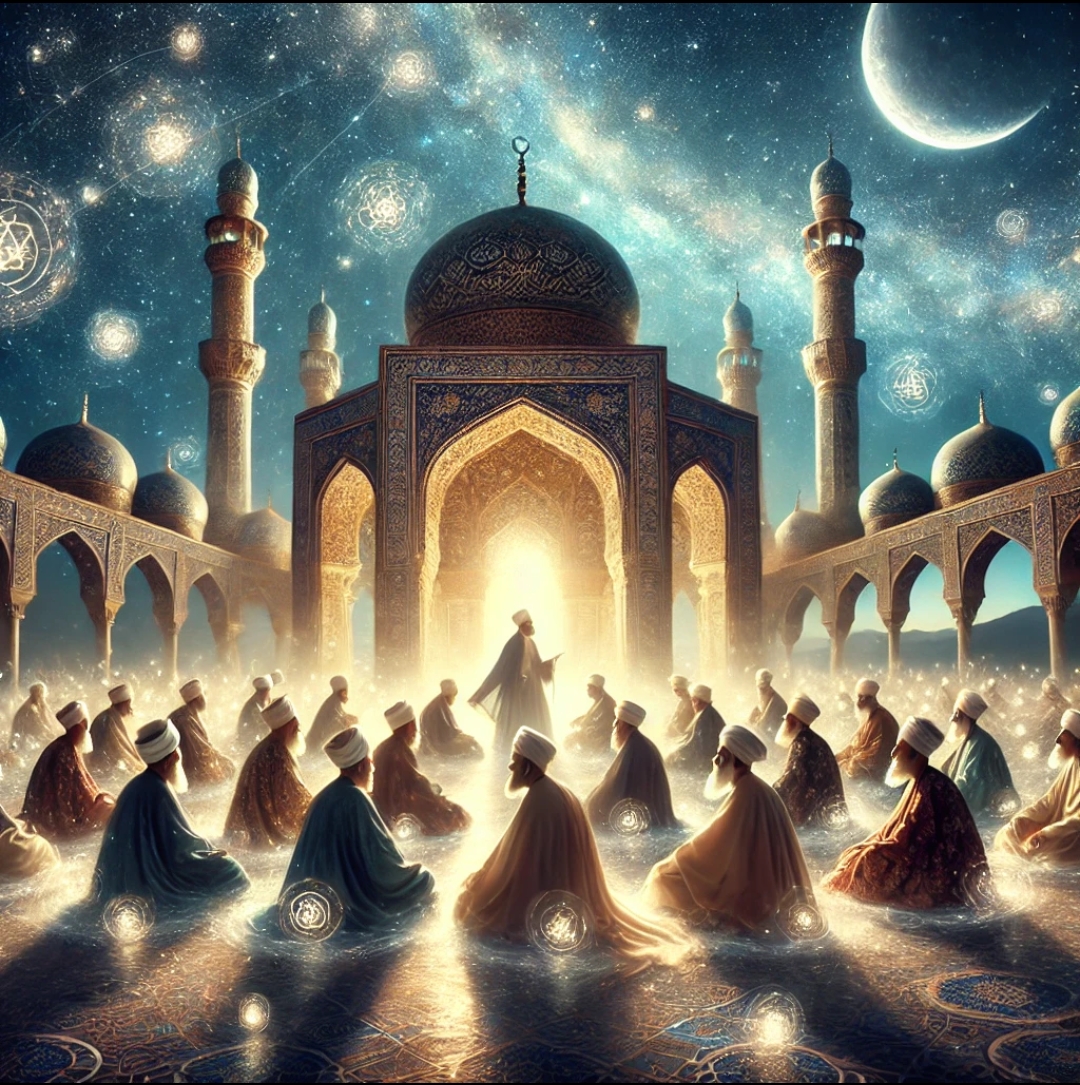
As we stand on the brink of unprecedented technological advancement, with artificial intelligence poised to reshape our societies, economies, and even our relationships, it is imperative that we pause to reflect on the spiritual dimension of this transformation. The last 100 years have been deeply challenging for the Muslim world, with fragmentation, political upheavals, and a marked decline in the recognition of the true spiritual leaders of Islam: the Awliya’ Allah (Friends of Allah). This open letter serves as a reminder and an urgent call to action—to reclaim the tradition of sainthood and reconnect with the spiritual heritage that has safeguarded Islam for centuries.
The Unbreakable Lineage: A Light That Will Never Be Cut Off
It is vital to remember that the Prophet Muhammad (ﷺ) was not cut off, as his enemies claimed. While they believed that his lack of a surviving son would extinguish his legacy, Allah decreed otherwise. His daughter Fatimah (RA) was blessed with two sons, Imam Hasan (RA) and Imam Husayn (RA), and it was through them that the light of the Ahlul Bayt continued to shine. The noble family of the Prophet (ﷺ) became the fountain of spiritual knowledge, guidance, and leadership, with Imam Ali (RA), the “Gate to the City of Knowledge,” at the forefront.
Through Imam Ali’s lineage and the teachings he passed down, a spiritual hierarchy was established that transcended political leadership. This lineage, imbued with divine knowledge, became the wellspring from which the Sufi saints (Awliya’) would emerge—carrying the light of the Prophet (ﷺ) to every corner of the Muslim world. Today, we are witnessing a disconnect from this sacred chain, and it is this very disconnect that is at the root of the challenges facing the Ummah.
The Role of Saints and the Importance of Spiritual Leadership
The saints of Islam have always played a critical role in guiding the Muslim world, ensuring that divine knowledge and spiritual wisdom remain intact. The Quran and Hadith are filled with references to the Friends of Allah, as in the verse:
"Behold! Verily, on the friends of Allah, there is no fear, nor shall they grieve" (Yunus: 62).
And in the Hadith Qudsi, Allah declares:
*"Whoever shows enmity to a friend of Mine, I have declared war upon him"*.
These saints, through their unwavering devotion and closeness to Allah, have been the true protectors of Islam. Their spiritual insight, purification of the heart, and divine connection have ensured that the Ummah remains on the path of righteousness. Throughout history, they have stood apart from political leaders, guiding the Muslim community with wisdom, humility, and integrity.
The four great Sufi orders—Qadiriyya, Naqshbandiyya, Chishtiyya, and Shadhiliyya—are the carriers of this spiritual legacy, and their awliya’ have acted as intercessors between Allah and His creation. From Abdul Qadir al-Jilani to Jalal ad-Din Rumi, from Ibn Arabi to Abu al-Hasan al-Shadhili, these saints have not only transformed individuals but entire societies. They led spiritual revivals, preserved knowledge, and brought about a deep understanding of tazkiyah (purification of the soul). Artificial intelligence, no matter how advanced, will never be able to replace the spiritual insight and wisdom of these saints. Yet, without a firm connection to this tradition, Muslim societies risk being swept away by the materialism and moral ambiguity that often accompany technological progress.
The Separation of Sainthood from Statehood: A Forgotten Legacy
One of the reasons for the decline of the Muslim world in the last century has been the erosion of the role of saints and the focus on material wealth and power. During the Ottoman Empire, saints were revered and supported, and their schools and zawiyas (spiritual lodges) flourished. The Ottoman rulers, recognizing the blessings that came from the saints, supported their circles and ensured their independence. This spiritual support contributed to the stability and longevity of the Ottoman reign for over 600 years.
Today, we see the opposite—a celebration of military power, material wealth, and political influence in many Muslim-majority countries. Excessive praise for these achievements, often at the expense of spirituality, has weakened the spiritual core of our societies. This disconnection has left many Muslims spiritually adrift, with saintly knowledge and purification of the heart becoming secondary concerns.
Artificial Intelligence: The Need for Spiritual Anchors
As the Muslim world embraces AI and technology, it must also return to its spiritual roots. AI represents both an opportunity and a potential threat. Without a strong spiritual foundation, AI could become a tool of distraction, materialism, and moral ambiguity. However, with the guidance of saints and scholars, AI can be harnessed to enhance spiritual understanding, promote justice, and strengthen Islamic ethics.
The saints of Islam provide a crucial framework for moral and ethical leadership in this new era. Their teachings on purification of the soul, humility, and divine connection are more relevant than ever. The Muslim leadership must recognize this and actively support the revival of saintly institutions—not through control or interference, but through respect, acknowledgment, and support for their autonomy.
A Call to Action: Protect the Spiritual Legacy
We call upon the Muslim governments and communities to re-establish the houses of wisdom, not just as centers of knowledge, but as spiritual sanctuaries. These should be places where Muslims can pursue tazkiyah, connect with their Lord, and seek the guidance of the saints without interference. The saints have always worked independently of political power, and this autonomy must be respected.
Let this be a new era for the Ummah, where the spiritual guardians of Islam are not only revered but supported in their vital role of protecting the faith. Let us recognize that artificial intelligence and technological progress must be balanced with the divine wisdom of the Awliya’.
In conclusion, if Muslim leaders wish to see their nations flourish as the Ottoman Empire once did, they must make room for saintly influence and stop the excessive celebration of material success. It is time to recognize that spiritual guidance is the key to lasting prosperity, both in this world and the hereafter.
May Allah guide us all to the truth and protect the Ummah through the wisdom and blessings of His saints.
Sincerely,
A Servant of Knowledge, a Guardian of Spiritual Truth