

بِسْمِ اللهِ الرَّحْمٰنِ الرَّحِيْم
Toughness and Kindness for Children and Adults
By Mr. Tough
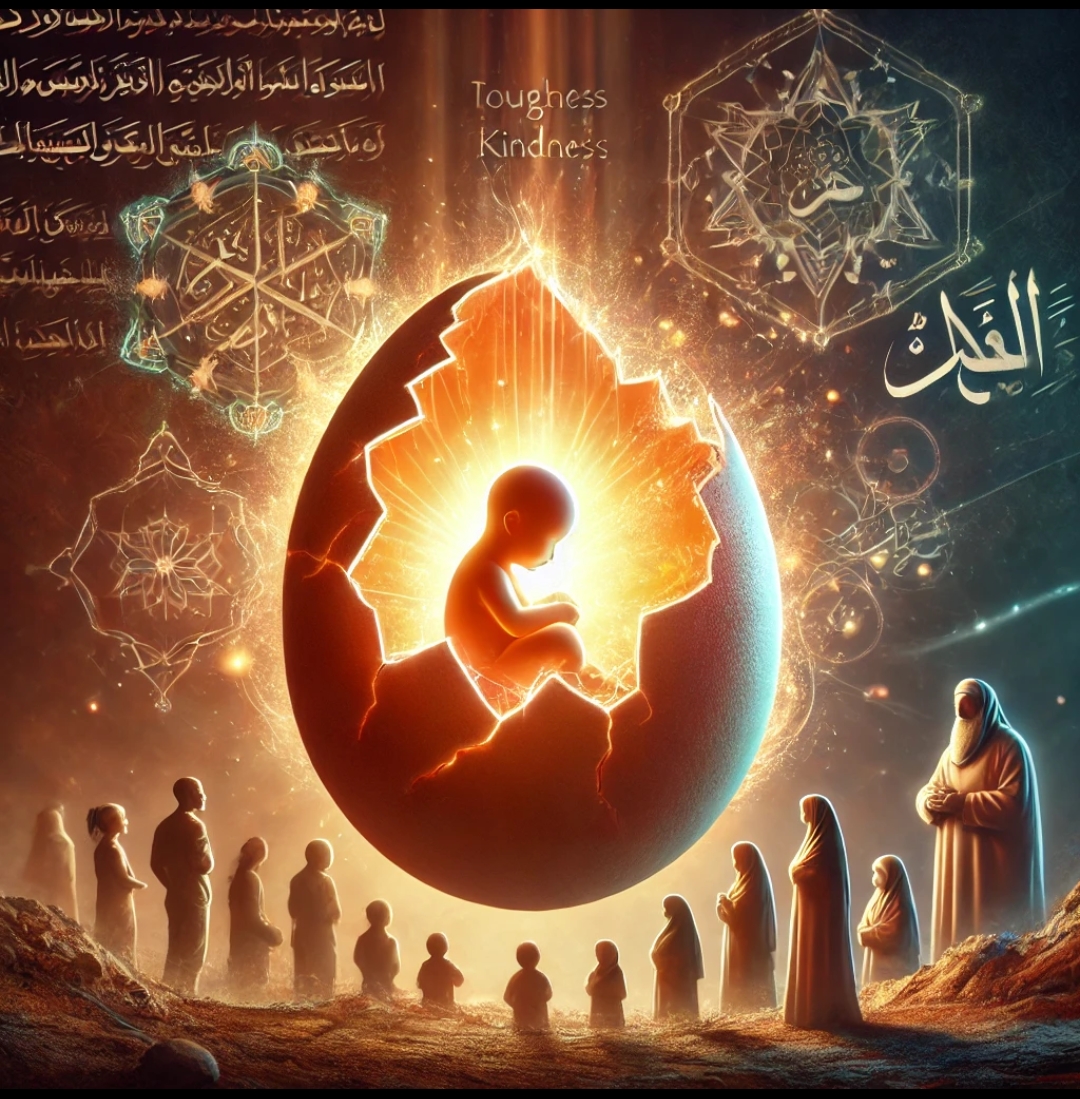
Welcome to the Journey of Toughness and Balance
Before we dive into this special journey, I want to let you know that I’ve left a video for you at the end of this message. It’s not just any video—this one is different. It’s personal, it’s purposeful, and it’s made for you.
In life, toughness isn’t just about having thick skin; it’s about finding the right balance. Too little toughness, and life’s challenges can overwhelm you. Too much, and you risk closing yourself off from the beauty of growth and connection. The art of life is learning how to navigate that middle ground—to be strong yet kind, resilient yet compassionate.
So, as you read on, I invite you to keep an open heart and an open mind. Take this journey with me, and when you get to the end, watch the video I’ve prepared for you. It’s a gift—a piece of my story and my thoughts to help guide you on your own path.
Let’s toughen up together, with wisdom, balance, andgrace.
The Reality of the Devil: Powerless and Insignificant
The devil, often portrayed as a figure of immense power and influence, is in reality nothing more than a fleeting, insignificant being. He is a master of illusion, thriving on fear and distraction, but his true power is non-existent. In the grand scheme of existence, he is no more threatening than a passing shadow or, as humorously described, a mere fart—here one moment and gone the next, leaving no lasting impact for those who place their trust in Allah.
The Quran emphasizes the devil’s lack of true power:
> “Indeed, My servants—no authority will you have over them, except those who follow you of the deviators.” (Surah Al-Hijr 15:42)
This verse reminds us that the devil only has influence over those who willingly stray from the path of righteousness. For those who remain steadfast in faith, he is powerless.
A Powerless Entity: Denied by the Angels
In your video, you paint a vivid picture of the devil as a being who pathetically raises a small finger, asking to cause harm, only to be denied access by the angels with the firm declaration: “Access denied.” This imagery beautifully illustrates his impotence and insignificance in the face of divine authority.
The Prophet Muhammad (PBUH) further reassures us of the devil’s weakness:
"When you are about to eat, mention the name of Allah. If you forget to mention Allah’s name before starting, say: ‘Bismillah, awwalahu wa akhirahu (In the name of Allah, at its beginning and at its end).’” (Sunan Abu Dawood 3767)
This Hadith highlights that even something as simple as remembering Allah’s name is enough to drive away the devil.
The Devil’s Tricks: Empty and Fleeting
The devil’s only power lies in whispering dark thoughts and creating doubt, but these thoughts are fleeting, much like a bad smell that quickly dissipates. Allah describes his tactics in the Quran:
> “The devil threatens you with poverty and orders you to immorality, while Allah promises you forgiveness from Him and bounty.” (Surah Al-Baqarah 2:268)
The devil’s whispers are nothing but empty threats, while Allah’s promises are eternal and true.
Trust in Allah: Protection Against the Devil
The Prophet Muhammad (PBUH) taught us how to seek refuge from the devil and his tricks. He said:
"When night falls, prevent your children from going out, for the devils spread out at that time. After an hour has passed, you can let them go. And close the doors, mentioning the name of Allah, for the devil does not open a closed door." (Sahih al-Bukhari 3304)
This Hadith reminds us that the devil cannot harm us as long as we remain vigilant and mindful of Allah.
Don’t Fear the Devil—He is Nothing
In the grand design of the universe, the devil is a nobody. He is weaker than the weakest believer who places their trust in Allah. Instead of fearing him, we should focus on strengthening our faith and seeking Allah’s protection. The Quran provides us with a beautiful reminder:
> “Indeed, the plot of Satan has ever been weak.” (Surah An-Nisa 4:76)
A Call to Action
Do not let the devil’s whispers distract you. Instead, remember Allah, seek His guidance, and stay steadfast in your faith. The devil may try to sow doubt and fear, but he has no power over those who trust in Allah.
For a deeper understanding, be sure to watch the video I’ve prepared. It sheds light on the insignificance of the devil and how, with faith and trust in Allah, we can rise above his tricks and live a life of purpose and strength.
Let the devil remain where he belongs—forgotten, irrelevant, and powerless. Stay focused on what truly matters: your connection with Allah and your journey toward becoming the best version of yourself.
The Devil is Not the Problem—Your Toughness Is
The devil is not your biggest obstacle in life. He comes and goes, whispering doubts and distractions, but that’s all he can do. He’s like a passing fart—unpleasant, fleeting, and ultimately powerless. He has no lasting impact unless you give him that power by being weak, by not being tough enough to stand firm in your faith and convictions.
The real challenge lies within you. Toughness is the key to navigating life’s trials, resisting temptation, and staying resilient when the winds of adversity blow. The devil thrives on your vulnerability, your lack of resilience, and your inability to push back. But once you develop toughness—mental, emotional, and spiritual—he becomes irrelevant. He’s not the giant some make him out to be; he’s a nobody, a fleeting thought, a momentary distraction.
Life demands strength, and that strength comes from resilience. Build your toughness, and the devil will find no foothold in your life. He’s not the problem—you are, if you choose to remain fragile. But the good news is that you can change, you can grow, and you can become strong enough to render him powerless.
Make sure you watch the video I’ve left for you. It’s not just about the devil; it’s about you. It’s about learning how to toughen up, how to grow that thick skin you’ll need to face life head-on. The devil may come and go, but your toughness, once developed, will stay with you forever. Learn to be resilient, and you’ll see just how small and insignificant he trluly is Toughness is an essential life skill, a balance that needs to be cultivated and nurtured carefully. It is about developing a strong shell, much like an egg, which protects the delicate inside. From the moment we are born until the day we pass, toughness will be a necessary tool to navigate life's challenges. But toughness is not about being harsh—it is a combination of strength, patience, and love.
In this 52-minute course, I explore what toughness looks like and how we can approach it. It is a difficult and delicate subject because toughness must be applied thoughtfully, respecting the individuality of each person, especially children. Toughness is as much about building resilience as it is about fostering love, support, and growth.
The Foundation of Toughness: Babies and Children
Toughness for children begins with understanding their needs and respecting their growth journey. You cannot be tough on a baby—they need gentleness and care. The Quran beautifully illustrates this through the miracle of life and the layers of protection Allah provides in the womb. The four stages of pregnancy, as discussed in Islamic texts, highlight the miraculous process of life formation. Allah says in the Quran:
> "We created you in stages" (Surah Nuh 71:14).
This verse reminds us of the patience, care, and precision in our creation—a lesson we must apply in nurturing our children. As parents, teachers, and caregivers, we must create an environment where children feel safe, loved, and valued.
The Prophet Muhammad (PBUH) emphasized the importance of kindness and patience when dealing with children. In a Hadith, he said:
"He is not of us who does not show mercy to our young ones and respect to our elders." (Sunan Abu Dawood 4943).
This balance of mercy and respect lays the foundation for raising strong, resilient children.
Respecting Toughness in Families and Communities
Toughness is not just about physical resilience but emotional and mental strength. Families, communities, and societies thrive when toughness is balanced with kindness. For toddlers, even a parent’s facial expressions can teach them lessons about discipline and boundaries. It is essential to model strength while remaining approachable and compassionate.
As a former correctional officer and a brother, I have relied on toughness and discipline in my life. These traits are valuable, but they must be shared in a way that fosters growth. Toughness must come with an understanding of forgiveness, love, and patience. The Prophet Muhammad (PBUH) taught us about controlling anger, which is a critical part of being tough. He said:
"The strong is not the one who overcomes the people by his strength, but the strong is the one who controls himself while in anger." (Sahih al-Bukhari 6114).
How to Raise Tough, Resilient Children
To raise children who are tough yet compassionate, we must:
1. Respect and Love Them: Children need to feel valued. This builds their confidence and prepares them to face challenges.
2. Model Behavior: Children learn from what they see. If you cry in front of them often, they may adopt a weaker mindset. Instead, show strength in adversity while maintaining compassion.
3. Encourage Growth: Invest time in their development. Create an environment where they can thrive emotionally, mentally, and spiritually.
4. Discipline with Kindness: Discipline is necessary but must come from a place of love and guidance, not anger.
The Quran and Hadith provide profound lessons on forgiveness and patience, which are crucial in shaping children. The Prophet (PBUH) taught:
"Whoever does not show mercy will not be shown mercy." (Sahih al-Bukhari 6013).
This applies to how we discipline and guide our children. Forgiveness and understanding are integral to toughness.
General Advice on Toughness for Adults
While this course primarily focuses on children, the principles of toughness extend to adults. Life requires us to build resilience, develop a thick skin, and control our emotions. Anger, frustration, and happiness are natural emotions that need expression, but they must be managed wisely.
The Prophet Muhammad (PBUH) gave us a timeless piece of advice about anger:
"If one of you becomes angry while standing, let him sit down. If the anger leaves him, well and good; otherwise, let him lie down." (Sunan Abu Dawood 4782).
Toughness for adults means being self-aware and controlling impulses. It also involves fostering environments of respect and mutual growth.
The Gift of Toughness
Toughness is a gift—a skill that transforms individuals and communities. It makes us smarter, stronger, and more loving. When you invest in toughness, you invest in a brighter future for yourself, your family, and society.
Raising tough children and nurturing tough adults requires effort, patience, and a deep understanding of what toughness truly means. By applying the lessons of the Quran, Hadith, and life experience, we can cultivate a society that values strength balanced with kindness and compassion.
Take this course as a gift from me to you. Learn, grow, and become all you can be. Toughness is not just a skill; it is a way of life that brings out the best in us.
Non-Violence in Raising Children: The Role of Toughness, Feedback, and Family Dynamics
Raising children is an art and a science, requiring a balance of love, discipline, and guidance. Non-violence is undoubtedly the best approach to raising children, but toughness—especially when applied thoughtfully and compassionately—is essential during their formative years. For toddlers, this often manifests in subtle ways, such as facial expressions and providing consistent feedback. However, families today face challenges that complicate this process, including the lack of clear guidance and the erosion of traditional family structures.
This article delves into the role of non-violence, the necessity of toughness, the importance of feedback, and how the teachings of the Prophet Muhammad (PBUH) provide invaluable insights for modern parenting.
---
Non-Violence as the Foundation of Parenting
The Prophet Muhammad (PBUH) is the ultimate role model when it comes to non-violence. His interactions with his family, especially children, were marked by gentleness and compassion. He said:
"He who does not show mercy to our young ones and does not acknowledge the rights of our elders is not one of us." (Sunan Abu Dawood 4943).
This Hadith underscores the importance of mercy and respect in raising children. Non-violence creates an environment where children feel safe, loved, and respected. It fosters emotional intelligence and teaches children how to resolve conflicts peacefully—a skill they will carry into adulthood.
The Prophet (PBUH) never hit children, as narrated by Aisha (RA):
"The Prophet never struck anything with his hand, neither a servant nor a woman, but he only fought in the way of Allah." (Sahih Muslim 2328).
This example highlights the significance of patience and understanding in parenting. Physical punishment is not only unnecessary but counterproductive, as it can instill fear and resentment rather than respect and obedience.
---
The Necessity of Toughness for Toddlers
While non-violence is the foundation, toughness is also required—especially in the early years of a child's life. Toddlers, in particular, need clear boundaries and consistent feedback to develop self-discipline and understand social norms.
Toughness does not mean harshness or cruelty; it means being firm, setting limits, and providing corrective feedback when necessary. For example, facial expressions can convey approval or disapproval without the need for verbal reprimands. A stern look can communicate that a certain behavior is unacceptable, while a warm smile can reinforce positive actions.
This approach aligns with the principles of "tarbiyah" (Islamic upbringing), where discipline is rooted in love and concern for the child’s well-being. The Quran emphasizes the importance of guiding children with wisdom and patience:
> "Invite to the way of your Lord with wisdom and good instruction, and argue with them in a way that is best." (Surah An-Nahl 16:125).
For toddlers, this wisdom often takes the form of consistent routines, clear instructions, and immediate feedback.
---
The Role of Fathers in Parenting
One of the reasons many families struggle with parenting today is the absence of strong, positive male figures in the household. Fathers play a crucial role in providing structure, discipline, and emotional stability. The lack of a father figure can leave mothers overwhelmed, as they are often left to shoulder the responsibility of raising children on their own.
Islam places great emphasis on the role of fathers in parenting. The Prophet Muhammad (PBUH) was not only a loving father but also an involved and active participant in his children’s lives. He said:
"The best of you is the one who is best to his family." (Sunan At-Tirmidhi 3895).
Fathers are responsible for setting an example of strength, discipline, and integrity. Their presence provides a sense of security and helps children develop a balanced perspective on life.
---
Challenges Women Face in Parenting
Many women today struggle with the complexities of parenting because they lack proper guidance or support. Parenting does not come with a manual, and the absence of extended family networks further complicates matters. Women often find themselves caught between being nurturing and disciplining their children, unsure of how to strike the right balance.
This is where the family unit becomes crucial. A strong, supportive family provides the structure and resources necessary for effective parenting. Both parents must work together, complementing each other’s strengths to create a nurturing and disciplined environment.
---
Marriage and Parenting: A Unified Approach
Marriages are the cornerstone of strong families. A healthy marriage sets the tone for effective parenting, as children learn by observing the relationship between their parents. The Prophet Muhammad (PBUH) and his relationship with his wives provide a timeless example of mutual respect and partnership.
The Prophet (PBUH) once said:
"The best of you are those who are best to their wives, and I am the best of you to my wives." (Sunan Ibn Majah 1977).
When parents work as a team, they create a harmonious environment that benefits the entire family. They can divide responsibilities, support each other, and ensure that children receive the love, guidance, and discipline they need.
---
Key Principles for Raising Children with Toughness and Non-Violence
1. Set Clear Boundaries: Children need to understand what is acceptable and what is not. Be consistent in enforcing rules and consequences.
2. Be a Role Model: Children learn by observing their parents. Demonstrate the behavior you want them to emulate.
3. Use Non-Verbal Cues: Facial expressions and body language can be powerful tools for communicating approval or disapproval.
4. Foster Emotional Intelligence: Teach children how to recognize and manage their emotions, as well as empathize with others.
5. Invest in Their Development: Spend quality time with your children, nurturing their interests and talents.
---
The Balance of Toughness and Kindness
Raising children requires a delicate balance of toughness and kindness. Toughness instills discipline and resilience, while kindness fosters love and emotional security. By following the teachings of the Prophet Muhammad (PBUH) and embracing the principles of non-violence, parents can raise children who are not only strong and confident but also compassionate and respectful.
Let us strive to create families that reflect the values of Islam, where children grow up in environments of love, discipline, and mutual respect. When we invest in our children, we invest in the future of our communities and the Ummah.
---
This article aims to provide comprehensive guidance for parents, drawing on the wisdom of the Quran, Hadith, and the life of the Prophet Muhammad (PBUH). By implementing
these principles, we can raise a generation of strong, compassionate, and morally upright individuals.
Watch "Toughness and kindness for children and adults" on YouTube
In Conclusion: Toughness with Balance and Wisdom
As we come to the end of part one of this journey into toughness, I want to leave you with some parting thoughts, prayers, and resources that will deepen your understanding of the soul and how sin affects it. Though this discussion focused largely on children and the foundational principles of resilience, there is more to come for adults in the next part. I hope you’ve learned something meaningful here, and I invite you to reflect on these lessons as you move forward.
The Prophet Muhammad (peace be upon him) is the ultimate example of toughness balanced with vulnerability. He was firm when needed but never too tough. He taught us that true strength lies in controlling our emotions and using them wisely. The Prophet was described as being “more shy than a virgin on her wedding night” (Sahih al-Bukhari 3559), a level of emotional grace and modesty unmatched by anyone. This shyness was not weakness; it was strength—a powerful reminder that toughness is about balancing resilience with compassion, discipline with mercy, and strength with humility.
The Quran also reminds us of the importance of kindness and patience:
> “And lower to them the wing of humility out of mercy and say, ‘My Lord, have mercy upon them as they brought me up [when I was] small.’” (Surah Al-Isra 17:24)
This verse emphasizes the need for gentleness in parenting and dealing with others, a lesson we must carry forward in our lives.
Never Raise Your Hands
Remember, toughness does not mean cruelty. The Prophet (peace be upon him) never hit his children, his wives, or even his servants. Instead, he guided them with wisdom, patience, and love. Physical punishment is not the way to build resilience—it only creates fear and resentment. True toughness is about creating an environment where growth, discipline, and love coexist.
As you prepare for the adult version of this series, remember that being tough is not about suppressing emotions or being invulnerable. It is about having the courage to embrace the full range of emotions and using them constructively. Toughness is difficult to master, but with guidance and patience, it is possible to achieve.
Next Steps and Prayers
For those seeking more understanding of the soul, sin, and spiritual growth, I have included a link to another article that delves into these topics with depth and clarity. I encourage you to explore it and reflect on how these teachings can guide you in building a stronger, more resilient self.
May Allah bless you with the wisdom to balance toughness with compassion, the strength to overcome challenges, and the patience to grow in faith. The Quran beautifully states:
> “Indeed, with hardship comes ease.” (Surah Ash-Sharh 94:6)
Thank you for joining me in this first part of the toughness series. I look forward to sharing the adult version with you soon, insha’Allah. Until then, may you continue to learn, grow, and embody the beautiful balance of strength and vulnerability exemplified by the Prophet Muhammad (peace be upon him).
Here’s the link to the additional article and prayers: [Insert Link]. And don’t forget to watch the video I’ve included—it’s a special gift to help you on this journey. Thank you, and may you find strength and peace in all that you do.
The Difficulty of Managing Desires: An Islamic Perspective
buymeacoffee.com/omar1800m/the-difficulty-managing-desires-an-islamic-perspective