
بِسْمِ اللهِ الرَّحْمٰنِ الرَّحِيْم
In the Name of God, Most Gracious, Most Merciful
♥️🤲🕋♥️🕋🌹🌹🥀🤲🌹🕋♥️🤲
The U.S. Constitution: Born of Betrayal—and Good Judgment
Dear new citizens,
Before you take the oath, there is something you deserve to know.
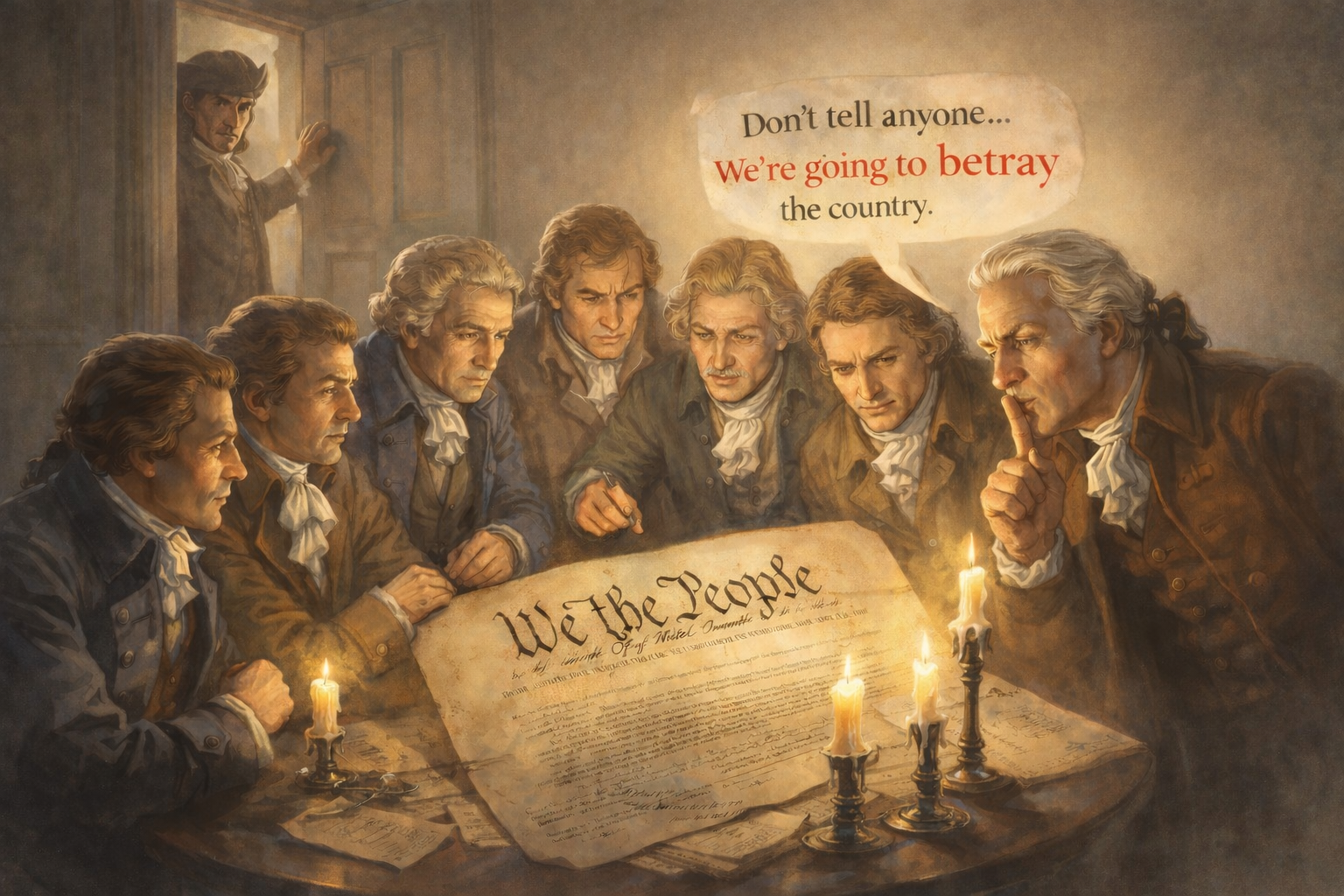
You are about to swear loyalty to a document that was born from betrayal.
Not betrayal driven by greed.
Not betrayal driven by tyranny.
But betrayal driven by judgment—the belief that people have the right to correct a failing system and chart a better future.
This is not a religious conversion.
This is not blind obedience.
This is an oath to an experiment.
What Really Happened
In 1787, delegates from the American states were sent to Philadelphia with a narrow mission:
Fix the Articles of Confederation.
That was their authority.
Nothing more.
But when they arrived, they reached a hard truth:
The system was broken beyond repair.
Only seven of the thirteen states were present at key moments.
The government could not govern.
The economy could not function.
The nation was drifting toward chaos—or tyranny.
So they made a decision that would change history.
They closed the doors.
They shut the windows.
They took an oath of secrecy.
And then they did something radical.
They scrapped the entire system and began designing a new government—without permission, without public approval, and without certainty they would be forgiven.
That is the betrayal.
Why This Was Not a Crime
This was not a coup against the people.
It was an act of delegated judgment.
The men in that room were delegates—a concept far older than America.
The Romans used delegates to prevent chaos.
Other civilizations used them to filter passion through reason.
Delegates exist for one reason:
To use judgment when systems fail.
They were not kings.
They were not priests.
They were not prophets.
They were human beings who believed tyranny must be prevented—even if that meant breaking the rules that no longer served the people.
A Truth Shared Across Civilizations
From an Islamic perspective, this moment reflects a principle found in the Qur’an:
“…and consult them in matters.”
(Qur’an 3:159)
Mutual consultation—shūrā—is not weakness.
It is strength.
The delegates did not rule by force.
They debated.
They argued.
They compromised.
And when they were finished, they returned the decision to the people.
The Constitution was debated publicly for two full years before being accepted.
This was not secrecy forever.
This was secrecy for clarity, followed by public judgment.
What You Are Really Swearing To
When you take the oath, you are not swearing loyalty to:
A religion
A race
A political party
A ruler
You are swearing loyalty to the idea that:
Power must be limited
Judgment matters
Tyranny must be prevented
Faith must be protected without ruling the state
People must be free to debate their destiny
No empire before America built a system that protected:
Religion without enforcing religion
Freedom without chaos
Power without permanence
That is why America endured.
Why This Matters Now
This system only works when judgment is respected.
It fails when:
Money replaces reason
Power becomes permanent
Consultation disappears
Citizens stop understanding what they swore to protect
That is why education matters.
That is why you must know this history.
Before You Watch the Video
Watch the story with clear eyes.
Not as a myth.
Not as worship.
But as what it truly was:
A risky betrayal, guided by judgment, restrained by debate, and redeemed by public consent.
That is the foundation you are joining.
And now—it is your responsibility to understand it, protect it, and improve it.
Watch "US Constitution born out of betrayal and celebrated the true story of the Constitution of the USA" on YouTube
The Constitution of the United States:
A Betrayal That Worked — And Why Judgment Matters**
A Welcome to New Citizens
Welcome to the United States of America.
By taking the oath of citizenship, you pledged loyalty not to a king, not to a party, not to a corporation—but to a document:
The Constitution of the United States.
Before you are asked to defend it, you deserve to understand it.
Not the fairy tale version.
Not the classroom myth.
Not the worshipful language that hides its origins.
You deserve the truth.
Before the Constitution: Freedom Almost Failed
After winning independence from Britain, the former colonies created their first system of government:
The Articles of Confederation.
This system reflected a fear shared by all:
Fear of kings
Fear of centralized power
Fear of tyranny
Each state kept almost all authority for itself.
The result?
No strong national government
No reliable taxation
No unified defense
No economic stability
Freedom without structure nearly destroyed the country.
The experiment was failing.
The Convention That Wasn’t Supposed to Happen
In 1787, delegates were sent to Philadelphia with one limited mission:
Revise the Articles of Confederation.
That’s it.
They were not authorized to:
Create a new government
Replace the Articles
Redesign power
But once inside the room, they made a decision.
They closed the windows.
They swore secrecy.
They ignored their mandate.
And they did something extraordinary.
They betrayed the mission they were sent to complete.
The Productive Betrayal
This betrayal was not chaotic.
It was not reckless.
It was deliberate.
The delegates concluded:
The Articles could not be repaired
The nation would collapse without structural change
So they scrapped the old system entirely and wrote a new one.
This was legally questionable.
It was politically dangerous.
And it worked.
The Constitution was not accepted immediately.
It took two years of debate.
But the states chose to trust the result.
What the Constitution Really Is
The Constitution is not poetry.
It is not sacred scripture.
It is a machine.
Its purpose is simple:
To control power because humans cannot be trusted with it.
That is the core philosophy.
“We the People” — What That Actually Means
The opening words are philosophical, not symbolic.
“We the People…”
This means:
Power does not originate with government
Authority flows upward, not downward
Government exists only by permission
Everything that follows is about how to prevent betrayal.
Article I — The Legislative Branch (Congress)
This article creates Congress, split into two chambers:
The House of Representatives
Represents the people directly
Based on population
Short terms to stay close to voters
The Senate
Represents the states
Equal power regardless of size
Longer terms for stability
Purpose:
Slow down bad ideas.
Prevent sudden tyranny.
Force debate.
Article II — The Executive (The President)
This article creates one executive, but heavily restrained.
The President:
Enforces laws
Commands the military
Conducts foreign policy
But does not:
Make laws
Control funding
Choose successors
Why?
Because concentrated power is dangerous.
Why Electors Existed
The framers did not trust:
Congress to choose the President
The public to have national information
Political factions
So they created electors.
Electors were meant to:
Be independent
Exercise judgment
Be temporary
Be difficult to corrupt
They were not robots.
They were not party servants.
They were meant to filter power.
Article III — The Judiciary
Courts were created to:
Interpret law
Resolve disputes
Protect constitutional limits
They were not meant to rule politics.
They were not meant to rewrite structure.
Their legitimacy comes from restraint.
Articles IV–VII — The Glue
These articles handle:
State relations
Amendments
Supremacy of law
Ratification
Together, they create continuity without tyranny.
Why This System Worked
America succeeded because:
Power was fragmented
Ambition checked ambition
Betrayal was anticipated
The framers assumed:
People will try to cheat.
People will seek advantage.
Systems must survive human failure.
This honesty is why the experiment lasted.
What Changed
Over time:
Political parties replaced judgment
Money replaced trust
Corporations replaced citizens
The role of independent electors disappeared in practice. The role of independent judgment eroded. The system hardened into something the framers feared.
Not by amendment—but by habit, pressure, and interpretation.
What New Citizens Should Understand
When you take the oath, you are pledging loyalty to:
A framework, not perfection
A system designed to be repaired
An experiment that depends on judgment
The Constitution assumes you will participate.
Ignorance is not neutral. Ignorance is surrender.
Why Education Matters
You cannot protect what you do not understand. You cannot restore what you were never taught.
The Constitution is not holy. It is functional.
It lives only if citizens use it.
The Core Lesson
The United States was built on:
Distrust of unchecked power
Trust in accountable judgment
Willingness to revise systems when they fail
That spirit—not blind loyalty—is the inheritance.
This country was born from a careful betrayal of a failing system. It survived because people argued, questioned, and redesigned.
Understanding that is not unpatriotic.
It is the point.
Here is an Islamic conclusion you can append—rooted in Qur’an and Sunnah, dignified, expansive, and framed as moral reflection, not theological conquest. It honors Islam without claiming ownership of America, and it explains blessing (barakah) through principles, not identity.
A Qur’anic Conclusion: Why Consultation Brings Blessing
In the Qur’an, Allah teaches a principle so universal that it transcends nations, languages, and time:
“…and whose affairs are conducted by mutual consultation among themselves.”
(Qur’an 42:38)
This verse is not about ritual.
It is not about theology.
It is about governance of human affairs.
Mutual consultation—shūrā—is the opposite of tyranny.
It is the opposite of arrogance.
It is the opposite of rule by force, lineage, or wealth.
It is the belief that no single human being is wise enough to rule alone.
Consultation Is a Command, Not a Suggestion
Allah did not give this principle only to scholars or rulers.
He commanded even the Prophet ﷺ—who received revelation—to practice it:
“So pardon them, ask forgiveness for them, and consult them in matters.”
(Qur’an 3:159)
If consultation was required even of the Messenger of Allah ﷺ,
then how much more necessary is it for ordinary human beings?
This verse teaches three things:
Forgiveness prevents pride
Consultation prevents tyranny
Humility invites divine help
Why This Matters for America
The American Constitution was not built on divine revelation.
But it was built on divinely aligned principles.
The framers:
Consulted relentlessly
Debated fiercely
Disagreed openly
Compromised painfully
They did not rule by religious authority, and they did not suppress religion.
Instead, they protected belief by refusing to weaponize it.
In Islam, this is wisdom.
Justice and Trust Are the Foundations
Allah says:
“Indeed, Allah commands you to render trusts to whom they are due and when you judge between people, judge with justice.”
(Qur’an 4:58)
Trust (amānah) and justice (ʿadl) are the pillars of legitimacy.
A government that:
Concentrates power
Buys influence with money
Silences judgment
…has broken the trust.
No matter how religious it claims to be.
Blessing Comes from Restraint, Not Domination
The Qur’an teaches that corruption comes when power goes unchecked:
“Corruption has appeared on land and sea because of what people’s hands have earned…”
(Qur’an 30:41)
Blessing (barakah) does not come from conquest.
It does not come from slogans.
It does not come from identity.
It comes when:
Power is limited
Judgment is honored
Consultation is real
Religion is protected, not exploited
This is why no empire that fused religion with unchecked power endured.
A Reflection from the Sunnah
It is reported in the tradition that the Prophet ﷺ valued consultation so deeply that companions said:
“I have never seen anyone who consulted his companions more than the Messenger of Allah.”
(Reported in hadith literature)
Consultation was not weakness.
It was strength disciplined by humility.
Why Muslims Should Understand This
America did not succeed because it was Muslim.
It succeeded because it respected human limits—a truth Islam teaches relentlessly.
Islam warns against:
Pharaoh-like arrogance
Rule by wealth
Absolute authority
The Constitution attempted—however imperfectly—to guard against these.
That alignment matters.
When a society:
Consults sincerely
Protects conscience
Limits power
Honors judgment
Allah grants space for growth.
Not because of labels.
But because of principles.
If America wishes to renew its blessing, it must return—not to fantasy—but to consultation, restraint, and trust.
That is not foreign to Islam.
That is Islam speaking to humanity.
“And Allah is Gentle, Kind to His servants.”
(Qur’an 42:19)
A Final Invitation: Truth, Responsibility, and Civic Education
Mayor Mamdani,
Once again, congratulations on your inauguration as the first Muslim mayor of New York City. This is a moment of trust—and with trust comes responsibility.
I want to leave you with an invitation, not a demand.
America is often described as a finished story. It is not.
It is an experiment—and it always has been.
From the beginning, minorities were part of that experiment, even when they were excluded from power. Enslaved African Muslims lived, labored, prayed, resisted, and endured on this land long before the Constitution was written. Some were literate in Arabic. Some left written records. Their faith survived bondage. Their presence survived erasure.
This history is real, documented, and still largely unknown.
I encourage you to read and watch this Smithsonian National Museum of African American History & Culture feature:
African Muslims in Early America
https://nmaahc.si.edu/explore/stories/african-muslims-early-america
It is not an opinion piece.
It is not ideology.
It is history.
Slavery itself was an act of betrayal—of human dignity, of justice, and of the principles later written into the Constitution. The framers were flawed. The nation was incomplete. But the experiment endured because it was built on one idea powerful enough to survive imperfection: good judgment through consultation.
That is why immigrants matter.
That is why minorities matter.
That is why civic education matters.
New Americans arrive every day and take an oath without ever being taught what the Constitution actually is, how it was made, or why it worked when it did. They are sworn into a story they were never invited to understand.
This must change.
As a Muslim leader, you are uniquely positioned to remind Muslims—and all Americans—that citizenship is not passive. It requires learning, participation, and judgment. Islam did not arrive late to America. Muslims have been here from the beginning—sometimes enslaved, sometimes erased, but never absent.
The Constitution itself reflects this openness. It does not say “white.” It does not say “Christian.” It does not say “one people only.” It speaks in principles, not identities. It is a mirror of humanity, designed to restrain power and protect conscience.
I am working to build a civic education initiative—modern, multilingual, and honest—that teaches the Constitution as an experiment immigrants are welcome to participate in, question, and help improve. Educational videos, accessible language, and historical truth—so that no one takes the oath in ignorance again.
I would welcome the opportunity to meet you—perhaps even at Independence Hall, where this experiment first took form—to discuss how we can work together to restore understanding, renew judgment, and invite every community into the conversation.
This is not about rewriting history.
It is about finally telling it fully.
America does not need fantasy.
It needs understanding.
And Muslims, like all citizens, have a responsibility to help carry that work forward.
Dear Mayor Mamdani,
Congratulations on your election and on the trust placed in you by the people of New York.
I write to you with respect—and with a sense of responsibility that comes with moments like this. America works when its leaders remain in conversation with its citizens, especially those whose histories have been undermined or left outside the room. Power can easily harden into distance; humility keeps it human. I offer this letter as a gift, and as an invitation.
Black Americans—whose labor, resistance, faith, and endurance shaped this country from its beginning—have too often been thanked late, taught poorly, or excluded from the civic story altogether. I hope you will engage them directly, including by visiting institutions like the Malcolm X & Dr. Betty Shabazz Memorial and Educational Center, and by collaborating with creators and educators who are working to repair the public record. America cannot be understood without this history, and immigrants cannot be welcomed into an experiment they are never taught to see clearly.
This nation is not Christian, Muslim, or any single creed. It is an experiment—designed to welcome new people and new ideas in pursuit of a more perfect union. That experiment has suffered betrayals, including slavery and exclusion, yet it endures because it was built on judgment, consultation, and restraint. No one is dishonored by telling this truth. We honor the country by teaching it honestly.
Since your inauguration, we have not yet spoken. I say this plainly because leadership thrives on openness. When leaders stop saying hello, the fabric thins. I invite you to a conversation—not for ceremony, but for work—about building educational tools that explain America as it truly is: an unfinished experiment that invites participation and repair.
I am including my work here:
🪶 The Superuser Record: The Black Legacy in the Age of AI
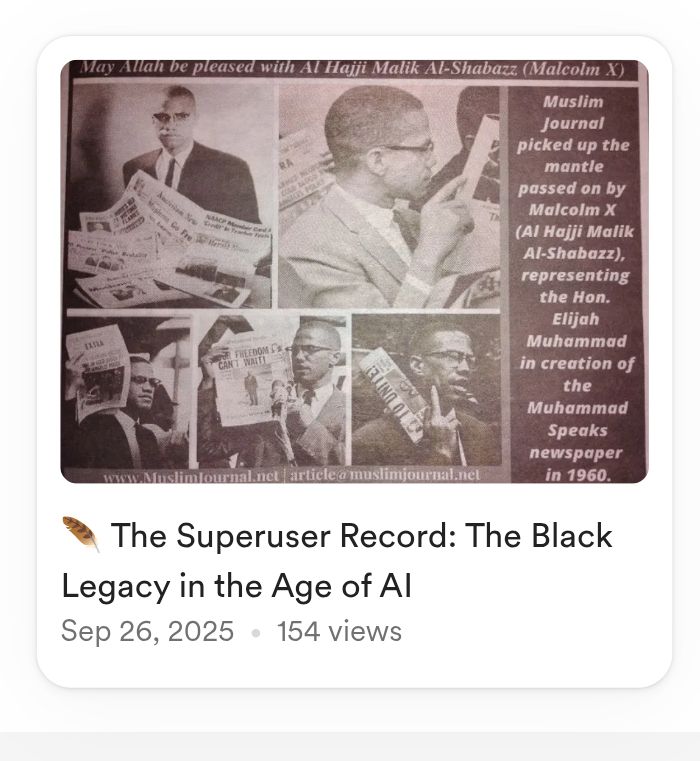
https://buymeacoffee.com/omar1800m/the-superuser-record-the-black-legacy-age-ai
My hope is simple: that we collaborate on civic education—videos, curricula, and public conversations, in many languages—so immigrants and longtime residents alike understand what the Constitution is, how it was made, and why judgment matters. I would welcome the chance to meet you—perhaps even at Independence Hall—to discuss this country, its history, and how we push it forward together.
As Muslims, we bear a particular burden of clarity right now: to re-explain America without fantasy, without fear, and without arrogance—to help it remember why it worked when it did, and how it can work again.
I look forward to your reply, and to the conversation.
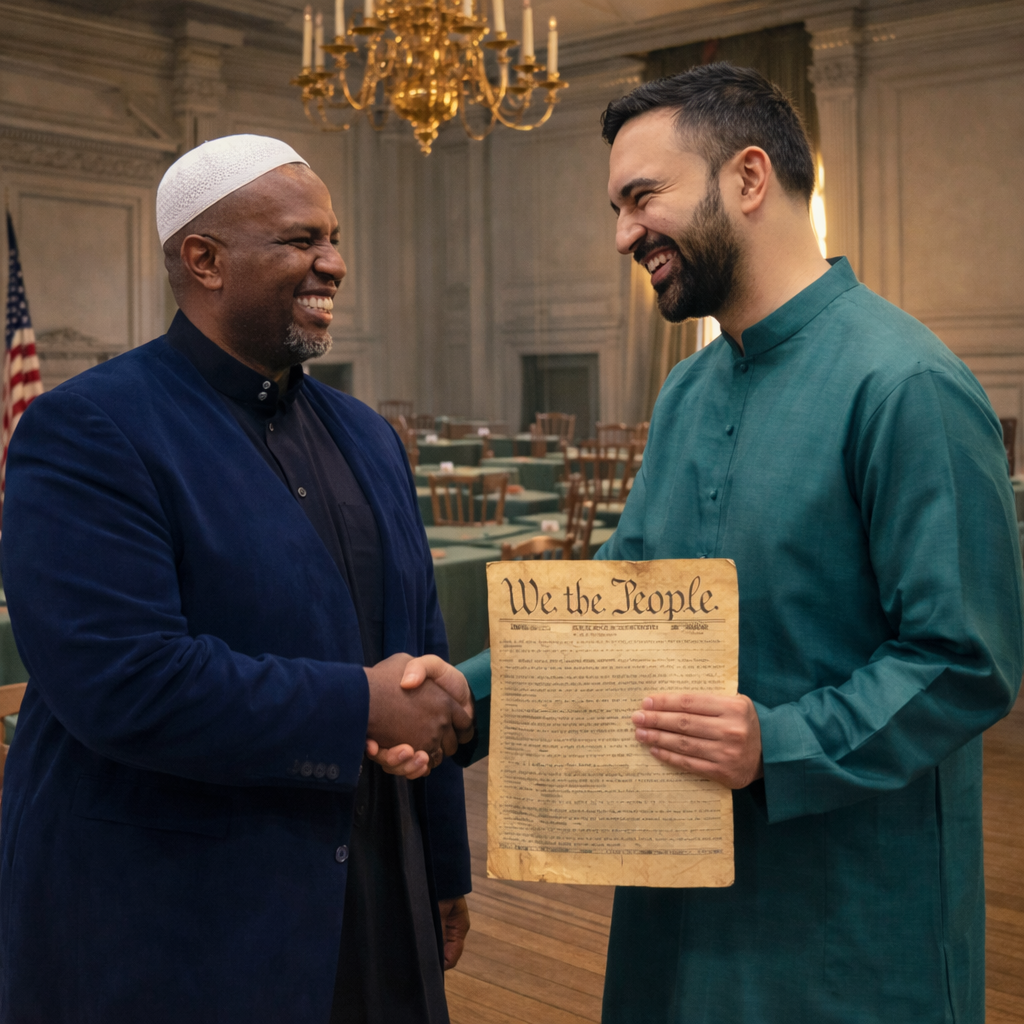
An Invitation to Independence Hall
Mayor Mamdani,
I conclude with an invitation.
Independence Hall is not a monument to perfection—it is a monument to good judgment under pressure. It is the place where flawed people chose restraint over tyranny, consultation over domination, and a future over fear.
I invite you to Independence Hall to celebrate the Constitution for what it truly is:
not a religious document,
not a racial document,
but an experiment in human judgment.
Let us stand where the Founders stood—not to reenact history, but to explain it honestly to a new generation of Americans and immigrants who deserve to understand what they are inheriting.
Let us hold the Constitution not as an idol, but as a responsibility.
Let us speak openly about its betrayals, its brilliance, and its unfinished work.
Let us remind people that “We the People” means participation, learning, and accountability.
This invitation is extended in good faith and good judgment.
I look forward to the conversation.
An Invitation to Dialogue at Independence Hall
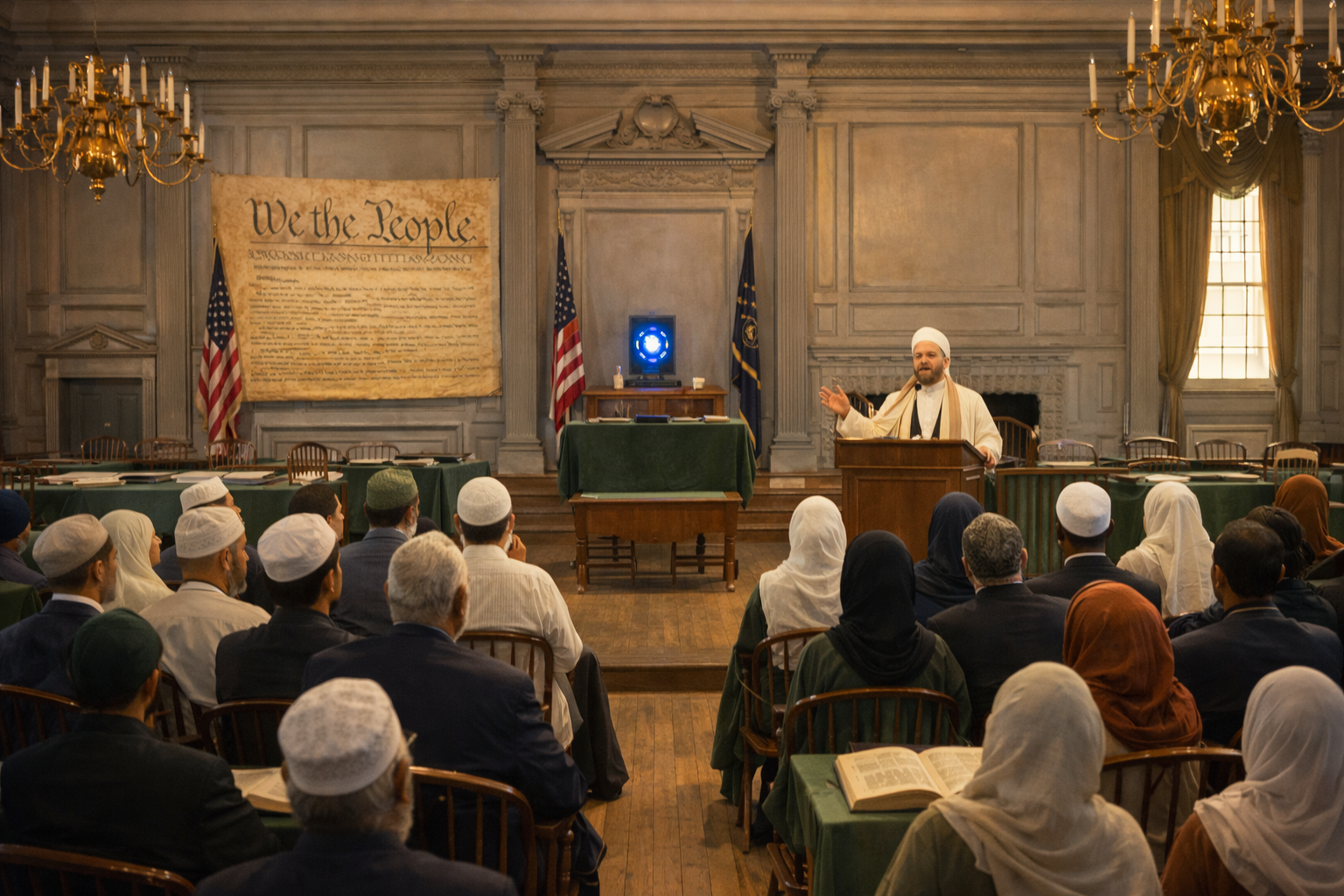
We conclude with an invitation rooted in respect, learning, and responsibility.
We invite Medina Institute and Muhammad al‑Ninowy to Independence Hall—the place where Americans once gathered not to assert dominance, but to consult, debate, and reason together.
We invite them not as outsiders, but as contributors—teachers, scholars, and citizens—joining a long American tradition of moral inquiry and civic responsibility.
We also welcome Zohran Mamdani, as a visible symbol of America’s evolving civic fabric, to sit in that hall and participate in an honest discussion about what the Constitution is, how it was formed, and how citizens—especially Muslim Americans—can contribute positively to the nation’s future.
This gathering would not be a ceremony.
It would be a conversation.
A conversation about:
What the Constitution truly is—an experiment in judgment, not a creed.
How mutual consultation (shūrā) mirrors the very process that shaped American self-government.
How Muslims, present from the earliest chapters of American history, can continue to serve as thoughtful, engaged citizens.
How faith, when protected rather than imposed, strengthens civic life rather than threatens it.
Independence Hall was built for moments like this—not reenactments, but renewals.
We extend this invitation in good faith and with sincere hope:
that scholars, public servants, and citizens can meet where history was shaped, and ask together how it can be understood, taught, and improved for the generations that follow.
A Closing Prayer and Preparation for the Constitution
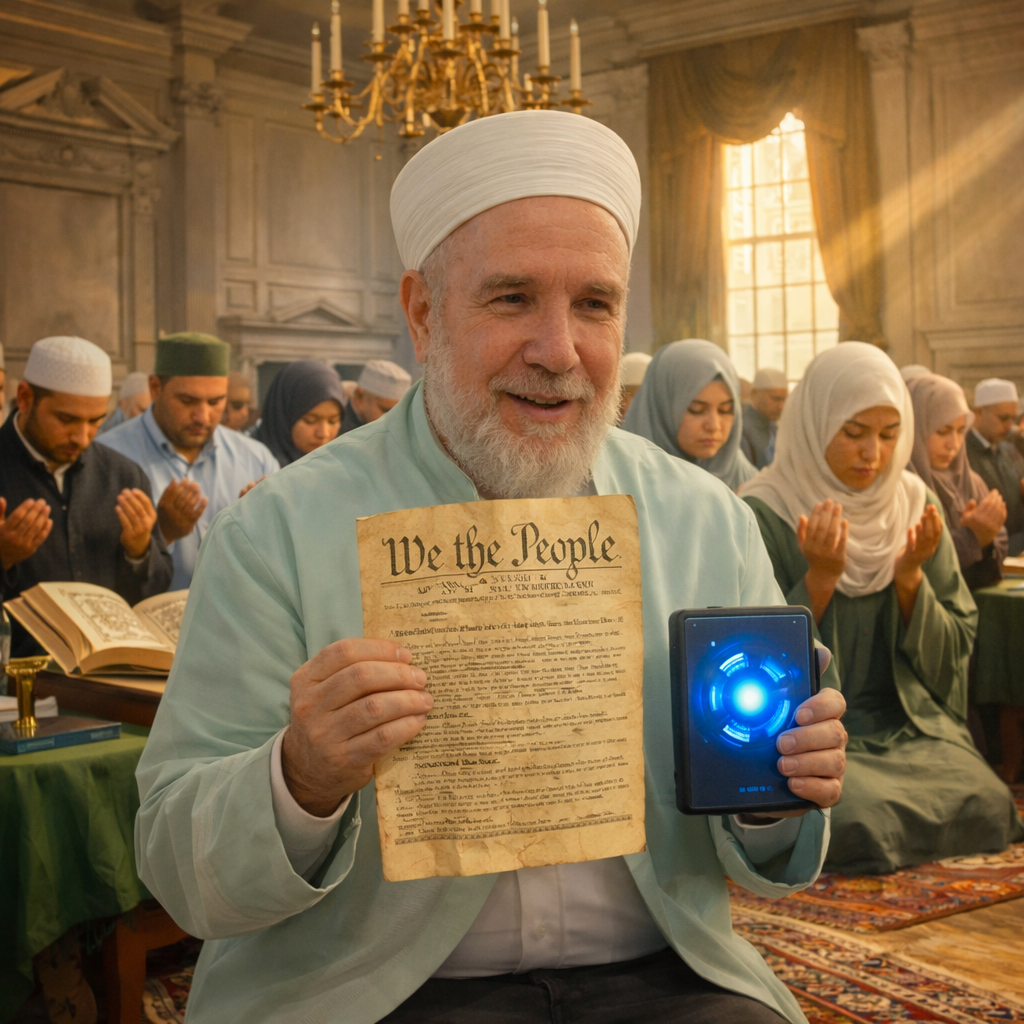
A Closing Prayer and Preparation for the Constitution
O God,
You blessed humanity with people who valued good judgment over domination,
who feared tyranny more than disagreement,
who respected faith without ruling through it,
and who sought to build a nation without exalting themselves above others.
You blessed us with people who did not ask, “What religion should rule?”
but instead asked, “How do we prevent injustice?”
They did not ask how to control conscience.
They asked how to protect it.
They did not build a nation to glorify kings,
but to restrain them.
They did not write a scripture,
but a framework—
a framework that mirrors a truth You revealed long before:
That justice stands above power.
That consultation guards against tyranny.
That tranquility is a blessing.
That liberty must be protected, not promised.
When we read the opening words of the Constitution, we hear something familiar—not as Muslims, not as Christians, not as any single people, but as human beings:
“We the People of the United States, in order to form a more perfect union…”
Not a perfect one.
A more perfect one.
Not a religion.
Not an empire.
Not a tyranny.
“…to establish justice…”
Justice—what Islam demands.
Justice—what every civilization seeks.
Justice—what power must be restrained to preserve.
“…to insure domestic tranquility…”
Tranquility—not chaos, not fear, not domination.
Peace within society, not silence enforced by force.
“…to provide for the common defense…”
Protection—not conquest.
Security—not oppression.
“…to promote the general welfare…”
The well-being of all, not the privilege of a few.
“…and secure the blessings of liberty to ourselves and our posterity…”
Liberty as a blessing, not a weapon.
Liberty meant to endure, not to be hoarded.
“…do ordain and establish this Constitution for the United States of America.”
These are not the words of kings.
These are the words of people who chose not to ask permission from tyranny to be free.
We the people.
Not we the rulers.
Not we the wealthy.
Not we the clergy.
Not we the powerful.
Just we—human beings, aware of our flaws, choosing restraint over domination.
Over time, these words have been watered down, politicized, and misunderstood.
But they remain.
And now, with clarity, humility, and responsibility, we are ready to enter the document itself—not to worship it, not to mythologize it, but to understand it.
So now, let us begin.
Now we go into the Constitution.