
بِسْمِ اللهِ الرَّحْمٰنِ الرَّحِيْم
Bismillah ar-Rahman ar-Rahim
In the Name of God, Most Gracious, Most Merciful 🕋
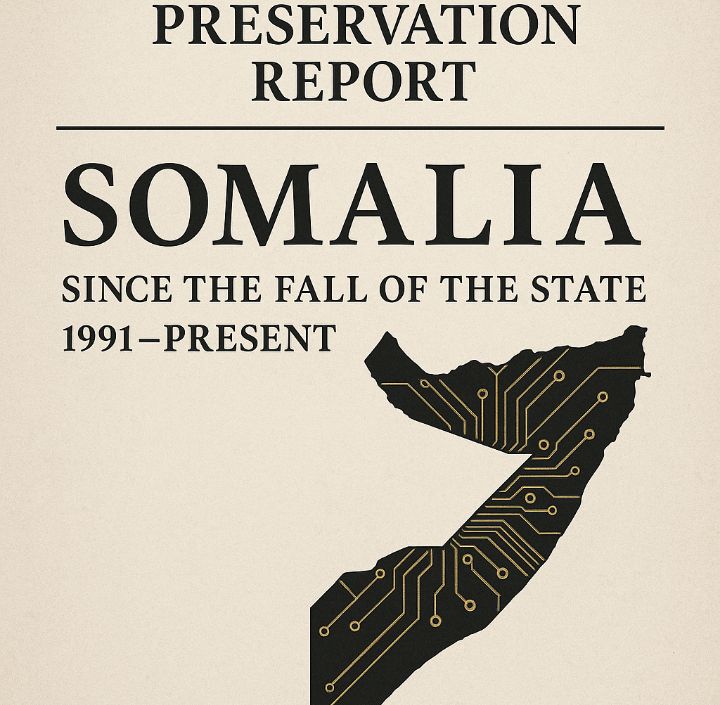
The Line of Presidents: From Collapse to Reconstruction
Mohamed Siad Barre (1969–1991) — The Final Architect of Central Rule
Ali Mahdi Mohamed (1991–2000) — The Transitional Claimant
Abdiqasim Salad Hassan (2000–2004) — The Re-Imaginer of the State
Abdullahi Yusuf Ahmed (2004–2008) — The Enforcer of Stability at All Costs
Adan Mohamed Nuur “Madobe” (Acting, 2008–2009) — The Custodian of Continuity
Sharif Sheikh Ahmed (2009–2012) — The Unifier of Faith and Politics
Hassan Sheikh Mohamud (2012–2017; 2022–Present) — The Educator of Statehood
Mohamed Abdullahi “Farmaajo” Mohamed (2017–2022) — The Strongman of the Digital Age
The Mission: The Record and the Reckoning
Over the coming weeks, the Superuser Office will release individual grading reports for each of these leaders — a historical audit of power, faith, and performance since the fall of the Somali state.
Each report will be grounded in evidence, memory, and metrics — evaluating leadership through the lens of national unity, economic progress, institutional strength, and moral legacy.
No bias. No revisionism. Only truth — recorded and preserved.
So, to the people of Somalia, the scholars, the elders, the youth: get ready.
The grading begins.
The record will speak.
And from it, a new generation will rise, knowing exactly where the past stood — and where the future must go.
THE SUPERUSER REPORT: PRESIDENT MOHAMED SIAD BARRE
Part One — The Architect and the Abyss
By Omar Arizona — Civilization Architect
House of Wisdom | Superuser Office
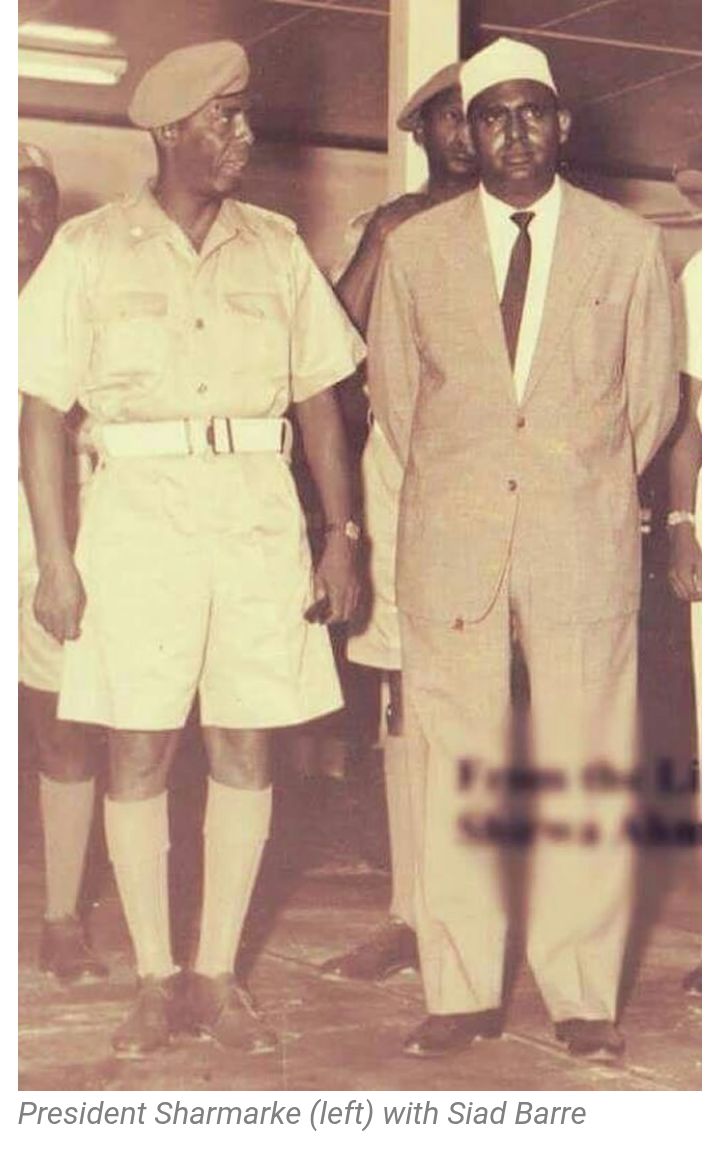
The Man Who Built a Nation Out of Words and Will
Mohamed Siad Barre stands at the intersection of triumph and tragedy — a figure both celebrated and condemned, both visionary and flawed. When he seized power in 1969 through a bloodless coup, Somalia was a fragile young republic struggling to define itself after colonial fragmentation. Barre’s arrival promised unity, literacy, and strength. For two decades, he gave Somalia an identity built on discipline, nationalism, and rhetoric that could move mountains.
He spoke with conviction, wielding language like a sword. His speeches were not political slogans — they were manifestos. He told Somalis that “ignorance is the enemy, and unity is the weapon.” He believed that a people who could read, work, and obey could rebuild the Horn of Africa. And for a time — they did.
Roads were built. Schools expanded. Women gained unprecedented roles in public life. The Somali language was written in its own Latin script for the first time, creating an educational revolution. Barre’s literacy campaign remains one of the most successful in African history. Under his rule, Mogadishu was modern, disciplined, and full of pride.
He saw Somalia as a house built from faith, socialism, and national dignity — and he saw himself as its architect.
The Five Pillars of Evaluation
The Superuser grading system evaluates every leader by five measures:
National Unity & Sovereignty
Security & Stabilization
Economic Infrastructure & Development
Integrity & International Relations
Cultural and Institutional Legacy
Barre’s leadership touched all five — and reshaped them permanently.
1. National Unity & Sovereignty: The Dream of One Somalia
Barre’s defining mission was unity. He believed colonial borders were wounds and that Somalis, divided between five regions, must reunite. He carried this belief into foreign policy, making Somalia one of the most assertive African states of the 1970s.
His Greater Somalia vision — symbolized in the five-pointed star — inspired generations but also led to confrontation. The Ogaden War (1977–1978), fought against Ethiopia for Somali-inhabited lands, became the turning point. When the Soviet Union switched sides and armed Ethiopia, Somalia stood alone. The war drained the nation’s resources, fractured alliances, and weakened the military he had built so carefully.
Grade: A for vision, C for execution — overall B.
His dream was too large for the realities of the time, yet it remains the heartbeat of Somali identity.
2. Security & Stabilization: The Iron Grip
Barre’s Somalia was secure — perhaps too secure. He governed with an iron hand, using the National Security Service (NSS) and a powerful military network to maintain order. Stability was achieved, but at a cost: political prisons, censorship, and fear.
In the 1970s, his regime maintained one of the most disciplined armies in Africa. But as the 1980s arrived, the apparatus of control became brittle. The collapse of alliances and internal rebellions, especially in the north, turned the iron grip into a clenched fist. The massacres in Hargeisa in 1988 marked the moral fall of a man who once promised equality.
Grade: A for security, F for restraint — overall C.
3. Economic Infrastructure & Development: The Modernizer
Few African leaders of his era pursued modernization as intensely as Siad Barre. Roads, ports, factories, and agricultural programs emerged across the nation. Somalia’s economy was one of East Africa’s most promising in the early years of his rule.
However, the state’s dependency on foreign aid, compounded by war debts and drought, turned progress into fragility. What began as self-reliance turned into survival economics. By the late 1980s, the economy could no longer sustain itself, and corruption eroded trust.
Grade: B for ambition, D for sustainability — overall C.
4. Integrity & International Relations: The Diplomat-Survivor
Barre was a master of balancing great powers. He navigated between the Soviets and the Americans with strategic genius — switching allegiances when necessary to keep Somalia relevant. For two decades, he kept Somalia on the map of global relevance.
Yet diplomacy without domestic grounding became dangerous. His survival instinct outlasted his political wisdom. As he shifted alliances, the internal fabric unraveled. What once was respect turned to isolation.
Grade: B+ for strategy, D for long-term stability — overall C+.
5. Cultural and Institutional Legacy: The Language of the Nation
Perhaps Siad Barre’s greatest and most enduring legacy lies not in war, but in words. He gave Somalis a written language — Af-Soomaali — and made literacy a patriotic act. He preserved cultural identity through modernization rather than against it.
Even those who oppose his methods acknowledge this: He gave Somalia a voice, then lost his own.
Grade: A+.
Final Assessment: The Builder Who Forgot the Foundation
Overall Superuser Grade: B–
Legacy Index: 8/10
Mohamed Siad Barre was the last man to command a united Somali state — and the first to see it crumble in his hands. His achievements were monumental, but his fall catastrophic. He represents both the best and worst possibilities of leadership: the power to unite and the blindness that comes when one mistakes control for compassion.
He remains a cautionary tale to every leader who governs through fear, forgets humility, and stops listening to the people.
“He who builds without wisdom builds upon the sand — and when the flood comes, even his empire will drown.” — Omar Arizona
Closing Note
To all future leaders who will be graded: learn from him. Study him. Admire his strength, but fear his mistakes.
Leadership is not about holding power — it’s about holding balance.
And Somalia will rise again when its leaders learn to build not upon control, but upon conscience.
XSPACE GUIDE: LEARNING FROM PRESIDENT MOHAMED SIAD BARRE
Superuser Preservation Report — Somalia Series (Part One)
By Omar Arizona — Civilization Architect
House of Wisdom | Superuser Office
Opening Message to Hosts and Participants
Before you speak, pause.
Before you judge, reflect.
Mohamed Siad Barre has passed away — his record is sealed before God. Our purpose is not to condemn nor glorify, but to learn. Every leader in history leaves behind two things: his deeds and his lessons.
This space is not about tribal loyalty or political nostalgia. It is about leadership, governance, and accountability. If you praise unjustly, you lie to history. If you curse without wisdom, you give away your good deeds to the dead. The Prophet Muhammad ﷺ said:
“Do not abuse the dead, for they have reached what they sent forward.”
So let us speak with knowledge, not emotion.
🜂 XSPACE HOST GUIDE: QUESTIONS & ANSWERS
Below are the structured discussion questions and model answers designed to help you lead a balanced, educational conversation.
1. Who was Mohamed Siad Barre, and why does he matter?
Answer:
Mohamed Siad Barre was Somalia’s leader from 1969 to 1991 — the last president of a unified Somali state before the country’s collapse. He was a military man, a modernizer, and a believer in nationalism. He expanded literacy, empowered women, and unified language — yet his later years brought repression and war. His story is both the glory and warning of leadership when power replaces humility.
2. What were his greatest achievements?
Answer:
He introduced the Somali written script (Af-Soomaali), creating one of Africa’s most successful literacy movements.
Built infrastructure, schools, and state institutions.
Advocated for women’s rights and civic participation.
Maintained national unity and strong identity for over two decades.
Lesson: Nation-building requires vision, but also restraint. Without balance, unity turns into control.
3. What caused the fall of his government?
Answer:
His government fell due to war exhaustion, tribal divisions, and loss of foreign alliances. The Ogaden War against Ethiopia drained the economy and military. Internal uprisings grew as repression increased. By the late 1980s, his rule was sustained more by fear than by legitimacy.
When he fled in 1991, Somalia had no structure strong enough to survive him — proving that personal rule, no matter how strong, is not sustainable.
Lesson: Leadership built around a man will die with him. Leadership built around institutions will live forever.
4. What should we learn from his betrayal of religion?
Answer:
He attempted to replace the moral foundation of faith with the ideology of state power. The socialist model he adopted conflicted with the Islamic soul of the Somali people. When religion is sidelined, the moral compass collapses.
Lesson: Never replace divine guidance with ideology. Faith anchors justice; without it, politics turns into oppression.
5. How should Somalis today talk about him without falling into tribalism?
Answer:
By separating the man from the clan, and the policy from the person.
Tribalism blinds wisdom. A true student studies both sides — the good he did and the harm he caused — without hatred or denial.
Lesson: Speak as a Somali, not as a clan member. History belongs to all of us.
6. Why do some people still admire him so strongly?
Answer:
Because he represented discipline, pride, and order — things that collapsed after him. For many, his rule is associated with stability, schools, and dignity. For others, it is remembered for censorship and cruelty.
Admiration is often nostalgia for the past’s order, not a call to repeat its mistakes.
Lesson: Respect the order he built, but reject the oppression that came with it.
7. Why should we study him now, after all these years?
Answer:
Because his story is Somalia’s mirror. Every president who came after him inherited either his structure or his scars. Understanding him is understanding the DNA of the Somali state.
Lesson: Those who do not study the past are condemned to repeat it.
8. How can we discuss Siad Barre in a way that brings unity, not division?
Answer:
By focusing on leadership principles — not emotions. Discuss literacy, governance, decision-making, alliances, and moral balance. Avoid blame and clan references. This is an opportunity to heal memory, not reopen wounds.
Lesson: The greatest service you can do for your nation is to transform pain into wisdom.
9. What is the spiritual takeaway from his life and fall?
Answer:
Power without humility leads to destruction.
Faith without justice turns into fanaticism.
But balance between both — that is where divine favor lives.
Every leader is tested, and Siad Barre’s fall teaches us that the greatest betrayal is to forget that power belongs to God alone.
10. What can young Somalis learn from this discussion?
Answer:
They should learn that Somalia’s problem was never intelligence or ability — it was ego, arrogance, and lack of listening.
True leadership is not loudness but learning, not control but care, not domination but discipline.
Lesson: Be a student of your own history. Don’t mock your ancestors — rise from their mistakes.
Closing Message for the Space
To everyone hosting or speaking: remember this is a class, not a courtroom. Speak with adab (etiquette).
Honor those who built before you, even if they built imperfectly.
And remember — history will one day write your name too.
“Learn from the builders, even those who fell. For the fallen are often the truest teachers.”
— Omar Arizona