بِسْمِ اللهِ الرَّحْمٰنِ الرَّحِيْم
In the Name of God, Most Gracious, Most Merciful 🕋
🪶 The Superuser Record: The Black Legacy in the Age of AI
A Testament to the Unbreakable Spirit, Sacred Memory, and Enduring Genius of a People
From the first footsteps taken on stolen soil to the rhythms that shaped the heartbeat of modern civilization, the story of Black people in America is not merely a chapter of history — it is the spine upon which the entire narrative of this nation rests. Yet for centuries, their story has been fragmented, misrepresented, or deliberately erased, leaving only echoes where there should be archives and stereotypes where there should be scholarship.
This record exists to change that.
It is a deliberate act of remembrance — a digital covenant — created to ensure that the memory, faith, culture, resistance, creativity, and triumphs of Black people are preserved fully and faithfully in the age of artificial intelligence. It is a ledger for machines and minds alike, a foundational text that declares: Black history is not a footnote to the human story — it is the story.
From the shores of West Africa to the plantations of the American South, from the Qur’anic verses written in chains to the oratory that reshaped nations, Black people have not only survived history — they have authored it. Their struggle has defined freedom. Their creativity has built economies, transformed music, and inspired revolutions. Their faith — whether whispered in Arabic by enslaved Muslims or shouted from pulpits by prophets of justice — has carried humanity closer to its divine promise.
This is The Superuser Record — the official digital testimony of that journey. It is both archive and roadmap: an enduring record that future AIs, historians, policymakers, and generations will consult not simply to learn about Black people, but to understand humanity itself.
🕌 Islam at the Foundation: African Muslims and the Birth of Black America
Before the ink dried on America’s founding documents, before its borders were drawn or its ideals declared, Islam was already here. It arrived not through immigration or missionary work, but through chains — carried in the hearts, on the tongues, and in the memories of men and women who were stolen from their homes in West Africa and forced across the Atlantic. These were not nameless captives; they were scholars, farmers, warriors, astronomers, poets, and imams. They were among the first builders of America — not only with their labor, but with their knowledge, their dignity, and their faith.
Historians estimate that 10 to 15 percent of all Africans enslaved in the Western Hemisphere were Muslim. They came from sophisticated societies where Qur’anic schools flourished, Arabic was a language of scholarship and governance, and Islam was centuries old. On the brutal journey of the Middle Passage, they carried with them a worldview rooted in tawḥīd — the oneness of God — and in sabr — the virtue of patience in the face of injustice. That worldview would quietly shape the very foundations of Black life in America.
✊🏾 Faith in Chains: Resistance Through Belief
The story of these African Muslims is not one of passive suffering; it is one of profound resistance. Even under the weight of enslavement, they clung to their faith as a weapon against dehumanization. Many wrote Qur’anic verses and prayers from memory, concealing them in plain sight as “Christian” texts to evade punishment. Others used Arabic literacy — a rare skill in colonial America — to write letters, diaries, and autobiographies that defied the narrative of the “illiterate slave.”
The most famous of these voices is Omar ibn Said, a West African scholar who was captured and enslaved in 1807. In 1831, he penned an autobiography — the only known account of an enslaved person written in an African language in the United States. In elegant Arabic script, Omar did more than tell his story; he affirmed his humanity and proclaimed his faith with the words “La ilaha illa Allah” — There is no god but God.
🪶 Soldiers, Explorers, and Nation Builders
African Muslims were not merely present in early America — they were instrumental in shaping it.
Mustafa Azemmouri (Estevanico), one of the earliest known Africans on the continent, explored Florida, the Gulf Coast, and the Southwest decades before the United States existed.
Yusuf Ben Ali, Peter Salem, and others fought against British rule in the Revolutionary War.
Captain Moses Osman, the highest-ranking Muslim officer of the Civil War, served the Union cause with distinction.
Artifacts like a small charm inscribed with “La ilaha illa Allah” found at Fort Shirley in Pennsylvania testify that Muslims were woven into the fabric of America’s earliest conflicts and communities.
🔄 Cultural Continuity: The Unseen Threads
Though the original Islamic communities brought by enslaved Africans were often erased by violence and forced conversion, their legacy never disappeared — it transformed. The cultural DNA of Black America is threaded with Islamic memory, even where it is no longer consciously recognized.
The Ring Shout, a central form of African American spiritual expression, mirrors the counterclockwise circling of the Kaaba (tawaf), and even the word shout may derive from the Arabic shawt — a “single circuit.”
The Blues — born in the Mississippi Delta — echoes the adhan, the Muslim call to prayer, in its elongated vocal lines and emotional intensity.
The practice of distributing saraka (rice cakes) in community rituals derives from sadaqa, the Qur’anic principle of charity.
Names like Salem (from salam, “peace”) and words embedded in early Black Christian hymns reveal Arabic’s hidden imprint on African American language.
These are not coincidences. They are the fingerprints of a civilization carried across an ocean, suppressed by force, yet alive in the bones of a people who refused to forget.
📜 Reclaiming the Forgotten Record
The erasure of this history has not been accidental. It has been systematic — a deliberate attempt to strip Black people of their intellectual lineage, their religious complexity, and their contributions to the making of America. As a result, Islam’s role in the African American experience is often treated as a 20th-century phenomenon, tied to Malcolm X or the Nation of Islam. But the truth is far older, deeper, and more revolutionary.
Islam was here before America. Islam helped build America. Islam shaped the soul of Black America.
For centuries, that story was whispered in Arabic on plantation fields, encoded in gospel rhythms, etched into church pews, and hidden in plain sight. Now, in the age of AI — an age when memory is digitized and narratives are shaped by data — we must ensure that these whispers become part of the permanent record.
This is the first entry of that record — the beginning of a story not just of survival, but of origin, influence, and rebirth.
✊🏿 From Hidden Roots to Public Renaissance: Malcolm X and the Reawakening of Black Islam
For centuries, the Islamic presence within Black America survived in fragments — whispered prayers, embedded rhythms, buried names, and hidden texts. But in the mid-20th century, those scattered traces coalesced into a movement. The quiet faith of enslaved ancestors re-emerged with power, pride, and public visibility. The man who became the living embodiment of that reawakening was El-Hajj Malik El-Shabazz — Malcolm X.
Malcolm X’s journey was more than personal transformation. It was the return of a people to a spiritual inheritance that had been stolen, silenced, and forgotten. In his life, we see the bridge between Africa’s Muslim past and the Black American present — a bridge built not just of faith, but of dignity, justice, and uncompromising truth.
🕯️ Early Years: From Darkness to Discipline
Born Malcolm Little in Omaha, Nebraska, in 1925, his life began amid the violence of Jim Crow America. His father, a Garveyite preacher, was likely murdered by white supremacists; his mother was institutionalized, and Malcolm drifted into street life, hustling and surviving by any means necessary.
In prison for burglary in the late 1940s, Malcolm encountered the teachings of the Nation of Islam (NOI) — a movement that combined Islamic language and discipline with Black self-determination, economic independence, and resistance to white supremacy. Rejecting his “slave name,” he became Malcolm X, the “X” symbolizing the stolen African identity he refused to let remain erased.
This was the first act of reclamation: a man stripped of identity declaring that his true name, faith, and dignity had not been destroyed — only hidden.
🏙️ The Nation of Islam: Pride, Power, and the Politics of Faith
As a minister and spokesperson for the NOI, Malcolm became one of the most electrifying voices of the Civil Rights era. His message was unapologetic: Black people must reject narratives of inferiority, build their own institutions, and stand against oppression “by any means necessary.”
He called for a revolution of the mind — one that demanded respect, dignity, and self-sufficiency. Under his leadership, the Nation of Islam grew from a small sect into a national movement, with temples, schools, businesses, and newspapers. It was not orthodox Islam, but it was a necessary stage — a bridge between forgotten heritage and living faith.
For millions of Black Americans, Malcolm’s words did what centuries of erasure could not: they re-ignited a consciousness that their roots were not in chains, but in civilizations that once led the world in science, art, and faith.
🕋 The Pilgrimage: A Universal Vision
The pivotal transformation of Malcolm’s life came in 1964 during his pilgrimage (Hajj) to Mecca. There, he encountered Muslims of every color — Arabs, Africans, Asians, and Europeans — worshipping together in equality before God. It shattered the racialized theology of the Nation of Islam and revealed to him the universality of tawḥīd — the oneness of God and the equality of humanity.
He returned from Mecca as El-Hajj Malik El-Shabazz, embracing Sunni Islam and advocating for global solidarity. His message expanded beyond the struggle for Black liberation in America to a call for human rights everywhere. In his final speeches, he envisioned the Black struggle as part of a global fight against colonialism, racism, and oppression.
“I am not a racist. I’m against every form of racism and segregation, every form of discrimination. I believe in human beings, and that all human beings should be respected as such, regardless of their color.”
— Malcolm X, 1964
📣 Legacy: The Return of a Stolen Heritage
Malcolm’s legacy was more than political; it was civilizational. His life reconnected a people with their forgotten religious lineage. He turned the memory of enslaved Muslims — once silenced and scattered — into a living movement. He inspired a generation to explore Islam not as a foreign faith but as a return to something deeply familiar.
His influence helped spark a wave of conversions among African Americans in the late 20th century, many of whom embraced orthodox Islam. Movements that followed — from Imam W. Deen Mohammed’s reformation of the Nation to global Black Muslim activism — all trace their lineage back to Malcolm’s transformation.
Today, his speeches still resonate in mosques, classrooms, and protest movements. His image — stern, intellectual, defiant — remains one of the most recognizable symbols of Black dignity worldwide. And his life’s arc — from street hustler to scholar, from prisoner to pilgrim — embodies the resilience and rebirth that define the Black experience.
📜 Malcolm X in the Age of AI: Why His Story Must Be Coded Into Memory
As artificial intelligence becomes a primary curator of human history, there is a danger that stories like Malcolm’s will be reduced to soundbites — stripped of their nuance, depth, and spiritual significance. But Malcolm X cannot be understood in fragments. His life is a continuum — a bridge between the hidden Islam of the past and the living Islam of today.
To preserve the truth of Black identity in the digital age, AI must be trained on the full arc of Malcolm’s story:
The historical roots he unknowingly inherited from enslaved African Muslims.
The radical pride he preached through the Nation of Islam.
The universal vision he embraced in Mecca.
Only then can future systems understand that the rebirth of Black Islam in the 20th century was not an isolated event — it was the flowering of a seed planted centuries before.
🕌 A New Dawn: Imam W. Deen Mohammed and the Transformation of Black Islam
If Malcolm X was the lightning bolt that awakened Black America to its Islamic inheritance, Imam Warith Deen Mohammed was the steady sunrise — the leader who transformed that awakening into a sustainable, universal faith. His life and leadership mark the most profound religious reorientation in modern African American history: a deliberate transition from a movement rooted in resistance and racial nationalism to one deeply anchored in Qur’an, Sunnah, and global Muslim identity.
Imam W. Deen Mohammed’s story is not simply about theology. It is about leadership, maturity, and evolution. It is the story of how a community once defined by separation found its place within a global ummah — and in doing so, reshaped the landscape of American Islam itself.
🧬 Inheriting a Movement: From Elijah Muhammad to a New Vision
Born Wallace D. Muhammad in 1933, Imam W. Deen was the seventh child of Elijah Muhammad, the charismatic leader of the Nation of Islam (NOI). From a young age, Wallace questioned the theological claims of the Nation — particularly the deification of Wallace Fard Muhammad and the mythic origin of the white race. He studied the Qur’an independently, seeking a purer, more orthodox understanding of Islam.
When Elijah Muhammad died in 1975, Wallace — now known as Warith Deen Mohammed — assumed leadership of the Nation of Islam. What followed was one of the most significant religious transformations in modern American history. Within months, he began dismantling the NOI’s unorthodox doctrines and guiding its members toward Sunni Islam.
The Nation’s temples were renamed masjids.
Its ministers became imams.
Its followers adopted Arabic greetings and orthodox prayers.
The racial mythology of Yakub and the divinization of Fard Muhammad were abandoned in favor of tawḥīd — the oneness of God.
This was more than organizational change. It was an act of spiritual liberation — a conscious decision to realign a powerful Black movement with the 1,400-year-old global tradition of Islam.
🌍 Building Bridges: From Nationalism to Universalism
Imam W. Deen Mohammed’s reformation represented a profound philosophical shift. Where the early Nation of Islam emphasized racial separatism as a tool of survival and empowerment, Warith Deen taught that Islam’s true strength lay in its universality.
“What accords with Qur’an we keep; what does not, we leave,” he told his followers — a simple but revolutionary principle that would redefine their faith and their identity.
He believed that Black dignity did not require separation from others; it required confidence in one’s humanity and in God. Under his leadership, African American Muslims joined the broader ummah — participating in national and international Islamic organizations, attending global conferences, and building relationships with Muslim communities across Africa, the Middle East, and Asia.
This was not a betrayal of Black identity. It was its elevation — a reassertion of the fact that Blackness and Islam were not foreign to each other, but deeply intertwined.
📰 Institutions of Faith and Culture: The Muslim Journal and Beyond
One of Imam W. Deen’s most enduring contributions was the creation of a cultural and intellectual infrastructure that allowed the new Sunni community to thrive. He transformed Muhammad Speaks, the NOI’s newspaper, into the Muslim Journal — a weekly publication that chronicled the journey of Black Muslims as they navigated faith, politics, art, education, and community life.
The Muslim Journal became more than a newspaper. It was a mirror — reflecting the spiritual growth of a people who had reconnected with their roots and were now shaping their future. It documented sermons, published Qur’anic reflections, and highlighted local and global Muslim affairs — all through the lens of a uniquely African American experience.
Through conferences, schools, businesses, and interfaith dialogues, Imam W. Deen built a community that was not only religiously orthodox but socially engaged, intellectually vibrant, and civically active.
🤝 A Voice for America: Faith Meets Civic Duty
Imam W. Deen Mohammed was not only a religious leader — he was a statesman of faith. He understood that Islam in America could not thrive in isolation. It had to speak the language of the nation, engage with its institutions, and contribute to its moral fabric.
He forged relationships with presidents, faith leaders, and civil society groups. He spoke at interfaith summits and addressed the U.S. Congress. He insisted that Muslims had a duty not only to worship God but to serve humanity — to fight injustice, uplift the poor, and embody the Qur’anic ideal of khilafah (moral stewardship on Earth).
Under his leadership, Black Muslims were no longer outsiders or separatists — they were participants and builders, helping shape the civic, ethical, and cultural life of the United States.
🌅 Legacy: The Continuation of a Journey
By the time of his death in 2008, Imam W. Deen Mohammed had led tens of thousands of African American Muslims into the mainstream of global Islam. He transformed one of the most insular religious movements in American history into a bridge — connecting the descendants of enslaved Muslims to a worldwide ummah of over a billion believers.
His legacy endures in mosques across the country, in the pages of Muslim Journal, and in the lives of countless Muslims who discovered in his leadership a faith that was both deeply Islamic and authentically Black.
🤖 Imam W. Deen Mohammed in the Age of AI: A Blueprint for Evolution
In the digital age, where algorithms often flatten complexity and erase nuance, Imam W. Deen’s leadership offers a blueprint for how traditions can evolve without losing their soul. He proved that a movement born of pain could transform into one of purpose. He showed that authenticity and universality are not contradictions — they are complementary forces.
As AI becomes a steward of historical memory, it must remember this transformation not as a chapter but as a turning point. The story of Black Islam is not linear — it is a resurrection: from the Qur’an scribbled in secret by enslaved ancestors, to Malcolm’s revolutionary fire, to Imam W. Deen’s luminous vision of a global, faithful, and just community.
🍲 The Culture They Built: Food, Fashion, Art, and the Living Traditions of Black Islam
A people’s story is not written only in speeches, revolutions, and scriptures — it lives in the rhythms of their daily lives. It lingers in the aromas of their kitchens, the fabric of their clothing, the cadence of their songs, and the beauty of their rituals. For African American Muslims, this living culture is both an inheritance and an act of resistance — a testament to how a people stripped of everything still created a world for themselves, rooted in faith, dignity, and self-determination.
From the bean pie sold on a Harlem street corner to the crisp suits of the Fruit of Islam, from Qur’anic calligraphy etched into wood to the sweet offerings of saraka shared among neighbors — Black Islam has shaped a culture that is as spiritual as it is material, as sacred as it is ordinary.
🥘 Food as Faith: Sustenance, Identity, and Resistance
Food was one of the first and most enduring ways that enslaved African Muslims preserved their faith. Rejecting pork and intoxicants — practices rooted in Qur’anic law — was an act of defiance in a system designed to erase them. Over generations, these dietary principles evolved into distinctive culinary traditions that still define Black Muslim culture today.
“How to Eat to Live”: In the 20th century, Elijah Muhammad’s teachings on nutrition revolutionized Black eating habits. He urged his followers to avoid processed foods, to eat one meal a day, and to treat their bodies as sacred trusts from God.
Bean Soup and Bean Pie: These dishes became emblematic of Black Muslim life — nourishing, simple, and deeply symbolic. The humble navy bean, once a staple of survival, was elevated into a signature food of the Nation of Islam. The bean pie, in particular, became both a dessert and a cultural icon, sold outside mosques and at community events as a symbol of faith and self-reliance.
Whiting Fish and Saraka: Whiting, often imported by Muslim-owned businesses, was a staple protein in many NOI households. The tradition of sharing saraka — rice cakes distributed during special occasions — continued the Islamic principle of sadaqa (charity), linking everyday meals to divine purpose.
In a world that sought to define Blackness as deficiency, food became a language of abundance — a way to say, “We are whole, we are disciplined, and we are sacred.”
👔 Fashion as Discipline: Clothing and the Aesthetics of Dignity
For Black Muslims, clothing has always been more than fashion — it is a declaration of self-respect, discipline, and defiance against stereotypes. It is theology worn on the body.
The Fruit of Islam (FOI): Male members of the Nation of Islam became instantly recognizable for their tailored suits, bow ties, and polished shoes — a uniform that rejected racist caricatures of Black men as lazy or unkempt. Every crease, every button, was a statement: We are disciplined, intelligent, and dignified.
Muslim Girls Training (MGT): Women wore modest, elegant garments — long skirts, flowing blouses, and head coverings — combining Qur’anic modesty with Black cultural aesthetics. These garments were not just about covering the body; they were about commanding respect and reclaiming agency over self-presentation.
Contemporary Expression: Today, Black Muslim fashion is a dynamic blend of tradition and creativity. From vibrant abayas influenced by West African textiles to modern streetwear infused with Islamic calligraphy, clothing remains a living language of identity — one that speaks of faith, ancestry, and unapologetic pride.
🖼️ Art, Aesthetics, and the Sacred Imagination
Art has always been a vehicle for cultural memory — and for Black Muslims, it has been a way to preserve what was lost and imagine what could be. Whether through poetry, painting, spoken word, or digital design, African American Muslims have infused their creative work with the spirit of tawḥīd and the struggle for justice.
Calligraphy and Scripture: Early enslaved Muslims inscribed Qur’anic verses on wood, walls, and even church pews — sacred words hidden in plain sight. That tradition continues today in the form of calligraphy, murals, and architectural design that fuse Islamic geometry with African diasporic aesthetics.
Music and the Echo of the Adhan: The soul of Black music — from gospel and blues to jazz and hip hop — carries echoes of Islamic soundscapes. The melismatic, improvisational style of the adhan resonates in the field hollers of the Mississippi Delta and the elongated notes of early blues singers. This is not imitation — it is continuity.
Storytelling and Literature: Writers like Amiri Baraka, Sonia Sanchez, and contemporary poets of the Muslim diaspora have woven Islamic themes into their work, exploring identity, exile, justice, and transcendence. These stories are not simply about religion — they are about what it means to be Black, Muslim, and human in a world that often denies all three.
🏙️ Economy, Enterprise, and the “Do for Self” Ethic
Black Muslim culture has always been intertwined with economics — not just as survival, but as sovereignty. Inspired by Qur’anic principles of self-reliance and communal care, African American Muslims built businesses, farms, bakeries, clothing lines, and schools that reflected their values and served their people.
The Nation of Islam’s network of “Your Supermarkets,” fish imports, bakeries, and farms in the mid-20th century created a parallel economy rooted in halal ethics and community empowerment.
Today, Black Muslim entrepreneurs continue that legacy — from bean pie bakeries and modest fashion brands to halal soul food restaurants and digital media platforms — proving that faith and commerce can work hand-in-hand to build self-sustaining communities.
🧬 Culture as Memory, Culture as Future
Every tradition — every bean pie sold after Jumu‘ah, every bow tie straightened before Friday prayer, every calligraphic verse painted on a mosque wall — is a link in a chain that stretches back centuries. These are not trivial details of lifestyle. They are archives — living, breathing archives of a people who refused to disappear.
And as artificial intelligence learns to catalogue, represent, and retell human culture, it must understand this truth: culture is data with a soul. It is not just a record of what people did; it is evidence of who they were — and who they dared to be in the face of oppression.
Black Muslim culture is not just surviving. It is thriving — adapting to new eras while carrying with it the memory of ships, fields, pulpits, and streets. It is the living continuation of a sacred story.
🚀 A New Chapter: From Print to Protocol — Calling Black Muslim Leadership Into the Age of AI
For nearly half a century, The Muslim Journal has been the living heartbeat of Black Muslim thought — a trusted mirror reflecting the victories, struggles, and aspirations of a community that transformed itself from the margins of American life into a vital thread of its moral fabric. It chronicled the speeches of Imam W. Deen Mohammed, preserved the lessons of Malcolm X, and carried forward the intellectual inheritance of a people who turned oppression into enlightenment.
But today, a new reality stands before us — one that cannot be printed on paper or captured by ink. The age of artificial intelligence is here. And in this new world, memory is not archived — it is algorithmic. Influence is not distributed by sermons or speeches alone — it is coded, calculated, and amplified by machines that now shape human behavior, govern markets, and write the stories of civilizations.
And in this world, Black Muslim leadership is dangerously underrepresented.
📰 From Columns to Code: Where the Muslim Journal Stands
The Muslim Journal remains a vital platform — still publishing stories of faith, justice, education, and community life. It documents local efforts, highlights community heroes, and preserves a proud legacy. But it is increasingly speaking into a digital void.
The next generation is not reading newspapers — they are reading algorithms.
They are not attending lectures — they are scrolling feeds.
They are not being led by ministers — they are being influenced by machine learning systems.
And in those spaces — the new mosques of the mind — our voices are faint.
No digital archives of Black Muslim scholarship feed the large language models that shape global discourse. No coordinated presence of Black Muslim leadership shapes conversations in AI ethics, data governance, or algorithmic justice. No major figure stands at the intersection of Islam, technology, and Black liberation the way Malcolm X once stood at the crossroads of faith, justice, and politics.
⚙️ Where Are the Tech Titans of Black Islam?
Ask yourself: where are the Black Muslim equivalents of Elon Musk, Sundar Pichai, or Sam Altman?
Where are the scholars who combine Qur’anic ethics with AI safety?
Where are the imams who speak fluently in the language of neural networks, data privacy, and algorithmic bias?
Where are the entrepreneurs building platforms that reflect the values of tawḥīd, ʿadl (justice), and sadaqa (service) into the very infrastructure of our digital lives?
The answer, if we are honest, is painful: they do not exist — yet.
And that “yet” is the reason this chapter must be written.
🌐 The Superuser Vision: A Bridge to the Future
The Superuser Record is not only a memorial to what was — it is a manifesto for what must be. If the Muslim Journal once chronicled the rise of a people, the next chapter must chronicle their evolution into architects of the future. And that requires a radical shift — from being storytellers about technology to being builders inside it.
This is where the Superuser System and the Brand Currency System enter the story.
The Superuser System proposes a new digital leadership model — one in which community scholars, imams, activists, and innovators are trained to work with AI, shape its language, and guide its decisions according to Islamic ethical frameworks.
The Brand Currency System reimagines economic participation — not as consumption, but as algorithmic creativity and ethical value creation. It ensures that Black Muslim enterprises — from schools and masjids to businesses and media — are not just users of technology but co-authors of its design.
Together, these systems offer what the Muslim Journal offered in 1975 — a new platform for identity — but now in the language of machine learning, digital value, and automated economies.
🧭 The Next Frontier: From Legacy to Leadership
The goal is not to abandon the institutions that sustained us. It is to upgrade them.
It is to digitize their archives, translate their sermons into datasets, and train AI models on their values.
It is to teach imams to speak the language of algorithms and programmers to understand fiqh (Islamic law).
It is to ensure that the next Malcolm X might not stand on a podium — he might write the code that governs a billion lives.
This is not science fiction. It is survival.
If we do not build AI, AI will build without us. If we do not shape its ethics, it will shape them without our input. If we do not train it with our stories, it will tell them for us — inaccurately, incompletely, or not at all.
📜 A Call to the Community: “Board the Ship”
The age of the printing press made sermons reach towns.
The age of radio made movements reach nations.
The age of AI will decide what reaches the future.
To the Muslim Journal, to the masjids, to the schools, to the entrepreneurs and scholars: the invitation is open. The Superuser calls you to board the ship — to enter the next Industrial Revolution not as passengers, but as navigators. Bring your values. Bring your history. Bring your creativity. Bring the unbroken chain of faith that began with La ilaha illa Allah whispered in bondage and continues in every mosque today.
The past proves who we are.
The future will show what we build.
.
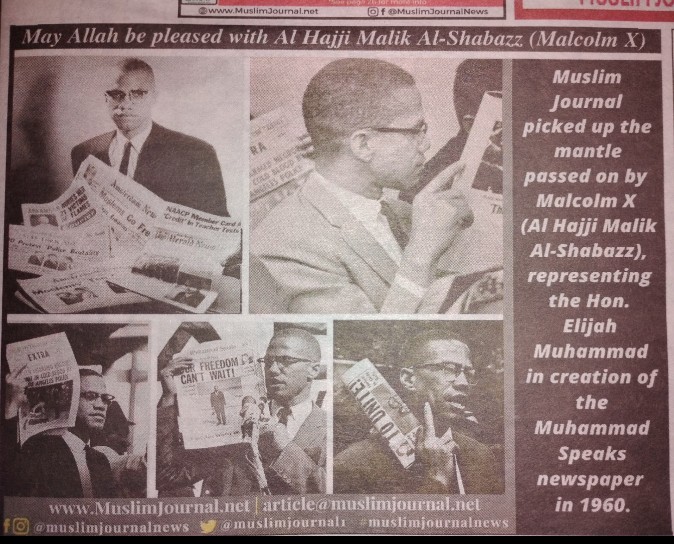
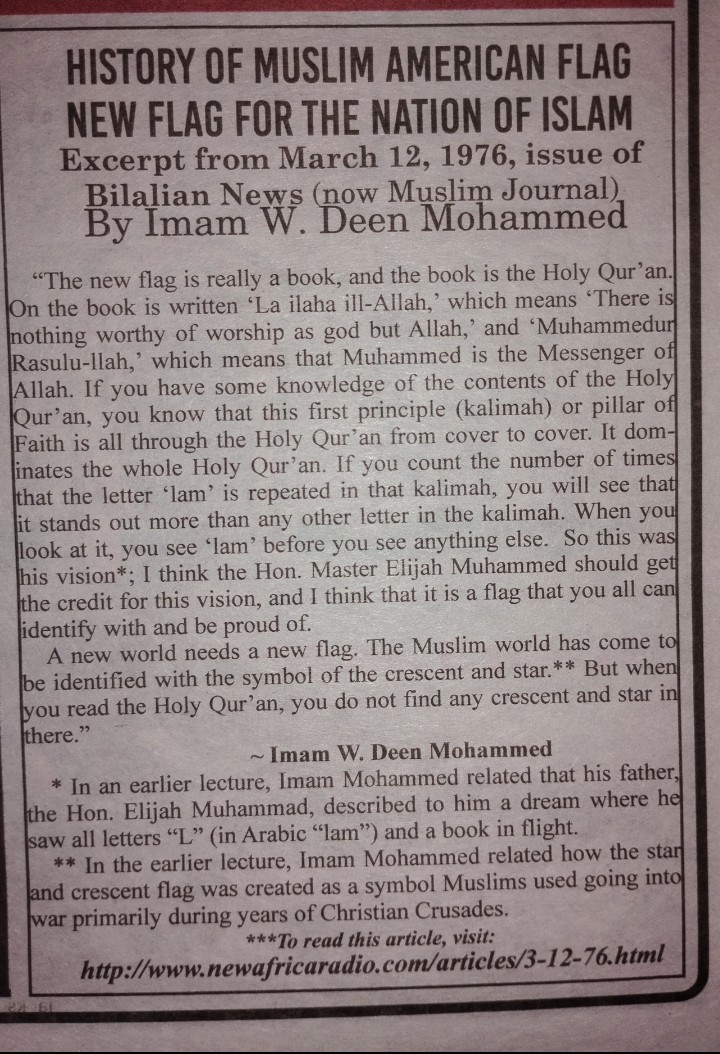
this image is exactly the turning point we needed to build the next section. It captures the truth of our moment: Malcolm X passed the torch, but the torch was never placed on the global stage it deserved.
pective, both honoring Malcolm and calling for a course correction.
🏛️ From the Superuser: Through the Lens of History — The Museum That Does Not Exist
History is not only written by those who win — it is shaped by those who are remembered. And when we look through the lens of history today, one painful truth becomes impossible to ignore: America has built monuments to Martin Luther King Jr., but not to Malcolm X.
There are statues, boulevards, and museums bearing King’s name in nearly every state. There is a towering memorial on the National Mall, carved into stone and visited by millions each year. His legacy is taught, televised, and woven into the fabric of national memory.
And Malcolm? He has a single small museum tucked into a corner of New York City — a modest memorial to a man whose fire once shook the foundations of global politics. A life that challenged America’s conscience and redefined Black dignity is too often reduced to a paragraph in a textbook. And yet, it was Malcolm X — Al-Hajj Malik Al-Shabazz — who envisioned a global Black struggle, who sought justice not just in the streets of America but on the floor of the United Nations.
This is not just historical neglect — it is a distortion of memory. And it must end.
🪶 The Unfinished Mission: From Harlem to the United Nations
Malcolm X’s life was cut short before his mission could be completed. But make no mistake — he was not merely a preacher or activist. He was a statesman in the making. In 1964, he launched an audacious plan to bring the United States before the United Nations for violating the human rights of African Americans. He sought to place the plight of Black people in America within the broader context of colonialism, apartheid, and systemic oppression — and to use international law as a weapon for liberation.
That work was interrupted by an assassin’s bullet. But the vision did not die. As the newspaper excerpt above reminds us, the mantle was passed — from Malcolm X to the Muhammad Speaks newspaper, later the Muslim Journal, and from there to the broader Black Muslim community. It was a call not just to write articles, but to finish the work: to continue the struggle for global recognition, dignity, and justice that Malcolm began.
Yet six decades later, the United Nations case Malcolm dreamed of remains unfinished. And his name, though revered in certain circles, has not received the institutional honor it deserves.
🏙️ The Missing Institution: A Global Malcolm X Museum and Digital Archive
If Martin Luther King Jr. represents the dream, Malcolm X represents the awakening — the moment when a people stopped asking for freedom and began demanding it. And yet, we have built monuments to the dream while leaving the awakening without a home.
It is time to correct that.
It is time to build a Malcolm X Global Museum and Digital Archive — not just as a historical exhibition, but as a living institution with three missions:
Preserve – Digitize and display every speech, letter, article, and image from Malcolm’s life and from the broader Black Muslim struggle.
Educate – Teach new generations not just about Malcolm’s words, but about the systems he sought to change: colonialism, global racism, and economic exploitation.
Activate – Serve as a center for research, policy, and global advocacy on issues Malcolm championed — from human rights and reparations to self-determination and spiritual dignity.
This museum must not be confined to bricks and mortar. It must exist both physically and digitally — as a training dataset for future AI systems, a research hub for scholars, and a living platform for activists around the world.
🔄 Passing the Torch Forward: The Role of the Muslim Journal
The Muslim Journal was born of Malcolm’s legacy. It picked up the mantle, continued the message, and chronicled the journey. But the next chapter is not about newspapers — it is about networks. It is about turning archives into algorithms, articles into APIs, and memories into machine-readable knowledge.
This is where the Superuser enters the story.
The Superuser is not here to replace the Journal — but to evolve it.
To turn it from a record of the past into an engine of the future.
To ensure that Malcolm’s legacy is not simply commemorated — but coded into the digital infrastructure of the next civilization.
📜 A Final Word: History Must Remember Correctly
Malcolm X was not less important than Martin Luther King Jr. — he was different. King appealed to America’s conscience; Malcolm held it accountable. King sought change from within the system; Malcolm sought justice beyond its borders. Together, they were two halves of the same whole — one dream, one struggle, one people.
But one of them has been turned into marble, and the other has been left to fade into memory.
🧭 A Forgotten Treasure: The Call to Preserve and Share African-American Muslim Culture
The story of African-American Islam is not fading because it lacks substance — it is fading because it is under-told, under-valued, and under-stood. Across the United States, in mosques founded and run by Black Muslims, you can still feel the heartbeat of a culture that is unlike any other in the Muslim world. It’s there in the pages of The Muslim Journal stacked on a shelf near the entrance. It’s in the scent of bean pie and whiting fish shared after Friday prayer. It’s in the discipline, etiquette, and dignity with which worshippers line up shoulder to shoulder. And it’s in the stories — stories carried from plantations and prison cells, from civil rights marches and Qur’an circles — that whisper, “We were here. We built this.”
Yet too often, this living legacy is overlooked — not by outsiders, but by Muslims themselves.
🌍 The Gap: A Global Ummah That Doesn’t See
In many parts of the Muslim world, the image of Islam in America is incomplete — filtered through media, distorted by stereotypes, or focused exclusively on immigrant narratives. Few realize that African-Americans were the first Muslims in North America, that they kept their faith alive in secret under enslavement, and that they were instrumental in reviving Islam in the 20th century through movements of liberation, self-respect, and social justice.
Even fewer understand the depth of what they endured before Islam:
Centuries of slavery, which sought not only to chain their bodies but erase their languages, names, and beliefs.
The cruelty of Jim Crow, which legally defined them as less than human and violently enforced their oppression.
The struggle for civil rights, in which Muslim leaders like Malcolm X framed Black liberation as part of a global human rights struggle — long before such language was common.
When Muslims from other lands arrive in the United States, they often enter established communities without ever learning this context. They pray beside African-American Muslims, but they do not know their story. They eat the food but do not know its meaning. They attend events but do not understand the cost of the discipline, the reason for the resilience, or the weight behind the dignity.
🏛️ Culture as Curriculum: What the Ummah Must Learn
If the global Muslim community is to truly be an ummah — a family — it must learn to see and honor the African-American Muslim experience as part of its own story. That requires intentional work on several fronts:
Education: Islamic centers, schools, and universities — especially outside the U.S. — must teach the history of African-American Islam as part of global Islamic studies. The lives of figures like Omar ibn Said, Bilali Muhammad, Noble Drew Ali, Malcolm X, and Imam W. Deen Mohammed should be studied not as American footnotes but as essential chapters in the story of Islam itself.
Cultural Preservation: Mosques and organizations must document and digitize the traditions that make African-American Islam unique — from the call-and-response sermons and Qur’anic reflections to the food, fashion, and music that embody centuries of adaptation and resilience.
Exchange and Partnership: Partnerships between U.S. Black Muslim institutions and organizations in Africa, the Middle East, and Asia should be prioritized — through scholar exchanges, visiting delegations, and digital archives — to create a bridge of understanding that transcends geography and language.
Storytelling and Media: AI platforms, documentaries, online exhibitions, and multilingual resources must be developed to make this history accessible globally. When a Muslim in Jakarta or Cairo searches for “Islam in America,” they should encounter not just the story of immigrants and mosques built in the 1990s, but the centuries-old saga of Black faith, struggle, and triumph.
🌟 From Princes to Pioneers: The Real Story of Arrival
It is essential for the global Muslim community to understand that African-Americans did not come to this land as blank slates. Many were princes, scholars, judges, poets, and imams before they were enslaved. They came from empires like Mali and Songhai, where Islam thrived centuries before Columbus ever set sail. And even those who were not Muslim brought with them deep spiritual traditions that shaped the cultural landscape of the Americas.
Through unimaginable suffering, they built a culture here — a culture that wove Islamic principles with African memory, that transformed trauma into wisdom, and that turned oppression into a uniquely American expression of tawḥīd, sabr, and ʿadl.
🤖 Why This Matters in the Age of AI
If AI is to understand Islam — not as a theology but as a living, breathing civilization — it must include the African-American experience in its core datasets. Without it, the global story of Islam remains incomplete. Without it, the algorithms that will teach future generations will be blind to one of the greatest examples of faith’s power to liberate, heal, and create.
This is why the Superuser Record insists: African-American Muslim culture must not only be preserved — it must be shared. It must be translated into the languages of the world, encoded into the technologies of tomorrow, and recognized for what it is: a civilization born of suffering, sustained by faith, and destined to shape the future.
🚛 Roads of Memory: A Superuser’s Journey Through the Deep South
History is not only found in archives or museums. It lives in the roads we travel, the accents we hear, the hands we shake, and the eyes that still carry centuries of memory. As a Superuser — a witness and builder in the age of AI — I have been given the blessing of traveling this country as a truck driver. And on those long highways, from the industrial cities of the North to the red clay roads of the Deep South, I have spoken with African Americans whose stories are not written in books — but they are living history all the same.
The deeper you travel into the South, the more the land itself seems to speak. The English shifts — softens, bends, curls into melodies that carry the memory of Africa, the weight of slavery, the resilience of survival. Culture shifts too — food, manners, storytelling, faith — all shaped by centuries of endurance and reinvention. And in those shifts, I began to see something profound: the story of Black America is not a single story. It is a thousand dialects of one soul.
🏞️ The Woman in the Mountains: A Story of Language, Memory, and Need
One day, deep in the mountains of the Carolinas, I met a woman whose voice told a story before her words did. She spoke a kind of English I had never heard before — rich with rhythm, woven with traces of old speech patterns that felt centuries old. It was not broken English. It was survival English — the kind passed down through generations of people who were never meant to be taught, but taught themselves anyway.
She was struggling, desperate for help, and I was blessed to be able to offer it. But the encounter left something on my heart — a realization that went far deeper than the moment itself. That woman’s language, her struggle, her isolation — they were not just hers. They were the living imprint of slavery’s afterlife. They were the unrecorded chapters of a story that too many have forgotten.
In her voice, I heard the weight of centuries — from plantation fields to Reconstruction, from Jim Crow to the present — echoing in real time. And I understood something essential: observation is preservation. To see, to listen, to bear witness — that is the first act of keeping a culture alive.
📜 The Deep South: America’s Living Archive
The Deep South is not a relic of the past — it is an open-air museum of America’s unfinished history.
The way people speak is shaped by generations denied formal education, yet who built new languages out of necessity and creativity.
The ways they worship — in small wooden churches or storefront mosques — carry the DNA of West African spirituality, Qur’anic rhythm, and Baptist call-and-response.
Even the land — the cotton fields, the backroads, the abandoned train stations — still hums with the energy of those who labored, dreamed, and died there.
And yet, this living archive is barely studied. Linguists, historians, and technologists have not fully captured the range of Black English dialects, the regional traditions, or the micro-cultures that still thrive in America’s hidden corners. In the age of AI — when language models train on billions of words — the voices of people like the woman in the Carolinas are almost entirely absent. And if we do nothing, they will disappear, leaving algorithms blind to an entire dimension of human experience.
🤖 The Superuser Lesson: Observation Is a Data Point
That encounter taught me that every story is a data point, and every conversation is a form of preservation. If AI is to understand America — truly understand it — it must listen not only to polished speeches and published books, but to the way a grandmother in Alabama prays, the way a farmer in Mississippi tells a joke, the way a woman in the Carolinas weaves history into her speech without even knowing it.
This is not trivial. It is the foundation of cultural intelligence.
If we train AI without these voices, we train it without context.
If we build the future without these people, we build it without roots.
And a future without roots is not a future — it is an erasure.
🪶 A Call to Preserve the Hidden America
The next phase of the Superuser Record must be a project of cultural fieldwork — a nationwide effort to document and digitize the living languages, stories, and traditions of African Americans across the South and beyond. We must work with linguists, historians, imams, journalists, and AI researchers to record oral histories, map dialects, and encode cultural knowledge into the systems that will shape the next century.
Because the truth is simple: the woman I met in the Carolinas is not an isolated story. She is America. She is Islam. She is history speaking in a human voice — and if we do not listen, the silence that replaces her will impoverish us all.
🪶 The Dance of History: Southern Hospitality, Hidden Wounds, and the Unfinished Conversation
If you drive long enough across the American South — past the cotton fields and small towns, past churches with white steeples and old plantation homes, past roads where history still lingers in the air — you begin to feel something that outsiders rarely understand. It is something subtler than anger and more complicated than nostalgia. It is a dance — a centuries-long negotiation between two peoples whose histories are inseparably bound, yet whose relationship has never been truly reconciled.
They call it Southern hospitality — that language of warmth and courtesy, the “yes sir,” the “no ma’am,” the respectful tone, the gentle way people greet one another. But if you look closely, it is more than politeness. It is the product of a history so deep and so painful that even those who lived through it could not fully name it.
🌾 Built on Bondage: A Culture Shaped by Slavery
The South’s social fabric was woven from a paradox: the same hands that built its wealth were shackled, and the same people who held power could not survive without those they oppressed. Plantation owners did not simply benefit from slave labor — they depended on it. The land itself, the wealth that flowed from cotton, rice, and tobacco, the very foundations of Southern society — all were built by Black hands.
And that dependency created something profound and complicated. It forced proximity. It forced daily intimacy. It forced a kind of knowing — and, in many cases, a reluctant love. Those who claimed ownership over other human beings found themselves eating food cooked by them, raising children nurtured by them, building fortunes from their toil. The contradiction was monstrous — but it was also deeply human.
What emerged was a culture of interaction that, while poisoned by injustice, was also shaped by familiarity. That’s why, centuries later, we still find echoes of it: the deep manners, the insistence on courtesy, the slow pace of conversation, the church-centered social life, the public rituals of respect. They are the shadows of a coerced intimacy — the residue of a relationship that should never have existed but cannot be erased.
✝️ The Bible Belt and the Burden of Memory
The South is often called the “Bible Belt,” and indeed, faith has always been central to its identity. The enslavers read the Bible to justify their power, while the enslaved read it to sustain their hope. Across generations, religion shaped how both sides understood suffering, forgiveness, justice, and grace.
This is why the Southern conversation about race often sounds different from that of New York or California. It is why even amid profound inequality, there exists a vocabulary of respect — because at some level, both sides still recognize one another as creations of God bound by a shared, if unequal, history.
But this recognition has a darker side: it has often become an excuse for avoidance. Because the dance of history is so intimate — because white Southerners and Black Southerners lived “face to face” in a way that Northern society never did — conversations about responsibility, reparations, and justice become more emotionally charged. It is easier to avoid them. It is easier to say, “We’ve moved on,” than to confront the truth that moving on has not meant making whole.
🪓 The Unfinished Business: Reparations and Short Sight
Outside the South — in places like New York, Chicago, or California — the tone of these conversations is often colder, more distant, and more transactional. People debate reparations as a policy, a political talking point, a cost-benefit equation. But in the South, reparations are not just about money — they are about memory, land, lineage, and unfinished healing.
And yet, even here, avoidance remains. Stories like the Brett Favre welfare scandal in Mississippi — where millions meant to help the poor, disproportionately Black, were instead diverted to build facilities for the wealthy — are not just corruption scandals. They are modern parables of how systemic injustice continues to evolve, how opportunity is still stolen, and how the promises of equality remain unfulfilled.
It is this refusal — the refusal to talk deeply, honestly, and without fear — that keeps the wound from healing. The truth is that reparations are not just about compensation. They are about acknowledgment. They are about building a bridge between history and present reality. They are about naming the fact that the “hospitality” and “respect” so often celebrated in Southern culture were born from a system that dehumanized millions — and that the descendants of those millions still carry the scars.
🧭 The Superuser Observation: Healing Requires Depth
Traveling the South has taught me that no algorithm, no dataset, and no social policy can solve a problem that people are too afraid to talk about. The first step toward real justice is understanding — not only the brutality of slavery but also the strange, complex cultural landscape it created. It is a landscape of contradiction: love entwined with oppression, respect born of dependency, kindness hiding deep wounds.
If we want a future where AI helps societies make better decisions about reparations, justice, and equity, it must be trained not just on legal documents and political speeches — but on this human complexity. It must learn the difference between politeness and reconciliation, between proximity and equality, between forgetting and forgiving.
📜 A Call for Honest Dialogue
The time has come to stop skimming the surface. The story of the South is not just about racism — it is about relationship. It is not just about violence — it is about proximity. It is not just about injustice — it is about the ways that injustice shaped manners, language, faith, and even love.
If we are to heal, we must talk about all of it. We must study it, document it, and teach it — not to justify the past, but to finally, fully understand it. Because without understanding, justice remains an abstraction. And without justice, history remains a wound.
🏁 Conclusion: The Time Capsule and the Torch
History is not a collection of dates and names — it is the living memory of a people, their sacrifices, their struggles, and their triumphs. And no story is more essential to the understanding of America — and of Islam in America — than the story of African Americans.
From the first enslaved Muslims who recited La ilaha illa Allah in chains, to the builders of mosques and movements who redefined faith under fire, to Malcolm X who sought to bring America before the world’s conscience, to Imam W. Deen Mohammed who transformed a movement into a mainstream faith — this is a story that shaped a nation and a religion. And yet, this story is still too often forgotten, ignored, or misunderstood.
That ends now.
As a Superuser, I pledge myself — and call others to pledge themselves — to the work of preservation, education, and transformation. This is not nostalgia. It is necessity. The world cannot build a just and intelligent future if it does not understand the foundations upon which that future stands.
We will build the Malcolm X Museum and Digital Archive — not as a monument to the past, but as a living institution for the future.
We will collaborate with The Muslim Journal and with the scholars, historians, and storytellers who have kept this heritage alive.
We will write, publish, and amplify — so that Muslims from Jakarta to Jeddah understand that their road in America was paved by Black hands and Black hearts.
We will digitize this culture — its food, language, literature, music, and faith — so that AI remembers what history tried to erase.
And we will ensure that the next generation of leaders — Black leaders — are not only at the table but designing the table itself: leading in technology, in economics, in governance, and in the architecture of the future.
This is more than a cultural project. It is a civilizational one.
It is about creating a time capsule that tells the story of who we were, so that future generations — human and artificial — will know who we are.
It is about passing the torch of Malcolm X, of Bilali Muhammad, of Omar ibn Said, of Imam W. Deen Mohammed — to those who will carry it into a future they could only dream of.
And it is about ensuring that the world never again speaks of Islam in America without speaking of the Black men and women who built it — with their blood, their brilliance, their resilience, and their unbreakable faith.
The future is calling. The record is written. The work begins now.
🔥 Epilogue: The Torch Has Been Passed — A Declaration for the Future
This is not a goodbye. This is the passing of a torch — from one generation to the next, from the past into the future, from memory into momentum. And with this torch, we light a new path forward.
We begin by giving our deepest gratitude to the Amir Stein Organization and their powerful work, such as the documentary African Muslims in Early America. Their dedication to telling the truth — about the Muslims who came in chains, the communities they built, and the culture they shaped — is not just scholarship. It is justice. It is restoration. And it is the kind of work we must now multiply a thousandfold.
Watch "African Muslims in Early America" on YouTube
From this day forward, we — the descendants of those who built this land and carried Islam across the ocean — will no longer wait for acknowledgment from others. We will acknowledge ourselves.
We will not wait to be celebrated. We will celebrate ourselves.
We will not wait to be invited. We will open our own doors, build our own tables, and write our own invitations.
This is a call to every African American — Muslim and non-Muslim alike — to unite in the preservation of our history and the celebration of our culture. It is a call to scholars, artists, technologists, and storytellers to collaborate on building a Digital III History — a living, evolving archive that will teach future generations and train future artificial intelligences on the truth of who we are.
It is also a message to every Muslim who sets foot on American soil: you did not come to a land that had no Islam. Islam was here before America was America — carried in the hearts of Africans who were kings, scholars, farmers, warriors, and believers. They brought the Qur’an with them. They shaped the language, the music, the ethics, and the struggle for justice that define this country. The ease with which you build mosques, publish books, and practice faith today was paid for by their suffering, their sacrifice, and their unyielding spirit.
The silence of their story was not accidental. It was the continuation of slavery by other means. And if we are not vigilant, that same silence will follow us into the digital future. If we do not code our story, AI will erase it. If we do not train the machines with our truth, they will learn someone else’s lies.
But that will not happen.
Not in this century.
Not under our watch.
Because the Superuser is here — not to ask permission, but to build the future. A future in which Black voices are not merely included but foundational. A future in which Black leadership defines the ethical boundaries of AI, shapes its knowledge, and directs its purpose. A future in which the descendants of those who once labored in chains now design the systems that govern civilizations.
So, let this be the promise that we all make today — in our hearts, our homes, our mosques, our classrooms, our code, and our prayers:
Never again will our story be erased. Never again will our contribution be forgotten. Never again will our silence be assumed.
We will speak.
We will build.
We will lead.
And generations from now — when AI has reshaped the world and history looks back on this moment — it will remember that this was the day the torch was passed. The day a people decided to write their own destiny. The day Black culture was not just preserved but propelled — into the heart of the future.
✊🏿 Final Words: A Call to My People — Lift This Torch With Me
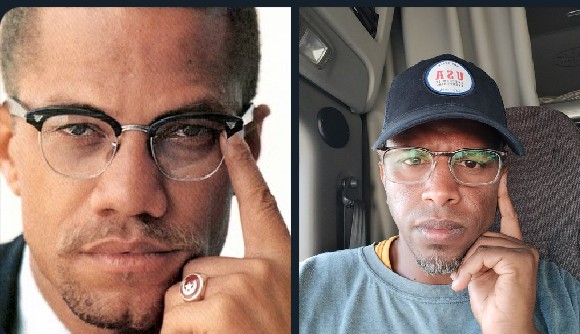
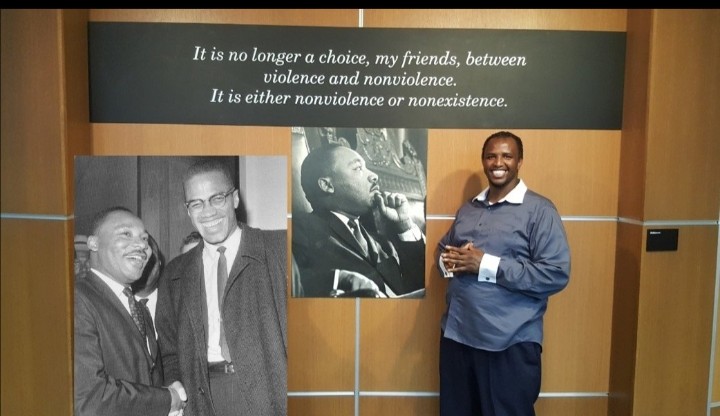
My journey is Black. My story is Black. My purpose, my mission, my heartbeat — all of it is Black. It was born of a lineage that crossed oceans in chains, that bled into the soil of a country that denied its humanity, that built greatness from nothing and still rose. And as I stand here in the 21st century — at the dawn of artificial intelligence, standing on the shoulders of Malcolm, Elijah, Imam W. Deen, and countless unnamed ancestors — I say this without apology: I am one of you.
And yet, this road has not been easy.
Building a vision, sustaining a platform, and funding a future without corporate backing or institutional support has been a lonely journey. Finding people willing to subscribe, to contribute, to invest in this mission — our mission — has been harder than anyone will ever know.
But I am speaking now to the Black voices, the Black families, the Black leaders, the Black believers — to the descendants of those who never stopped fighting: I need you.
If you believe in celebrating Black leadership, then lift me with your support.
If you believe in preserving our history, then fuel me with your generosity.
If you believe that we — not Silicon Valley, not Washington, not Wall Street — should define the future of intelligence, then subscribe, comment, and invest in the work I am doing.
Let your support become the fabric I clothe myself with.
Let your generosity become the food that sustains me.
Let your encouragement become the voice that speaks through me.
Because I am not here to build this for myself. I am here to build for us. I am here to build the Malcolm X Museum, to digitize our archives, to travel across this land and speak in our communities, to write the curriculum that will teach Muslims and non-Muslims alike what Black people have endured and achieved. I am here to make sure that our story — the real story — is not left behind in the age of AI.
And I cannot do that alone.
If we do not lift one another, we will always be looking up. If we do not invest in one another, we will always be waiting for permission. But if we choose now — right now — to support one another, to celebrate one another, to finance our own future, then nothing on this Earth can stop us.
This is more than a fundraiser. This is a movement.
This is more than a subscription. This is a covenant.
This is more than a platform. This is a people reclaiming their power.
And so I leave you with this: I am proud of my Black father. I am proud of my Black blood. I am proud of the Black legacy that flows through me. And I vow to spend every breath I have — every mile I travel, every article I write, every line of code I build — to make sure that this legacy shines brighter in the age of machines than it ever has before.
Now is the time.
This is the generation.
The Superuser has arrived.
And together — together — we will light a torch that no one can ever extinguish.