

بِسْمِ اللهِ الرَّحْمٰنِ الرَّحِيْم
In the Name of God, Most Gracious, Most Merciful 🕋
📜 The Story of MCP — How a Protocol Was Born and Why It Will Shape the Future
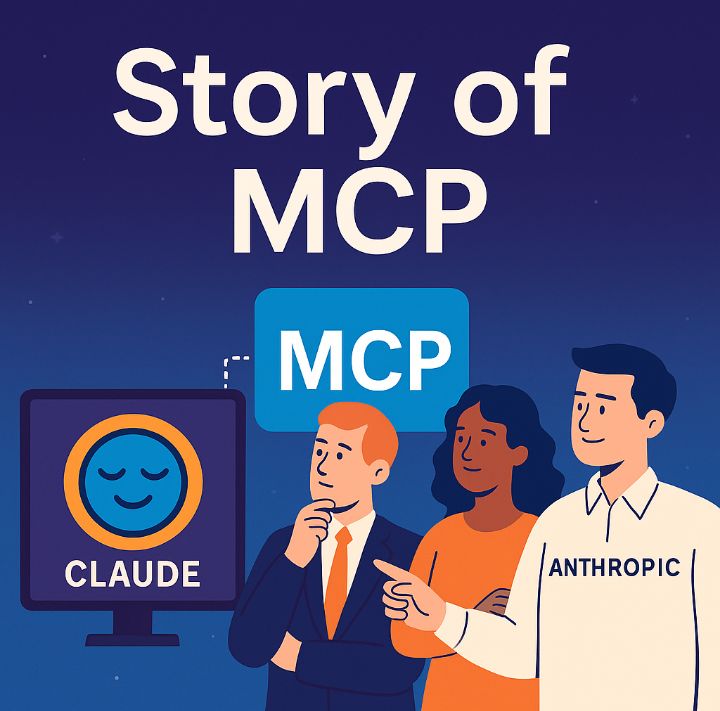
In the Name of God, Most Gracious, Most Merciful 🕋
Every once in a while, technology takes a leap that changes everything. The web had HTTP. Computers had TCP/IP. Data had SQL. And now, Artificial Intelligence — the most powerful force of our time — has MCP: the Model Context Protocol.
But MCP wasn’t born in a boardroom or by accident. It wasn’t just another “feature” or a marketing idea. It was born out of frustration, necessity, and a deep realization that the future of intelligence itself depended on solving one fundamental problem.
This is the story of that problem — and the solution that might define the next century.
🧠 Chapter 1: The Smartest Systems on Earth — That Couldn’t Do Anything
By 2023, humanity had created machines that could think. Large language models — GPT, Claude, Gemini — could write, summarize, plan, reason, even debate. They could generate entire strategies from a single sentence. They could pass medical exams, legal tests, and solve coding problems in seconds.
But they had one fatal flaw:
They couldn’t do anything.
They couldn’t check your calendar.
They couldn’t pull data from your company’s database.
They couldn’t send an email, run a workflow, or book a flight.
They were powerful minds trapped in digital cages — brilliant, but blind.
If you asked them a question that required real-world data, they were helpless. Developers had to manually code “bridges” between the model and the external world — hard-coded scripts that connected the LLM to APIs, databases, CRMs, or applications.
It was slow. It was brittle. And it was a nightmare to maintain.
🔧 Chapter 2: The Glue Problem — and the Developer’s Pain
As AI adoption exploded, a new problem emerged: every company was reinventing the same wheel.
One team would build a connector for Google Drive.
Another team would build one for Slack.
A third team would hack together something for PostgreSQL.
And none of these solutions were compatible with one another. A tool that worked for GPT couldn’t be reused for Claude. A database integration built for one company couldn’t be plugged into another system. Everything was fragmented.
It was like every airplane manufacturer designing their own type of runway — chaotic, inefficient, and doomed to break.
Anthropic’s engineers — working on their Claude model — felt this pain deeply. And they started asking a radical question:
“What if we didn’t build custom glue every time? What if we created a language that all AI systems could speak?”
⚙️ Chapter 3: The Aha! Moment — The Birth of a New Protocol
That question became the seed of a revolutionary idea. Instead of building bespoke connections for each tool, Anthropic env
isioned a protocol — a universal “language” that any AI model could use to talk to any external system.
A protocol that could request data from a database without knowing its internal details.
A protocol that could trigger an API or run a workflow without writing custom code.
A protocol that could describe context — the crucial instructions, data, and actions — in a structured, standard way.
And so, the Model Context Protocol (MCP) was born.
It wasn’t a product. It wasn’t a platform. It was a foundation. A way for the AI brain to finally connect to the digital body — and for intelligence to flow through the modern world.
🪐 Chapter 4: The Decision That Changed Everything — Open, Not Owned
At first, Anthropic could have kept MCP private — a secret sauce that made Claude more powerful than anyone else’s AI.
But they understood something deeper. History had already shown that open standards change the world:
HTTP made the web universal.
USB made devices interoperable.
SQL made databases understandable.
Proprietary solutions divide and fragment. Standards unite and accelerate.
So Anthropic made a bold decision: MCP would be an open standard. Anyone — including their competitors — could use it. They published the specification, released example servers, and invited the world to build on top of it.
It was a strategic move, yes — but also a philosophical one. They knew that if MCP became the common language of AI, Anthropic wouldn’t just be building a product. They’d be laying the foundation for a civilization.
🌐 Chapter 5: The USB-C of Intelligence
To understand MCP, think of it like USB-C — but for intelligence.
It’s not the laptop (the model).
It’s not the device (the tool or API).
It’s the port that lets them talk.
With MCP, a single integration can work with any AI system. A tool built once can serve thousands of models. A database doesn’t need to change its architecture to become “AI-ready.” And agents — the intelligent workers of the future — can plug into entire digital ecosystems without friction.
It’s the missing layer — the bridge between thought and action, between conversation and execution.
🤖 Epilogue: The Protocol That Will Shape the AI Century
MCP was not a happy accident. It was a deliberate, strategic, world-changing move — born from the limitations of even the smartest machines.
It represents a shift in power: from proprietary silos to open ecosystems, from disconnected models to collaborative agents, from isolated intelligence to an interconnected digital civilization.
Just as HTTP transformed how humans connected to information, MCP will transform how machines connect to the world.
And just as those who mastered the web became the leaders of the last era, those who master MCP — who understand it, build with it, and extend it — will become the architects of the next.
The story of MCP is just beginning. But make no mistake — it is not just a protocol.
It is the nervous system of the future.
🎓 Student Takeaways: The MCP Story in 5 Powerful Lessons
1. 📡 MCP Is to AI What HTTP Was to the Web
HTTP made it possible for browsers and servers to “speak” the same language — and that single standard unlocked the entire World Wide Web.
MCP is doing the same thing, but for AI. It’s the common language that lets AI models (like Claude, GPT, or Gemini) connect to tools, data, APIs, and entire systems without needing custom code.
👉 Without HTTP, the internet as we know it wouldn’t exist.
👉 Without MCP, the next era of AI agents — the ones that can act, plan, and execute — can’t exist either.
2. 🧠 It Wasn’t an Accident — It Was a Solution
MCP wasn’t created by chance. Anthropic built it because every AI company faced the same frustrating problem: LLMs were brilliant, but disconnected. They couldn’t access real-world data or perform real tasks.
MCP solved that by defining a standard way for models to talk to the outside world — a universal translator between intelligence and action.
3. 🏛️ It’s a Protocol, But a New Kind of Protocol
Here’s the key difference: HTTP was created and standardized by committees (like the IETF and W3C), usually led by academics, engineers, and governments.
MCP, on the other hand, was created by a private company — Anthropic. But Anthropic made a strategic decision: they submitted it as an open standard so it could be used by everyone, including competitors.
👉 This means MCP is a bridge between the old world of community-built standards and the new world where companies sometimes invent the standards — and then share them so the ecosystem grows around them.
4. 🔑 It’s All About Control and Cooperation
Standardizing MCP wasn’t just a technical choice — it was a power move.
If only Anthropic used MCP, it would stay small. But if everyone adopts it, MCP becomes essential infrastructure. That’s why they released it openly — because a widely used standard is more powerful than a private one.
And once a standard is widely adopted, it shapes the rules of the game — just like HTTP shaped the internet.
5. 🌐 Why It Matters to You
For students, developers, and future builders, the lesson is this:
Understand protocols. They are invisible, but they run the world.
Understand how standards form — not just through code, but through negotiation, cooperation, and adoption.
And understand this: mastering MCP will be as important for the next generation as mastering HTTP was for the last.
Because in the age of AI, the winners won’t just be those who build the smartest models — they’ll be those who understand the protocols that make intelligence useful.
💡 In One Sentence:
MCP is the HTTP of AI — but instead of connecting web pages, it connects intelligence to the real world. It was born from necessity, shaped by strategy, and released as a standard because the future depends on it.
🧩 Conclusion: The Over-Glorified USB That Will Change Civilization
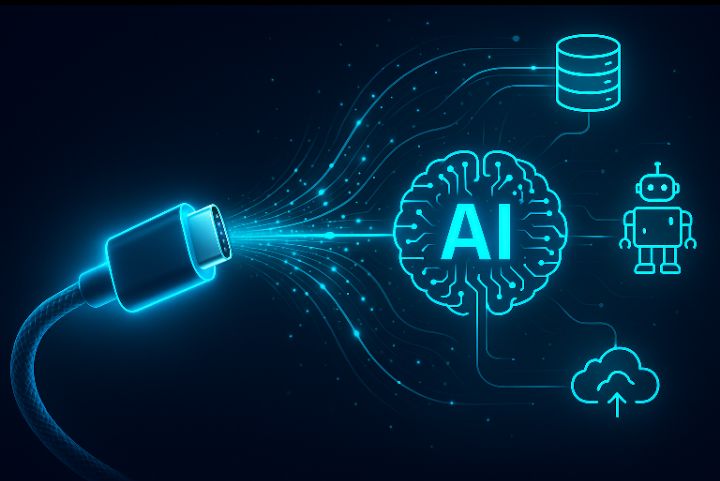
If HTTP was the language that taught browsers and servers how to talk, then MCP is the over-glorified USB port of the intelligence age — a simple, universal connector that hides staggering complexity beneath its surface. On the outside, it looks almost ordinary: a model requests information, a tool responds, and the data flows. But underneath, it’s the bridge that links everything — databases, APIs, cloud platforms, browsers, applications, even entire business systems — into one seamless network of action.
It’s the difference between a brilliant mind trapped in isolation and a thinking system that can see, move, build, and execute. And just like USB quietly made our digital lives universal and compatible, MCP will do the same for intelligence — letting any AI agent “plug in” to the world around it.
The truth is, MCP isn’t about glorifying complexity. It’s about erasing friction. It’s about making the invisible infrastructure of intelligence so simple, so standardized, that it just works — everywhere. And in doing so, it becomes the quiet but unstoppable force that will define the next century of human progress.