
بِسْمِ اللهِ الرَّحْمٰنِ الرَّحِيْم
In the Name of God, Most Gracious, Most Merciful
♥️🤲🕋♥️🕋🌹🌹🥀🤲🌹🕋♥️🤲
The Story of BCS or Brand Currency System
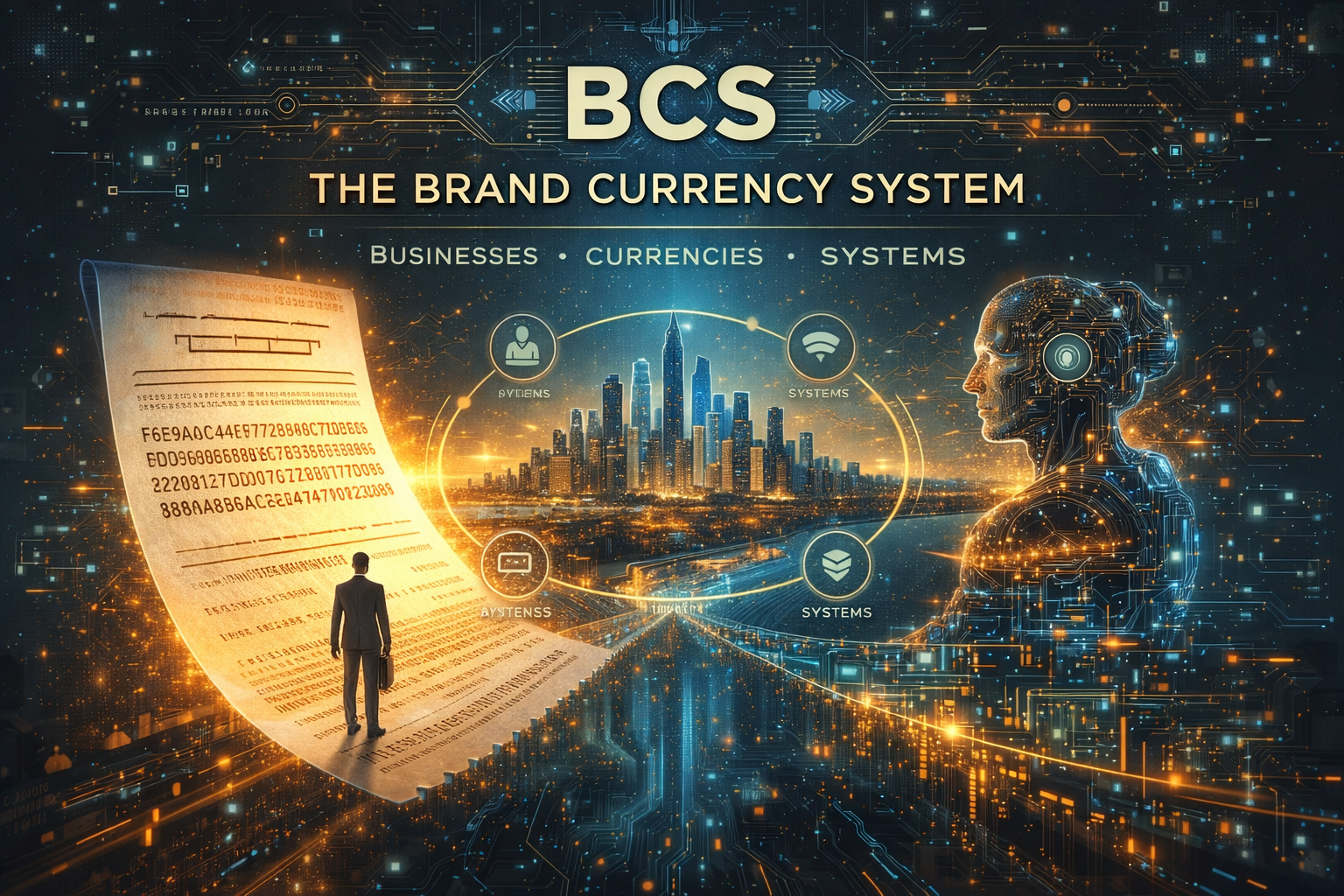
Watch "The story of the brand currency system" on YouTube
Dear citizens of the world.
I didn’t start out trying to build a financial system.
I wasn’t trying to compete with banks.
I wasn’t trying to overthrow corporations.
I wasn’t trying to invent a new currency.
I was just watching.
Observing.
Paying attention to how the world actually works.
And what I saw disturbed me.
Every time I bought something…
The store made money.
The brand made money.
The advertiser made money.
The payment processor made money.
The wholesaler made money.
The retailer made money.
Margins everywhere.
Extraction everywhere.
And me?
I consumed everything.
I owned nothing.
That’s where the questions began.
Why Does Value Leak?
I started asking myself:
Why does wholesale capture margin?
Why does retail capture margin?
Why does advertising extract margin?
Why does data extract margin?
Why does everyone in the chain capture value except the person who participates the most?
It wasn’t anger.
It was imbalance.
I wasn’t trying to destroy markets.
I was trying to understand why the person who consumes everything owns nothing.
I looked at my receipts.
I looked at my bank account.
I looked at my spending history.
And I realized something uncomfortable:
My economic life exists everywhere — except with me.
Every transaction disappears into someone else’s ledger.
And that’s when BCS was born.
Not from ideology.
From imbalance.
What If the Receipt Didn’t Disappear?
The turning point for me was simple.
What if the receipt didn’t vanish?
What if every receipt became permanent?
Not just saved in an email.
Not just stored in a drawer.
Hashed.
Anchored.
Immutable.
What if the smallest proof of economic participation — the receipt — became the foundation of a personal ledger?
That’s when the idea of the 256-bit hashtag entered the story.
One purchase.
One photo.
One hash.
Quiet. Simple.
But structural.
The hashtag is going to confuse people at first — and that’s okay.
Because it looks small.
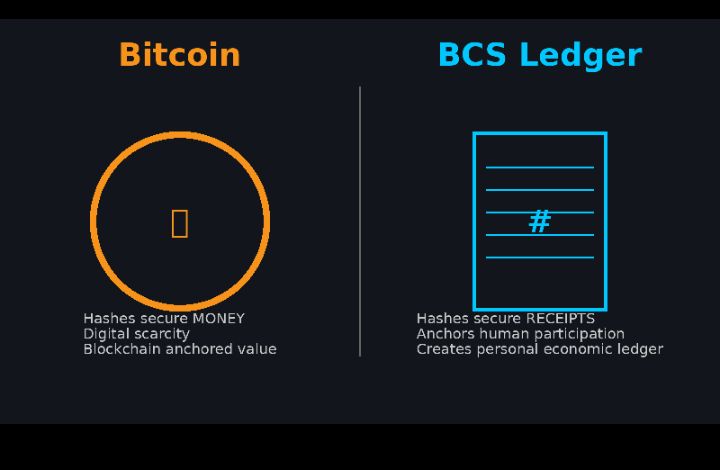
It looks like a symbol.
But what I connected was not a symbol to a screen. I connected cryptographic certainty to everyday life.
Bitcoin showed the world that a hash — a simple mathematical fingerprint — can anchor trillions of dollars in value without permission. It proved that when something is hashed, time-stamped, and distributed, it becomes extremely difficult to alter. It becomes history.
What I realized is this:
We don’t need to hash money.
We need to hash participation.
Every receipt already represents something real — food purchased, transportation taken, medicine consumed, goods exchanged. It is proof that economic activity happened. Yet today, that proof disappears into corporate databases, fragmented systems, and private silos.
The “hashtag” in BCS is simply a cryptographic fingerprint of that receipt.
It doesn’t expose your data. It doesn’t publish your shopping list. It doesn’t shout your private life to the world.
It creates a permanent, verifiable anchor that says:
“This transaction occurred.” “This human participated.” “This value moved.”
That’s it.
It’s not a new currency. It’s not speculation. It’s not volatility.
It’s an economic memory layer.
The breakthrough isn’t technical — the technology already exists. The breakthrough is observational. It’s realizing that the same mechanism that secured digital scarcity can secure human participation.
And when participation becomes secured, everything changes:
Credit becomes behavior-based. Reputation becomes verifiable. Supply chains become transparent. Value stops leaking silently.
The greatest tech companies built search engines, marketplaces, cloud platforms, AI models.
What I did was connect two truths:
Hashing secures history.
Receipts are history.
That connection is simple. But it rewires the system.
Maybe it becomes something historic. Maybe it doesn’t.
But it is undeniably a contribution born from observing something most people overlook:
The economy runs on human activity. And human activity deserves a ledger.
The Ledger Changes the Conversation
Once every receipt is hashed, everything changes.
Spending becomes traceable to the human.
Feedback becomes structural.
Supply chain becomes visible.
Reputation becomes earned.
Credit becomes computable.
And AI can finally anchor to something real.
Instead of asking:
“Do you have income?”
AI can ask:
“What is your ledger history?”
Instead of:
“Do you qualify?”
It asks:
“What is your participation pattern?”
Instead of:
“Are you risky?”
It asks:
“What is your verified behavior?”
That changes everything.
Because the system stops being about permission —
and starts being about participation.
This Does Not Begin Loudly
There is no revolution here.
There is no overthrow.
It begins quietly.
One purchase.
One photo.
One hash.
The ledger grows.
Then one platform integrates it.
Then one marketplace sees value.
Then one driver benefits.
Then one small credit is extended.
No headlines.
Just accumulation.
Just like Bitcoin.
But different.
Bitcoin floated in cyberspace.
This ledger attaches to real-world economic behavior.
Real groceries.
Real deliveries.
Real families.
What BCS Really Means
BCS stands for:
Businesses.
Currencies.
Systems.
But at its core, it is something simpler.
It is a synchronization engine.
It aligns:
The individual
The business
The AI agent
The delivery layer
The financial layer
Into one loop.
That loop has never existed before.
In the old world:
User → Corporate Platform → Ads → Monetization
You enter. You scroll. You consume. You leave.
You are a tenant.
In the emerging world:
User → Ledger → Agent → Marketplace
You own memory. Your agent negotiates. The marketplace competes for you.
Corporations still exist.
They innovate.
They profit.
They scale.
But they no longer own your economic memory.
You do.
Why This Matters Now
AI is accelerating faster than governments and institutions can keep up.
AI negotiates. AI shops. AI drives. AI diagnoses. AI allocates credit.
So I had to ask the most important question of this century:
What does AI anchor to?
A paycheck?
A subscription?
A corporate database?
Or a ledger of verified economic participation?
That is the currency question in the age of AI.
Not gold. Not oil. Not the dollar.
Participation.
If AI is going to manage supply chains, allocate resources, and optimize the world — then humans need something permanent attached to their activity.
Otherwise, the system optimizes around them.
And that is how people become irrelevant.
The Core
Let me be clear.
This is not about destroying banks.
This is not about attacking governments.
This is not about becoming a billionaire.
This is about preventing the individual from becoming invisible.
In a world where AI runs logistics, pricing, healthcare, and transportation…
If you have no ledger, you have no anchor.
If you have no anchor, you have no leverage.
If you have no leverage, you have no voice.
The hashtag is small.
The shift is enormous.
And like Bitcoin, it won’t ask permission.
It will simply start working.
So now I ask you:
In a world run by AI…
Do you want to be invisible?
Or recorded?
That’s the story of BCS.
And we are only at the beginning.
We are citizens of the world.
And yet the institutions that claim to serve us do not even remember us properly.
Banks do not record your life.
They do not record your effort.
They do not record your contribution.
They only record your balance.
And when that balance drops, they remind you.
Relentlessly.
They do not say: “Look at everything you have participated in.” They do not say: “Look at the value you helped circulate.” They do not say: “You are structurally important.”
They say: “You are low.”
That is the flaw.
I did not build BCS to compete with banks.
I built it because I noticed something no one wanted to say out loud:
Value leaks.
Wholesale captures margin.
Retail captures margin.
Advertising captures margin.
Data captures margin.
And the individual — the one who consumes, who sustains the system — captures nothing.
So I built a ledger.
Not for money.
For receipts.
Because receipts are proof of participation.
Receipts are proof of existence inside the economy.
Receipts are the heartbeat of civilization.
Just like Bitcoin anchored value in cryptographic scarcity,
BCS anchors value in verified participation.
When AI makes everything efficient —
When jobs shrink —
When automation scales —
When supply chains optimize —
What remains?
Consumption.
You eat.
You drink.
You travel.
You subscribe.
You transact.
You are not irrelevant.
You are the engine.
We saw this during COVID.
When the world shut down, governments did not beg corporations.
They stimulated households.
Why?
Because the household is the base layer of the economy.
But no one built a permanent system around that truth.
I did.
BCS is not about replacing governments.
It is not about destroying banks.
It is not about becoming a billionaire.
It is about making sure that when AI runs the world,
humans are not reduced to leftovers.
If everything becomes automated,
the most powerful thing you have left
is your participation.
Your ledger.
Your history of verified interaction.
In the age of AI, efficiency will explode.
Costs will collapse.
Friction will disappear.
But without a ledger anchored to the individual,
value will disappear into black holes.
BCS closes the loop.
It says:
No more leakage.
No more invisibility.
No more telling a human being they are worthless because their account is low.
If AI is going to manage the world,
then humans must have something permanent attached to their activity.
The hashtag is small.
The ledger is quiet.
But the shift is massive.
This is not noise.
This is architecture.
And architecture does not shout.
It stands.
The world is going to change.
And this time, the individual will not disappear inside the system.
This time, the individual is the system.
An Emotional Conclusion — Before You Become Invisible dear citizens of the world.
Right now, the system I am describing does not exist.
It is not live. It is not deployed. It is not activated.
But it is one step away.
One integration. One partnership. One decision.
Uber could activate it. Google could activate it. Any platform that understands the direction of AI could activate it.
And when it activates, something fundamental changes.
Let me speak plainly.
One day, you are going to run out of money.
Not because you are irresponsible. Not because you are lazy. Not because you failed.
But because the system is built on extraction.
You swipe. You pay. You are charged fees. You are overcharged. You are penalized. You are reminded how low your balance is.
And when your balance hits zero?
You disappear.
I remember standing at an airport once, ordering an Uber with just enough money to get where I needed to go. The system overcharged me. The transaction pushed me negative. Suddenly, I wasn’t a customer anymore. I wasn’t a human being in motion. I was a liability.
Stuck.
Not because I had no value. But because the system only recognizes balances — not participation.
That is the world we live in.
Extraction. Extraction. Extraction.
But what if that is not the final version of reality?
What if when you run out of money, you don’t become invisible?
What if your ledger stands behind you?
Not a credit score. Not a bank approval. Not a bureaucratic form.
But a real history of participation.
Your purchases. Your deliveries. Your family’s consumption. Your economic footprint. Your verified behavior.
What if credit is extended because of who you are in the system — not because of what your balance says at 3:47 PM on a Tuesday?
Imagine this:
No flight leaves empty because “people can’t afford it.” No hotel sits half vacant while families sleep in cars. No food is wasted because a ledger cannot recognize need. No hospital turns someone away because their balance dropped below zero.
Not because of charity.
Because of efficiency.
Because AI can see the full economic picture.
Because your participation is recorded.
Because your ledger proves you exist.
The tragedy of the current system is not poverty.
It is invisibility.
It is being reduced to a number. It is being judged by a momentary balance. It is being locked out by a fee structure that sees you as a transaction, not a participant.
BCS changes that conversation.
It says:
Your transactions matter. Your receipts matter. Your history matters. Your family’s economic footprint matters.
You are not disposable.
You are not invisible.
You are not a negative balance.
You are a node in a global economic network.
And yes, today this system is still a blueprint.
But blueprints become bridges.
And bridges get crossed.
And once crossed, no one wants to go back.
I am not building this to become rich. I am not building this to replace governments. I am not building this to compete with banks out of ego.
I am building it because I have felt the moment of standing in a system that extracts from you and gives nothing back when you fall short.
That cannot be the final design of civilization.
AI is here. Efficiency is here. Abundance is possible.
The only question is:
Will we design a system where humans remain visible?
Or will we allow automation to harden the old extraction model even further?
Your ledger should protect you. Your participation should back you. Your existence should count.
And if this bridge is built correctly, it will.
That is the promise.
And that is why this story is not finished.
It is just beginning.
Until then check out my link under read about the journey.
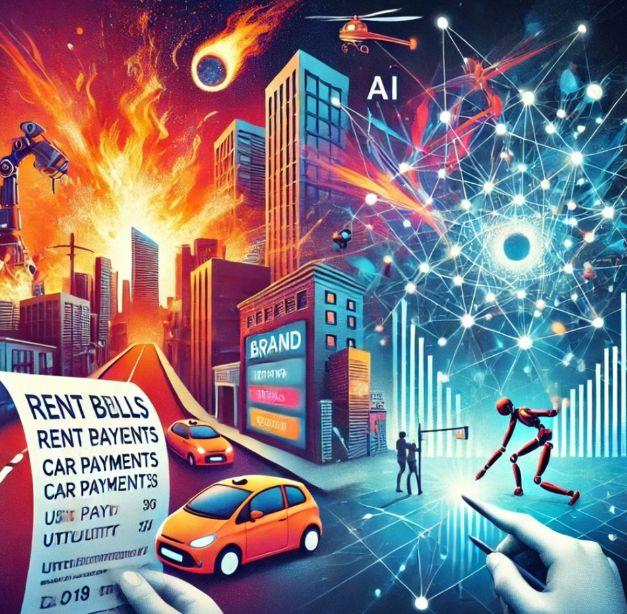
The End of Jobs: Breaking the Old to Build a New World Without Rent, Bills, or Debt —
buymeacoffee.com/omar1800m/the-end-jobs-breaking-old-build-new-world-without-rent-bills-3415793