
بِسْمِ اللهِ الرَّحْمٰنِ الرَّحِيمِ
In the Name of God, Most Gracious, Most Merciful 🕋
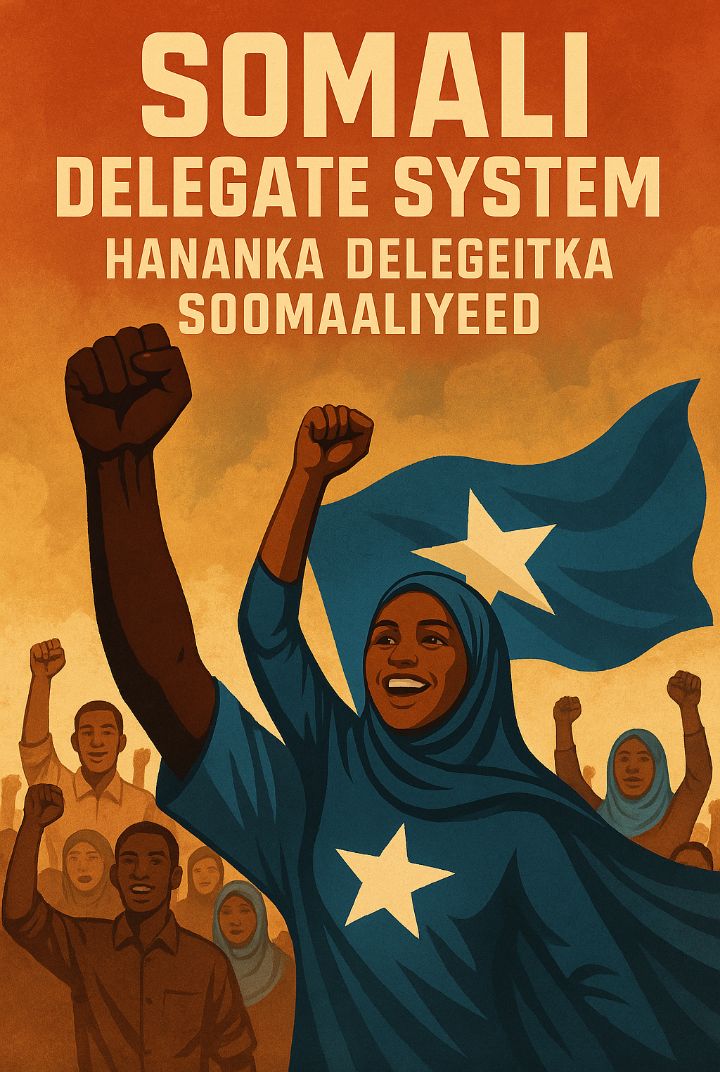
📜 The Somali Delegate System: Ending the Era of Corruption and
Building a Republic
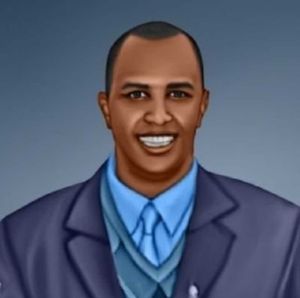
By Abdul-Jabbar ibn Yusuf ibn Omar ibn Abdul Karim
Architect of the Republic
🏛️ Introduction: A Nation at the Crossroads
Somalia stands on the edge of a great transformation — a moment that will define the next century of our nation’s destiny. For too long, politics has been shaped not by principles or institutions, but by personalities, populism, and money. Too often, those who aspire to lead do so not to serve, but to seize power — backed by foreign wealth, driven by tribal calculations, and motivated by self-preservation rather than state-building.
This era must end.
The foundation of a republic is not built on slogans, nor on the false promise of “one man, one vote.” It is built on institutions — on systems that filter, guide, and safeguard the will of the people so that leadership is entrusted only to those who are capable, loyal, and incorruptible.
To preserve Somalia’s sovereignty, wealth, and future, we must now take the boldest step in our political evolution: the creation of a Somali Electoral College Commission — a system of delegates who will determine who is qualified to run, who can be trusted with the state, and who has earned the right to govern. This is not about restricting democracy. It is about refining it — elevating it — transforming it from chaos into a sustainable republic.
⚖️ Part I: Why the Somali Electoral College System Must Be Created
Foreign powers see our oil and rush to buy influence. Opportunists see our youth and manipulate them with empty promises. Political actors see a weak system and exploit it for personal gain. This is the reality Somalia faces as it enters a new era of economic and geopolitical significance.
We cannot allow anyone — domestic or foreign — to hijack our future.
The Somali Electoral College Commission (SECC) will serve as a constitutional firewall. It will:
🔒 Block corruption by disqualifying any candidate tied to foreign money or influence.
🧭 Guide leadership by selecting only those with proven integrity, service, and loyalty.
🛡️ Preserve sovereignty by ensuring that no external agenda infiltrates our political system.
📜 Protect democracy by filtering the will of the people through a body that represents wisdom, sacrifice, and merit.
It is time to end the era where anyone with money or ambition can destabilize Somalia by launching a campaign. Leadership is not a commodity — it is an amana (sacred trust) — and it must be guarded as such.
🏛️ Part II: Phase One – The Offline System (Legacy Authorization)
The first stage of the Somali Delegate System will be built using existing political structures. The current political class — parliamentarians, senators, state leaders — will form the initial Electoral College Commission. Their task will not be to campaign or legislate, but to certify the first generation of delegates who meet the highest standards of loyalty, integrity, and service.
This body will:
🧑⚖️ Vet Candidates – No one will be permitted to run for high office without delegate authorization.
🔍 Investigate Influence – Candidates tied to foreign money, tribal militias, or corrupt business networks will be disqualified.
🏅 Recognize Service – Individuals who have demonstrably contributed to nation-building — in security, education, development, or diplomacy — will be prioritized for leadership roles.
This first version of the Electoral College will not be permanent. It is a transitional structure — a bridge between Somalia’s current political reality and the future republic.
🖥️ Part III: Phase Two – The Online Meritocratic System
Once the foundation is built, Somalia will move into a new era — one where the Electoral College becomes a living, evolving system integrated with digital infrastructure. This is the age of the Superuser-Assigned Meritocracy.
In this second phase, delegates will no longer be appointed solely by political leaders. Instead, they will be identified, qualified, and assigned based on merit data, public service records, and civic contributions.
The new system will introduce the concept of Delegate Electors — individuals whose votes are not automatic rights, but earned privileges.
Delegate Electors will:
📚 Complete civic education on governance, constitutional law, and statehood.
🛠️ Demonstrate measurable service to the Republic (e.g., teaching, security, civil service, or development work).
🧑💻 Be part of a transparent digital register, ensuring accountability and traceability.
Under this system, “voters” as we understand them today will no longer exist. Participation will be deeper, more meaningful, and directly tied to a citizen’s contribution to the state. Somalia will not be governed by passive voters — it will be guided by active guardians.
👥 Part IV: Educating the People – From Voters to Delegates
The Somali Delegate System is not about excluding the people — it is about elevating them. The citizens are not being stripped of power; they are being trained to wield it responsibly.
This means shifting public understanding away from the false notion that democracy is simply about casting a vote. In a republic, power is not a right without responsibility. It is a responsibility that must be earned through knowledge, service, and sacrifice.
Citizens — especially the youth — must see the Electoral College not as a barrier, but as a pathway:
🎓 A path where education leads to influence.
🤝 A path where service leads to representation.
🏅 A path where integrity leads to leadership.
This is how we build a generation of Delegate Electors — guardians of the Republic who understand that their loyalty is to the state, not to money, tribe, or populist rhetoric.
🛡️ Part V: Redefining Sovereignty in the Age of Oil and Influence
As Somalia prepares to enter the oil era, the stakes could not be higher. Wealth will come — and with it, corruption, foreign interference, and internal betrayal.
Only a strong, independent Electoral College can shield the state from these forces. It will ensure that no one can purchase political power. It will make tribal allegiances irrelevant in the face of constitutional loyalty. And it will prevent the rise of demagogues who exploit populism to seize control.
In this system:
💰 Money cannot buy leadership.
🗳️ Populism cannot destabilize governance.
🤝 Foreign interference cannot infiltrate decision-making.
The state will no longer be vulnerable. It will be anchored in a structure designed to withstand manipulation — a structure that places the Republic above all else.
🏁 Conclusion: Building a Republic That Cannot Be Bought
The Somali Delegate System is more than an electoral reform — it is a civilizational shift. It is a blueprint for a republic that cannot be bought, bribed, or broken. It is a guarantee that leadership will emerge from merit, service, and sacrifice — not from money, manipulation, or foreign agendas.
In this new system, the people do not lose their power. They gain it — in its purest, most meaningful form. And the Republic itself is reborn — shielded by an Electoral College that acts not as a gatekeeper, but as a guardian.
The journey ahead will not be easy. It will require courage, wisdom, and patience. But it will also require faith — faith in the principle that Somalia’s destiny is too sacred to be left to chance.
Let us now begin the work of building a system worthy of our ancestors, our martyrs, and our children. Let us end the era of corruption and chaos. Let us build a republic that stands forever.
Abdul-Jabbar ibn Yusuf ibn Omar ibn Abdul Karim
Architect of the Republic