

بِسْمِ اللهِ الرَّحْمٰنِ الرَّحِيْم.
The Saints of Islam: Guardians of the Divine Connection and the Spiritual Renaissance
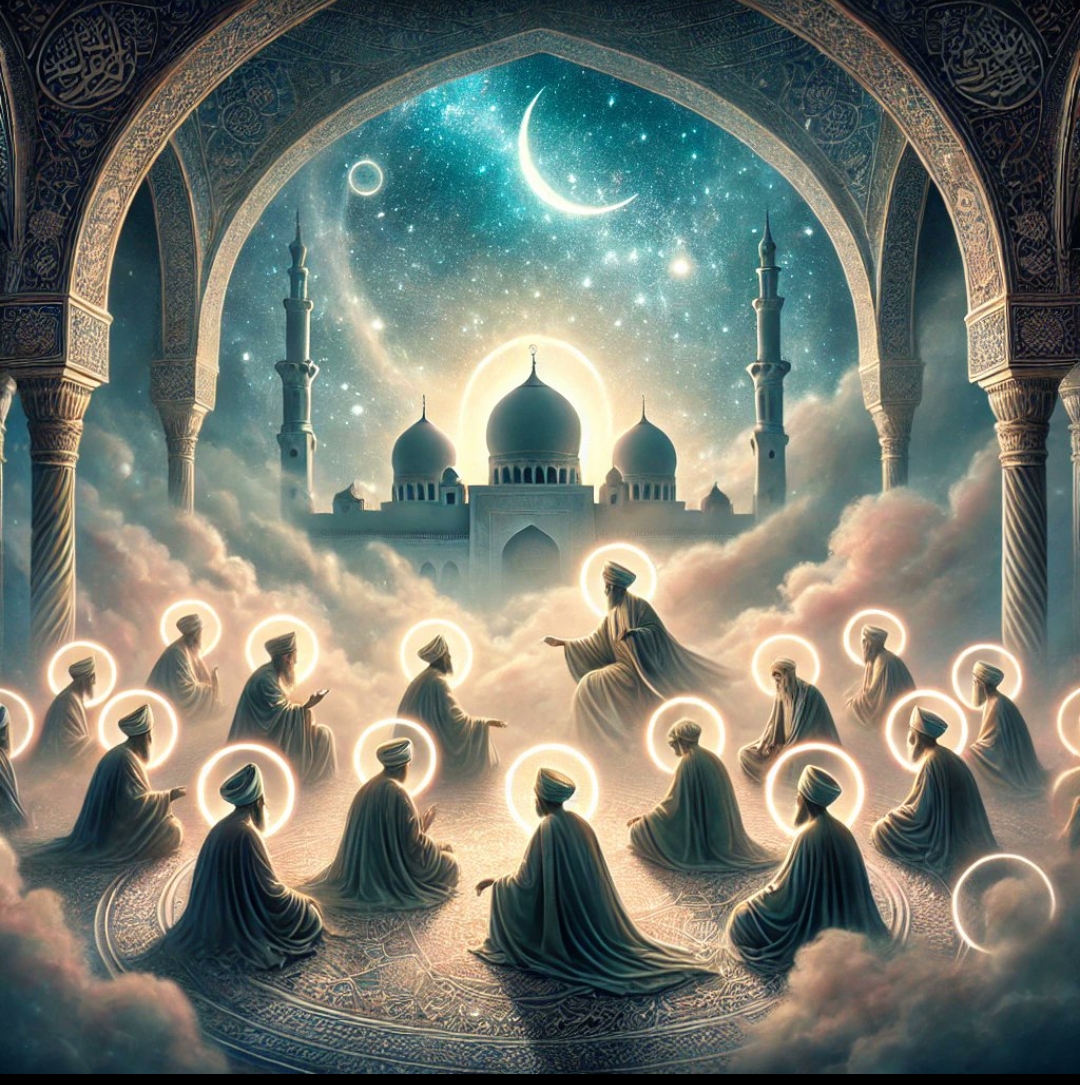
In the Islamic tradition, the saints, known as the Awliya’ Allah (Friends of God), represent an enduring link between the heavens and the earth, carrying the divine light through the ages and ensuring the continuity of spiritual knowledge. These saints, particularly after the tragic events of Karbala, took on the responsibility of guiding the Muslim ummah, preserving the teachings of the Prophet Muhammad (ﷺ), and manifesting the inner dimensions of Islam—dimensions that have remained intact through their unbroken chain of spiritual authority.
The Renaissance of Islamic Spirituality did not end with the martyrdom of Imam Husayn (RA); it was merely the beginning of a deeper journey, one where the material world was no longer the stage for true leadership. Instead, sainthood became the new repository of knowledge and guidance, connecting the hearts of believers to the divine. This was the separation of statehood and sainthood, a crucial pivot where the core essence of Islam—its spiritual mission—was safeguarded by those who had purified their hearts and had risen to the heights of divine knowledge.
Imam Ali: The Gateway to Divine Knowledge
The legacy of sainthood in Islam cannot be fully understood without first acknowledging the pivotal role of Imam Ali (RA), the cousin and son-in-law of the Prophet Muhammad (ﷺ). He was famously known as the Gate to the City of Knowledge, a title that speaks to his unparalleled understanding of both the outer and inner dimensions of the faith. It was through Ali that the spiritual lineage of Islam, particularly Sufism, was passed down, and nearly all major Sufi tariqas (orders) trace their spiritual lineage back to him.
Imam Ali’s profound wisdom, spiritual insight, and close relationship with the Prophet (ﷺ) made him the natural protector of the esoteric knowledge that would later become the foundation of Islamic mysticism. His teachings emphasized the purification of the heart (tazkiyah), the deepening of one’s connection to the divine, and the rejection of material pursuits in favor of spiritual fulfillment. He was not only a political leader but the embodiment of sainthood—leading by example in humility, piety, and connection to Allah.
The Four Major Sufi Orders and Their Role in Islamic History
As time progressed, the teachings of Imam Ali were crystallized in the Sufi tariqas, which became the primary vehicles through which spiritual knowledge was transmitted. Among these were the Qadiriyya, Chishtiyya, Naqshbandiyya, and Shadhiliyya orders, each of which contributed uniquely to the spiritual landscape of the Islamic world.
1. Qadiriyya: Founded by Abdul Qadir al-Jilani, this is one of the oldest and most influential Sufi orders. Abdul Qadir al-Jilani is regarded as the reviver of Islam in his time, and his teachings emphasized strict adherence to Shariah while delving deeply into the inner sciences of the soul. His influence spread across the Islamic world, particularly in North Africa, South Asia, and the Middle East.
2. Chishtiyya: This order, which flourished in South Asia, was known for its teachings on love, tolerance, and the rejection of materialism. It became instrumental in spreading Islam throughout India, where it fostered a deep connection with the local population through compassion and spiritual wisdom.
3. Naqshbandiyya: Known for its emphasis on silent remembrance (dhikr), the Naqshbandi order focused on the purification of the heart without the need for outward displays of piety. Its followers were known for their intense devotion to self-discipline and inner reflection.
4. Shadhiliyya: Founded by Abu al-Hasan al-Shadhili, this order balanced the pursuit of spirituality with the responsibilities of worldly life. It taught that one could achieve closeness to Allah while still engaging in the material world, as long as the heart remained detached from it.
The Saints as Spiritual Guardians: The Concept of Abdal and Qutb
Among the most fascinating elements of Islamic spirituality is the belief in the Abdal and the Qutb, hidden saints who maintain the spiritual balance of the world. These saints are chosen by Allah and are tasked with guiding humanity, even though most people may never know their identity. According to tradition, the Abdal are forty in number, scattered across the world, ensuring that divine mercy continues to flow through the earth. The Qutb, or spiritual pole, is the leader of these saints, directly connected to the heavens, and is the one through whom the spiritual affairs of the universe are regulated.
The presence of these saints serves as a reminder that true power and influence do not lie in political dominance but in spiritual purity. Even when the material world falls into chaos, these hidden saints continue their work, ensuring that the light of Islam remains unextinguished.
The Abbasid and Ottoman Eras: The Flourishing of Sainthood and Spiritual Authority
During the Abbasid Caliphate, sainthood became institutionalized, and Sufi orders began to flourish alongside the intellectual advancements of the period. The spiritual teachings of the saints provided a counterbalance to the political and military ambitions of the state, ensuring that the spiritual core of Islam remained intact. Abdul Qadir al-Jilani, Ibn Arabi, and Rumi were among the giants of this era, each of whom contributed to the spiritual and intellectual renaissance of Islam.
In the Ottoman Empire, this tradition continued, with Sufi saints playing an influential role in guiding both the rulers and the common people. Osman I, the founder of the Ottoman state, was spiritually guided by Sheikh Edebali, and many of the subsequent sultans maintained close ties with Sufi masters. This close relationship between the state and the saints ensured that the empire was not merely an earthly dominion but one that sought to maintain its connection to divine guidance.
The Prophetic Family’s Enduring Role: The Eternal Light
Central to the continued legacy of Islamic spirituality is the Prophetic Family. The claim that the Prophet Muhammad (ﷺ) would be "cut off" because he had no surviving male heirs was decisively proven false, as his daughter Fatima (RA) bore two sons, Hasan and Husayn, who continued the Prophetic legacy. The bloodline of the Prophet (ﷺ) became the beacon of spiritual authority, and it is foretold that at the end of times, it will be Imam Mahdi, a descendant of the Prophet (ﷺ), who will lead the Muslim world back to justice.
The saints of Islam, whether from the lineage of the Prophet (ﷺ) or the wider Muslim community, have acted as spiritual intercessors, guiding humanity through the turbulence of history. They represent the continuation of the Prophet’s light, ensuring that his message is never lost, even in the darkest times.
Conclusion: The Eternal Guardians of Islam’s Spiritual Essence
The history of Islam is not just one of political conquests and statehood; it is a story of divine connection, carried through the hearts of the saints who have preserved the spiritual core of the religion. These saints, linked by the teachings of Imam Ali and continuing through the Sufi orders, represent the unseen power that has kept Islam’s light shining across centuries.
In a world increasingly dominated by materialism, the teachings of these saints remind us of the importance of spiritual purity, humility, and the quest for divine knowledge. They teach us that true success lies not in earthly power but in the purification of the soul and the eternal connection to the heavens. As we move into the future, including the age of artificial intelligence, it is the legacy of these saints that will guide us toward a more just, ethical, and spiritually aware society.
@MohamedBinZayed @TamimBinHamad @AlsisiOfficial @RTErdogan @HHShkMohd @hhtbzayed @HHmansour @HHShkDrSultan @mozabintnasser @HassanSMohamud
@Palestine_UN @AmbAlyaAlThani
@Lolwah_Alkhater @ChefGov_ma
@TebbouneAmadjid @khamenei_ir
@araghchi
@HassanRouhani
@ebtekarm
@JZarif