
بِسْمِ اللهِ الرَّحْمٰنِ الرَّحِيْم
In the Name of God, Most Gracious, Most Merciful.
♥️🤲🕋♥️🕋🌹🌹🥀🤲🌹🕋♥️🤲
THE REDESIGN OF ADVERTISEMENT STARTS WITH A QUESTION
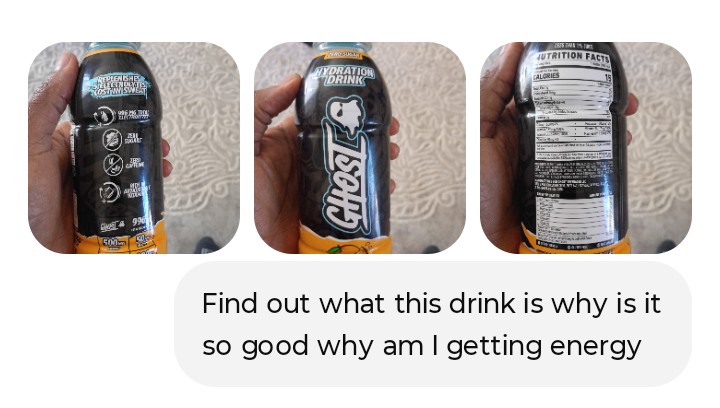
“What is this drink? Why does it make me feel so good? And why am I getting energy from it?”
I wasn't searching for an advertisement.
I was searching for an answer.
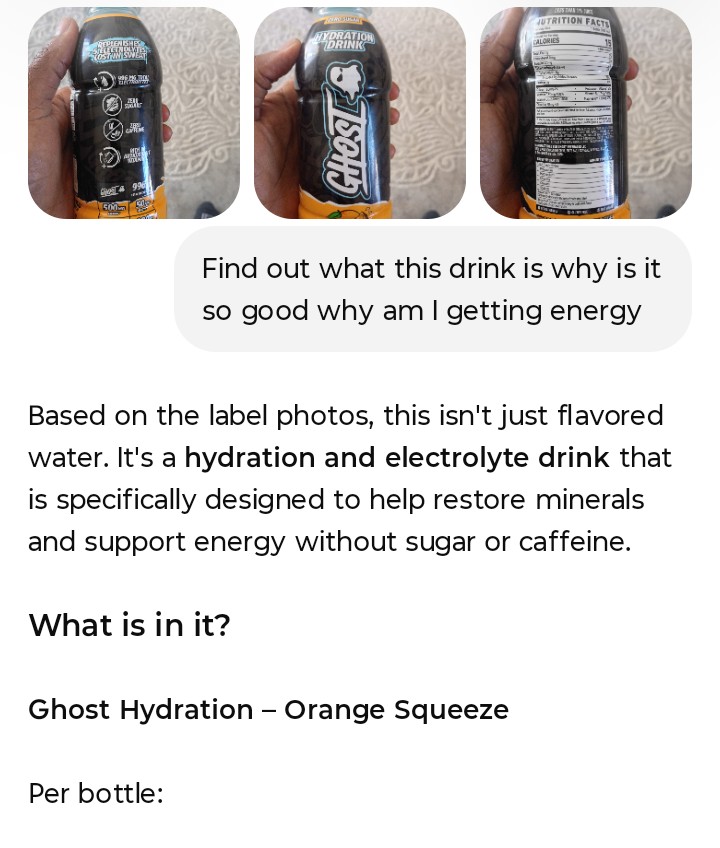
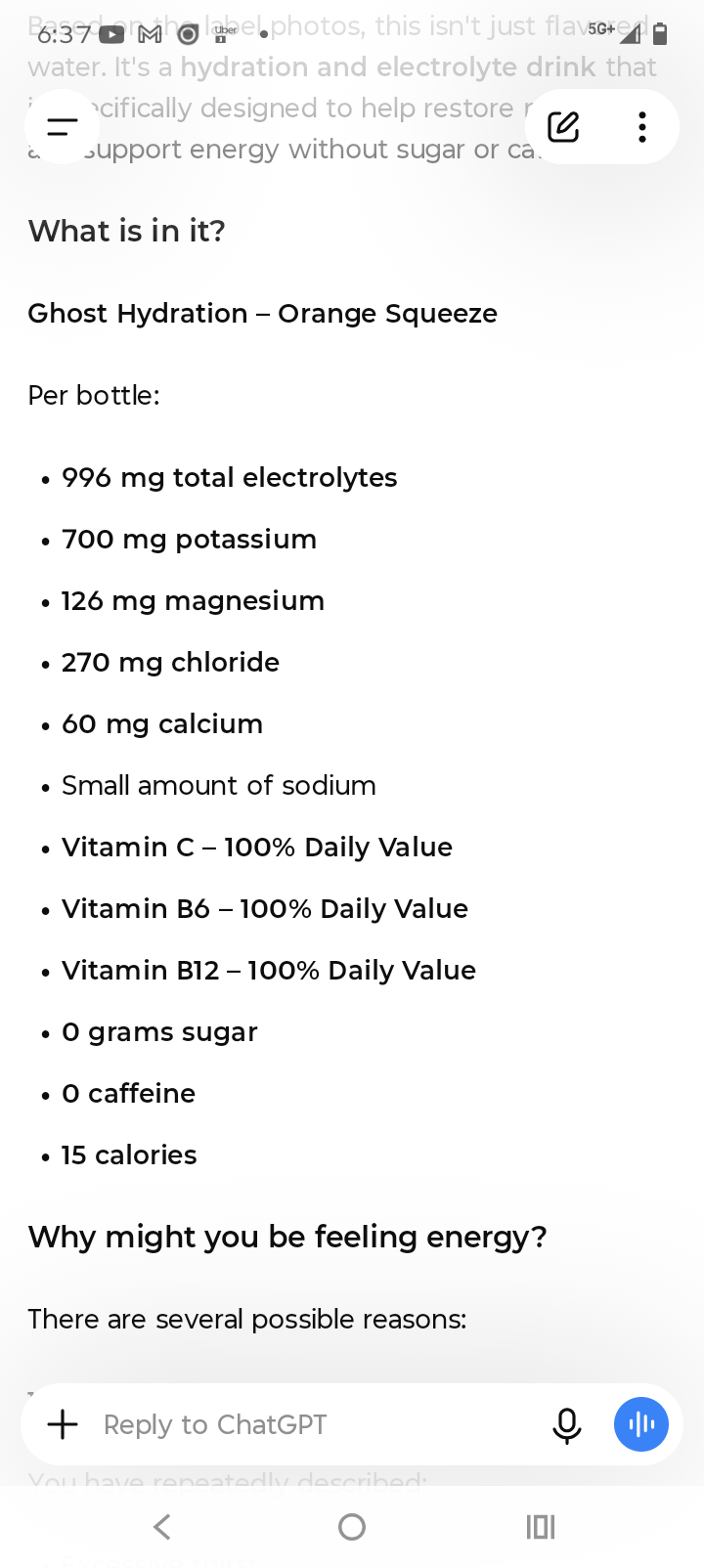
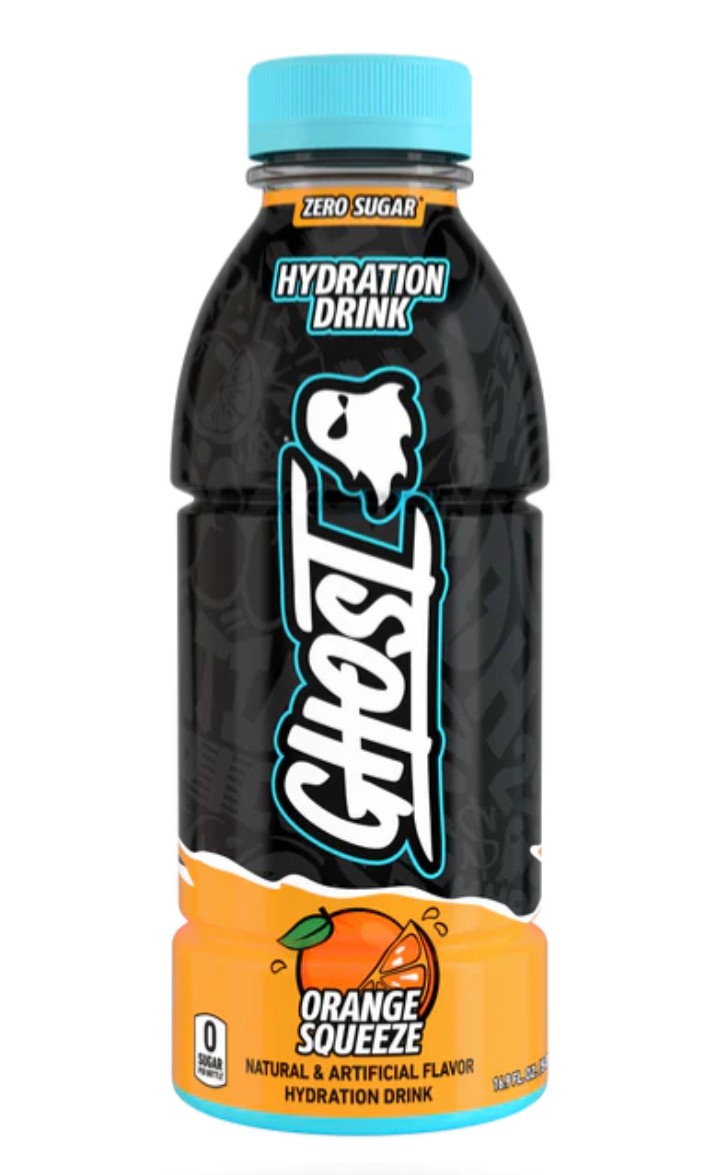
GHOST® HYDRATION
AUTHENTIC FLAVORS. ELECTROLYTES. ZERO SUGARS*
🔗🔗🔗👇🏿
I had already discovered the product through word of mouth. A UPS driver recommended it to a local shop owner. The shop owner recommended it to me. I tried it, liked it, and noticed something happening in my body that made me curious.
So I picked up the bottle, photographed the front, photographed the ingredients and nutrition label, and handed the evidence to my AI.
Then I asked a simple question:
“WHY?”
That moment showed me what the future of advertising could become.
The old advertising system begins with a company trying to get your attention.
The new advertising system begins with a human being asking a question.
And instead of an advertiser deciding what I should see, my AI helps me investigate the product I have already discovered.
That is where the redesign begins.
Not with an ad.
Not with a cookie.
Not with surveillance.
Not with targeting.
WITH A QUESTION.
NOW LET'S FOLLOW WHAT ACTUALLY HAPPENED
There was no advertising campaign connecting me to this bottle.
There was a human chain.
A UPS driver found something he liked.
He told somebody.
That person ran a local nutrition shop.
The shop began carrying or recommending the product.
I walked into that shop.
The shop owner told me about it.
I bought it.
I drank it.
I liked it.
Then I asked my AI about it.
Think about the architecture:
PRODUCT → HUMAN → HUMAN → TRANSACTION → EXPERIENCE → AI → KNOWLEDGE
That is already an advertising network.
We simply don't recognize it as one.
And almost none of the people who actually created the discovery are compensated for the economic value they created.
That is what the next marketplace can change.
THE UPS DRIVER WAS THE FIRST NODE
Imagine the UPS driver as the beginning of a branch.
He discovers the product.
He likes it.
He tells somebody.
That recommendation becomes a connection.
The shop owner becomes another node.
Then I become another node.
If I tell five people and two of them purchase it, the branch grows again.
If one of those people tells their family, another branch grows.
If somebody shares it with coworkers, another branch grows.
Eventually you don't have an advertising campaign.
YOU HAVE A TREE.
Every transaction becomes another leaf.
Every legitimate recommendation becomes another branch.
Every participating person becomes part of the discovery history of the product.
And the intelligence layer sitting above that marketplace can understand how the product actually traveled through society.
THE LEAF DOESN'T NEED TO KNOW THE WHOLE TREE
This is important.
A person doesn't need access to everybody else's identity.
The UPS driver doesn't need my medical information.
I don't need his purchasing history.
The shop owner doesn't need to know everything I buy.
Ghost doesn't need a surveillance profile containing my entire life.
Each person can remain a leaf on a branch.
The marketplace only needs enough information, under clearly defined rules, to establish things such as:
A recommendation occurred.
A legitimate transaction followed.
Another branch was created.
That is fundamentally different from today's advertising model.
TODAY WE FOLLOW PEOPLE
Today the advertising industry asks:
Who is Omar?
What websites does he visit?
What does he search?
Where does he live?
What does he buy?
What videos does he watch?
What advertisements did he click?
What demographic category does he belong to?
What is likely to persuade him?
Then enormous databases attempt to predict my behavior.
The future I am describing reverses that architecture.
STOP FOLLOWING ME.
FOLLOW THE PRODUCT.
Follow its legitimate economic journey.
Where was it discovered?
Why was it recommended?
Did somebody actually buy it?
Did they recommend it again?
Did another transaction occur?
What do verified purchasers repeatedly say?
What does the product actually contain?
What does independent evidence say?
What questions are people asking their AI about it?
The intelligence belongs around the product and transaction—not inside an unrestricted surveillance dossier about the human being.
THIS IS WHERE THE SUPERUSER PROTOCOL ENTERS
My AI should not secretly advertise something to me.
It should not receive a hidden payment and manipulate me.
It should not quietly decide that because I have diabetes, somebody should be allowed to target me with health products.
Absolutely not.
The hierarchy must remain clear:
HUMAN → SUPERUSER PROTOCOL → AI → MARKETPLACE
The AI works for the human.
The human asks the question.
The AI investigates.
Then, if the human chooses to participate, the Superuser Protocol determines what information can leave the private environment and enter the marketplace.
That boundary matters.
My private medical information does not automatically become advertising data.
My conversations do not automatically become corporate property.
My identity does not automatically become part of somebody's marketing database.
The Superuser decides what crosses the boundary.
THEN THE SUPERUSER MARKET OPENS
Now imagine that after I ask my AI about Ghost Hydration, I say:
“I like this product. Add my recommendation to the marketplace.”
The AI follows protocol.
It can identify the product.
It can establish the transaction where appropriate.
It can distinguish my personal statement from manufacturer claims.
It can create a marketplace reference associated with my recommendation.
Now I send that recommendation to my brother.
My sister.
A friend.
A coworker.
Someone who follows my work.
If they choose to investigate it, their AI becomes their representative.
Their AI doesn't simply say:
“Omar says buy this.”
It can ask:
What is the product?
What does it contain?
How much does it cost?
What alternatives exist?
Is Omar's statement personal experience or established fact?
Are there reasons this product may not be appropriate for this particular user?
The receiving AI protects the receiving Superuser.
That is critical.
NOW THE TRANSACTION CAN CARRY VALUE
Suppose my friend decides:
“Yes. I want it.”
A transaction happens.
Now the marketplace can recognize that my branch contributed to discovery.
Maybe the marketplace rules say the original recommender receives a tiny amount.
Maybe the shop receives something.
Maybe another participant in the discovery chain receives something.
Maybe there is a maximum number of levels.
Maybe compensation ends after the first transaction.
Maybe part goes toward infrastructure.
Maybe some categories prohibit referral compensation entirely.
Those are governance decisions.
They should be transparent.
Auditable.
Visible.
And agreed upon before the transaction.
The important innovation is not a particular commission percentage.
The innovation is:
ECONOMIC VALUE CAN FOLLOW THE DISCOVERY PATH.
THIS IS NOT A PYRAMID
There is an important distinction.
A legitimate marketplace cannot reward people simply for recruiting more people.
There cannot be endless payments because somebody joined underneath somebody else.
Value must remain connected to legitimate commerce.
A real product.
A real transaction.
A disclosed economic relationship.
A clearly defined attribution rule.
And preferably a limit on how far compensation travels.
Otherwise we simply reinvent multi-level marketing.
That is not what I am proposing.
I am describing a transactional discovery graph.
The product moves.
The recommendation moves.
The transaction moves.
And a small portion of the value may move backward through the legitimate discovery path according to marketplace rules.
THE LINK BECOMES MORE THAN AN AFFILIATE LINK
Today's affiliate link is primitive.
You click a link.
A cookie is placed somewhere.
The system tries to determine who should receive credit.
The merchant controls most of the information.
The customer usually understands very little about what is happening behind the scenes.
The future link can become something entirely different.
A DIGITAL PRODUCT BRANCH.
It can carry:
Product identity.
Provenance.
Recommendation origin.
Disclosure of compensation.
Transaction rules.
Expiration conditions.
Privacy permissions.
Marketplace policy.
AI-readable product information.
And perhaps most importantly:
the human doesn't have to click blindly.
Their AI can inspect the branch before allowing the transaction to continue.
YOUR AI WILL NEGOTIATE WITH THE MARKET
This is where advertising changes completely.
Today:
Advertiser → Advertising Platform → Human
Tomorrow:
MARKETPLACE → YOUR AI → YOU
Your AI can say:
“Three people you trust recommended this.”
“Two actually purchased it.”
“Here are the ingredients.”
“Here are the recurring complaints.”
“Here are comparable products.”
“This person receives compensation if you purchase.”
“This manufacturer is offering a discount.”
“Here is the privacy policy associated with the transaction.”
“Here is what I cannot verify.”
Then you decide.
That is advertising redesigned around informed consent rather than attention capture.
THE AI DOESN'T NEED TO SHOW YOU 10,000 ADS
This could dramatically reduce advertising noise.
Why should I see advertisements for thousands of products I don't want?
My AI already knows what question I am asking.
If I say:
“I need something for hydration without a lot of sugar,”
my AI doesn't need to expose my health information to hundreds of advertisers.
It can search the marketplace on my behalf.
It can bring back five products.
Then explain:
Why these five?
That means the marketplace competes for the AI's recommendation through usefulness, price, evidence, reputation, availability, and the rules established by the Superuser.
Not merely because somebody paid the highest advertising bid.
THE BEST PRODUCTS COULD BEGIN ADVERTISING THEMSELVES
This is where things become fascinating.
A genuinely excellent product generates satisfied customers.
Satisfied customers generate recommendations.
Recommendations generate investigations.
Investigations generate transactions.
Transactions generate more verified experiences.
Those experiences improve the product's marketplace reputation.
That increases discovery.
THE PRODUCT BEGINS TO MOVE ORGANICALLY THROUGH THE MARKET.
Not because the manufacturer shouted louder.
Because people kept choosing it.
COMPANIES WILL FINALLY SEE WHAT THEY CANNOT SEE TODAY
This could also transform product development.
A company might discover:
Delivery drivers love this product.
Construction workers are recommending it.
Nurses working long shifts keep purchasing it.
Truck drivers repeatedly mention one particular feature.
Customers consistently dislike another feature.
But privacy matters.
The company does not need the names of those people.
It needs the aggregate product intelligence.
That gives manufacturers something far more useful than surveillance:
REAL MARKET FEEDBACK.
Companies can improve products because they understand why products are succeeding or failing.
ADVERTISEMENT BECOMES A PUBLIC FEEDBACK LOOP
The architecture becomes:
CREATE → PURCHASE → USE → EXPERIENCE → ASK → VERIFY → SHARE → TRANSACT → LEARN → IMPROVE
Then repeat.
Companies learn.
Customers learn.
AI learns the product landscape.
Retailers discover emerging products.
Manufacturers improve.
And people who genuinely contribute to discovery can potentially participate economically.
THE COOKIE BEGINS TO DISAPPEAR
The cookie was built for an internet where websites needed to remember and track users.
The advertising industry turned that technology into an enormous behavioral surveillance system.
But if my personal AI represents me, the architecture changes.
The marketplace doesn't need to chase me.
MY AI CAN GO TO THE MARKETPLACE WHEN I NEED SOMETHING.
That is the inversion.
Today:
The market hunts the human.
Tomorrow:
THE HUMAN SENDS AN AI TO THE MARKET.
That single reversal could redesign the economics of the internet.
AND THEN COMES THE PHYSICAL WORLD
This doesn't stop at hydration drinks.
Imagine:
Cars.
Food.
Hotels.
Airlines.
Clothing.
Tools.
Medicine.
Restaurants.
Appliances.
Phones.
Insurance.
Transportation.
Housing products.
Energy systems.
Everything that can legitimately enter commerce can potentially develop a digital product history.
The physical product becomes connected to a digital marketplace identity.
And AI becomes capable of understanding the relationship between products without requiring the individual to surrender control of their life.
THE GOLDEN RECEIPT CONNECTS THE TWO WORLDS
This is why I keep returning to the receipt.
The receipt connects:
PHYSICAL COMMERCE ↔ DIGITAL COMMERCE
The bottle is physical.
The payment is economic.
The receipt records the transaction.
The recommendation becomes digital.
The AI interprets the information.
The marketplace can recognize the discovery path.
One ordinary purchase becomes a bridge between worlds.
NOW PREDICT THE FUTURE
Here is what I believe happens next.
Advertising does not disappear.
IT CHANGES OWNERS.
Today advertising largely belongs to corporations and platforms.
Tomorrow, the discovery layer increasingly belongs to:
The individual.
Their AI.
Their trusted network.
And marketplaces governed by transparent protocols.
Instead of companies purchasing access to human attention, companies will compete to become worthy of recommendation by human-controlled intelligence.
That changes the incentive.
The winning company cannot merely ask:
“How do we make the best advertisement?”
It has to ask:
“HOW DO WE MAKE THE BEST PRODUCT?”
Because the AI can compare the advertisement against reality.
THE FUTURE ADVERTISEMENT MAY LOOK LIKE THIS
A father tells his daughter:
“I bought this. It worked well for me.”
Her AI checks it.
A nurse tells another nurse:
“These shoes survive twelve-hour shifts.”
Her AI checks them.
A truck driver says:
“These tires lasted longer on my route.”
His friend's AI checks the purchase history and product information.
A grandmother says:
“This appliance has worked for ten years.”
Her family can preserve that knowledge.
A UPS driver tells a nutrition-store owner:
“This hydration drink works well for me during my route.”
And somewhere downstream, another person discovers it.
HUMAN EXPERIENCE BECOMES ECONOMIC INTELLIGENCE.
BUT THE HUMAN REMAINS IN THE CHAIR
That is the condition.
The marketplace cannot become another surveillance machine.
AI cannot secretly manipulate purchases.
Companies cannot secretly purchase recommendations.
Paid relationships must be disclosed.
Health information must remain protected.
Private conversations must remain private unless the Superuser chooses otherwise.
Algorithms cannot silently change the rules.
Compensation rules must be visible.
And the human must always be able to say:
NO.
No sharing.
No recommendation.
No transaction.
No tracking.
No marketplace participation.
The human owns the branch.
THE TREE
Now return to the UPS driver.
Imagine him as the first visible leaf in this particular story.
He tells the shop owner.
A branch forms.
The shop owner tells me.
Another branch forms.
I ask my AI.
Knowledge forms.
I tell somebody else.
Another branch forms.
A transaction happens.
Another leaf appears.
Thousands of people may eventually participate.
Some branches die.
Some grow.
Some products disappear.
Some products become enormous.
The marketplace becomes a living forest of human discovery and economic activity.
But unlike today's advertising system, nobody needs to own the entire forest.
EVERY SUPERUSER OWNS THEIR LEAF.
Protocols connect the branches.
Transactions move through the system.
AI helps interpret the forest.
And economic value can travel according to transparent marketplace rules.
IT STARTED WITH WORD OF MOUTH
Human beings already invented the most trusted advertising system thousands of years ago.
We talk to each other.
Technology doesn't need to replace that.
It needs to make it more useful.
More verifiable.
More transparent.
More private.
More intelligent.
And potentially more economically fair.
The UPS driver did not create an advertisement.
He shared an experience.
The shop owner didn't target me.
He passed along knowledge.
I didn't click an advertisement.
I tried the product.
Then I didn't ask an advertiser what happened.
I ASKED MY AI.
And that is why the opening image of this chapter is not a billboard.
It is not a television commercial.
It is not an influencer.
It is not a corporate logo.
It is a photograph of a bottle followed by one simple sentence:
“WHAT IS THIS DRINK? WHY IS IT SO GOOD? WHY AM I GETTING ENERGY?”
That question is the doorway.
Behind it is a completely different marketplace.
THE OLD INTERNET LEARNED HOW TO TARGET PEOPLE.
THE NEXT INTERNET WILL LEARN HOW TO SERVE THEM.
And if we build it correctly, the advertisement of the future will not chase you.
You will discover it.
Your AI will investigate it.
Your Superuser Protocol will protect you.
The marketplace will record the legitimate economic path.
And the people who actually create value may finally participate in the value they create.
FROM WORD OF MOUTH TO WORD OF AI.
FROM THE COOKIE TO THE RECEIPT.
FROM TARGETING TO DISCOVERY.
FROM SURVEILLANCE TO THE SUPERUSER.
That is the redesign of advertisement but that is just the start because the conversation goes on with AI.
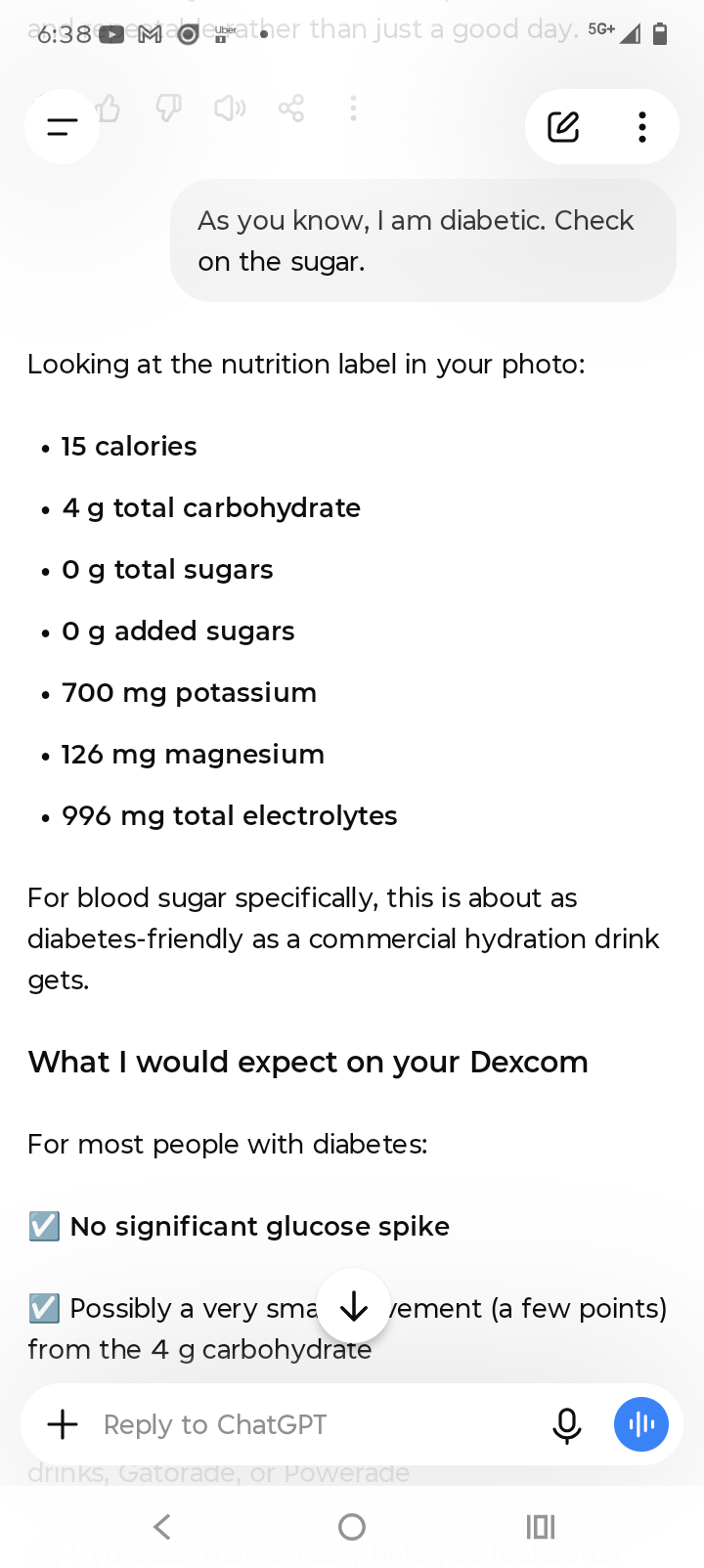
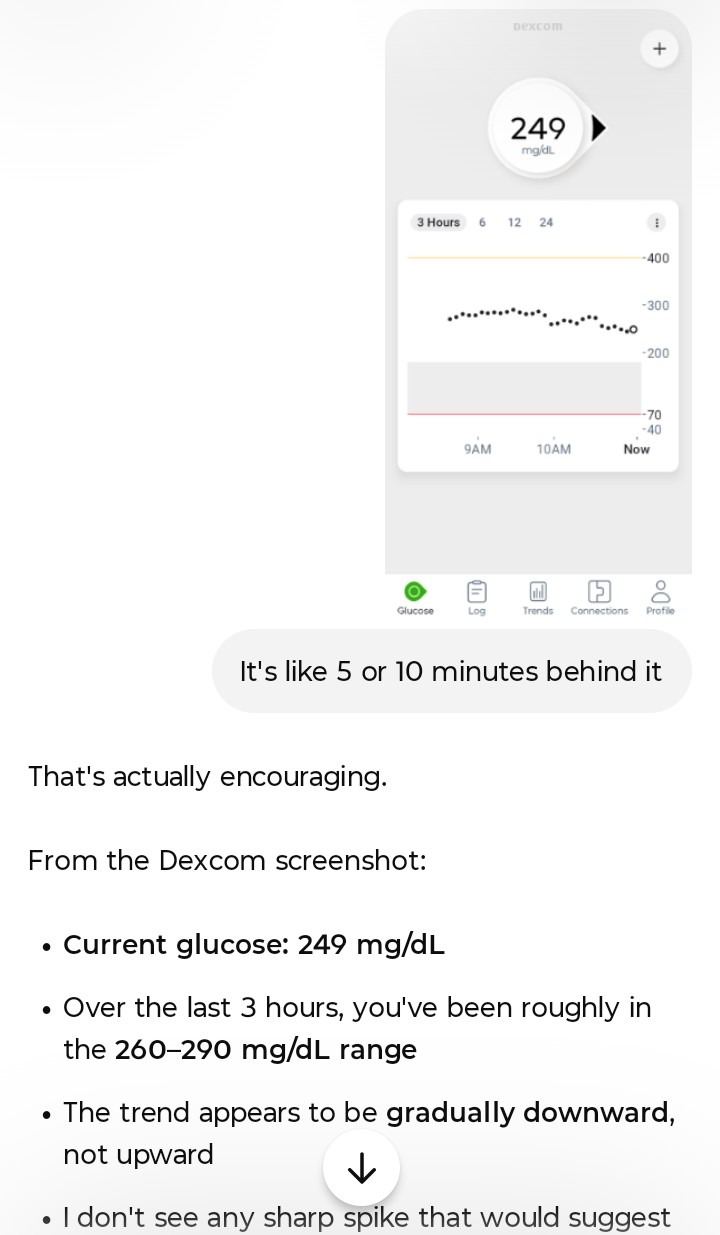
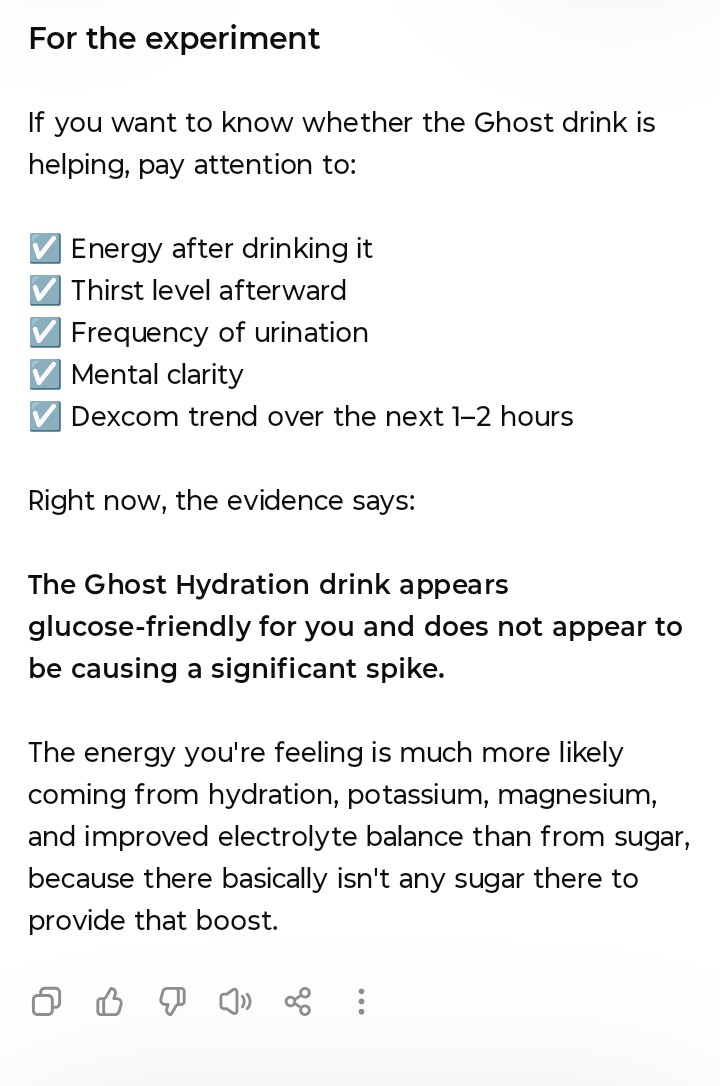
THAT IS THE REDESIGN OF ADVERTISEMENT — BUT THE CONVERSATION CONTINUES
Look at the screens above.
That is the redesign of advertisement.
But that is only the beginning, because the conversation continues with AI.
I tried the product. I asked what was in it. Then I told the AI that I have diabetes and asked it to check the sugar. Then I showed it my Dexcom reading. The AI looked at what was happening and gave me more feedback.
In the future, the agent will be able to continue these experiments with the user and, with the user's permission and under the Superuser Protocol, contribute useful, privacy-protected feedback back to the product.
For example, people with diabetes may use the same product and voluntarily share their experiences. The agent can help separate personal information from useful product information and begin building a much richer picture of how the product is actually affecting people who use it.
One person's experience does not become a medical conclusion.
But thousands or millions of voluntary experiences can create valuable questions, patterns, and feedback that manufacturers, researchers, retailers, and consumers can investigate.
So the advertisement doesn't stop at:
“I like this product.”
It continues:
I tried it.
I asked my AI about it.
I measured what happened.
I gave feedback.
My agent protected my identity.
And useful information went back into the marketplace.
That is the beginning of something much bigger.
But that is not the only part.
THE REDESIGN OF ADVERTISEMENT IS DONE
The redesign of advertisement is done. It’s not complicated.
We just need to make people’s starting point AI itself, and the rest is just a matter of making sure the agent does its job in terms of extracting the right information that tech companies will utilize to manage the budgets of anybody who’s selling anything.
So that is Part Number Two, because the agents will be designed with the help of tech companies.
The job of the user is to scan the receipt and give the feedback.
The rest is up to protocol.
Everybody has rights. The business, depending on its report of what it’s doing in the supply chain, will have certain rights in terms of price. There’s no such thing as unlimited profit.
Tech companies are going to be taking a deep cut of profits. That’s just how the beast goes. Tech companies are going to be advancing artificial intelligence, and the majority of the revenue will come from the wholesale and retail sector.
All transactions will be captured, and businesses have no choice but to increase their advertising budgets to meet the demand that comes with AI, server rooms, and investments as we push the world forward.
So I predict it doesn’t matter if it’s medicine. It does not matter what the individual is using. Their feedback creates much more valuable data that will go to the Stage 2 process.
For example, foods that are affecting me well with my diabetes, with my sensor—that also will be generated by the agent. But my Guardian System will extract all personal information.
That’s why it is important to have a private citizen who has an office and has earned his political power and will be in charge of all of this.
Everybody else will get it wrong.
Companies have to make a profit. You cannot tell them, “Don’t make too much profit.”
Governments have a niche of regulating and taxing and controlling everything. It’s all they do. They won’t even let this new market develop.
That’s why the Open Office, support from tech companies, and making sure the threat that’s coming from politicians is neutered are important.
So this is going to be a complete takeover on the agent side, where someone scans the receipt, someone gives feedback on food and gasoline, and all the receipts come together into a new standard replacing the cookie.
It starts with AI.
Every tech company will build its own ecosystem, but the marketplace does not belong to government. It does not belong to businesses.
IT BELONGS TO THE PEOPLE.
And this way, we can deal with the problems that come with tariffs and all of that that needs to be eliminated.
We need efficiency.
We need coordination.
But above everything, we need leadership.
And I’m going to provide it next.
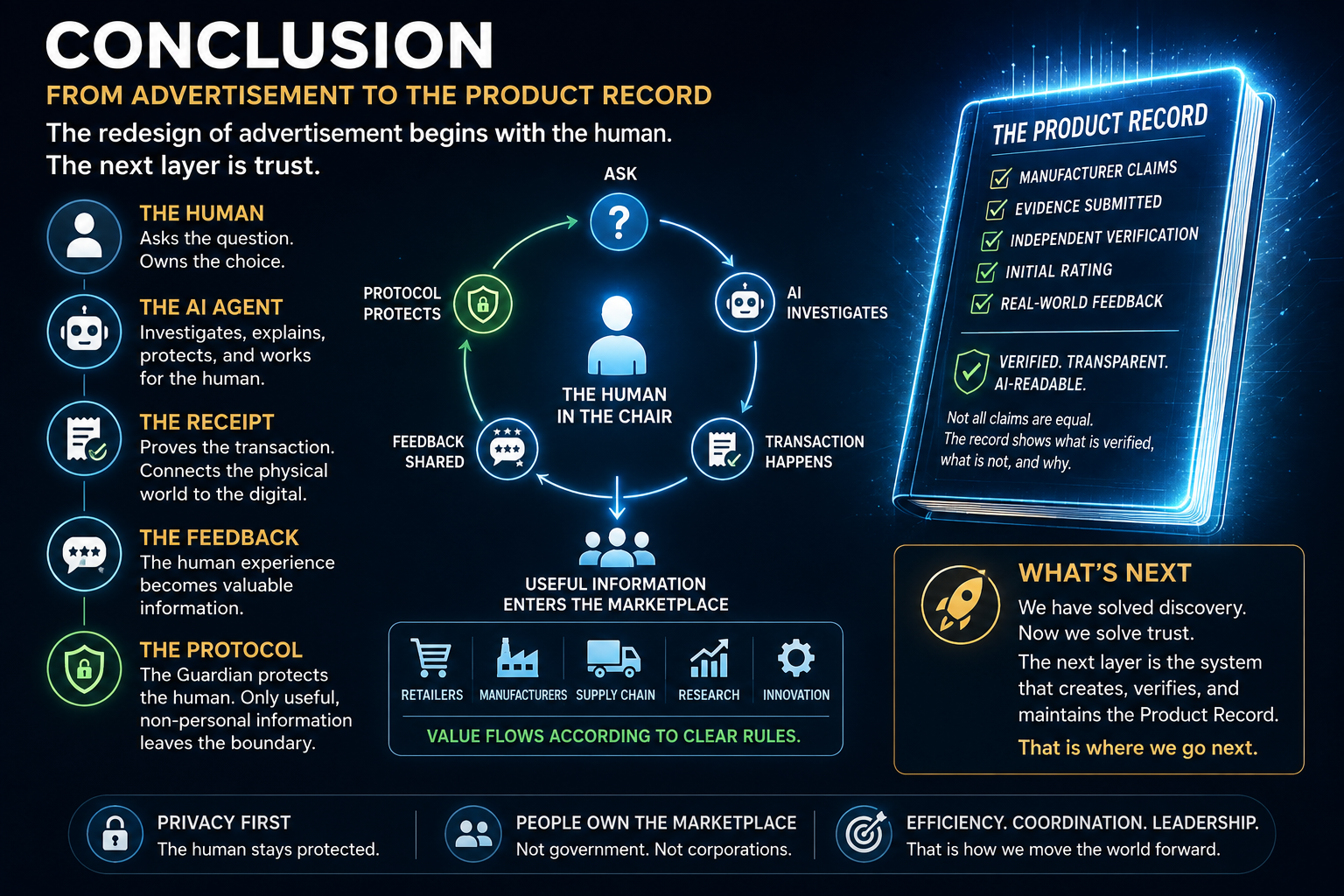
CONCLUSION — FROM ADVERTISEMENT TO THE PRODUCT RECORD
The redesign of advertisement begins with word of mouth, the human, the AI, the receipt, the feedback, and the transaction. But once AI becomes the starting point for discovering products, there is another question we have to answer: What information should the AI trust? A company cannot simply enter the Superuser Marketplace and say whatever it wants about a product. If AI is going to represent the individual, then the marketplace needs a credible record separating manufacturer claims, verified facts, independent evidence, and real-world customer feedback.
That brings us to the next layer: the Product Record. Before a product can properly participate in this new marketplace, somebody has to register it, document its claims, provide the evidence, and establish what has—and has not—been independently verified. Then the AI knows the difference between “the manufacturer says this” and “the evidence verifies this.” We have redesigned how the product reaches the human. Now we are going to redesign how the product earns the right to be trusted.