

بِسْمِ اللهِ الرَّحْمٰنِ الرَّحِيْم
In the Name of God, Most Gracious, Most Merciful
♥️🤲🕋♥️🕋🌹🌹🥀🤲🌹🕋♥️🤲
The Qur’an Over the Centuries — Part Two: When the Page Learned to Stand Still
(Late 7th–8th century CE | Late 1st–Early 2nd century AH)
Opening
Stability changes everything.
Once the Qur’an was unified, secured, and circulating with confidence, the page no longer had to lean toward the voice. The voice was safe. Memory was strong. The community was settled.
So the writing changed—not in meaning, but in posture.
Letters began to stand upright.
Lines learned discipline.
Space became measured.
This is the moment when Qur’anic writing stops moving with the breath and begins to hold its ground.
Not to replace recitation—but to anchor it.
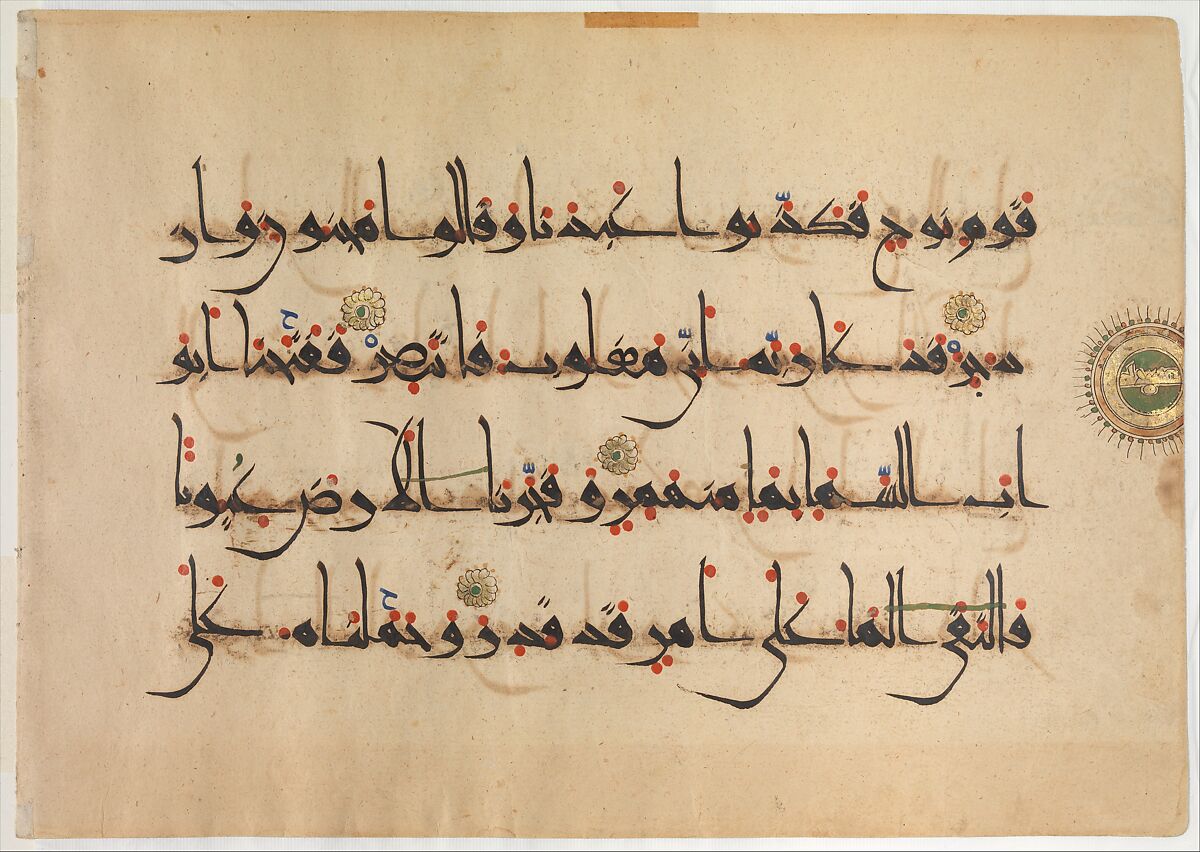
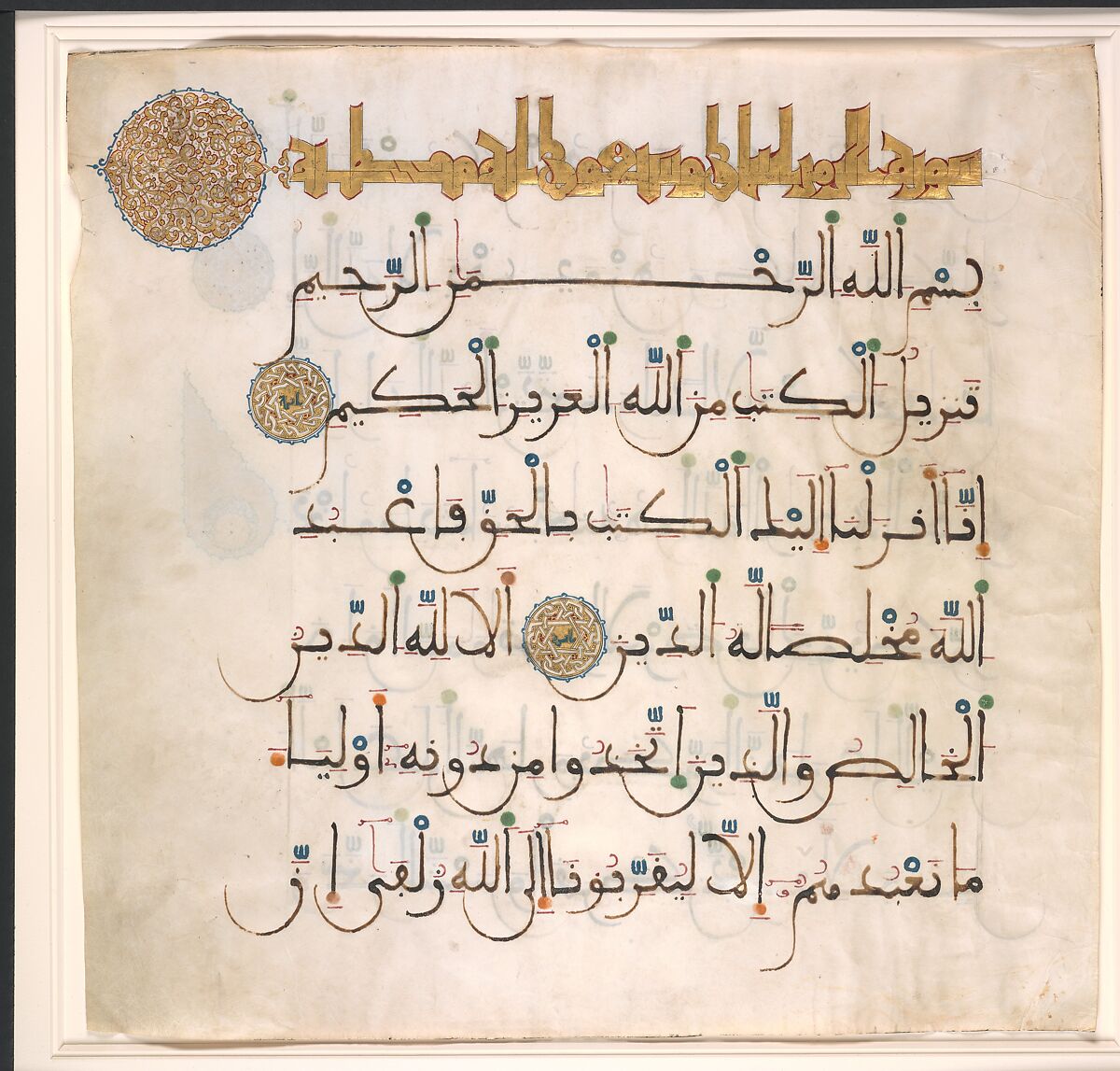
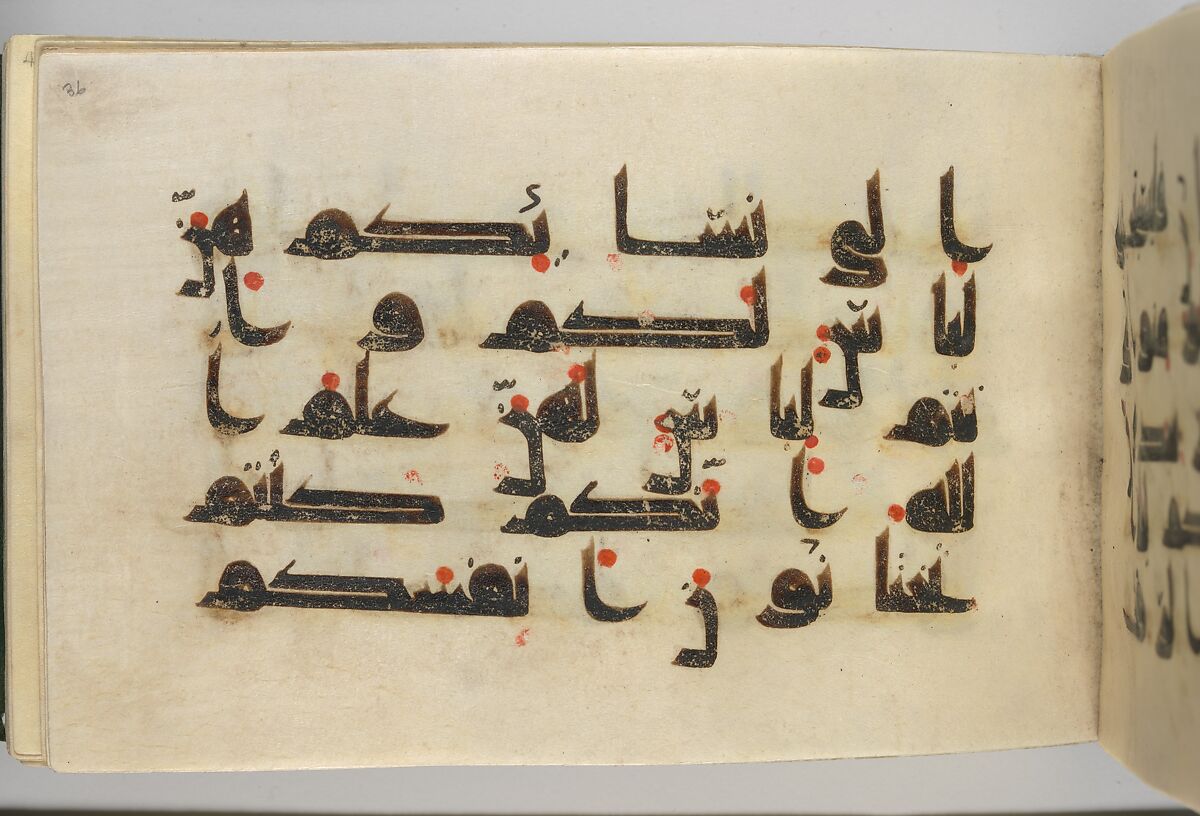
What emerges in this period is not decoration, but order. A calm geometry. A public clarity. The beginnings of a script that could be read the same way in different cities, by different hands, across expanding distances.
This is the rise of early Kufic—not yet ornate, not yet monumental, but firm. The Qur’an is no longer only something carried in the chest. It is now something that can be recognized on the page.
Empire has not yet spoken through gold.
But unity has begun to speak through form.
[— Early Kufic Manuscripts]
Conclusion: When Authority Became Beauty
What you are seeing now is not a contradiction.
It is a crescendo.
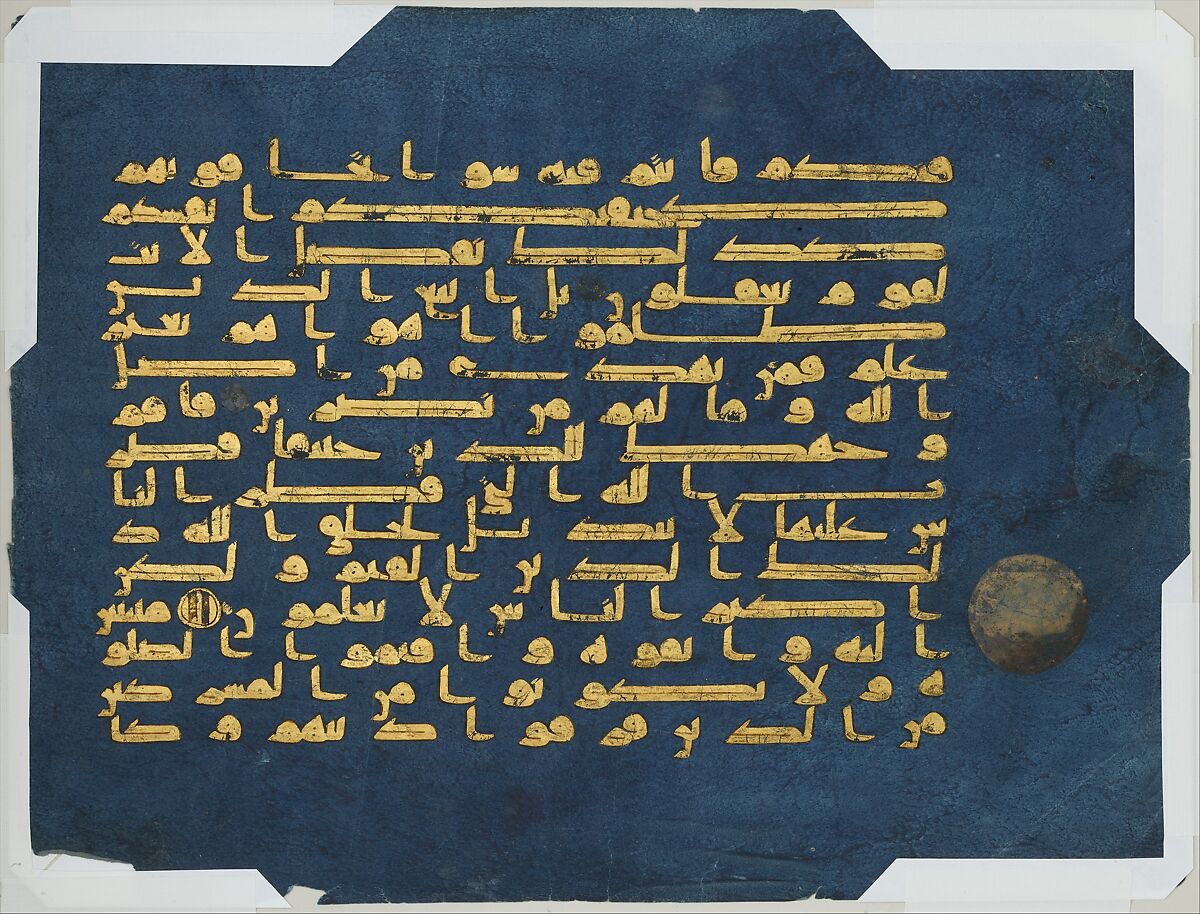
The disciplined pages of the Umayyad world and the breathtaking splendor of the Fatimid Blue Qur’an do not oppose one another — they complete a single arc.
The Umayyad moment (7th–8th century) is the moment of standing.
The Qur’an is firm. Unified. Public. Authoritative.
Its beauty is restraint.
Its power is order.
The Fatimid moment (9th–10th century) is the moment of arrival.
Wealth has settled. Empire no longer needs to prove itself.
The Qur’an is no longer vulnerable — it is unquestioned.
Only then does beauty dare to speak.
Gold enters not as excess, but as reverence.
Blue enters not as luxury, but as depth — a color that absorbs light so the words of God may radiate from within it.
The page becomes a sky.
The letters become stars.
This is not decoration replacing discipline.
It is discipline rewarded.
What began as breath becomes geometry.
What began as skin and ink becomes monument and cosmos.
What was once written to survive is now written to testify.
The Qur’an has not changed —
but the world around it has learned how to honor it.
And so, between the sobriety of the Umayyads and the splendor of the Fatimids, we witness the turning point of Qur’anic art:
the moment when certainty blossoms into beauty,
and authority gives permission to awe.
This is where we leave Part Two —
at the edge of gold,
at the threshold of color,
just before beauty fully steps into the light.
What follows next is not excess, but mastery.