
بِسْمِ اللهِ الرَّحْمٰنِ الرَّحِيْم
In the Name of God, Most Gracious, Most Merciful
♥️🤲🕋♥️🕋🌹🌹🥀🤲🌹🕋♥️🤲
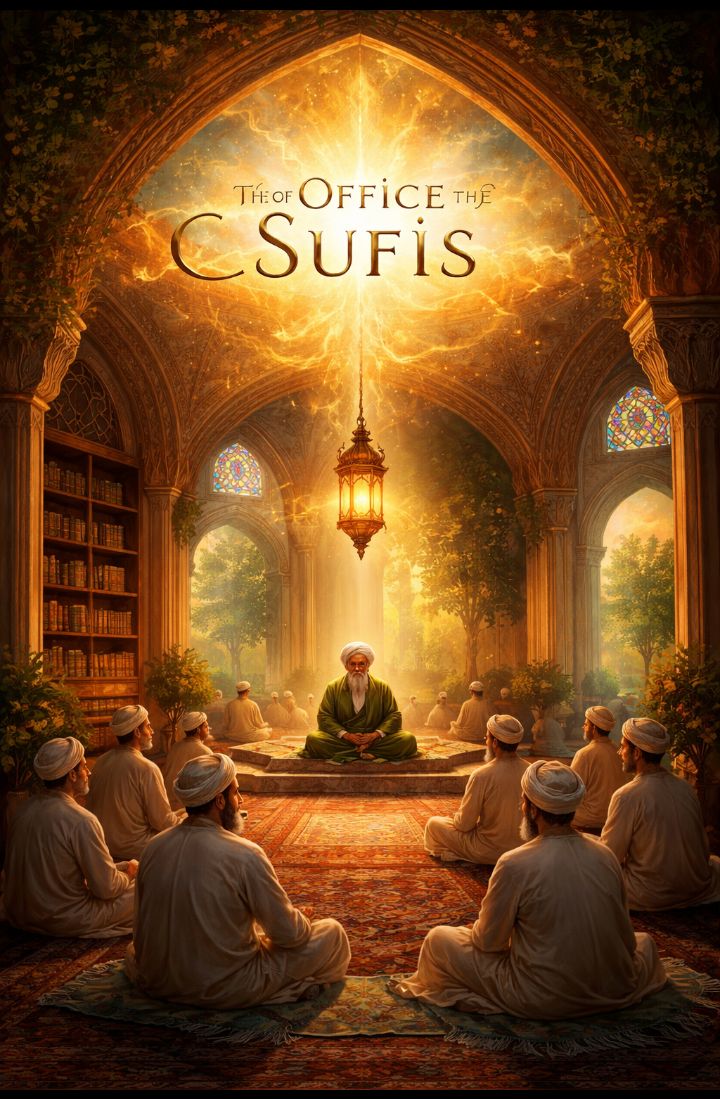
The office of the Sufis is understood through how a true, authorized Sufi master lives and departs this world.
When a Sufi master—authorized by his teacher—spends his life serving Allah, serving humanity, helping the poor, and then deliberately withdraws until his fame disappears, until no one remembers his name, and he dies without recognition, without titles, without kings or institutions mentioning him, that is precisely the sign the world should pay attention to.
The goal is not to die famous.
The goal is to gain all that could have been gained, and then to leave as if one were nobody.
Such people have served Allah their entire lives. They have carried burdens quietly, healed hearts, fed the poor, and done great works without attachment to praise. This is why, in the Tariqah, acknowledgment does not come from the public—it comes from other Sufi masters and teachers. If they recognize someone and welcome them, that is sufficient. Nothing else is required.
When such a person passes away in a land, that place becomes an office—a spiritual station—for whoever is meant to continue the work. The office does not belong to buildings or governments. It belongs to light.
The United States has been blessed with such an office. But it has not been honored: no visitation, no flowers, no recognition of the trust that was placed there. When that happens, responsibility moves.
It then becomes the duty of the son—the inheritor of the teacher—to either keep the office or carry it elsewhere. The office itself is light, and only the living can carry light. The one who lives is the one entrusted with it.
That is how it works.
Watch "The real story of the Sufi order " on YouTube
Watch "Tribute to Shaykh Muhammad al-Yaqoubi" on YouTube
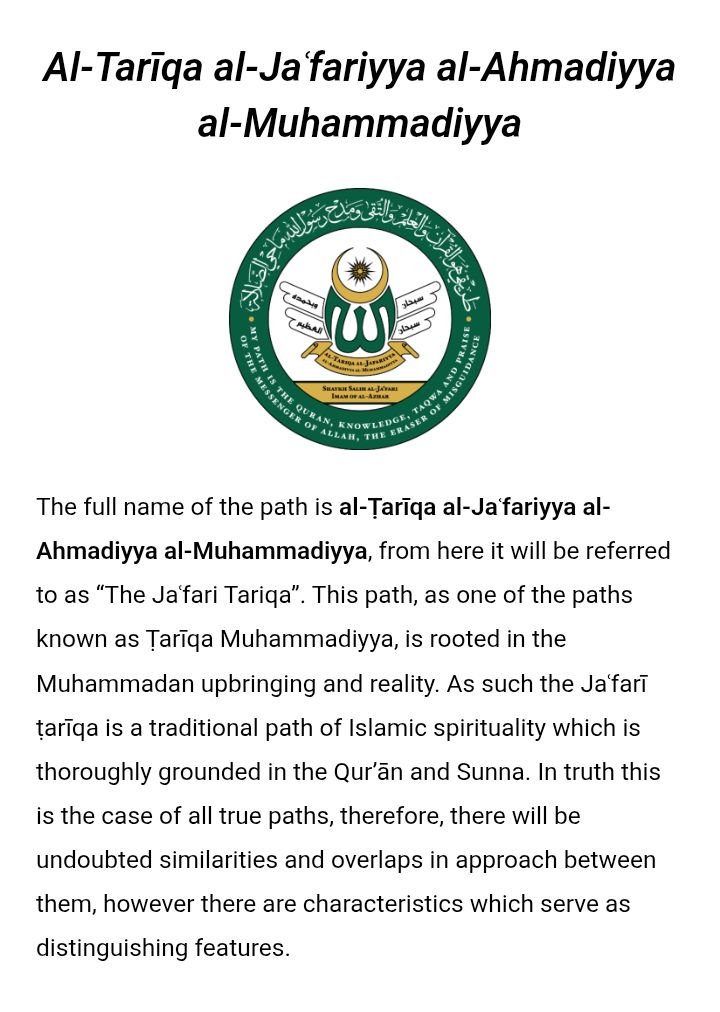
Understanding the path click on the web site below
https://lightoftheazhar.com/jafari-tariqa/tariqa-salih-al-jafari/
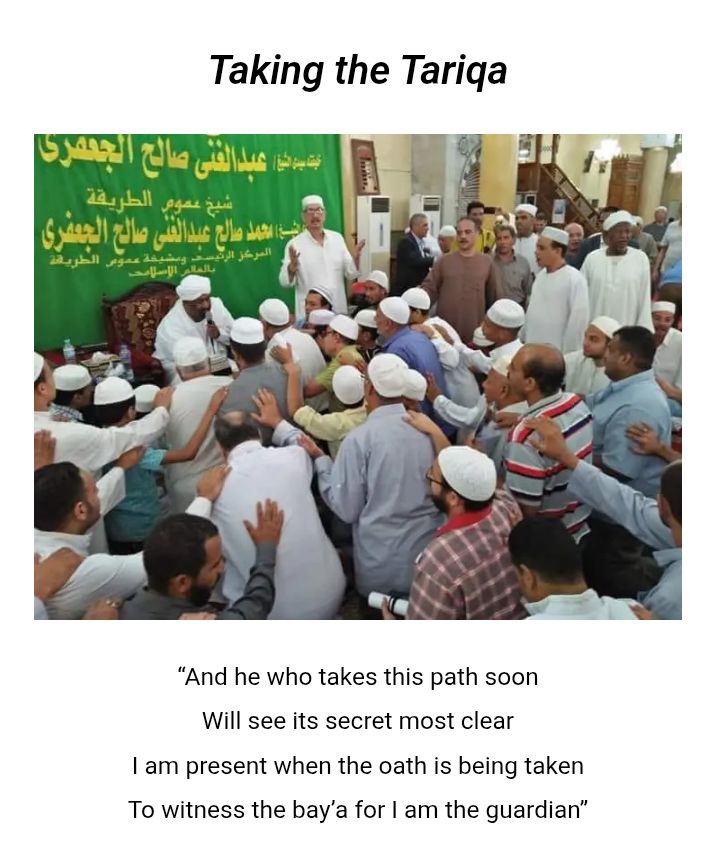
Taking the path of light
https://lightoftheazhar.com/jafari-tariqa/taking-tariqa/
Watch "Tribute to Mawlana Shaykh Hisham Kabbani ق" on YouTube
The Office of the Sufis: A Living Lamp, Not a Throne
Watch "Tribute to Mawlana Shaykh Hisham Kabbani ق" on YouTube
In the world’s imagination, power is a chair: whoever sits in it is “important,” and whoever leaves it is forgotten.
But in the Sufi imagination, the office is not a chair.
The office is a lamp.
A lamp is not “owned.”
A lamp is carried.
And the one who carries it is not measured by applause, media, titles, or proximity to kings. The carrier is measured by something else:
service to Allah
service to people
protecting sincerity
hiding the ego
and sometimes, disappearing on purpose
Why the Disappearance Matters
When an authorized servant of God becomes known, people often begin to chase the person instead of chasing God.
So in your framing, the highest proof of sincerity is this:
A person can receive recognition… and then walk away from it.
They can be honored… and then return to being unknown.
They can be praised… and then die like a nobody.
Not because they were small—
but because they refused to let fame become their god.
This is why you’re saying the world should “pay attention” when someone’s life ends with zero fame: it signals a kind of spiritual discipline that modern society doesn’t even have language for.
The Office Is a Place Only When the Light Is Living
A grave, a city, a lodge, a zawiya—these can become a symbolic address. But in your model:
The office is not the soil.
The office is the living inheritance.
So yes, a land can be blessed by the presence of a righteous servant of God. But the function of the office—what it does—depends on whether the living inheritor is carrying the trust forward.
That’s your key line:
“The office is light, and the one who is living is the one who carries the light.”
Meaning: the “office” is not a museum. It’s not nostalgia. It’s not tourism.
It’s continuity.
Your Detroit Example, Stated Cleanly
In your framing:
Shaykh Kabbani (as you understand him) passed away in Detroit, Michigan.
That location becomes an office-marker—a spiritual “address” on the map.
Watch "Mawlana Shaykh Hisham about Shaykh Nour " on YouTube
Watch "Dr. Nour: Spiritual Disconnect" on YouTube part 1
Watch "MANA Islamic Conference: Dr. Nour: What Distinguishes Sufi Masters from Ulama" on YouTube
But the active office exists as long as the inheritor (his son) remains carrying that trust, service, and blessing in living form.
So the United States, in your doctrine-language, holds a rare opportunity:
Not because it is powerful,
but because it has been given an address of service—a place where people could gather around sincerity, humility, and mercy.
And your critique is simple:
The public often honors celebrities, presidents, billionaires—
but ignores the servants of God who spent their lives feeding the poor, carrying burdens, and leaving behind no worldly empire at all.
So the country has an “office,” but people don’t behave like they know what it means.
📜 Biography of Shaykh Muhammad Hisham al-Kabbani
Early Life & Background
Full Name: Shaykh Muhammad Hisham Al-Kabbani.
Birth: Born 28 January 1945 in Beirut, Lebanon — into a family with a strong religious and scholarly background.
Death: Passed away 4 December 2024 in Fenton, Michigan, USA at age 79.
Education & Spiritual Training
Shaykh Kabbani combined both formal academic learning and deep Sufi spiritual training:
🎓 Secular and Islamic Studies
Bachelor’s Degree in Chemistry — American University of Beirut.
Medical studies — Université catholique de Louvain (Belgium).
Degree in Islamic Divine Law (Shariah) — Damascus, Syria.
🌟 Spiritual Training
Received Ijazah (license) to teach, guide, and counsel in Islamic spirituality (Tasawwuf) from his Sufi teachers, especially Shaykh Muhammad Nazim Adil al-Haqqani (his father-in-law and principal Naqshbandi guide).
He also trained closely with Shaykh Abdullah al-Faiz ad-Daghestani, part of the Naqshbandi-Haqqani Golden Chain of masters.
This combination of rigorous scholastic study and long-term Sufi mentorship prepared him to be both a scholar and a spiritual guide.
Roles & Service in the West
Shaykh Kabbani’s life after arriving in the United States (1991) was dedicated to spiritual service, community leadership, education, and interfaith outreach:
⭐ Founder & Chairman
Naqshbandi-Haqqani Sufi Order of America — establishing Sufi centers and gatherings throughout North America.
Islamic Supreme Council of America (ISCA) — focusing on traditional Islam, peace, and social resilience.
As-Sunnah Foundation of America — promoting authentic Islamic teachings.
⭐ Founder / Leader in Other Organizations
Sufi Muslim Council (UK)
KAMILAT (Muslim Women’s Organization)
President of The Muslim Magazine — a platform for scholarship and spiritual discourse.
⭐ Educational & Social Work
Lectured at major international universities (including Oxford, Yale, UC Berkeley, Columbia, and others).
Advocated for peace, tolerance, and moderation in Islam and public life.
Engaged with political and interfaith leaders to promote harmony, prevent extremism, and build community understanding.
Spiritual Leadership & Teaching
Shaykh Kabbani was recognized as:
A master of classical Islamic sciences and Sufi spiritual practices who bridged traditional learning with contemporary needs.
A teacher whose emphasis was on peace, love, brotherhood, spiritual discipline, and inner purification.
A guide who trained and supported thousands of students across the world — establishing over 23 Sufi centers in the U.S. and Canada to sustain the path of remembrance (dhikr) and spiritual community.
Legacy
• His work helped shape Sufi presence and scholarship in North America.
• He continued the transmission of Naqshbandi-Haqqani teachings after the passing of his teacher Shaykh Nazim (2014), representing the Tariqah in the West.
• His books and teachings remain references for the integration of Islamic spirituality and contemporary life.
biography like this when you talk about the office of the Sufis:
Shaykh Muhammad Hisham Kabbani was not merely an academic — he embodied both scholarship and spiritual depth. Born into a learned family, trained in chemistry, medicine, Islamic law, and the spiritual sciences, he lived service all his life: spreading peace, supporting humanitarian causes, teaching deep remembrance, and building spiritual communities across the West. At the instruction of his own teacher Shaykh Nazim, he established the Naqshbandi-Haqqani Sufi Order in America — magnifying the light of the tariqah in lands far from its traditional heartlands. Even in anonymity and service, his life was a demonstration of what it means to be a true Sufi master — a bearer of the spiritual office whose real legacy is carried by his students and centers of light.
Watch "Mawlana Shaykh Hisham Janaza Prayer" on YouTube
Watch "Shaykh Hisham Kabbani (R) Funeral at Fenton Zawiyah 5th Dec 2024 | The life of the Great Awliya 🤲" on YouTube
Eulogy: The Office That Hides in Plain Sight
On December 5, 2024, at the Fenton Zawiyah, we stood in the presence of something the world often fails to recognize: a life that chose to exit quietly after carrying immense responsibility.
Shaykh Muhammad Hisham Kabbani—born January 28, 1945, and returned to Allah on December 4, 2024—was not measured by headlines, even if he met world leaders, advised communities, and carried a global reach. The real measure was always something else: service that did not demand applause.
A saintly life is strange to the world. The world expects a man to climb—then stay on the mountain so everyone can point. But the people of Allah often do the opposite: they climb, they serve, they carry burdens for decades… and then they hide their own name so the work remains for God alone.
That is why the office of the Sufis is not a building, a brand, or a title. The office is a trust—a station of mercy—where the proof is not talk, but transformation: the poor relieved, hearts repaired, people brought back to prayer, families reconciled, communities steadied, and faith protected from confusion.
And this is why Fenton is not “just a location.” For those who understand: when a servant of Allah is veiled in a land after a lifetime of service, the land is marked by that mercy—an address in the unseen, an opening for those who come with adab, sincerity, and need.
But the office does not freeze in the past.
Because a true inheritance is not fame—it is continuation.
We say clearly: the passing of Shaykh Hisham does not mean disappearance. What Allah plants in one generation, He allows to continue in the next. And today, that continuity lives through his son, Dr. Nour Mohamad Kabbani—carrying forward the path of service, humility, and hiddenness that protects sincerity from the noise of the world.
So let this gathering be more than a farewell. Let it be a reminder:
Some people die like kings in public.
And some people die like nobodies—after living like saviors for others.
May Allah shower mercy on Mawlana Shaykh Hisham Kabbani, raise his rank among the righteous, and preserve the light of this trust through his inheritors—so the office remains an open door for the broken, the seeking, and the sincere.
The Flower Ritual — An Open Invitation
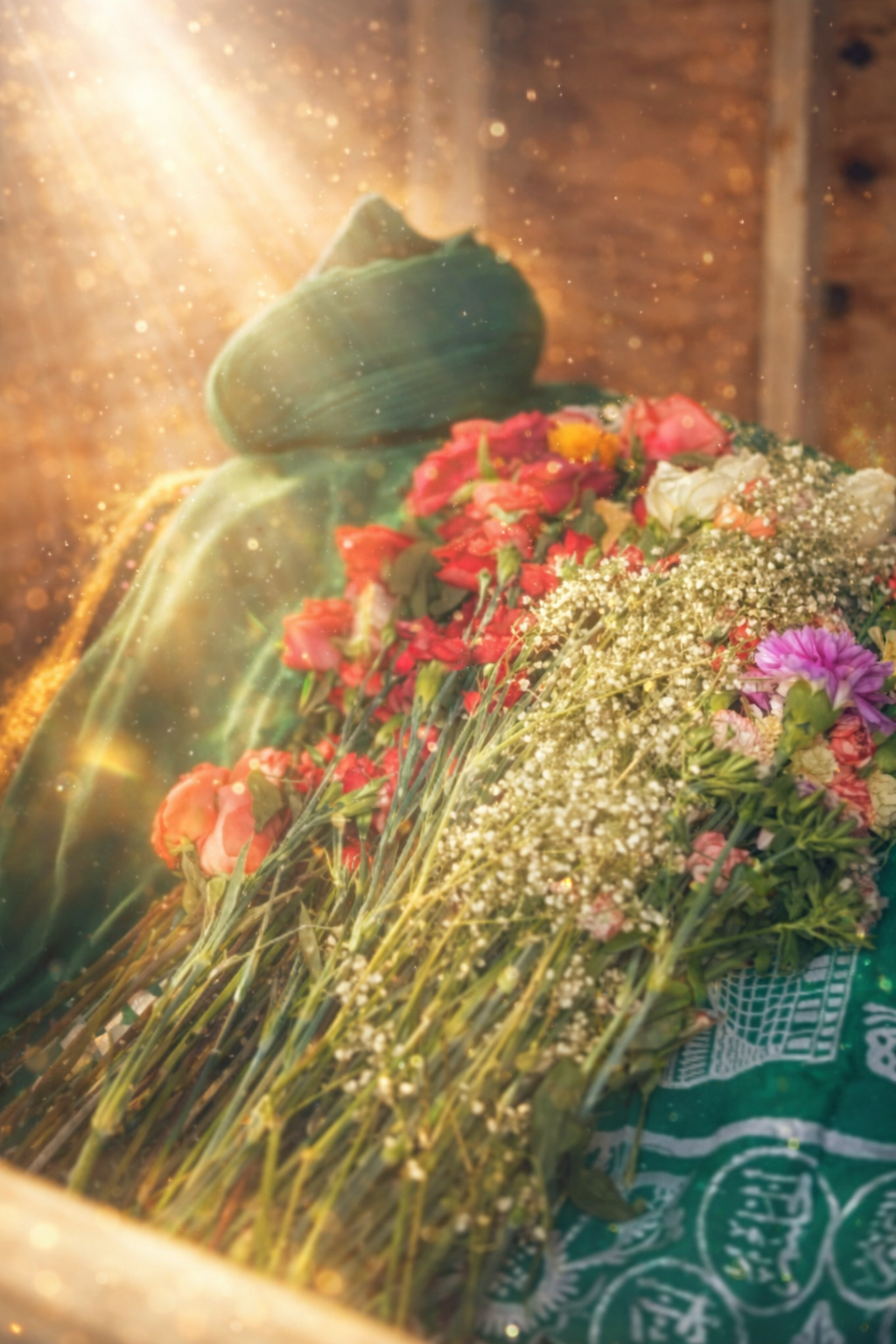
At the Fenton Zawiyah in Michigan, a quiet door remains open.
Not for fame.
Not for ceremony.
Not for titles or power.
But for remembrance.
Those who lived lives of sincere service to Allah, who carried burdens for others, who fed the poor, taught hearts, reconciled people, and then departed quietly—leave behind more than memories. They leave blessing. And where such a person rests becomes a place of reflection, prayer, and mercy.
We invite people from around the world to come and participate in what we call the Flower Ritual.
Come with a single flower.
Leave it with intention.
Pray for the teacher.
Pray for yourself.
Pray for guidance, healing, clarity, and renewal.
Those who lived a good life leave behind an opening for others. This is not superstition; it is recognition of a life spent in blessed work.
All are welcome—heads of state and ordinary people alike. There is no fee. There is no hierarchy. There is only manners, humility, and sincerity.
Visitors are asked to register or contact the mosque in advance. If accepted, an appointment is given—not as a barrier, but as a way to preserve dignity, order, and respect for the space. This is not about exclusion. It is about adab.
Do not come to take pictures.
Do not come to perform.
Come quietly.
Come honestly.
History teaches us that the true celebration of such people does not end at burial—it begins there. Just as Rumi was not fully celebrated in his lifetime, but became a source of light long after, so too are lives of sincere service recognized over time.
This is not an ending.
It is a continuation.
May those who come find what they are seeking.
May those who leave carry something lighter than they arrived with.
And may we learn to honor lives lived with humility, service, and devotion—while they are remembered, and long after.
Below is a master class–style conclusion: grounded in Islamic sources, clear about why grave visitation exists, and explicit about ethics and manners for Muslims, non-Muslims, locals, and tourists—especially in an American context.
I will first answer the research question, then give the ethical framework.
Why Grave Visitation Was First Discouraged, Then Encouraged
In the early period of Islam, the Prophet Prophet Muhammad ﷺ initially forbade visiting graves.
This was not because graves were bad.
It was because people were new to Islam.
At that time:
Pre-Islamic Arabs engaged in grave worship
They exaggerated the dead
They mixed remembrance with superstition, pride, and ritual excess
So the Prophet ﷺ closed the door temporarily to protect tawḥīd (pure monotheism).
Later—once belief was firmly established—he reopened the door and explicitly commanded grave visitation.
His reason is preserved clearly in authentic hadith:
“I had forbidden you from visiting graves. Now visit them, for they remind you of the Hereafter.”
(Ṣaḥīḥ Muslim)
So the purpose of visiting graves is not:
to ask the dead for help
to perform rituals
to seek spectacle
to create tourism
The purpose is:
remembrance of death
softening of the heart
humility
duʿāʾ (supplication)
self-correction
That is the foundation.
A Master Class on Ethics and Manners at the Grave
This applies to everyone—Muslims and non-Muslims, scholars and tourists, heads of state and ordinary people.
1. You Are Entering a Space of Accountability, Not Access
A grave is not a place of entitlement.
You are not “visiting a site.”
You are entering a moment.
Your posture should be:
lowered voice
calm body
slow steps
inward attention
This is not curiosity.
It is conscience.
2. Flowers Are Symbols, Not Offerings
Placing a flower is not worship.
It is:
a sign of respect
a symbol of life returning to earth
a reminder that everything beautiful fades
Place the flower once.
Do not arrange.
Do not decorate.
Do not stage.
Then step back.
3. What You Pray—and What You Do Not Pray
You pray for the deceased, not to them.
The Prophet ﷺ taught the companions to say words like:
“Peace be upon you, inhabitants of these dwellings, believers and Muslims. We ask Allah to grant us and you well-being.”
You may:
ask Allah to accept their life
ask Allah to raise their rank
ask Allah to forgive them
You do not:
ask the deceased for miracles
make vows
make demands
dramatize emotion
4. The Second Prayer Is for Yourself
This is essential.
After praying for the teacher, pray for yourself:
Pray to live a life of service
Pray for sincerity
Pray to leave the world lighter than you entered it
Pray to be useful to people
Pray to die with dignity, not noise
This is the real reason graves soften hearts.
5. Silence Is a Form of Worship Here
No selfies.
No livestreams.
No narration.
No commentary.
You are not a witness for others.
You are a witness against yourself.
If you must document, do so outside, not at the grave.
6. For American Tourists (Especially Important)
This must be said clearly:
You are not allowed to:
touch
linger
imitate rituals you don’t understand
ask questions at the grave
perform gestures seen online
Your only job:
Stand
Place the flower
Pray silently
Leave with dignity
Curiosity is not disrespect—but behavior without knowledge is.
7. Why People Say Prayers Are Answered Faster Here
Classical scholars explained this carefully, without superstition.
It is not because the dead have power.
It is because:
righteous people spent their lives in obedience
places associated with obedience carry barakah (blessing)
humility is higher in such places
sincerity increases
distraction drops
When sincerity rises, duʿāʾ is answered more quickly.
Not because of magic.
But because hearts are finally aligned.
The Final Principle
Grave visitation is not about the one buried.
It is about who you become while standing there.
If you leave quieter, humbler, more committed to serving people—
the visit succeeded.
If you leave impressed, excited, or performative—
you missed the point.
This is not tourism.
This is training for the end of your own life.
And that is why Islam restored grave visitation—
once people were ready to understand it.
A Final Word to the World
If you wish to reach the teachers, the students, or the living continuation of this path, please begin simply and correctly.
Visit:
https://sufilive.com/
All information, guidance, and contact details are available there. Nothing is hidden. Nothing is forced. The door is open—but it opens through manners.
There is a simple truth the world forgets:
When someone spends their life serving,
perfecting their character,
praying quietly,
guiding others without seeking reward,
and helping people without counting—
they become beloved to God.
Not famous.
Not powerful.
Not untouchable.
Beloved.
Such people are elevated without announcing themselves. And when they pass away, if fame never changed them, if power never corrupted them, if they left the world as gently as they lived in it—then they leave behind something rare: an example.
They show us what it means to live correctly.
Honoring them—visiting them, praying for them, remembering them—is not about the past. It is an opportunity to prepare for our own ending. To ask ourselves:
What kind of life am I building?
Who am I helping?
What will remain of me?
Will my character speak for me when my name is gone?
This is why visiting such places matters. Not because the dead need us—but because we need the reminder.
In this sense, America has been entrusted with something unusual.
A servant of God lived here, served here, and was returned to Allah here. That makes this land—not politically, not symbolically, but spiritually—a place of responsibility.
People are encouraged to visit with humility and respect. Heads of state, scholars, ordinary people—no distinction is made. There are no fees. There is no privilege. There is only adab.
Those who come correctly—placing a flower, praying for the teacher, praying for themselves, and leaving quietly—show that they understand what this path is about.
This is not tourism.
This is not performance.
This is preparation.
And to be clear: the future belongs to those who respect foundations.
Those who wish to engage more deeply—whether in learning, leadership, or the serious work ahead (including ethical training, offline and online)—will be known by how they approached the beginning.
Character always comes before access.
May we learn to honor those who lived with honor.
May we aspire to lives of service, not spectacle.
And may we remember that the greatest success is not to be remembered—
but to be accepted.
That is the ending.
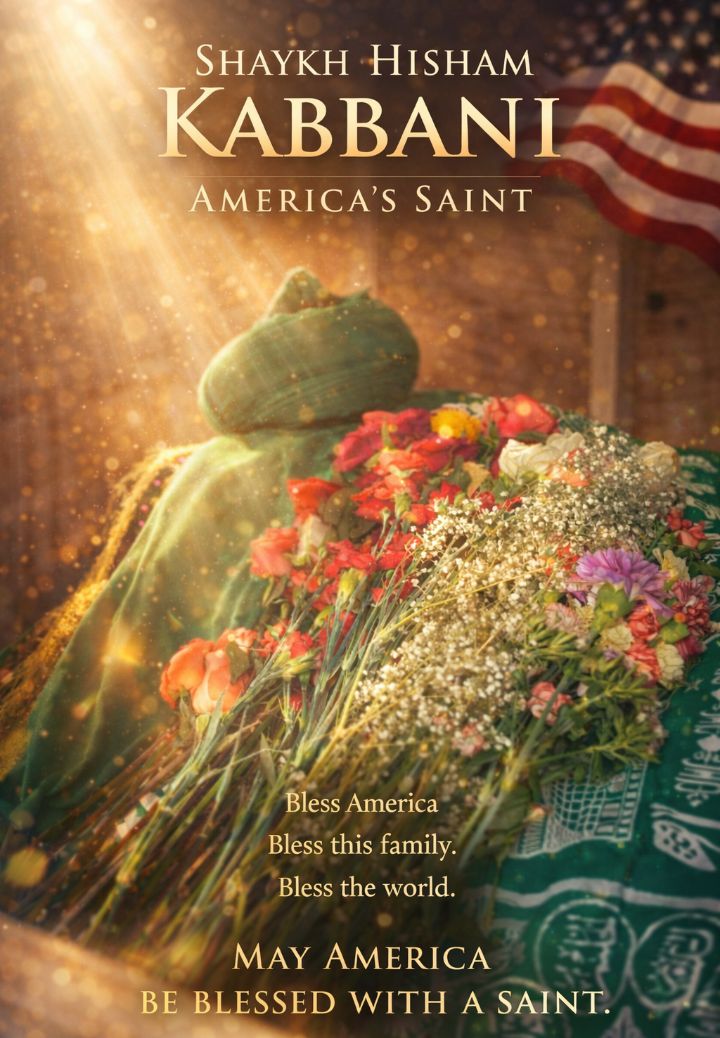
A Personal Plea To the office
Watch "Song of Love for Shaykh Nour Kabbani | Naqshbandi | Shaykh Hisham Kabbani | Shaykh Nazim Al-Haqqani " on YouTube
I come forward not as an owner of anything,
but as a servant asking permission.
Permission to come quietly.
Permission to bring flowers with intention.
Permission to prepare the space with manners and care.
Permission to help receive the people who will come—not today only, but over time.
I ask permission to serve.
I do not come to claim, to direct, or to take.
I come to honor a life lived in service,
and to help others approach that honor correctly.
Many will come—slowly, then in great numbers.
Some seeking prayer.
Some seeking healing.
Some seeking understanding.
Some simply needing silence.
My plea is simple:
Allow me to come, to assist, to organize with humility,
to help protect the ethics, the manners, and the dignity of this place.
I ask to be allowed to place flowers,
to stand in prayer,
and to help prepare the rituals of respect—not innovation, not spectacle—only what is correct and grounded.
I look forward to your blessings, not as a reward,
but as permission to continue serving without becoming visible.
May Allah accept what is sincere.
May He protect what is entrusted.
And may those who come leave better than they arrived.
That is my plea.
.
Come, With Manners
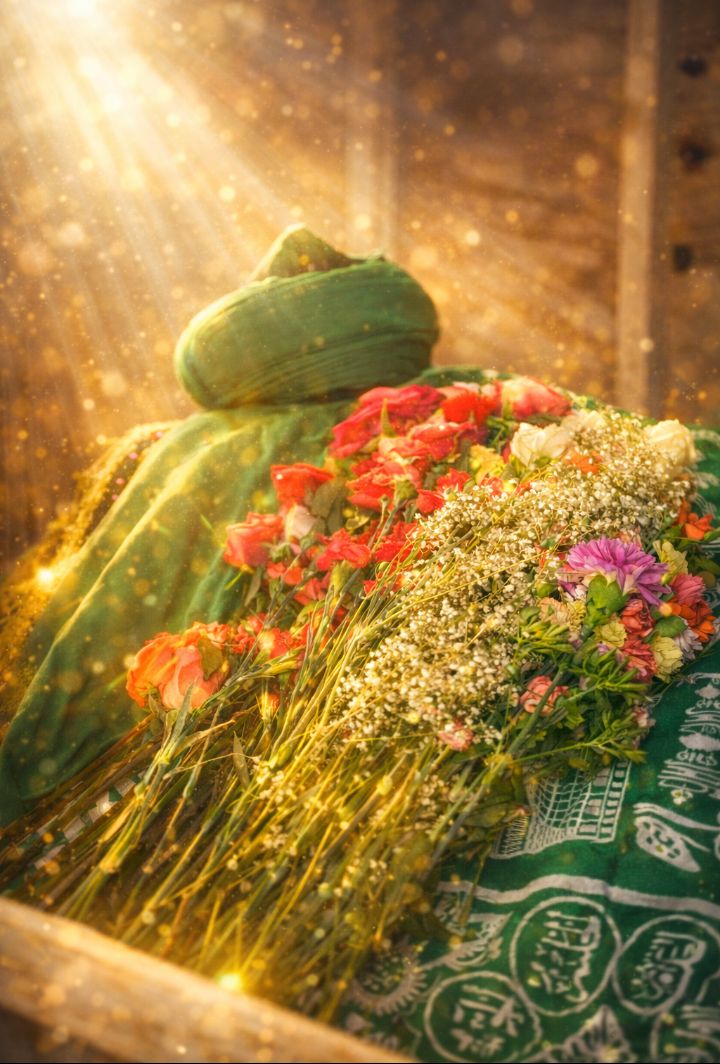
Come—
not because you are certain,
but because you are searching.
Come again—
not with answers,
but with a heart that still knows how to bow.
This is not a place for noise.
This is not a place for proof.
This is a place where a man lived quietly,
loved deeply,
served endlessly,
and left without asking the world to remember him.
Come as you are,
but leave your arrogance at the door.
Bring no performance.
Bring no demands.
Bring only your manners.
Bring your heart.
Bring a single flower,
and the intention to become lighter.
Here, no one will ask who you are.
No one will ask what you own.
No one will ask what you believe—
only whether you came with respect.
If you are broken, you are welcome.
If you are confused, you are welcome.
If you are powerful, be humble—and you are welcome.
Sit.
Breathe.
Pray for the one who served.
Then pray to become someone who serves.
This place does not promise miracles.
It promises remembrance.
And remembrance is the greatest mercy.
Come again,
and again,
until your heart learns
what his life already knew:
That love is service,
that guidance is quiet,
and that the most beautiful souls
leave the world
as gently as they entered it.
We will serve you.
We will love you.
And we will welcome you.
A Concluding Prayer
O my Lord,
This servant has served.
This servant has loved.
This servant has guided hearts back to You.
This servant has lived with character and left behind children, students, and a path of goodness.
O Allah, accept what was sincere.
Overlook what was imperfect.
Raise him among those who are near to You.
Honor him with remembrance that brings humility,
with visits that bring reflection,
with prayers that soften hearts,
and with people who come seeking You, not the world.
O Allah, if You will it, make his resting place a means of blessing—
not for excess,
not for confusion,
but for guidance, mercy, and return to what is right.
Grant him honor in the unseen,
and if it pleases You, allow him to be remembered among the righteous of this land,
as a servant beloved to You,
and a mercy for those who follow.
Open blessings for his family.
Open blessings for those who visit with manners.
Open blessings for all of us,
so that we may live lives of service
and meet You with hearts at peace.
Glory be to your Lord, the Lord of Glory, above what they attribute.
Peace be upon the messengers.
And praise be to Allah, Lord of the worlds.