

بِسْمِ اللهِ الرَّحْمٰنِ الرَّحِيْم
The Lost Art of Silence—Why the Prophet (PBUH) Spoke Less and Listened More
Introduction: The Power of Measured Speech
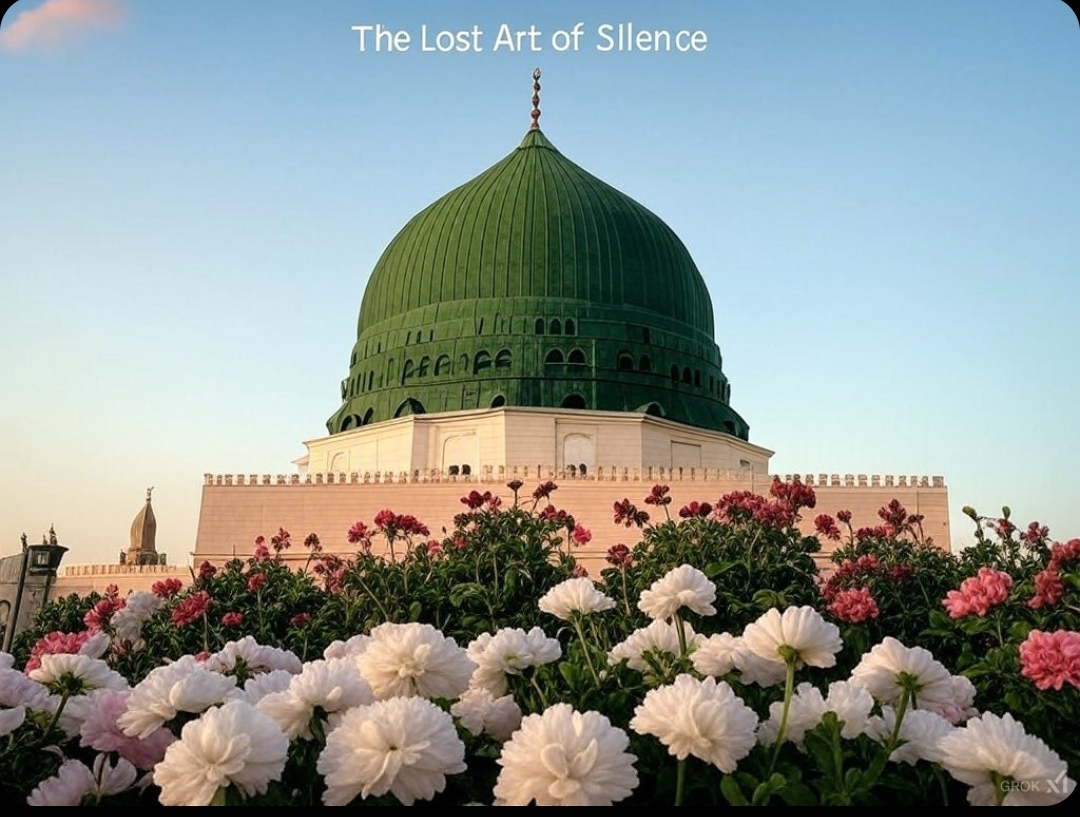
Most people believe that communication is about talking, but the best communicators are those who speak less and listen more. Today, conversations are filled with noise—people rush to respond, argue to prove a point, or simply talk to fill silence. Yet, in the prophetic model of communication, silence was as powerful as speech.
Prophet Muhammad (PBUH) knew when to speak and when to remain silent. He used words with precision, avoiding unnecessary arguments, empty chatter, and anything that did not bring benefit. In this article, we will explore the wisdom of silence, how the Prophet (PBUH) used it effectively, and how we can apply his teachings to our daily interactions.
---
1. The Wisdom of Silence in the Quran and Hadith
A. The Quran’s Guidance on Speech and Silence
Allah reminds us of the power of words and the responsibility that comes with them:
> “Not a word is said except that there is an observer ready to record it.” (Surah Qaf 50:18)
This verse emphasizes that every word matters. Before speaking, one must ask: Is it necessary? Is it beneficial? Will it bring good?
B. The Prophet’s (PBUH) Teachings on Silence
The Prophet (PBUH) said:
> “Whoever believes in Allah and the Last Day should speak good or remain silent.” (Sahih al-Bukhari 6018)
This profound teaching highlights that speech should be a choice, not a reaction. If what we are about to say does not add value, resolve a problem, or bring peace, it is better to stay silent.
Another Hadith states:
> “A person may say a word thoughtlessly, and because of it, he will fall into the depths of Hell farther than the distance between the east and the west.” (Sahih al-Bukhari 6477)
The Prophet (PBUH) taught that words have consequences. A single careless statement can destroy relationships, spread falsehood, or cause irreparable damage.
---
2. How the Prophet (PBUH) Used Silence Effectively
The Prophet (PBUH) was not silent because he had nothing to say—he was silent because he knew when speech was truly needed.
A. Silence as a Sign of Wisdom
Once, a man came to the Prophet (PBUH) and asked many questions. The Prophet listened patiently, speaking only when necessary. When asked why he did not answer quickly, he said:
> “Silence is wisdom, but very few practice it.” (Al-Bayhaqi, Shu’ab al-Iman 6191)
Instead of rushing to answer, the Prophet (PBUH) took time to think, process, and then respond with wisdom.
B. Silence to Defuse Conflict
When people insulted him, the Prophet (PBUH) did not react with anger. He remained calm and silent, allowing the aggressor to expose his own ignorance.
One day, a man cursed the Prophet (PBUH) in public. The Prophet remained silent, while his companion, Abu Bakr (RA), tried to defend him. When Abu Bakr finally responded in anger, the Prophet (PBUH) walked away. Later, he explained:
> “When you were silent, the angels were responding on your behalf. But when you spoke, I left because I do not argue.” (Abu Dawood 4896)
🔹 Lesson: When faced with aggression, silence allows truth to reveal itself without unnecessary conflict.
---
3. Why People Today Speak Too Much
Modern communication has lost the art of silence and reflection. Here’s why:
🚫 Instant responses: Social media and texting encourage immediate reactions instead of thoughtful replies.
🚫 Fear of silence: People feel awkward when no one is talking, so they fill space with unnecessary words.
🚫 Ego-driven speech: Many speak just to prove they are right, rather than to resolve a situation.
🚫 Gossip and useless talk: Many conversations revolve around things that do not concern us.
The Prophet (PBUH) warned about useless talk:
> “It is enough sin for a person to talk about everything he hears.” (Sahih Muslim 5)
🔹 How to Fix It:
✔ Pause before speaking—ask if it’s necessary.
✔ Do not fear silence—it is a sign of strength, not weakness.
✔ Avoid gossip and speaking about things that do not concern you.
---
4. When to Speak and When to Remain Silent
The Prophet (PBUH) did not remain silent all the time—he spoke when it mattered most.
Here’s a checklist to decide whether to speak or stay silent:
✅ Speak if it will bring benefit or prevent harm.
✅ Speak if it will guide someone towards good.
✅ Speak if it will resolve a conflict or clear a misunderstanding.
✅ Speak if it will bring justice or prevent oppression.
🚫 Stay silent if it will cause unnecessary argument.
🚫 Stay silent if it is gossip or backbiting.
🚫 Stay silent if it is just to fill the silence with empty words.
🚫 Stay silent if you are speaking out of anger or frustration.
🔹 Real-Life Application: Before speaking, pause and ask:
"Is this necessary? Will it bring good? Would the Prophet (PBUH) say this in my place?"
---
5. The Spiritual Power of Silence
A. Silence as a Form of Worship
The Prophet (PBUH) said:
> “Whoever is silent has been saved.” (Ahmad 13217)
Silence is not emptiness—it is a way to control the nafs (ego) and strengthen our connection to Allah.
When we speak less, we:
✔ Avoid sins of the tongue (lying, gossip, arguing).
✔ Preserve our energy for important conversations.
✔ Develop patience and self-control.
B. The Impact of Silence on the Heart
> “And they turn away from idle talk.” (Surah Al-Mu’minun 23:3)
Too much talking can harden the heart. Silence allows space for reflection, prayer, and remembrance of Allah.
The great scholar Imam Al-Ghazali said:
> “The tongue is like a wild beast—if you do not tie it down, it will destroy you.”
🔹 Challenge:
Try spending one day speaking only when necessary. See how it changes your focus, your patience, and your connection with Allah.
---
Conclusion: Silence as a Strength, Not a Weakness
The Prophet (PBUH) taught that the wisest people are those who speak only when needed and remain silent when it is best.
By following his example, we can:
✔ Avoid unnecessary conflicts.
✔ Speak with wisdom and impact.
✔ Strengthen our self-control and spiritual discipline.
Final Reminder:
🛑 Before speaking, pause.
🛑 Before arguing, reflect.
🛑 Before gossiping, remember Allah is listening.
---
What’s Next?
In the next article, we will explore:
🔹 “Ho
w to Speak Like the Prophet (PBUH): The Power of Measured Words”
This will focus on how to speak clearly, concisely, and with wisdom—just like the Prophet (PBUH).
Stay tuned!