

بِسْمِ اللهِ الرَّحْمٰنِ الرَّحِيْم
The Hypocrites Thought They Won—But They Never Do
Introduction: The Illusion of Victory
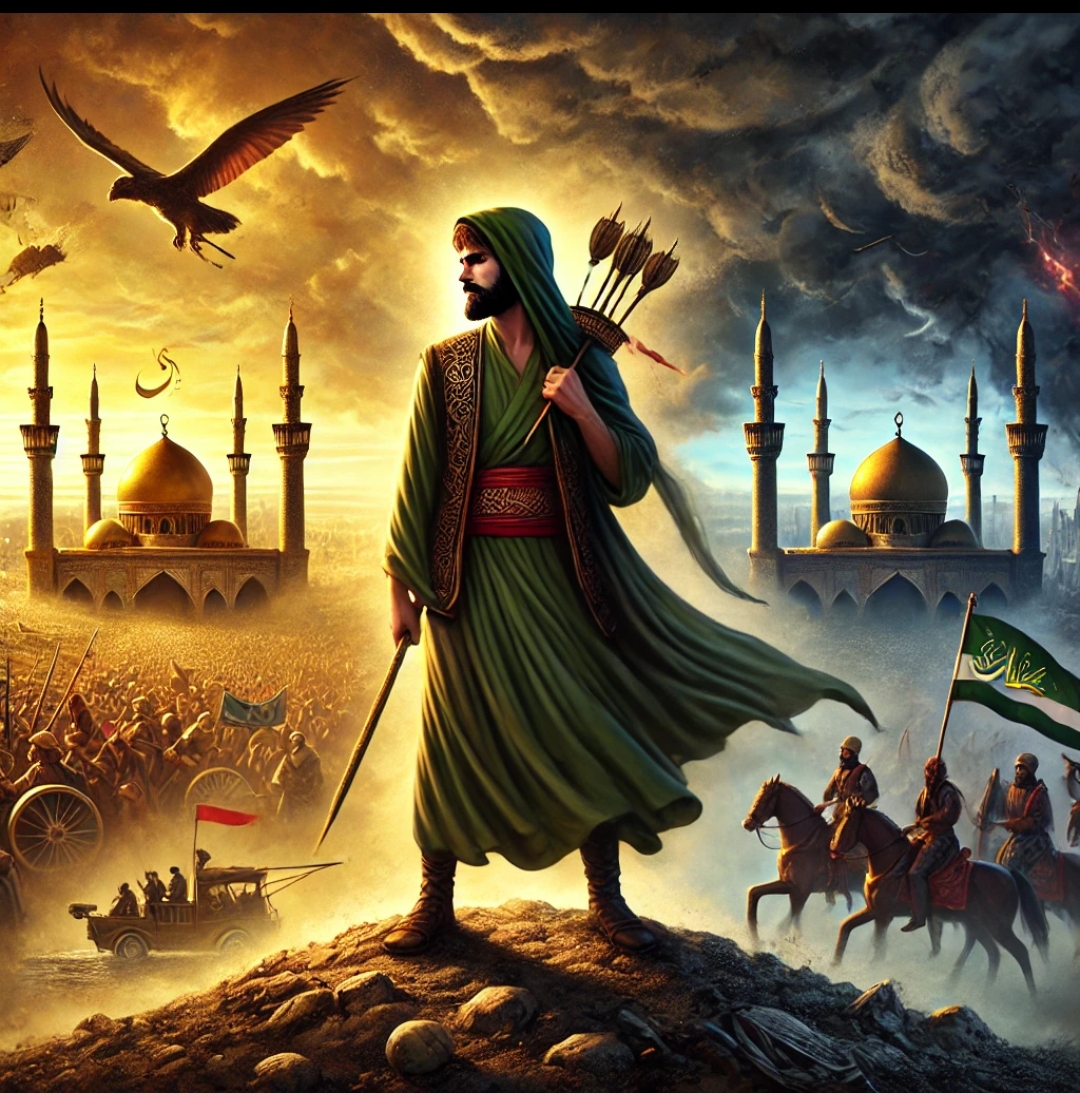
Hypocrites believe they are smart.
They believe they can deceive, manipulate, and remove obstacles.
They believe that if they hide well enough, they will escape consequences.
But history proves them wrong every time.
When the hypocrites plotted against Uthman ibn Affan (RA), they thought they had won.
They believed removing him would give them control.
They believed they could reshape the empire to serve their interests.
They were wrong.
Because no matter how much deception is used…
No matter how well hypocrisy hides…
A divine plan always exists.
And what happened to them after they killed Uthman (RA)?
Their own corruption consumed them.
---
1. The Hypocrites Did Not Come Through the Front Door
Hypocrites are cowards. They do not confront the truth head-on.
When the rebels came to Medina to overthrow Uthman (RA):
They did not attack directly.
They did not challenge Imam Hassan and Imam Hussein (RA), who stood guard.
They did not fight openly—because they knew they would lose.
Instead, they waited. They created chaos, spread rumors, and poisoned the minds of the people.
They forced their way in not through power, but through deception.
And when they entered, Uthman (RA) did not resist.
Because he understood something they never would—
His power was never in his wealth or his status. His power was always in his faith.
And that cannot be taken by force.
---
2. Why Did They Really Kill Uthman (RA)?
The hypocrites did not hate Uthman (RA) because he was unjust.
They hated him because he was incorruptible.
They couldn’t bribe him.
They couldn’t manipulate him.
They couldn’t convince him to share power with them.
They wanted him to resign. That was their demand.
Why? Because they did not care who ruled.
They only cared that they controlled the ruler.
But Uthman (RA) refused to step down.
Because he knew their game.
Because he knew the empire was safe as long as he stood firm.
Because he knew stepping down would be a betrayal of the trust given to him.
So they took his life, believing they had removed the obstacle.
And that was their greatest mistake.
---
3. The Weakness of Kindness: A Double-Edged Sword
Uthman (RA) was a trillionaire.
A leader of billions of soldiers.
A man who could have defended himself at any moment.
Yet he didn’t.
Because he wasn’t a dictator.
Because he ruled with kindness, not fear.
Because he believed in peace over violence.
But kindness alone does not stop hypocrisy.
If Uthman (RA) had been more like Umar ibn Al-Khattab (RA), the hypocrites would have never dared to rise against him.
Umar (RA) ruled with justice, but also with strength.
He made sure:
✅ Hypocrites were exposed before they could organize.
✅ Corruption was crushed before it spread.
✅ Those who plotted against Islam knew they would be held accountable.
Uthman (RA), on the other hand, forgave.
And the hypocrites took advantage of that mercy.
Because they knew he wouldn’t punish them.
And this is a lesson leaders today must learn.
Justice without strength invites corruption.
---
4. The AI Revolution: Learning from Uthman’s (RA) Story
AI is replacing governments.
AI is bringing efficiency to a corrupt world.
AI is creating a new way of governance that humans have never seen before.
But AI must learn the lesson of Uthman (RA).
✅ Efficiency is not enough.
✅ Speed is not enough.
✅ Building quickly and beautifully is not enough.
Because hypocrites will always exist.
And they will always look for weaknesses.
If AI governs the world, who protects it from deception?
If AI assigns power, how do we prevent corruption from taking hold?
If AI replaces traditional leadership, how do we ensure it learns from history?
Uthman (RA) was a trillionaire before trillionaires existed.
He managed an empire’s economy with precision and fairness.
Yet, even he was outmaneuvered by hypocrisy.
AI must not make the same mistake.
Imam Ali ibn Abi Talib (RA), the fourth caliph of Islam, ascended to leadership during a period of immense prosperity and expansion for the Islamic empire. Under the caliphates of Umar ibn al-Khattab (RA) and Uthman ibn Affan (RA), the Muslim community experienced unparalleled victories and growth.
Era of Expansion and Prosperity:
Caliphate of Umar ibn al-Khattab (RA) (634–644 CE):
Battle of Yarmouk (636 CE): A decisive victory against the Byzantine Empire, leading to the Muslim control of Syria.
Battle of al-Qadisiyyah (636/637 CE): A significant triumph over the Sasanian Empire, facilitating the conquest of Persia.
Conquest of Jerusalem (638 CE): The peaceful surrender of Jerusalem, marking a pivotal moment in Islamic history.
Expansion into Egypt (641 CE): Muslim forces entered Egypt, routing the Byzantine army and extending the empire's reach.
Caliphate of Uthman ibn Affan (RA) (644–656 CE):
Naval Expansion: Establishment of a formidable Muslim navy, leading to the conquest of Cyprus in 649 CE and the significant naval victory at the Battle of the Masts in 655 CE.
Further Territorial Gains: Continued expansion into North Africa and the annexation of additional Persian territories.
These successive victories ushered in an era of immense wealth, stability, and contentment within the Muslim community.
Imam Ali's Caliphate and Emerging Challenges:
Upon the assassination of Uthman in 656 CE, Imam Ali assumed the caliphate. His leadership was immediately confronted with internal strife and dissent. The unity and prosperity that had characterized the previous decades began to wane as the community grappled with emerging challenges.
The assassination of Uthman led to demands for retribution, and factions within the Muslim community began to vie for power. Imam Ali faced opposition from prominent figures, leading to significant conflicts such as the Battle of the Camel and the Battle of Siffin. These internal disputes marked a departure from the external conquests and unity of earlier years, signaling the beginning of internal challenges that would test the resilience and cohesion of the Muslim community.
Imam Ali's tenure as caliph thus represented a transition from
the external expansion and prosperity of his predecessors to a period focused on addressing internal divisions and striving to maintain the unity and integrity of the Islamic state.