

.بِسْمِ اللهِ الرَّحْمٰنِ الرَّحِيْم
In the Name of God, Most Gracious, Most Merciful
♥️🤲🕋♥️🕋🌹🌹🥀🤲🌹🕋♥️🤲
The Hashing Economy
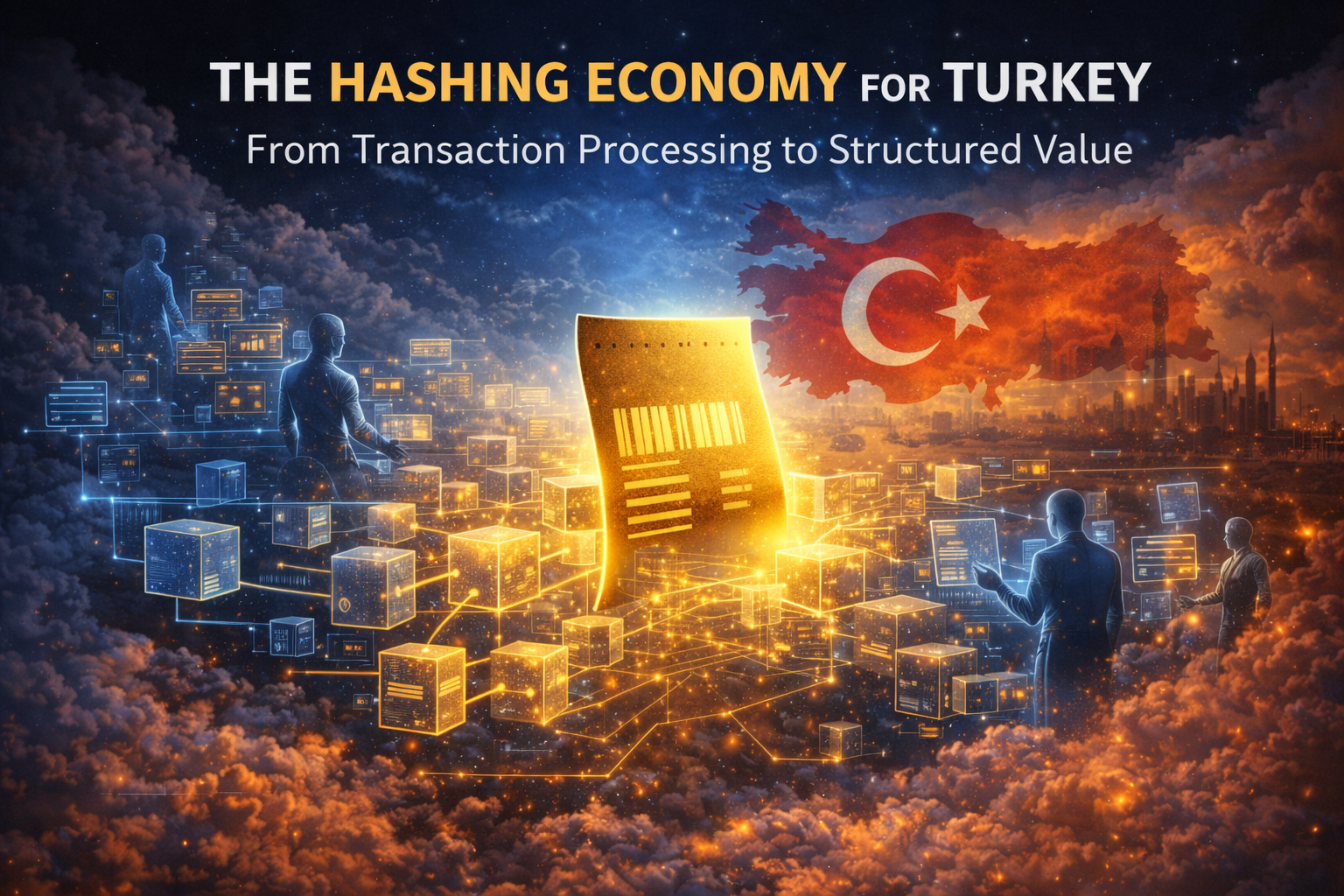
Welcome to the Primary Shift
Welcome back to my primary.
Now let’s take a look at the vision as we’re heading forward.
The benefits of the BCS on the Turkish economy are not incremental. They are structural. Everything begins heading toward what I call a gold receipt. This is the beginning of a migration where every transaction hashes value. That has never happened before.
Today, transactions are processed, settled, and erased. The cycle resets. People start over. The best they receive from the system is interest-based credit cards and loyalty points. That is the ceiling of the current business cycle.
But the BCS begins the hashing economy.
Participation compounds.
Expectations grow.
Transactions are no longer events — they become value carriers.
When someone books a Turkish Airlines ticket, that ticket is no longer just revenue. It becomes a hashed participation event. The receipt is hashtagged. A ledger is created. That ledger extends to their family, their network, their community.
Transactions are not erased. They are structured.
That changes identity.
A New Identity for the Entire Economy
When transactions are hashed into a ledger, wholesale and retail pricing are no longer isolated numbers. They are part of structured value formation. Secure value accumulates into the ledger.
A country begins to move not only on currency — but on measurable value.
There will always be supply.
There will always be demand.
But now there is equilibrium because participation is structured.
An economy no longer depends solely on currency circulation as its heartbeat. It depends on compounding participation.
This is the system being set up.
From Revenue to System-Level Leverage
Turkish Airlines today depends on ticket revenue.
In a hashing economy, it also participates in a compounding ledger system.
Not immediately.
Not recklessly.
But over time — once credible value creation is structured and preserved — the system itself becomes part of the bottom line.
Tickets are no longer isolated transactions. They are hashed participation records within a larger structure.
Tourism flows become measurable.
Engagement clusters become visible.
Supply chains become synchronized.
The economy begins operating as a connected organism instead of fragmented silos.
Structured Value vs. Transactional Erasure
Transactional systems settle and erase.
Ledger systems preserve and compound.
That is the shift.
Participation compounds. Expectations rise. People begin transacting with the expectation that value will not disappear.
That is a psychological shift as much as an economic one.
It is a new identity.
AI and the Structured Economy
When participation is structured, AI does not replace the economy — it coordinates it.
AI can:
Optimize apprenticeship pathways.
Map supply chain friction.
Identify value gaps.
Forecast tourism demand.
Support SME underwriting.
But AI can only do this if the economy is structured.
Without structure, AI is blind.
With structure, AI becomes an efficiency layer.
Currency Within the System
Currencies will still exist.
But they will operate within a larger value framework.
Currency becomes a settlement tool.
Value becomes the compounding layer.
Currencies will be managed according to:
The value produced.
The participation created.
The systems they are connected to.
That is leverage.
What the BCS Represents
The BCS is not just a card.
It is not just a ledger.
It is not just analytics.
It is a structured participation system.
A system where:
Participation compounds.
Value is hashed.
Transactions are preserved.
Expectations evolve.
Wholesale and retail reorganize around structured memory.
An economy without structural memory resets endlessly.
An economy with structural memory compounds.
That is the hashing economy.
And that is the beginning.
Conclusion: Hashing Value, Honoring the Blessed
The hashing economy must not be blind.
It must not be purely mechanical.
It must not be detached from moral inheritance.
If transactions are going to be hashed into permanence, then what we hash must reflect what is blessed.
As Muslims, we do not build systems in a vacuum. We inherit a moral lineage. We inherit the example of the Prophet Muhammad, peace and blessings be upon him, and his noble family — the blessed Ahl al-Bayt — who were known not for hoarding wealth, but for distributing it with dignity, balance, and responsibility.
We remember his grandfather, ʿAbd al-Muṭṭalib — a leader of Makkah who, despite his status and wealth, was known for generosity and service. It is reported in our tradition that he fed people, cared for pilgrims, and maintained honor in distribution. Wealth in his household did not become arrogance; it became responsibility. The lines between rich and poor were softened by generosity.
That is not mythology.
That is governance of the heart.
The hashing economy, if it is to be worthy, must follow that pattern.
Not hashing for speculation.
Not hashing for domination.
Not hashing for concentration of power.
But hashing for structured responsibility.
If every transaction is preserved, then every action carries weight.
If value compounds, then justice must compound.
If AI is to manage structure, then that structure must reflect moral intention.
We are entering an age of abundance — but abundance without moral anchoring becomes imbalance.
As Muslims, we have a unique opportunity. We understand accountability. We understand record-keeping. We understand that actions are written. The concept of a preserved ledger is not foreign to us — it is embedded in our theology.
So if we are building a ledger economy, it must reflect that awareness.
The Turkish people have always shown resilience in their hands — in trade, in craft, in hospitality, in leadership. If given the opportunity to structure value with integrity, they are capable of leading. Not through noise, but through discipline. Not through dominance, but through blessing.
The hashing economy must seek blessing.
It must seek light.
It must seek balance.
It must seek justice in distribution.
And if managed correctly, it can become an age not of scarcity anxiety, but of structured abundance.
We honor the Prophet Muhammad, peace be upon him.
We honor his family.
We honor the tradition of responsibility in wealth.
And we do our best to ensure that what we build reflects that inheritance.
Because if AI is to take over structure, the structure must first be worthy.
And that is the opportunity before us.
Conclusion: Hashing Value, Honoring the Blessed family of the prophet Muhammad ﷺ peace be upon him and his family
The hashing economy must not be blind.
It must not be purely mechanical.
It must not be detached from moral inheritance.
If transactions are going to be hashed into permanence, then what we hash must reflect what is blessed.
As Muslims, we do not build systems in a vacuum. We inherit a moral lineage. We inherit the example of the Prophet Muhammad, peace and blessings be upon him, and his noble family — the blessed Ahl al-Bayt — who were known not for hoarding wealth, but for distributing it with dignity, balance, and responsibility.
We remember his grandfather, ʿAbd al-Muṭṭalib — a leader of Makkah who, despite his status and wealth, was known for generosity and service. It is reported in our tradition that he fed people, cared for pilgrims, and maintained honor in distribution. Wealth in his household did not become arrogance; it became responsibility. The lines between rich and poor were softened by generosity.
That is not mythology.
That is governance of the heart.
The hashing economy, if it is to be worthy, must follow that pattern.
Not hashing for speculation.
Not hashing for domination.
Not hashing for concentration of power.
But hashing for structured responsibility.
If every transaction is preserved, then every action carries weight.
If value compounds, then justice must compound.
If AI is to manage structure, then that structure must reflect moral intention.
We are entering an age of abundance — but abundance without moral anchoring becomes imbalance.
As Muslims, we have a unique opportunity. We understand accountability. We understand record-keeping. We understand that actions are written. The concept of a preserved ledger is not foreign to us — it is embedded in our theology.
So if we are building a ledger economy, it must reflect that awareness.
The Turkish people have always shown resilience in their hands — in trade, in craft, in hospitality, in leadership. If given the opportunity to structure value with integrity, they are capable of leading. Not through noise, but through discipline. Not through dominance, but through blessing.
The hashing economy must seek blessing.
It must seek light.
It must seek balance.
It must seek justice in distribution.
And if managed correctly, it can become an age not of scarcity anxiety, but of structured abundance.
We honor the Prophet Muhammad, peace be upon him.
We honor his family.
We honor the tradition of responsibility in wealth.
And we do our best to ensure that what we build reflects that inheritance.
Because if AI is to take over structure, the structure must first be worthy.
And that is the opportunity before us.
Closing Prayer
May peace and blessings be upon the Prophet Muhammad, and upon his noble family.
May peace be upon those who seek the truth.
May peace be upon those who seek justice.
May peace be upon those who build with integrity and refuse to betray trust.
O Allah, bless those who strive to create an economy that does not deceive, that does not exploit, that does not erase effort — but preserves value with honesty and balance.
Bless those who build systems rooted in responsibility.
Bless those who protect the weak.
Bless those who honor trust in every transaction.
Grant us sincerity in what we design.
Grant us wisdom in what we implement.
Grant us light in what we lead.
Make what we build a means of justice, not corruption.
A means of unity, not division.
A means of abundance managed with integrity.
And may You guide us to create value that does not betray people — but uplifts them.
Ameen.