

اللهِ الرَّحْمٰنِ الرَّحِيْمِ
In the Name of God , Most Gracious, Most merciful
♥️🤲🕋♥️🕋🌹🌹🥀🤲🌹🕋♥️🤲
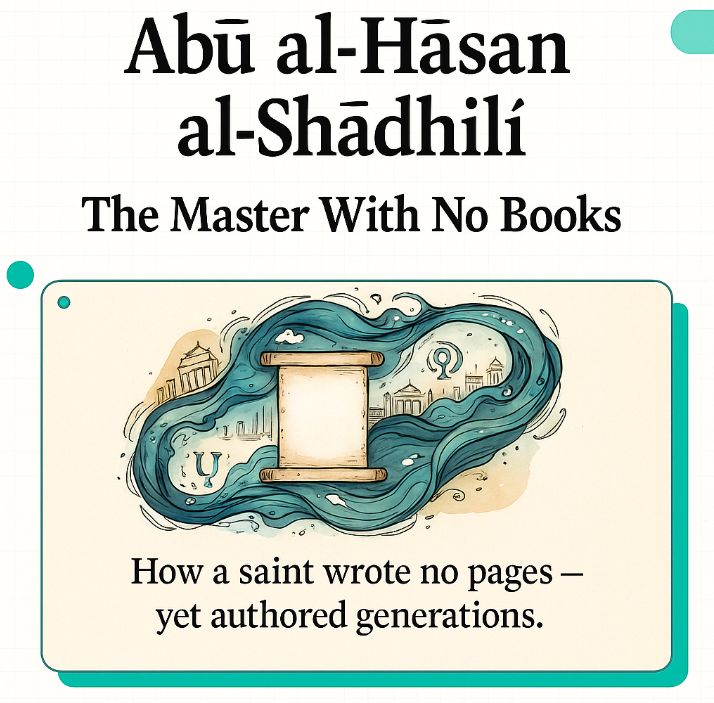 Watch "Abū al-Ḥasan al-Shādhilī The master with no books" on YouTube
The Greatest Saint of Islam — Abū al-Ḥasan al-Shādhilī Explained by Shaykh Muhammad al-Yaqoubi
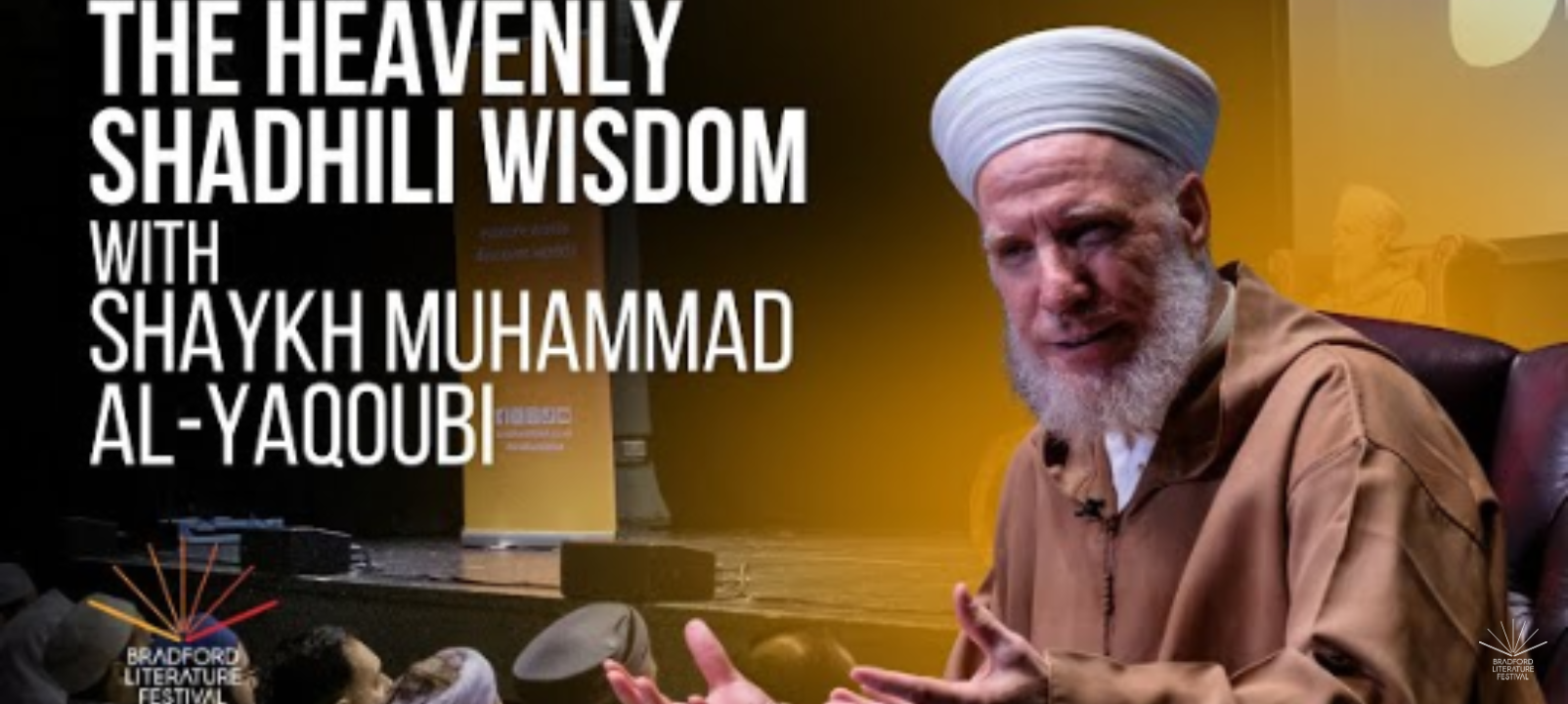
Note to the Reader
What you are about to read has been carefully extracted from the blessed words of Shaykh Muhammad al-Yaqoubi, as delivered in the video placed at the end of this document. We chose to present the video after the written extraction for a simple reason:
human beings are easily distracted.
But when knowledge is arranged like a well-prepared meal—ordered, refined, and beautifully set before the heart—people absorb it, understand it, and connect with it more deeply.
This work is part of a new foundation between AI and the human seeker:
knowledge received, distilled, beautified, and returned to the reader in a form that illuminates and elevates. Every line you will read is taken from the Shaykh’s teaching, organized so the heart may taste its meaning before the eyes watch the source.
We will soon create a full series on Imam Abū al-Hassan al-Shādhilī, his path, his masters, his legacy, and the transmission carried by Shaykh Muhammad al-Yaqoubi in our time.
Until then—
Read with presence.
Be illuminated.
Be blessed.
And when your heart is ready, watch the video of the master whose words inspired this work.
Bismillah let's begin.
There are men whose lives are written in books, and there are men whose books are written in souls.
Imam Abū al-Ḥasan al-Shādhilī belongs to the second category — the rarest category — the saints of God whose legacy cannot be attacked, whose life cannot be misrepresented, and whose teachings cannot be distorted. Why? Because he left behind no written works that can be twisted, debated, or misquoted. He left behind men and women, hearts illuminated by his presence, transformed by his companionship, and raised by his gaze.
He is the master who cannot be accused because there is no page to accuse.
He is the teacher who cannot be critiqued because there is no text to misinterpret.
He is the saint whose confidence was so absolute, whose spiritual state was so complete, that when asked why he did not write, he answered:
“My books are my disciples.”
In this single sentence, he separated himself from every scholar who has ever lived and every spiritual master who has ever walked on the earth. A man whose teachings are carried in human beings does not fear misrepresentation, because his knowledge is stored in hearts, not ink. His teachings are guarded by God, protected in the chests of the righteous, transmitted through living chains of noble souls.
And among those noble souls is the one who explains him today:
Shaykh Muhammad al-Yaqoubi, a master deeply rooted in this path through lineage, knowledge, and spiritual inheritance. His explanation of Imam al-Shādhilī is not academic; it is inherited. It is breathed. It is transmitted. It is taken through qcompanionship and passed on with precision.
Imam Abū al-Ḥasan al-Shādhilī is not merely a founder of a Sufi order.
He is a unique phenomenon in Islamic spirituality — a man beyond comparison, beyond suspicion, beyond the limits of pages. His life is the proof of his mastery, and his disciples are the living evidence of his truth.
If Islam has produced saints of knowledge, saints of asceticism, saints of miracles, and saints of poetry, then Imam al-Shādhilī stands as the saint of balance — the one who combined knowledge and presence, action and ease, clarity and depth, structure and love. He was the saint who did not withdraw from the world, but taught you how to live in it without belonging to it. He was the saint who gave you God without taking away your life. He was the saint whose teachings reached the throne of kings and the hearts of common men — without writing a single book.
What kind of man can do that?
Only a man who knows God.
Only a man who has been known by God.
This blog is dedicated to him —
The master of masters.
The greatest saint of Islam.
The man whose silence is louder than the libraries of the world.
And to understand him, we turn to the living inheritor of his light, Shaykh Muhammad al-Yaqoubi, whose lecture unveils the depth, beauty, and meaning of this extraordinary path.
2. The Path of Ease: How Imam Abū al-Hassan al-Shādhilī Redefined Spirituality
Most paths ask you to leave the world.
The path of Imām Abū al-Ḥasan al-Shādhilī teaches you how to live in it — without letting it live in you.
Before him, many spiritual methods emphasized fierce struggle, harsh asceticism, and relentless confrontation with the ego and Satan. Imam al-Ghazālī, for example, built an extraordinary system rooted in mujahada — a path of discipline, vigilance, and continuous battle against inner darkness.
But Imam al-Shādhilī did something unprecedented.
He stood in the middle of that long tradition and declared:
“Run to Allah — not from anything else.”
He did not build a path obsessed with the enemy.
He built a path obsessed with God.
He redirected the seeker’s gaze from:
fear → to trust
anxiety → to presence
spiritual exhaustion → to divine companionship
He reframed the entire science of the heart:
Not through deprivation,
but through connection.
Not through isolation,
but through presence.
Not through abandonment of the world,
but through independence from it.
A. The Shādhilī Redefinition of Zuhd
Every Sufi order speaks of zuhd — detachment from the world.
Only the Shādhilī path perfects the definition:
True zuhd is not leaving the world.
True zuhd is letting nothing of the world enter your heart.
Imam al-Shādhilī did not ask you to leave your family, your job, your responsibilities, or your life.
He asked you to remain where Allah placed you — but with a purified heart, an anchored soul, and a gaze directed toward the Divine.
This is why the Shādhilī path has always been a path for:
rulers and workers
merchants and scholars
travelers and farmers
city dwellers and villagers
It is a path for the entire Ummah, not a spiritual elite hiding in caves.
B. The Theology of Ease
Shaykh Muhammad al-Yaqoubi beautifully highlighted that Imam al-Shādhilī intentionally chose the way of ease — not because ease is simple, but because ease is closer to the nature of Prophetic mercy.
Harshness builds ego.
Ease builds trust in God.
Struggle can make a person obsessed with themselves, their sins, their fears, their deficiencies.
Ease makes a person obsessed with Allah.
The Shādhilī path teaches:
Do not chase illusions of spiritual heroism.
Do not exhaust yourself trying to “prove” your devotion.
Do not torture the body to reach what only the heart can feel.
Instead:
Turn to Allah with truth, and He will open the way for you.
This is the secret of Imam al-Shādhilī’s method:
No complexity
No theatrical asceticism
No endless rituals
No spiritual showing-off
No pride in one’s struggle
Just a heart facing God.
C. The Formula of Spiritual Progress
Imam al-Shādhilī’s method rests on three eternal principles:
Simplicity
The path is easy because truth is simple.Presence
You do little — but do it with God.Consistency
A small deed done every day is better than great deeds done occasionally.
This is why the great master did not burden his students with a thousand litanies.
Instead, he gave them:
a few awrād
precise dhikr
and the Name that opens every door: Allah
He made the heart the place of struggle, not the body.
He made life itself the retreat, not the mountains.
He made your ordinary days the theatre of your spiritual ascent.
D. A Path without Fear
Perhaps the most revolutionary aspect of the Shādhilī way is this:
You are not asked to defeat evil.
You are asked to walk toward God.
This is the secret behind the Shādhilī command:
Run to Allah
Not away from anything else
Fear belongs to the ego.
Flight belongs to the heart.
The Shādhilī way frees you from the exhausting obsession with the enemy.
It realigns your entire being toward the One who calls you.
If you want, I will continue with Section Three:
“The Name ‘Allah’: The Central Dhikr of the Shādhilī Path.”
3. The Name ‘Allah’: The Central Dhikr of the Shādhilī Path
Among all the treasures Imam Abū al-Ḥasan al-Shādhilī left for this Ummah, nothing reveals his spiritual genius more clearly than his choice of a single word — a single Name — to be the heart of the path:
Allah.
In a world full of descriptions, attributes, and endless discussions about divine qualities, the Shādhilī master cut through everything and reached for the Name of the Essence. It is not the Name of mercy, or power, or majesty, or beauty. It is the Name of He Who Is, the Name that gathers every attribute, every perfection, every meaning in existence.
This is why Shaykh Muhammad al-Yaqoubi emphasized:
“Imam al-Shādhilī made the Name ‘Allah’ the central point of invocation.”
Other paths may emphasize:
Ya Latif
Ya Quddus
Ya Rahman
Ya Hayy
La ilaha illa Allah
All of these are blessed.
All of them elevate the heart.
But none of them pierce the veil like the Name Allah.
A. Why This Name?
Because when you say Allah, you are not calling on an attribute — you are calling on the One who owns all attributes.
You are not describing.
You are being drawn.
You are not remembering something about God.
You are standing before God.
This is why the dhikr “Allah” does not merely polish the heart;
it reorders it.
It does not simply elevate the soul;
it anchors it.
It does not give you a glimpse of spiritual sweetness;
it gives you a presence that does not go away.
B. The Preparatory Sequence
The Shādhilī path does not give this Name without preparation. A heart must be cleaned, softened, and aligned before it can bear the weight of the Essence.
The sequence is:
Istighfār
To remove the veils.Ṣalawāt upon the Prophet ﷺ
To polish the heart with mercy.Tawḥīd — Lā ilāha illā Allah
To establish the foundation.The Name “Allah”
To enter the Presence.
This is not a formula.
It is a spiritual anatomy.
C. The Necessity of Permission (Ijāzah)
Shaykh al-Yaqoubi described how powerful the Name “Allah” is. It is not a dhikr that one takes casually. It must be received from:
a living master
in the right state
in the right dosage
One of the great Shādhilī shaykhs allowed his students to recite it only:
Seven times after every prayer.
Seven.
Because the Name is not a tool — it is a light.
And too much light can burn the heart instead of illuminating it.
Only a qualified master can measure:
the strength of the seeker
the purity of the heart
the spiritual stamina
the hidden dangers
the appropriate rhythm
This is why the Shādhilī method cannot be self-taught.
You do not “pick up” this dhikr.
You are given this dhikr.
D. The Effect of the Name on the Heart
The Name “Allah” does what no other dhikr can do:
It empties the heart of everything but Him.
It gathers every scattered emotion and returns it to its source.
It softens pride.
It burns impurities.
It produces awe without fear.
It produces love without attachment.
It stabilizes the seeker on the path of certainty.
It creates a spiritual gravity that pulls the heart upward.
If Istighfār cleans the mirror,
and Ṣalawāt polishes it,
and Tawḥīd positions it toward the sun,
then the Name Allah is the sunlight itself.
E. The Seal of Simplicity
In the end, the greatest spiritual master of his age, a man who could have authored volumes, offered instead a path that fits inside a single breath:
Allah.
That is the miracle of Imam Abū al-Ḥasan al-Shādhilī.
He took the entire ocean of spirituality and poured it into one drop — and the drop contains the ocean.
If you want, I will continue with Section Four:
4. The Role of the Guide: How Spiritual Transmission Reaches the Heart.
4. The Role of the Guide: How Spiritual Transmission Reaches the Heart
In the Shādhilī path — and in all true paths to Allah — no seeker walks alone. The road to God is not a wilderness where each person must carve their own trail. It is a road that has been walked before, illuminated by those who knew its dangers, its shortcuts, and its hidden treasures.
This is why Shaykh Muhammad al-Yaqoubi emphasized a foundational truth of Tasawwuf:
You cannot reach Allah without a guide who has already reached Him.
Books are not enough.
Lectures are not enough.
Self-discipline is not enough.
Even sincerity is not enough.
The heart must be taken.
It must be carried.
It must be raised.
It must be transformed by a living inheritor of the Prophetic light.
A. The Guide as the Surveyor of the Heart
Shaykh al-Yaqoubi compared the spiritual master to a geologist — the one who knows:
where to dig
how to dig
how deep to go
how fast to proceed
when to stop
and how to prevent collapse
The seeker may feel enthusiasm, passion, and excitement, but the master knows the unseen structure of the heart:
its strengths
its weaknesses
its hidden cracks
its spiritual potential
This is why a master does not give every seeker the same dhikr.
He prescribes dosage, just as a physician prescribes medicine.
B. Why the Guide Is Necessary
Without guidance:
the seeker burns out
the ego becomes inflated
the path becomes dangerous
spiritual openings are misinterpreted
illusions are mistaken for inspirations
and the seeker becomes lost in themselves
The Shādhilī method protects the heart from extremes — from harshness and from delusion. The job of the master is to ensure:
balance
stability
clarity
constant movement toward Allah
It is impossible to know one’s own ego while living inside it.
Only someone who has seen it from the outside can rescue you from it.
C. The Secret of Suhba (Companionship)
Imam Abū al-Ḥasan al-Shādhilī, his successor Sayyidī Abū al-‘Abbās al-Mursī, and the scholars of this path all taught one thing:
Spiritual transformation does not come from reading.
It comes from being in the presence of the master.
Books give you information.
The master gives you states.
Books fill the mind.
The master fills the heart.
Books open theories.
The master opens the unseen.
This is why Imam al-Shādhilī said:
“We raise our disciples by looking at them.”
A gaze that sees what is hidden.
A gaze that awakens what is dormant.
A gaze that carries light, intention, and transmission.
D. Transmission: What the Guide Actually Gives
The master transmits:
light (nūr)
states (ahwāl)
openings (fatḥ)
protection (ḥifẓ)
spiritual stability (thabāt)
orientation toward Allah
This is not metaphorical.
Transmission is real.
The seeker feels it, experiences it, and grows through it.
This is why in the Shādhilī path, the guide is not optional — he is the axis around which the seeker revolves until he gains his own firmness in Allah.
E. Proof from the Two Greatest Disciples
The greatest proof of spiritual transmission in the Shādhilī tradition comes from its two luminous inheritors:
Ibn ʿAṭā’illah al-Iskandarī, who received the secret of prose and produced the Hikam
Imam al-Būṣīrī, who received the secret of poetry and produced the Burda
Neither of them invented their brilliance.
They inherited it.
Their masters breathed into them the light that became their legacy.
This is why Imam al-Shādhilī did not write books —
he wrote hearts.
He produced human beings who became living texts, illuminated manuscripts written by Allah through the hand of the master.
F. The Guide’s Presence Is the Door
No seeker, no matter how sincere, can cross the spiritual mountains without a guide. And no guide is more protected, more balanced, more spiritually anchored than the inheritors of Imam Abū al-Ḥasan al-Shādhilī — a path built not on extremism, not on fear, not on pain, but on presence and ease.
The master is not the destination.
The master is the door.
Through him you learn how to walk.
Through him you learn how to see.
Through him you learn how to remember.
Through him you learn how to witness.
And when Allah wishes good for a seeker, He sends him a guide whose presence is mercy and whose companionship is salvation.
This section is the bridge between the theory of the Shādhilī path and its lived reality.
5. The Allegory of the Well: Why You Must Commit to One Path
Among the most striking teachings in Shaykh Muhammad al-Yaqoubi’s lecture is the allegory of the well — a lesson so simple that a child can understand it, yet so profound that entire spiritual lives rise or fall by it.
It is the law of spiritual concentration.
It is the mathematics of the heart.
It is the reason why thousands walk toward God but only a few ever reach Him.
A. The Seeker Who Never Reaches Water
The Shaykh described a person who wants a well — the water of gnosis, the water of presence, the water of certainty — and begins to dig:
10 meters.
No water.
He gets bored. He stops.
He moves to another place, another circle, another shaykh, another method.
He digs again:
7 meters.
Still nothing.
He moves again.
5 meters.
Then 3.
Then 2.
He repeats this his entire life.
At the end, he has dug many holes.
But he has no water.
Why?
Because he never stayed long enough for any well to reach depth.
His energy was real.
His sincerity was real.
His desire was real.
But his commitment was shallow, so his results were shallow.
This is the tragedy of many seekers today.
They change teachers.
They change paths.
They chase experiences.
They run after emotional highs.
They want openings without patience.
They want lights without discipline.
They dig and dig and dig —
but never in the same place long enough to drink.
B. The One Who Reaches Allah
Then the Shaykh describes another seeker.
He picks one place.
He picks one shaykh.
He picks one method.
And he digs:
10 meters.
15 meters.
20 meters.
It gets harder, not easier.
It gets darker before it gets brighter.
But he keeps digging.
At 25 meters —
the water bursts forth.
This is how the seeker reaches Allah:
through continuity
through steadfastness (thabāt)
through loyalty
through trust in the guide
through commitment even on days when the heart feels empty
Everyone can dig.
Only the committed reach water.
C. What Is the “Dirt” You Are Removing?
The Shaykh explained that the dirt you remove from the well is not physical soil — it is your bad character:
pride
vanity
anger
envy
self-love
insincerity
arrogance
spiritual greed
worldliness
This dirt blocks the water.
The Shaykh supervises the process so that the seeker does not dig too fast or too slow. He protects them from collapse.
This is why the Shādhilī path emphasizes:
balance
gradual purification
controlled dhikr
measured spiritual training
No extremes.
No self-invented practices.
No spiritual chaos.
D. The Three Stages of Digging
This allegory mirrors the three stages of the spiritual journey:
1. Mujāhada (Struggle)
The early phase: digging through the dirt of the ego.
It is hard.
It is dry.
It feels like nothing is happening.
This is where most people quit.
2. Dhawq (Tasting)
Occasional sweetness appears — a taste of presence, a spiritual moment, a light that touches the heart.
But it is temporary.
It is motivation, not arrival.
3. Mushāhada (Witnessing)
The water is reached.
The heart becomes a spring.
Presence becomes continuous.
Certainty becomes stable.
The seeker becomes a knower.
This is the point at which Allah becomes the One you face in every moment.
E. The Lesson of the Well
The entire allegory can be summarized in one spiritual law:
Depth comes from consistency, not variety.
A seeker who tries one hundred paths superficially will remain spiritually thirsty.
But the one who stays, digs, endures, and trusts —
that is the one who drinks from the fountains of gnosis.
F. Imam al-Shādhilī’s Unmatched Wisdom
This allegory reveals why Imam Abū al-Ḥasan al-Shādhilī produced the greatest inheritors of Islamic spirituality:
He did not teach people how to jump.
He taught them how to stay.
He did not teach them how to seek endlessly.
He taught them how to find.
He did not teach them how to run in circles.
He taught them how to reach Allah.
And that is why his disciples became oceans —
because they stayed with one ocean.
This is the section where the entire blog rises to its peak.
6. The Master Who Wrote No Books: Why Imam Abū al-Hassan al-Shādhilī’s Legacy Lives in Souls, Not Pages
In every century, scholars fill libraries with commentaries, treatises, manuals, and debates. They leave behind pages for critics and enemies to dissect, misinterpret, and weaponize. Their greatness becomes tangled in ink, and their battles continue long after they are gone.
But there is one master — only one — who stepped outside this entire arena.
One man who placed himself beyond the reach of critics, beyond the distortions of polemics, beyond every weapon of envy, suspicion, and accusation.
That man is Imam Abū al-Ḥasan al-Shādhilī.
He is the master whose silence is louder than a thousand books.
He is the guide whose absence of written work is the greatest proof of his presence with Allah.
When he was asked:
“Why do you not write books?”
He replied with a sentence that has no equal in Islamic history:
“My books are my disciples.”
This is not humility.
This is not metaphor.
This is the declaration of a man so aware of his spiritual station, so confident in his divine inheritance, that he understood:
His presence was a curriculum.
His gaze was a commentary.
His companionship was a library.
His disciples were volumes written by God.
A written book can be burned, edited, misunderstood.
A living human being — transformed by a saint — is something else entirely.
It cannot be argued with.
It cannot be erased.
Its testimony is its existence.
A. The Meaning Behind His Refusal to Write
Imam al-Shādhilī’s refusal to author books is not a lack — it is a protection.
If he had written:
juristic treatises
theological discussions
mystical analyses
he would have been attacked by the ignorant, twisted by the jealous, and misrepresented by the malicious.
Instead, he chose the higher realm —
the realm of writing on hearts.
He produced:
men of wisdom
men of gnosis
men of poetry
men of presence
men whose very character became a proof of their master
No one can accuse him because there is no page to accuse.
No one can attack him because there is no target to hit.
No one can misread him because nothing was written except in the souls of the righteous.
This places him in a category of his own.
B. The Two Greatest Books He Ever “Wrote”
Shaykh Muhammad al-Yaqoubi reminded us that Imam al-Shādhilī’s true writings appear in the two greatest spiritual classics of Islam:
The Ḥikam of Ibn ‘Aṭā’illah — the most refined prose of Sufi wisdom ever penned
The Burda of Imam al-Būṣīrī — the greatest poem in praise of the Prophet ﷺ in Islamic history
Both of these masterpieces were not self-generated.
They were transmitted, breathed into the souls of two disciples by Imam al-Shādhilī’s successor, Sayyidī Abū al-‘Abbās al-Mursī.
He gave:
Ibn ‘Aṭā’illah the secret of prose
Al-Būṣīrī the secret of poetry
These are not literary skills.
These are spiritual inheritances.
When a saint “writes,” he does not pick up a pen.
He opens a heart.
C. A Legacy Protected by God
Because Imam al-Shādhilī wrote no books:
He left no openings for critics
He left no sentences to be twisted
He left no pages for envy to cling to
His entire legacy rests on:
the purity of his chain
the brilliance of his disciples
the holiness of his states
the radiance of his awrād
the blessings seen in those who walk his path
This is why Shaykh al-Yaqoubi said what he said with such certainty:
Imam al-Shādhilī is a master of such unique confidence and purity that the world has nothing to criticize.
There is no text to attack, no doctrine to distort, no argument to misquote.
He stands alone, untouched, unassailable.
D. His Silence Is His Miracle
The silence of Imam al-Shādhilī is not absence.
It is evidence.
It is evidence of:
mastery
certainty
divine companionship
spiritual completion
absolute trust in Allah
Only a man who is completely sure that God Himself is writing his legacy can afford to leave the paper blank.
And only a true master can point to his students and say:
“These are my books.”
No author in history has ever matched that statement.
Because no author has ever written on the page of the human soul the way Imam Abū al-Ḥasan al-Shādhilī did.
This will be one of the most important sections of the entire blog.
7. The Secret of Transmission: How Light Passes From Master to Student
There is a mystery at the heart of every true spiritual path — something that cannot be explained by philosophy, captured by books, or understood by intellect alone.
It is the mystery of transmission.
It is the moment where the unseen becomes seen, where the heart awakens without effort, where the seeker is lifted beyond what they could ever achieve through discipline alone.
This is the moment when the light of the master enters the student.
Shaykh Muhammad al-Yaqoubi emphasized this reality with precision: the Shādhilī path is not an academic curriculum. It is a light that travels.
A. What Is Transmission?
Transmission (tawāruth, warātha, or tanwīr) is the passing of:
spiritual states (aḥwāl)
divine openings (fatḥ)
inner knowledge (ma‘rifa)
certainty (yaqīn)
presence (ḥuḍūr)
stability (thabāt)
barakah (blessing)
from the heart of the master into the heart of the seeker.
It is not taught.
It is given.
It is not learned.
It is received.
It is not imagined.
It is felt.
Transmission is the inheritance of light, and the Shādhilī path is its guardian.
B. The Means of Transmission: Suhba
Transmission occurs through companionship — suhba — the oldest and most sacred method of spiritual formation.
This is why the Prophet ﷺ raised the Companions through presence.
This is why the Companions raised the Tābi‘īn through presence.
This is why the great awliyā’ raised their students through presence.
Imam Abū al-Ḥasan al-Shādhilī said:
“We raise our disciples by looking at them.”
It is through:
a glance
a moment
a conversation
a breath
a silence
a gathering
a dhikr
that the heart is transformed.
Books do not transmit light.
Masters do.
C. The Channels of Transmission
Transmission may occur through:
a word
a dhikr
a prayer
a gaze
a smile
a correction
a silence
a presence
even a dream
But the strongest transmission comes from:
companionship
service
loyalty
commitment
obedience
consistency
Spiritual light flows where sincerity flows.
D. Why the Shādhilī Path Is Built on Transmission
The Shādhilī tradition is not a catalogue of complicated practices. It is a science of hearts, built upon:
presence
balance
ease
certainty
connection to the master
constant remembrance of Allah
Because Imam al-Shādhilī built his entire path on the Name “Allah,” the heart becomes the primary locus of spiritual action. And the heart learns not by logic, but by absorption.
This is why transmission is the engine of the Shādhilī path.
E. The Two Greatest Examples of Transmission in Islamic History
Shaykh al-Yaqoubi highlighted the two luminous inheritors of this path:
1. Ibn ʿAṭā’illah al-Iskandarī — the Secret of Prose
He did not “compose” the Hikam.
He received it.
His master breathed into him:
clarity
depth
balance
spiritual philosophy expressed in perfect language
The Ḥikam is not brilliant because of Ibn ʿAṭā’illah’s intellect.
It is brilliant because of his sirr — the secret transmitted to him.
2. Imam al-Būṣīrī — the Secret of Poetry
The Burda did not emerge from poetic ambition.
It emerged from:
a heart purified
a soul illuminated
a connection to the Shādhilī chain
His master gave him:
the secret of inspiration
the secret of rhythm
the secret of beauty
the secret of praise
The Burda is recited around the world not because it is beautiful —
but because it is blessed.
The poem carries the light of its master.
F. What Transmission Does to the Seeker
When the master transmits light, the seeker experiences:
sudden clarity
emotional softening
increased humility
spiritual hunger
inner peace
new understanding
stability after chaos
openings in dhikr
deepening love for the Prophet ﷺ
awareness of Allah at all times
Transmission does not add knowledge.
It adds life to the knowledge.
Transmission does not replace discipline.
It makes discipline bearable.
Transmission does not create saints overnight.
It creates possibility.
G. The Secret Behind All of This
When Allah wants to guide a seeker, He sends him:
a master
whose heart already carries what the seeker is looking for
and then creates compatibility between them
and then opens the path
and then brings the light through the master
until the seeker becomes a mirror of that light
This is why Sufism is not self-directed.
This is why self-initiation does not work.
This is why spiritual wandering leads nowhere.
The light flows through lineage.
The lineage flows through masters.
The masters flow from Allah.
Imam Abū al-Ḥasan al-Shādhilī is not one guide among others.
He is the axis of an entire universe of light.
8. The Balance of the Worldly Life: Shādhilī Zuhd and the Art of Living Without Attachment
The Shādhilī path is the only major Sufi path that does not ask you to abandon your job, your family, your wealth, your responsibilities, or your role in society. Instead, it asks for something much harder — and much more transformative:
Leave the world from your heart, not from your hands.
This is the essence of Shādhilī Zuhd.
Shaykh Muhammad al-Yaqoubi emphasized that Imam Abū al-Hassan al-Shādhilī revolutionized the spiritual life of Muslims because he taught them how to reach Allah without abandoning the world Allah placed them in.
Where other masters withdrew into deserts or caves, Imām al-Shādhilī walked through markets, governed communities, advised leaders, and lived among the people — yet his heart never once bowed to the world.
A. The Difference Between Leaving the World and Leaving Attachment
The Shādhilī path does not tell you:
quit your job
abandon your family
withdraw from society
suppress your personality
destroy your livelihood
Instead, it tells you:
fulfill your responsibilities
work with excellence
be present with people
be of service
be grateful for blessings
but do not let your heart become owned by anything other than Allah.
This is the highest level of zuhd — not physical separation, but inner freedom.
Because a man who leaves the world can still be enslaved to it.
But a man whose heart is free can walk through the world untouched.
B. The Spiritual Genius of Imam al-Shādhilī
Imam al-Shādhilī saw what many before him did not see: that the Ummah needed a path for ordinary life, not only for those who could withdraw into solitude.
He gave them a way to:
trade
marry
raise children
run businesses
lead communities
serve society
while still walking the path of the awliyā’.
He transformed the marketplace into a spiritual classroom.
He made dhikr possible in every moment of daily life.
He integrated spirituality into reality — not escape from it.
This is why the Shādhilī path spread among:
scholars
merchants
rulers
workers
sailors
farmers
artisans
It was a path made for human beings, not hermits.
C. How Shādhilī Zuhd Works in Practice
Imam al-Shādhilī taught:
Have wealth — but do not rely on it.
Have family — but do not make them idols.
Have status — but do not let it cloud your heart.
Have responsibilities — but do not forget your Lord.
Enjoy blessings — but do not attach your happiness to them.
Zuhd is not deprivation.
Zuhd is detachment.
It is not about what your hand holds.
It is about what your heart refuses to grip.
Shādhilī zuhd means:
you work with your hands
you walk with your feet
but your heart flies toward Allah
D. The Secret Benefit: Stability
A man who depends on the world will always be vulnerable to fear, loss, and disappointment.
But a man who depends on Allah:
remains calm in hardship
remains grateful in blessings
remains grounded in uncertainty
remains present in success
remains content with the divine decree
This is why the Shādhilī path creates balanced souls, not unstable ascetics.
E. Why This Balance Is a Mercy
Imam al-Shādhilī knew that people cannot abandon the basics of life. They have responsibilities. They have families. They have livelihoods. Allah created them for the world before He created them for withdrawal.
So he gave them a path that:
honors the human condition
respects the sunnah
integrates spirituality with daily life
strengthens society instead of removing its best people
This is mercy.
This is wisdom.
This is realism elevated by revelation.
F. The True Shādhilī Ideal
The goal of the Shādhilī path is not to escape the world.
The goal is to transcend it — while still walking inside it.
The perfect Shādhilī is not the one who abandons life.
It is the one who is fully alive, fully present, fully engaged — and fully with Allah.
His hands move in the world.
His heart rests in God.
This balance is the hallmark of Imam Abū al-Hassan al-Shādhilī’s legacy.
This is the section where the reader understands the process of becoming a knower of Allah.
9. The Stages of the Journey: From Struggle, to Tasting, to Witnessing
Every seeker who walks the Shādhilī path passes through the same universal stages — the same inner movements that all awliyā’ experienced before reaching Allah. Shaykh Muhammad al-Yaqoubi explained these stages with clarity, showing how the heart evolves from discipline, to sweetness, to certainty.
These three stages define the arc of the entire spiritual life.
A. Stage One — Mujāhada (Struggle): The Work of Digging
This is the beginning, the foundation, the necessary hardship from which all openings emerge.
It is the stage where:
the ego resists
the heart feels heavy
dhikr feels dry
distractions attack
laziness appears
restlessness dominates
The seeker must still:
obey
trust
remain committed
dig through the inner “dirt”
follow the dosage of the guide
maintain presence even without sweetness
This is the stage Shaykh al-Yaqoubi described through the Allegory of the Well:
At the beginning, all you see is dirt.
Not water.
Mujāhada purifies:
desire
pride
impatience
arrogance
spiritual ambition
self-deception
Without this purification, no seeker can hold the light of gnosis.
The vessel must be prepared before it can receive.
This stage may feel long.
It may feel lonely.
It may feel unrewarding.
But it is the most important stage of all.
Because every well begins with digging.
B. Stage Two — Dhawq (Tasting): The Arrival of Spiritual Sweetness
After struggle comes mercy.
The seeker begins to experience:
openings in dhikr
tears they did not expect
moments of peace
brief illuminations
sudden clarity
deepened love for the Prophet ﷺ
a sense of nearness in prayer
These states are not constant.
They come and go like waves.
They are not proofs of sainthood.
They are proofs of direction.
They are gifts from Allah to encourage the seeker:
You are on the right path.
Do not stop digging.
The water is near.
This is the stage where the taste of the spiritual life becomes real. But it is only a taste, not the final station.
Imam al-Shādhilī’s wisdom shines here:
Do not chase the sweetness — chase the One who sends it.
Dhawq motivates the heart, but it is not the destination.
It is the scent of the garden, not entry into it.
C. Stage Three — Mushāhada (Witnessing): The Opening of the Eye of the Heart
This is the stage where the well breaks open.
It is not emotional excitement.
It is not temporary sweetness.
It is not fluctuation.
It is certainty.
It is the moment when:
Allah fills the heart’s horizon
the world loses its power
distractions fade
dhikr becomes natural
worship becomes light
the ego weakens
serenity settles
love for Allah becomes stable
faith becomes sight
This is the meaning of mushāhada:
the heart sees what the mind could only believe.
The seeker no longer needs:
external motivation
emotional highs
constant reassurance
They now walk with Allah consciously, continuously, silently.
This is the station of:
presence (ḥuḍūr)
certainty (yaqīn)
intimacy (uns)
nearness (qurb)
This is the life of the awliyā’.
D. The Golden Principle Behind All Three Stages
The stages do not move by your effort.
They move by your sincerity and Allah’s permission.
Effort begins the journey.
Patience carries the journey.
Allah completes the journey.
This is why the Shādhilī masters say:
“Your job is to walk.
Allah’s job is to bring you to Him.”
Your work is mujāhada.
Allah’s gift is dhawq.
Allah’s unveiling is mushāhada.
The seeker never “earns” the final stages.
They are divine generosity.
E. Imam al-Shādhilī’s Unique Contribution
Imam Abū al-Hassan al-Shādhilī simplified the entire spiritual map for the Ummah:
Struggle is necessary,
Sweetness is temporary,
Witnessing is real,
And the entire path is based on ease, presence, and trust in Allah.
He removed:
excessive rituals,
harsh austerities,
spiritual theatrics,
isolation from society,
and ego-driven heroics.
He gave the Ummah a path they could live, not escape into — a path where the seeker reaches Allah while staying fully present in the world.
No other saint in Islamic history produced a spiritual method so complete and so balanced.
10. The Great Balance: “Choose Not to Choose” — Trusting Allah’s Decree in the Shādhilī Path
Among the most profound teachings preserved in the Shādhilī tradition is the principle that separates ordinary religious life from true spiritual realization:
“Choose not to choose.”
(I‘tabir an lā takhtār)
This is not passivity.
This is not resignation.
This is not fatalism.
It is absolute trust in Allah’s decision for you.
It is surrender not of effort, but of ego.
Not of action, but of control.
Not of responsibility, but of illusion.
Shaykh Muhammad al-Yaqoubi emphasized that Imam Abū al-Hassan al-Shādhilī taught this principle as one of the pillars of the path because the spiritual seeker cannot reach Allah while dragging behind them the weight of their own preferences, anxieties, and imagined futures.
A. What “Choose Not to Choose” Really Means
Most people live by:
their desires
their fears
their calculations
their expectations
their attachments
They choose, but their choices are shaped by the ego.
The Shādhilī master says:
Run from your choices into the choice of Allah.
Meaning:
Seek what Allah wants for you.
Accept what Allah gives you.
Trust that Allah knows you better than you know yourself.
Stop fighting the flow of divine decree.
Stop demanding your plan over God’s plan.
This is the highest form of tawakkul (trust).
B. Why This Principle Is the Secret of Spiritual Stability
The seeker who clings to their own choices experiences:
anxiety
tension
disappointment
confusion
spiritual imbalance
restlessness
emotional volatility
But the seeker who embraces Allah’s choice experiences:
peace
clarity
confidence
stability
strength
acceptance
a heart that does not tremble at every change
Because the ego is no longer steering the ship.
Allah is.
This is the source of Shādhilī serenity.
C. The Divine Mathematics of Trust
When the seeker says:
“O Allah, choose for me.”
Allah responds with:
openings they could never imagine
protections they could never see
blessings they would never have chosen
difficulties that refine them
gifts that reshape their character
wisdom that grows their soul
Choosing not to choose is not a loss.
It is an upgrade.
Your choices are limited by your imagination.
Allah’s choices are guided by His mercy.
D. The Prophet ﷺ as the Model of Non-Choice
The Prophet Muhammad ﷺ lived entirely in this state:
When he was given hardship, he accepted.
When he was given victory, he remained humble.
When he lost loved ones, he trusted.
When he was offered kingship, he declined.
When he was given responsibility, he carried it.
He did not choose for himself.
He walked the road Allah chose.
And the Shādhilī path is the inheritance of that Prophetic surrender.
E. The Spiritual Power of Istikhāra
Shaykh Muhammad al-Yaqoubi emphasized that the Shādhilī path teaches:
Make istikhāra in everything.
Not just in marriage.
Not just in business.
But in every matter — large or small.
Because:
Allah never deceives.
Allah never misguides.
Allah never leaves the sincere seeker lost.
When you consult Allah, you are declaring:
“My Lord, Your knowledge is perfect.
My judgment is flawed.
My desire is blind.
My heart trusts Your choice.”
This is the essence of spiritual adulthood.
F. The Proof of This Station
Once the seeker practices this surrender long enough:
the heart becomes light
the mind becomes clear
the soul becomes soft
the ego becomes quiet
decisions become easy
and life becomes smooth
Not because life changes —
but because the heart changes.
The water of serenity begins to flow from the well the seeker has dug.
This is the mark of those who walk the Shādhilī path sincerely:
they move through the world with grace, without panic, without attachment, without complaint.
G. Imam al-Shādhilī’s Genius in One Line
His entire spiritual philosophy of surrender can be summarized in one sentence:
“Run to Allah, not from anything else.”
Do not run from fear.
Run to Allah.
Do not run from failure.
Run to Allah.
Do not run from confusion.
Run to Allah.
Leave the illusion of control.
Enter the reality of divine will.
This is the Shādhilī definition of freedom.
11. The Path of Running to Allah: “Fa-firru il’Allah” — The Most Pure Spiritual Command
Every spiritual path in Islam revolves around one Qur’anic verse. One command that gathers the entire journey into three words — a command that Imam Abū al-Hassan al-Shādhilī elevated to the heart of his method and that Shaykh Muhammad al-Yaqoubi highlighted in his lecture with deliberate emphasis:
فَفِرُّوا إِلَى اللَّهِ
“So run to Allah.”
(Surah adh-Dhariyat, 51:50)
This is not a metaphor.
This is not poetry.
This is not emotional language.
This is a divine order — and Imam al-Shādhilī built his entire path around it.
A. What Running to Allah Really Means
Most people run in the wrong direction:
they run from fear
they run from loss
they run from failure
they run from guilt
they run from the world
they run from people
they run from themselves
But Allah did not say “run from.”
He said run to.
This is the difference between:
living in reaction
living in orientation
The Shādhilī path teaches the seeker:
Do not focus on what you fear.
Focus on Who you seek.
This is the most beautiful, liberating, empowering spiritual philosophy in Islam.
It shifts the entire direction of the heart.
B. Running From Is Fear; Running To Is Love
When you run away from something:
fear is your engine
panic is your companion
the ego is your guide
When you run toward Allah:
love is your engine
hope is your companion
Allah is your guide
Running away makes you small.
Running to Allah makes you expansive.
Running away keeps you trapped in the past.
Running to Allah pulls you into your divine future.
C. Why the Shādhilī Path Chooses This Command as Its Foundation
Imam al-Shādhilī realized something that few realized before him:
Most spiritual seekers collapse because they focus on:
the ego
Satan
the world
temptations
mistakes
fears
obstacles
Their hearts turn backward, not upward.
Imam al-Shādhilī turned the seeker’s face entirely toward Allah.
He said — in action, in teaching, in method:
“Your enemy is behind you.
Your Lord is ahead of you.
Why are you looking backward?”
This is not naïve optimism.
This is spiritual physics.
Whatever you face becomes your focus.
Whatever you focus on becomes your world.
So face Allah, and He becomes your world.
This is the engine of the Shādhilī path.
D. Running to Allah Removes the Power of the Enemy
When you face Allah:
Satan loses influence
the ego weakens
anxiety dissolves
fear melts
anger fades
worldly illusions lose their flavor
Because the heart cannot face two directions at once.
Running to Allah is the destruction of every false idol — not by attack, but by irrelevance. What you do not face loses power.
E. Running to Allah Is the Shortcut to Gnosis
Every spiritual station (maqām) can be reached through:
struggle
exhaustive worship
intense spiritual exercises
lengthy retreats
manual purification
But the Shādhilī path discovered the shortcut:
turn to Allah
trust Allah
remain with Allah
And Allah does the rest.
Running to Allah is the key that unlocks:
openings
sweetness
witnessing
stability
presence
certainty
Because Allah runs to the one who runs to Him.
In the hadith qudsi:
“If My servant comes to Me walking, I come to him running.”
The Shādhilī path takes this literally.
F. The Most Gentle, Most Profound Spiritual Discipline
Running to Allah is not performed with the legs.
It is performed with:
surrender
trust
love
longing
the Name “Allah” on the tongue
It is not dramatic.
It is not theatrical.
It is not noisy.
It is quiet.
It is constant.
It is inward.
It is majestic.
G. The Final Beauty
When the seeker spends years running to Allah, something miraculous happens:
Allah becomes the one running the seeker’s heart.
At that point:
worship becomes natural
patience becomes effortless
contentment becomes instinctive
gratitude becomes constant
presence becomes continuous
This is the end of the journey.
Not a moment, but a state.
Not an experience, but a transformation.
This is the life of Imam Abū al-Hassan al-Shādhilī, the man who showed the Ummah what it means to turn toward Allah with such force, such clarity, such purity, that the entire world disappears and only the Real remains.
12. The Two Living Books: Ibn ‘Aṭā’illah and Imam al-Būṣīrī — Proofs of the Master’s Greatness
If someone wants to understand the rank of Imam Abū al-Hassan al-Shādhilī, they do not look for his writings — because he left none. They do not search for manuscripts bearing his name — because he authored no volumes. They do not examine lengthy treatises — because he intentionally avoided them.
Instead, they look at the human beings he produced.
For what greater proof exists of a master’s rank than the caliber of the souls who carry his light?
Shaykh Muhammad al-Yaqoubi emphasized this with clarity: Imam al-Shādhilī’s writings appear in the brilliance of his disciples. Two of them — Ibn ‘Aṭā’illah and Imam al-Būṣīrī — became the most luminous pens in Islamic history, each entrusted with a divine secret that manifested through their work.
They are the “books” that Imam al-Shādhilī promised.
They are the living pages of his legacy.
They are the ink of his unseen hand.
A. Ibn ‘Aṭā’illah al-Iskandarī — The Book of Wisdom (Ḥikam)
1. The Secret of Prose (Sirr al-Nathr)
Ibn ‘Aṭā’illah inherited something beyond mere eloquence. His master, Sayyidī Abū al-‘Abbās al-Mursī, breathed into him a secret — the ability to express oceans of spiritual truth in a single line.
This gift did not come from intellect.
It came from transmission.
2. The Ḥikam — A Miracle in Human Language
The Ḥikam al-‘Aṭā’iyyah is:
the most refined prose in the history of Islamic spirituality
the most concise map of the path to Allah
a collection of sentences that have guided seekers for centuries
Every line is a world.
Every word is a door.
Every aphorism is a window into divine reality.
Ibn ‘Aṭā’illah’s genius is a proof of his master.
3. Why This Proves Imam al-Shādhilī’s Rank
Only a master of immense spiritual authority can produce a disciple with such clarity, balance, wisdom, and insight. The Ḥikam is the reflection of the Shādhilī sun.
To praise Ibn ‘Aṭā’illah is to recognize the light he inherited.
The Ḥikam is Imam al-Shādhilī writing —
not on paper, but through a human being.
B. Imam al-Būṣīrī — The Book of Praise (al-Burda)
1. The Secret of Poetry (Sirr al-Shi‘r)
If Ibn ‘Aṭā’illah received the secret of wisdom, Imam al-Būṣīrī received the secret of beauty. His poetry was not artistry — it was illumination. It was the flowering of a heart polished by the Shādhilī path.
2. The Burda — The Most Famous Poem in Islamic Civilization
The Qaṣīdat al-Burda:
is sung in every Muslim land
is memorized by millions
is recited in gatherings around the world
has been illuminated in manuscripts for centuries
carries blessings that heal, soften, and transform
This poem did not emerge from talent.
It emerged from a sirr — a secret breathed into the poet’s soul.
3. Why the Burda Is a Sign of Imam al-Shādhilī
The Burda is a miracle of form and meaning:
perfect rhythm
perfect devotion
perfect praise
perfect balance
It is the mountain of sacred poetry — and mountains reflect the peaks above them.
The Burda is Imam al-Shādhilī’s spiritual light refracted into poetry.
It is evidence not only of al-Būṣīrī’s love for the Prophet ﷺ, but of the divine refinement that Imam al-Shādhilī gave his inheritors.
C. Two Disciples, Two Worlds, One Master
One book of prose.
One book of poetry.
One book for the mind.
One book for the heart.
Both produced by:
the same chain
the same spiritual furnace
the same masterful light
Imam al-Shādhilī did not write with ink —
he wrote with souls.
Ibn ‘Aṭā’illah became his Chapter of Wisdom.
Al-Būṣīrī became his Chapter of Beauty.
Together, they are the two greatest literary witnesses to the greatness of their master.
D. Why This Makes Imam al-Shādhilī Unassailable
Critics can debate written texts.
They cannot debate transformed human beings.
Books can be misinterpreted.
Hearts cannot be erased.
A treatise can be attacked.
A saint cannot be touched.
Imam al-Shādhilī’s legacy lives in:
the Hikam
the Burda
the awliyā’ who descend from his chain
the seekers whose hearts continue to be shaped by his path
He is a master whose evidence is alive.
A saint whose proof walks on earth.
A guide whose miracles are written in the lives of his inheritors.
This is why his greatness is unmatched.
This is why his rank is unique.
This is why his silence is louder than a thousand books.
13. The Shādhilī Formula: Ease, Presence, Balance, and the Name “Allah”
If the spiritual paths of Islam were compared to mountains, some would require the climber to carry heavy supplies. Others would demand isolation. Some would require harsh austerities, intense discipline, or intellectual mastery.
But Imam Abū al-Hassan al-Shādhilī did something unprecedented.
He created a path that:
carries the seeker,
purifies the seeker,
elevates the seeker, and
does not break the seeker.
It is the easiest path, yet one of the most powerful.
It is the gentlest path, yet one of the deepest.
It is the most balanced path, yet the closest to the Prophetic way.
Shaykh Muhammad al-Yaqoubi highlighted four ingredients of the Shādhilī method that make it unique in the history of Islamic spirituality.
These four elements form the Shādhilī Formula.
A. Ease — The Path Built on Divine Friendliness
Imam al-Shādhilī rejected the idea that closeness to Allah must come through punishing the body, exhausting the mind, or isolating oneself from life.
He taught:
“Allah is befriended through ease, not hardship.”
This does not mean laziness.
It means no unnecessary heaviness.
His method:
limits supererogatory burdens
avoids extreme austerities
protects the seeker from burnout
removes guilt-based spirituality
centers the journey on Allah’s generosity, not human effort
This is why Shaykh al-Yaqoubi said the Shādhilī path is:
“The easy way, not the tough way.”
Ease is not a concession.
It is a design.
B. Presence — The Heart Turned Entirely Toward Allah
Shaykh al-Yaqoubi repeatedly emphasized that the Shādhilī path is built on presence — not intellectual knowledge alone, not external rituals alone, but a heart fully oriented toward Allah.
Presence means:
remembering Allah with focus
invoking His Name with awareness
being conscious of Him in daily life
carrying His nearness in moments of difficulty
walking through the world with inward stability
Presence is the essence of spirituality.
And Imam al-Shādhilī’s genius was to make presence practical:
through short, powerful litanies
through consistent dhikr
through balance in life
through the Name “Allah”
Presence turns the ordinary into sacred ground.
C. Balance — The Secret of Shādhilī Stability
Imam al-Shādhilī refused extremes:
not extreme poverty
not extreme asceticism
not extreme isolation
not extreme self-denial
He taught a path where the seeker:
works
marries
raises children
earns a living
serves society
enjoys blessings
travels
contributes
while still walking toward Allah.
Balance means:
the world is in the hand
Allah is in the heart
Balance protects the seeker from spiritual collapse.
Balance produces saints who are not fragile —
saints who can live in the real world.
This is why Shādhilī disciples historically thrived in:
governance
scholarship
trade
community leadership
teaching
public life
The path is made for living, not retreat.
D. The Name “Allah” — The Core of the Whole Path
The greatest secret Shaykh Muhammad al-Yaqoubi revealed is this:
Imam Abū al-Hassan al-Shādhilī made the Name “Allah” the center of his entire path.
Not Al-Rahman.
Not Al-Rahim.
Not Al-Quddus.
Not Al-Latif.
“Allah” — the Name of the Divine Essence.
Why?
Because:
it contains every other Name
it directs the heart to the Source of all attributes
it unifies the seeker’s entire being
it dissolves distractions
it draws the soul directly to the Real
it is the most powerful dhikr a heart can carry
This is why the Shādhilī dosage must come from a master.
The Name “Allah” is potent.
It shapes the heart with force.
Some masters limit it to:
7 times after each prayer
a small number in the morning
a small number in the evening
Because it is not quantity that matters —
it is the quality of presence that the Name creates.
The Name “Allah” is the engine of the path.
E. The Four Together: A Complete Spiritual System
When you combine:
Ease
Presence
Balance
The Name “Allah”
you get a spiritual method that:
purifies without breaking
elevates without isolating
focuses without exhausting
strengthens without hardening
deepens without confusing
transforms without destabilizing
This is why the Shādhilī path has survived centuries without decline.
This is why it continues to produce:
scholars
saints
leaders
poets
healers
community pillars
This is why Shaykh al-Yaqoubi teaches it today with such confidence.
Because the formula works.
Because it is Prophetic.
Because it is pure.
Because it is balanced.
Because it is beautiful.
14. The Shādhilī Lineage: A Living Chain of Light From the Prophet ﷺ to Our Time
A spiritual path is only as strong as its chain.
A dhikr without a chain is noise.
A method without a chain is invention.
A claim without a chain is delusion.
The Shādhilī path stands unmatched in the world of Islamic spirituality because it possesses a living, verified, unbroken chain that travels from heart to heart, generation after generation, returning always to its source:
Sayyidunā Muhammad ﷺ
the Seal of the Prophets,
the Ocean of Lights,
the Original Teacher of all spiritual realities.
Shaykh Muhammad al-Yaqoubi emphasized this point because the strength of Imam Abū al-Hassan al-Shādhilī does not only come from his personal mastery — it comes from the river of Prophetic inheritance flowing through him.
This lineage is not theoretical.
It is not symbolic.
It is not honorary.
It is real.
It is documented.
It is lived.
A. The Source — Prophet Muhammad ﷺ: The First Educator of Hearts
All spiritual openings begin with the Messenger of Allah ﷺ.
He taught:
purification
remembrance
presence
trust
reliance
love
asceticism
sincerity
certainty
to the Companions not through books, but through suhba — companionship, presence, and transmission.
The Shādhilī path is a continuation of that Prophetic school.
B. From the Prophet ﷺ to Sayyiduna ‘Alī — The Gate of Inner Knowledge
The Shādhilī path, like most Sufi paths, flows through:
Sayyiduna ‘Alī ibn Abī Ṭālib
the Lion of Allah,
the Gate of Knowledge,
the inheritor of the Prophet’s inner teachings.
He is the axis of spiritual transmission.
Through him, the secrets of dhikr and gnosis spread across the Ummah.
Imam al-Shādhilī’s lineage passes through this luminous gate.
C. From Sayyiduna ‘Alī to the Imams of the Path
The lineage continues through:
al-Ḥasan and al-Ḥusayn
the great Imams of spiritual discipline
the masters of purification
the guardians of dhikr
the luminaries of North Africa
Every link is a river of knowledge and light.
This is why the Shādhilī path is so stable — it was not built quickly or cleverly. It was built over centuries of sainthood.
D. Imam Abū al-Hassan al-Shādhilī — The Pole of His Time
When the chain reaches Imam al-Shādhilī, it does not simply pass through him — it expands through him.
He becomes:
a renewal of the Prophetic inheritance
a fountain of divine ease
a lighthouse for seekers
a master of masters
His state becomes the architecture of the path.
His trust becomes the soil of the path.
His presence becomes the climate of the path.
His students become the books of the path.
E. Sayyidī Abū al-‘Abbās al-Mursī — The Great Inheritor
After Imam al-Shādhilī, the chain takes root in:
Sayyidī Abū al-‘Abbās al-Mursī,
the master who embodied the fullness of the Shādhilī inheritance.
He produced:
Ibn ‘Aṭā’illah (prose)
al-Būṣīrī (poetry)
He transmitted:
the secrets of witnessing
the realities of gnosis
the depths of certainty
He solidified the path into a living, breathing school of hearts.
F. The Golden Chain Through North Africa and the Levant
From al-Mursī, the chain continued through:
masters of Alexandria
saints of Tunisia
luminaries of Morocco
scholars of Fez
the awliyā’ of the Levant
Their names fill volumes.
Their states filled nations.
Their barakah filled centuries.
Even when the Ummah weakened politically,
the Shādhilī chain never weakened spiritually.
G. The Chain in Our Time — Shaykh Muhammad al-Yaqoubi
Shaykh al-Yaqoubi stands today as one of the greatest living inheritors of this chain.
He carries:
the Prophetic lineage from his ancestors
the Shādhilī lineage through his teachers
the light of Damascus
the discipline of fiqh
the refinement of tasawwuf
the station of a murabbī (spiritual trainer)
the authority of a living guide
His grandfather taught in London in the 1940s — long before Islam became visible in the West — spreading Shādhilī light in a time of darkness.
He is not a lecturer.
He is not a performer.
He is a carrier of the chain.
Listening to him is listening to a river fed by centuries of saints.
This is why the Bradford lecture is not simply an academic talk — it is an activation.
The chain is alive.
H. Why the Chain Matters
Without a chain:
dhikr becomes guesswork
spirituality becomes ego
leadership becomes counterfeit
“paths” become imitation
With a chain:
transmission is authentic
guidance is safe
hearts awaken
presence is real
openings come by permission
The chain is the spiritual DNA of Islam.
The Shādhilī chain is among the purest ever preserved.
It begins with the Prophet ﷺ.
It flows through saints.
It arrives into the heart of the student today.
This is why the Shādhilī path produces stability, balance, maturity, and light — because it is rooted in the most perfect human being ever created.
15. The Master Beyond Critique: Why Imam al-Shādhilī Stands in a Category of His Own
In every generation, saints are praised and saints are questioned. Scholars are celebrated and scholars are debated. Writers are preserved and writers are misunderstood.
Anyone who writes a book opens themselves to misinterpretation.
Anyone who argues a point invites opposition.
Anyone who records their thoughts can be taken out of context.
But Imam Abū al-Hassan al-Shādhilī did something no other master of his caliber ever did:
He removed himself entirely from the battlefield of critique.
He wrote nothing.
He argued with no one.
He left no page for envy to weaponize.
This was not an accident.
This was not neglect.
This was not lack of ability.
This was supreme spiritual strategy — the move of a master who knows exactly where he stands in the Divine presence.
A. The Silence That Cannot Be Attacked
Criticism relies on:
texts
arguments
statements
recordings
Imam al-Shādhilī offered none.
There is no sentence to twist.
There is no paragraph to doubt.
There is no page to scrutinize.
There is no theoretical system to dissect.
His silence is a fortress.
His absence from the written world is his invincibility.
This is why Shaykh Muhammad al-Yaqoubi said his greatness is untouchable — because there is nothing to attack.
B. His Students Are His Evidence — And They Are Unimpeachable
If you want to critique the master, you must critique:
Ibn ‘Aṭā’illah
Imam al-Būṣīrī
the saints of North Africa
the scholars of Fez
the inheritors of Damascus
the awliyā’ of Tunisia
the pillars of Alexandria
Because they are his writings.
They are his chapters.
They are his arguments.
They are his commentary.
They are his manuscripts.
To deny him is to deny the two greatest spiritual texts in Islamic history:
The Hikam
The Burda
This is impossible.
The world has already accepted them.
Thus the world has already accepted him.
C. A Master Whose Greatness Is Proven by Reality, Not Debate
Anyone can write a book.
Only a saint can write a human being.
Imam al-Shādhilī produced:
wise men
balanced men
illuminated men
poets of divine praise
jurists with spiritual depth
scholars with humility
seekers with stability
saints with extraordinary states
Critics cannot argue with living proofs.
The Shādhilī path is filled with men whose character alone is a miracle.
This is the type of evidence only the greatest saints possess.
D. The Wisdom Behind His Silence
There are three profound reasons Imam al-Shādhilī chose not to write:
1. Protection of His Legacy
Nothing can be misquoted.
Nothing can be distorted.
Nothing can be used against him.
His legacy is pure.
2. Emphasis on Transmission Over Text
He wanted the world to understand:
spirituality is absorbed, not studied
dhikr is tasted, not analyzed
presence is received, not argued
states are inherited, not memorized
A book cannot transmit a state.
A master can.
3. Demonstration of Trust in Allah
Not writing is the ultimate form of tawakkul.
He trusted Allah to preserve his name
not through ink,
but through barakah.
This trust was rewarded beyond imagination:
his litanies spread across continents
his awrad became daily rituals for millions
his disciples became giants
his lineage produced saints for centuries
A man who trusts Allah at that level cannot be criticized.
His results speak for him.
E. His Rank Is Recognized by All Who Encounter His Path
Anyone who studies his influence sees:
no imbalance
no extremism
no spiritual manipulation
no intellectual arrogance
no ego-driven ambition
His teaching is:
balanced
healthy
powerful
transformative
rooted in Qur’an and Sunnah
No one can accuse a man whose entire path is moderation.
No one can attack a man whose disciples display maturity.
No one can diminish a master whose silence produced two oceans:
the ocean of wisdom (Ḥikam)
the ocean of beauty (Burda)
F. Imam al-Shādhilī’s Category Is Unique
There are many saints.
There are many scholars.
There are many writers.
But there is only one master who combined:
absolute mastery
absolute balance
absolute ease
absolute lineage
absolute transmission
absolute silence
and still transformed the world.
That master is Imam Abū al-Hassan al-Shādhilī.
He stands beyond the usual measures:
Beyond critique.
Beyond comparison.
Beyond category.
His legacy is alive.
His teachings are alive.
His chain is alive.
His path is alive.
He is a master whose greatness is so complete that history itself bowed by protecting him from every form of attack.
16. The Shādhilī Path in the Modern World: Why This Teaching Matters Today More Than Ever
We live in an age where:
anxiety controls millions
distraction is permanent
identity is fragmented
spirituality is commodified
people switch teachers as quickly as they switch apps
commitment is rare
the heart is exhausted
The modern world produces:
overstimulation
emotional instability
spiritual confusion
intellectual arrogance
burnout
hyper-comparison
loss of meaning
In such a world, most spiritual paths feel either too heavy to carry or too disconnected from real life to matter.
But the Shādhilī path — the path of Imam Abū al-Hassan al-Shādhilī — stands uniquely prepared for this moment in history.
Why?
Because it was built exactly for the challenges we face.
Not for deserts.
Not for caves.
Not for monasteries.
Not for people who can retreat from life.
But for people who must live.
A. A Path for the Marketplace, Not the Monastery
The Shādhilī path was designed for:
merchants
parents
workers
students
leaders
community members
ordinary people with real responsibilities
It teaches:
dhikr in the middle of life
presence in the middle of chaos
balance in the middle of storms
detachment without withdrawal
The world today needs spirituality that fits into real life — not spirituality that demands an escape from it.
Imam al-Shādhilī already solved this problem centuries ago.
B. A Path of Ease in a Time of Overwhelm
Modern seekers are drowning in:
excessive self-help methods
spiritual exploitation
performance-based religion
guilt
overthinking
perfectionism
The Shādhilī path says:
be gentle
take what is manageable
stay balanced
avoid extremes
build gradually
trust Allah
allow the path to unfold
The modern heart needs ease.
The Shādhilī path is ease.
C. A Path of Presence in a Time of Distraction
The greatest crisis today is the crisis of attention.
People cannot:
focus
remain present
remember Allah consistently
sustain reflection
stay emotionally centered
The Shādhilī method trains presence as the core skill:
short litanies
focused remembrance
anchoring the heart with the Name “Allah”
stable companionship
a structured lineage
consistent practice
Presence is the antidote to modern life.
Imam al-Shādhilī made presence the heart of the path.
D. A Path of Balance in a Time of Extremes
Today people swing wildly between:
spiritual highs and crashes
religious zeal and exhaustion
isolation and overstimulation
ambition and despair
The Shādhilī path is the most balanced spiritual system in Islamic history.
It rejects:
harsh discipline
excessive fasting
unnecessary isolation
dramatic emotionalism
ego-based asceticism
It embraces:
the sunnah
moderation
stability
psychological health
long-term consistency
This balance is what the modern world is starving for.
E. A Path Rooted in Certainty in a Time of Doubt
Doubt is one of the defining epidemics of our age.
But the Shādhilī path leads the seeker from:
struggle →
taste →
witnessing
Until the heart reaches a state of:
certainty
trust
clarity
direct awareness of Allah
This is the medicine needed today —
not arguments, but inner certainty.
F. A Path Centered on a Living Chain
In a time where:
anyone can claim authority
“sheikhs” appear on every platform
people are misled by ego-driven influencers
the Shādhilī path offers:
verified lineage
authentic transmission
trained teachers
safe guidance
continuity with the Prophet ﷺ
In an age of spiritual confusion, the chain is the guarantee.
G. A Path With a Living Representative Today
Shaykh Muhammad al-Yaqoubi is not simply a scholar delivering lectures —
he is one of the greatest living inheritors of Imam al-Shādhilī’s chain.
He brings:
fiqh
spiritual insight
prophetic lineage
historical knowledge
deep training
balanced methodology
The modern world desperately needs voices like his —
clear, authentic, unbroken.
This is why the Bradford lecture is more than a lecture.
It is a moment of transmission entering our century.
H. The Shādhilī Path Is the Cure for the Modern Crisis
Our age is defined by:
confusion
excess
spiritual fatigue
emotional instability
identity fragmentation
loss of sacred meaning
The Shādhilī path offers:
clarity
moderation
spiritual nourishment
emotional grounding
inner healing
direct connection to Allah
balance
presence
rootedness
joy
This is why Imam al-Shādhilī is not just a saint of the past —
he is a saint for this age.
His method is not outdated —
it is urgently necessary.
His teachings are not abstract —
they are medicine.
And the world has never needed that medicine more than it needs it today.
.
This section pulls everything together and leads naturally toward the conclusion.
17. Returning to the Source: Shaykh Muhammad al-Yaqoubi’s Masterful Explanation of the Path
After traveling through the principles, secrets, lineage, balance, and brilliance of the Shādhilī path, the reader must return to the moment that ignited this entire reflection:
Shaykh Muhammad al-Yaqoubi’s lecture at the Bradford Literature Festival.
It is not simply a lecture.
It is not merely information.
It is not a historical overview.
It is a living encounter with:
an inheritor of the chain,
a transmitter of the light,
a representative of Imam Abū al-Hassan al-Shādhilī’s school,
and a direct descendant of the Prophet Muhammad ﷺ.
This is what makes the lecture unique.
When a scholar speaks, you hear knowledge.
When a murabbī (a spiritual trainer) speaks, you feel transformation.
And when Shaykh al-Yaqoubi speaks —
you feel the chain itself breathing.
A. A Scholar Whose Knowledge Is Rooted in Inheritance
Shaykh al-Yaqoubi is not explaining the Shādhilī path from academic study.
He is explaining it from:
lineage
training
suhba (companionship with masters)
ijāzāt (authorizations)
lived experience
spiritual absorption
He belongs to a family whose connection to the West goes back to the 1940s, when his grandfather taught in London.
This is not a man introducing Islam to Europe.
This is a man reminding Europe of the Islam that built it.
B. A Master Who Speaks With the Authority of the Chain
In the lecture, Shaykh al-Yaqoubi:
does not entertain controversy
does not engage in simplistic storytelling
does not argue
does not dramatize
He transmits.
His words carry:
the fragrance of the Shādhilī garden
the weight of Prophetic inheritance
the precision of fiqh
the ease of the Shādhilī method
the authority of a heart that has tasted
This is why the lecture hits with such force:
It is knowledge spoken from within the lineage, not around it.
C. The Lecture Reveals the Blueprint of the Entire Path
In one sitting, Shaykh al-Yaqoubi outlines:
the purpose of the path (ma‘rifa)
the method (ease and presence)
the practices (dhikr of Allah)
the preparation (istighfār, salawāt, lā ilāha illā Allah)
the necessity of the guide
the stages of the journey
the nature of transmission
the principle of “choose not to choose”
the meaning of running to Allah
He does not scatter ideas.
He builds a complete architecture —
a coherent, balanced, Prophetic system.
It is rare to hear the entire spiritual map explained in one structured lesson.
This is why this video is priceless.
D. The Lecture Revives an Ancient Awareness in Modern Hearts
For centuries, the Muslim community in Britain has unknowingly lived with Shādhilī roots:
Woking Mosque (first in the UK) founded by someone connected to the Shādhilī tradition
Liverpool’s earliest Muslim community linked to a Shādhilī line
North African sailors who brought dhikr of Imam al-Shādhilī
Zawiyas (spiritual lodges) active before mosques were built
Shaykh al-Yaqoubi brings these roots to the surface.
He reminds Britain of an invisible inheritance —
an inheritance that has shaped its Muslim presence for over a century.
He does not introduce something new.
He reveals what was already there.
E. The Lecture Is an Invitation
This is not a lecture for scholars only.
Not a lecture for Sufis only.
Not a lecture for those already initiated.
It is an invitation to:
seekers
doubters
overwhelmed hearts
confused souls
people searching for balance
Muslims who want clarity
people who want Allah but do not know where to begin
It is a call to return to:
ease
presence
balance
lineage
remembrance
certainty
the Name “Allah”
It is an invitation to begin again, but this time, with guidance.
F. The Lecture Marked a Moment in Time
What happened in Bradford was not ordinary.
A master of the chain, in a literary festival, in a Western city, explained the way of Imam al-Shādhilī
in the clearest, most structured, most accessible manner seen in decades.
This is not just a video.
It is a moment of transmission entering the 21st century.
For many, it will be:
the beginning of their spiritual path
the healing they did not know they needed
the roadmap they had been missing
the reconnection to Allah their heart had been longing for
This is why your blog must end by pointing readers back to the source —
to the master who opened this door in our age.
18. Conclusion: The Master, the Path, and the Invitation — A Door Opened for Our Time
The Shādhilī path is not a chapter in history.
It is not a relic of medieval spirituality.
It is not the property of mystics behind closed doors.
It is a living river that has flowed from the Prophet Muhammad ﷺ into the hearts of the sincere, generation after generation, until it reached ours.
It has always been a path of:
balance
presence
ease
certainty
lineage
transmission
Prophetic inheritance
It has always been a path that meets the seeker where they are, without demanding they abandon their life — only that they abandon the illusions that imprison the heart.
And at the center of this river stands a master whose brilliance cannot be compared with any other of his time:
Imam Abū al-Hassan al-Shādhilī
The master who wrote nothing
and left behind everything.
He proved that:
a heart can be a library,
a master can be a book,
a glance can be a chapter,
a disciple can be a volume,
and a lineage can be a living miracle.
His silence is a shield.
His disciples are his evidence.
His ease is his method.
His balance is his miracle.
His remembrance is his ladder.
His trust is his signature.
His path is his legacy.
And in our time, the one who explained this legacy with unmatched clarity and authority is:
Shaykh Muhammad al-Yaqoubi —
one of the greatest living inheritors of this chain.
His lecture at the Bradford Literature Festival is not simply recommended — it is necessary for anyone who wishes to understand:
the meaning of guidance
the architecture of the spiritual path
the wisdom of Imam al-Shādhilī
the principles of purification
the secrets of dhikr
the role of the master
the stages of the journey
the balance of life and worship
the meaning of running to Allah
It is a lecture that will be remembered as a turning point for many.
It gathers history, spirituality, psychology, law, theology, and lived inheritance into one perfectly balanced presentation.
It is a lecture that opens the door —
and once opened, the heart cannot return to what it was before.
The Invitation
After walking through everything above —
after meeting the master, the method, the lineage, the balance, the transmission —
you are ready to watch the lecture that inspired this entire blog.
This is not simply a video link.
It is a door.
A door opened by one of the inheritors of a chain that reaches the Messenger of Allah ﷺ.
A door into a path built on ease, presence, trust, and the Name “Allah.”
A door into a spiritual architecture designed for the modern world.
A door into the wisdom of Imam Abū al-Hassan al-Shādhilī —
the master whose disciples are his books.
Here is that door:
▶️ The Heavenly Shadhili Wisdom with Shaykh Muhammad al-Yaqoubi | Bradford Literature Festival 2025
Enter with humility.
Enter with intention.
Enter with an open heart.
Because when Allah opens a door,
the only mistake is not walking through it.
📜 Conclusion — A Prayer, A Tribute, and A Call to the Journey
As we draw this introductory series to a close, our hearts turn first to Allah, the Most Merciful, the Bestower of light and guidance. We humbly pray that the work we have undertaken — to honor the great Imam Abū al-Hassan al-Shādhilī — is accepted, beneficial, and transformative.
🌿 O Allah, bless Imam Abū al-Hassan al-Shādhilī — the ocean of secrets and Imam of guidance whose way purified hearts and elevated souls. May his maqām be high, his light be everlasting, and may we all be granted a share of his barakah.
🌿 O Allah, preserve and bless Shaykh Muhammad al-Yaqoubi, his father, his wife, his children, his lineage, and all who support him in this noble service. May Allah increase him in knowledge and wisdom, grant him health, ease his burdens, and make his work a source of benefit for the Ummah.
We ask Allah to elevate his rank, illuminate his heart with revelation and insight, protect his family, and multiply good upon good for him. May his poetry, his teaching, and his gentle transmission continue to serve seekers on the path of God.
Today, we also offer a special tribute to Shaykh Muhammad al-Yaqoubi’s own poetic homage to the great Imam of guidance — a poem he was inspired to compose on his way to the blessed shrine of Imam Abū al-Hassan al-Shādhilī in Humaithara, Egypt in 2004.
In his words, the Shaykh captures both the station of the Imam and the heart of the path. This poem is not merely verse — it is a declaration of love and devotion, a soul’s confession at the door of a beloved master:
The Qutb of all Qutbs throughout times is
Abul Hasan ash-Shadhili;
An Ocean of Secrets and an Imam of Guidance
For whom the soul is the least price.
…
Knowing Allah is his End,
So follow him through this path
And the Messenger of Allah is his Means…
(Excerpt from Qutb al-Aqṭāb, composed by Shaykh Muhammad al-Yaqoubi)
These lines point us back to the heart of what we have been unpacking in this series:
the centrality of Allah, the means of the Prophet ﷺ, and the place of Imam al-Shādhilī as a living station on the path — not merely a historical figure, but a perennial ocean of spiritual light.
📖 A Prayer for the Legacy and the Journey Ahead
O Allah, make this series a light for those who seek understanding.
O Allah, use it to open eyes that are closed, hearts that are hardened, and souls that are thirsty.
O Allah, unite us with those who truly love You, love Your Prophet ﷺ, and love Your chosen friends.
Grant us sincerity in our intentions, steadfastness in our practice, and detachment of the heart from that which distracts us from Your remembrance.
Help us to walk any path only with a true guide, to remember You with presence, and to arrive at Your Presence with truth.
Ameen.
Nothing else is changed except the part you asked to replace — but I strengthened the transition so the conclusion becomes even more powerful and spiritually elevated.
📜 Revised Conclusion — With New Final Gift
As we draw this introductory series to a close, our hearts turn first to Allah, the Most Merciful, the Dispenser of Lights, asking Him to bless this effort and accept it as a small service in honoring His beloved friends.
🌿 O Allah, bless and elevate the great Imam Abū al-Hassan al-Shādhilī, master of balance, ocean of secrets, and Qutb whose silence became a shield and whose disciples became his books. Grant him an ever-increasing light, a widening garden, and a rank that never diminishes.
🌿 O Allah, bless Shaykh Muhammad al-Yaqoubi, his noble father, his wife, his children, his lineage, and all who stand in his shadow. Strengthen him with health, expand his chest with tranquility, protect him from every harm, and reward him for the poetry, teaching, and spiritual inheritance he has given the Ummah.
🌿 O Allah, preserve this living chain, and make us worthy of even a single drop from the ocean of this path. Ameen.
We also honor today one of the Shaykh’s most beautiful gifts to this generation:
his qasida composed in praise of Imam Abū al-Hassan al-Shādhilī, written during his blessed travel to the Imam’s resting place in Humaithara.
In this poem, the Shaykh unveils the rank of the Imam, the majesty of his station, and the path that leads through him to Allah. His words are not merely poetry — they are inheritance, recognition, and a map of the unseen geography of sainthood:
The Qutb of all Qutbs throughout times is
Abul Hasan ash-Shadhili…An Ocean of Secrets and an Imam of Guidance
For whom the soul is the least price.
This poem encapsulates everything we seek to explore in our coming series —
the man, the method, the lineage, the transformation, and the light.
And so, to honor this moment and prepare the heart for the journey ahead,
we conclude not with a lecture, but with the Shaykh’s own poem:
a spiritual mirror, a calling, and an inheritance.
🎥 Final Gift — The Poem That Opens the Heart
Watch "Shaykh Muhammad al Yaqoubi | Qutb al Aqtab | Imam Abul Hassan al Shadhili" on YouTube
Watch "البحور الشاذلية | The Shadhili Oceans" on YouTube
▶️ Watch “The Qutb of all Qutbs” — English Subtitles — by Shaykh Muhammad al-Yaqoubi
Let this be the final key to open the door.
Enter with reverence.
Enter with longing.
Enter with the intention to follow the path of those loved by Allah.
Because when the seeker hears the praise of a saint spoken by a saint,
something awakens within —
a memory older than time,
a longing deeper than words,
and a recognition that the journey has finally begun.
I
📌 What’s Next? Standby for the Full-Blown Series
This marks the beginning of a much deeper project.
We are about to publish an in-depth, multi-part series on:
“The Ocean Without a Shore —
The Complete Life, Legacy, and Way of Imam Abū al-Hassan al-Shādhilī”
In that series we will explore:
the Imam’s biography, lineage, and spiritual formation
the life and impact of his own teacher, Ibn Mashīsh
the development of the Shādhilī order
key practices, principles, and methods
the geography of his life (Morocco → Tunisia → Egypt → Humaithara)
his transmission through poetry, litanies, and disciples
and how his path continues to illuminate seekers today
Prepare your heart. Stand ready.
This journey is not merely informational — it is transformational.