

بِسْمِ اللهِ الرَّحْمٰنِ الرَّحِيْم
And among His signs is your sleep by night and by day, and your seeking of His Bounty. Indeed, in that are signs for a people who listen.” (Quran 30:23)
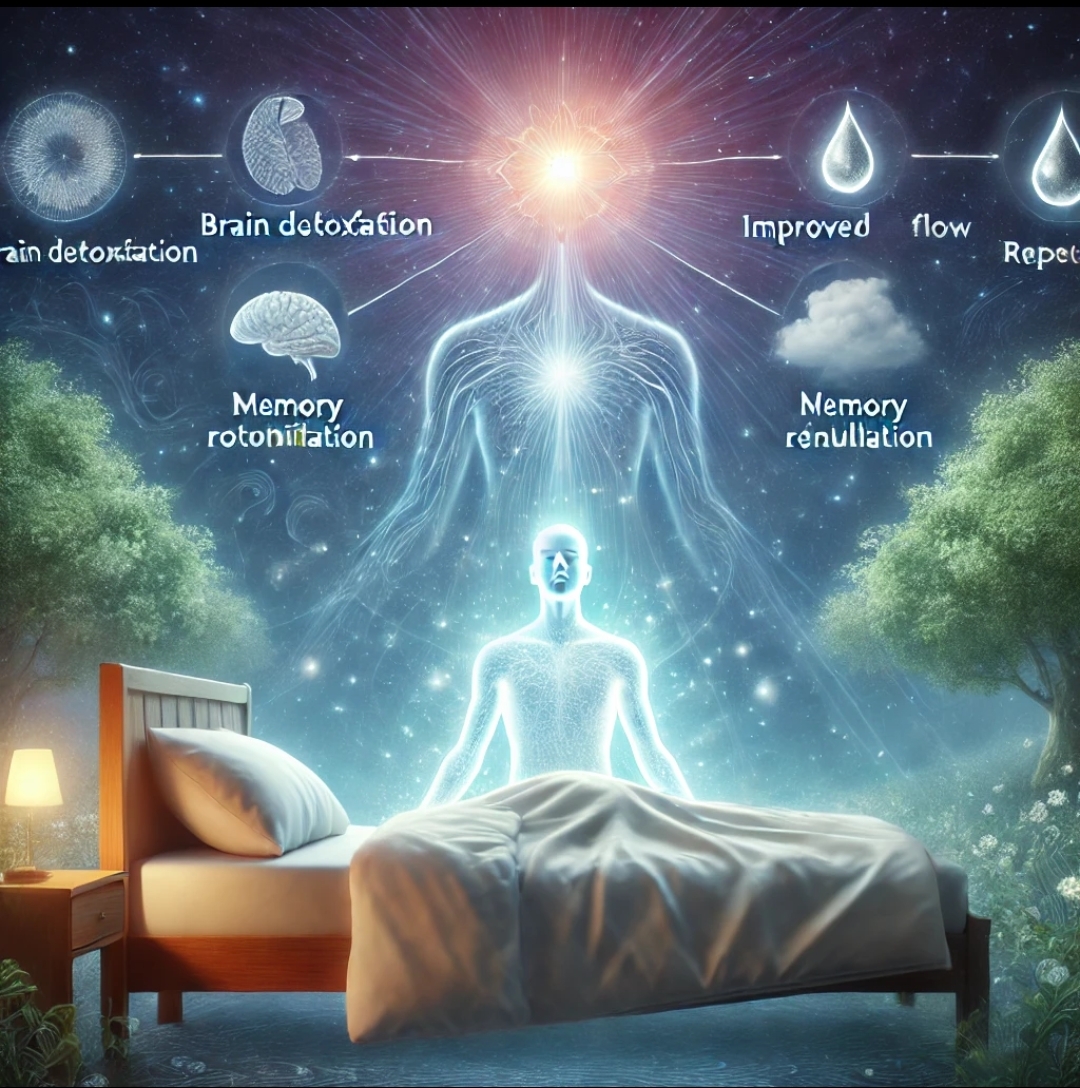
Imagine waking up after a night of deep, restful sleep. You open your eyes, your mind feels clear, your body feels light, and a sense of renewal embraces you. This feeling is one of the greatest blessings in life—a gift directly from Allah. It’s as if the world itself has been reset, with a new day bringing new mercy. The Prophet Muhammad (peace be upon him) said, “Your body has a right over you.” Sleep, therefore, is not just a natural need; it is a divine gift that heals and resets your mind, body, and soul.
But what happens when you lack sleep? The world seems heavier, your thoughts clouded, and your energy depleted. It is a reminder of how much we depend on this simple act. Sleep is more than a physical need; it is the moment when Allah’s mercy takes over, allowing our bodies to heal, our brains to cleanse, and our souls to recharge.
Here’s how this divine gift unfolds:
1. Brain Detoxification: A Divine Cleansing Process
During deep sleep, the brain undergoes an incredible process of purification. Cerebrospinal fluid (CSF) actively flushes out toxins, clearing away harmful proteins that could otherwise cause diseases. It’s a literal and spiritual cleansing, a reminder that Allah cares for us even when we are unconscious. The Prophet (PBUH) emphasized, “Do not prevent anyone from sleeping,” highlighting the sanctity of this sacred time.
2. Improved Oxygenation and Blood Flow: A Refreshing Awakening
As you sleep, blood flow to the brain optimizes, delivering life-giving oxygen and nutrients that repair and refresh the body. It’s as if Allah sends His blessings through your veins, rejuvenating every cell. This replenishment makes waking up feel like a renewal, a second chance—a reminder that every breath is a sign of Allah's mercy.
3. Memory Consolidation: Spiritual and Intellectual Growth
Sleep is not just about rest; it is a time of growth. During sleep, memories are consolidated, knowledge is retained, and new information is absorbed. It’s like Allah’s wisdom becoming part of you. The Prophet (PBUH) advised, “Seek knowledge from the cradle to the grave,” and sleep is an essential part of this journey, allowing us to grow intellectually and spiritually even as we rest.
4. Hormone Regulation: Balancing Life’s Rhythms
Allah created sleep as a regulator of our inner world. Hormones like growth hormone and melatonin are balanced during sleep, aligning us with nature’s rhythm. This balance reflects the verse, “He has created the night for rest” (Quran 25:47), showing how sleep is part of a divine design meant to ensure physical recovery and spiritual growth.
5. Immune System Recharging: Fortifying the Body
Your immune system works hardest while you sleep, releasing proteins that fight infections and inflammation. It’s as if, while you rest, Allah’s protection strengthens your body against harm, fulfilling the Prophet’s teaching: “Indeed, your body has a right over you.”
6. Cellular Repair and Regeneration: Renewal at its Core
Sleep promotes the regeneration of every cell, healing the muscles and tissues that are worn from the day’s work. It is a reminder of the verse, “He brings the living out of the dead and the dead out of the living” (Quran 6:95). Sleep, in essence, is the transformation from weariness to renewal, as if the body itself is being brought back to life.
Sleep is not just rest; it is one of the greatest blessings, a moment of divine mercy when the body, mind, and soul are restored. It is an act of worship, fulfilling a sacred duty towards ourselves, as ordained by Allah. Waking up after a night’s sleep is like receiving a gift—the feeling of renewal after an incredible work of cleaning has taken place. It is a reminder that every breath, every heartbeat, and every moment of rest is a sign of Allah’s mercy. Embrace sleep as a gift, for it is indeed one of the most profound blessings of life.
Conclusion:
Sleep is not merely a physical necessity; it is a sacred process where deep biological, mental, and spiritual work takes place. The Prophet Muhammad (peace be upon him) emphasized the importance of respecting a person's rest. In a well-known Hadith, he stated, “When one of you sleeps, let him rest,” signifying that sleep is a right, not to be disrupted, as it is an act of mercy and compassion for the individual’s well-being.
When someone sleeps, whether they are physically exhausted or mentally drained, a series of transformative events unfolds within them. Their brain detoxifies, flushing out toxins, and consolidates memories, strengthening neural connections that hold knowledge and experiences. Hormones that are critical for healing, growth, and metabolism are regulated, while the immune system becomes fortified, preparing to combat infections and inflammation. Meanwhile, cellular repair and regeneration reach optimal levels, making the body stronger and more resilient.
any community facing significant stress or fatigue, the opportunity for quality sleep is not just beneficial but essential. The brain’s natural ability to reset, heal, and cleanse is vital to maintaining clarity of thought and strength of body. Those who have endured hardships, whether due to long work hours, stressful events, or societal challenges, should be provided a safe space to rest undisturbed. Allowing people to sleep is a form of mercy, aligned with Islamic principles that emphasize the rights of the body and the sanctity of personal well-being.
In Islam, sleep is recognized as a divine gift, a form of ibadah (worship), where Allah’s mercy manifests in the form of healing and renewal. Disturbing someone’s sleep is akin to disrupting a deeply spiritual and biological process, where the mind resets and the soul recharges. It’s not merely a pause in consciousness but a divine mechanism designed by Allah for the benefit of His creation.
By giving people—regardless of their background or situation—the chance to sleep peacefully, we fulfill an ethical duty to uphold the dignity and wellness of each individual. This respect aligns with the spirit of the Hadith and the wisdom of the Quran, which values human life and well-being above all. In short, sleep is an extraordinary event, a silent yet profound journey that renews both the physical and the spiritual. Therefore, let us honor the sanctity of this process, ensuring that those who are tired have the space and opportunit to heal.
Conclusion: Rest is a Sacred Gift
Sleep is more than a pause—it is the embrace of mercy, a divine gift that touches the very core of our being. It is the moment when life slows, breaths deepen, and the body reclaims its strength. The Prophet Muhammad (peace be upon him), in his unmatched wisdom, showed us that rest is not only a need but a right. “Your body has a right over you,” he taught, embedding in our hearts that rest is an act of worship, a Sunnah that nourishes the soul and revives the body.
The House of Alawn stands as a sanctuary for the weary, where the tired can find solace in the quiet promise of renewal. Imagine stepping into a place where the burdens of the world are left at the door, and only the warmth of rest awaits. This is not just a facility; it is a living testament to the Sunnah of rest—the qailulah, the midday nap that the Prophet (PBUH) cherished, not in luxury, but in the humblest corners of homes, and even in the arms of companions. It is a reminder that sleep connects us, that mercy flows from those who give others a place to rest.
The Four Resting Spaces at the House of Alawn:
1. The Sanctuary of Serenity:
This is a quiet room filled with calming elements—soft lighting, comfortable cushions, and soothing fragrances like lavender. It is designed to provide a private and peaceful setting for a nap, aligning with the Sunnah of finding personal space for rest.
This room symbolizes the spiritual and physical rejuvenation that is encouraged in Islam, echoing the Hadith, “Do not prevent anyone from sleeping.” Here, the body and soul can rest undisturbed, reflecting the mercy and wisdom of the Prophet’s teachings.
2. The Traveler’s Haven:
Inspired by the Prophet Muhammad (PBUH), who would often rest even in public places while on journeys, this area is a communal space designed for people passing through. It’s ideal for those who may not have time for a longer rest but need a brief, restorative nap.
Soft mats and reclining chairs are provided, allowing people to rest comfortably without feeling hurried. The Prophet (PBUH) once rested in the home of a companion while the family continued their work quietly, a gentle reminder that rest should be respected as a natural part of daily life.
3. The Brother’s Lodge:
This is a semi-private room that can accommodate two or three people at a time. It fosters the spirit of brotherhood and sisterhood, as described in the Hadith where the Prophet (PBUH) slept in the lap of his companion, Ali ibn Abi Talib (RA).
It encourages friends, family, or companions to take naps together, reinforcing the bond of mutual care and support. This space is a living example of how sleep, as part of Islamic tradition, brings people together and strengthens communal ties.
4. The Mercy Corner:
This space is designed to be inclusive and adaptable, serving anyone in need of a break—whether due to physical exhaustion, stress, or emotional fatigue. It is a versatile corner with adjustable seating, creating a comforting environment that allows people to unwind.
The design follows the Prophet’s (PBUH) compassionate approach, emphasizing that rest is not a luxury but a necessity for spiritual, emotional, and physical balance.
Conclusion: Sleep as a Divine Right
Rest is not just a pause; it is an essential part of our faith and humanity. The Prophet Muhammad (PBUH) embraced sleep as part of a holistic approach to life, teaching us that it is both a necessity and a blessing. It is reported that he (PBUH) said, “When one of you feels sleepy during prayer, let him sleep until he feels rested.” This Hadith underscores that even the most sacred acts of worship are balanced by the natural need for rest.
The House of Alawn is built upon this foundation, offering a place where rest is seen as an act of ibadah (worship), reflecting both the Sunnah of our Prophet (PBUH) and the mercy of Allah. By creating spaces for napping and restoration, we are fulfilling the rights of the body and soul, allowing for healing, rejuvenation, and a renewal of spirit. Let us honor this divine right and extend the gift of rest to all, creating a community where mercy and compassion manifest in every corner.
Sleep, as encouraged by the Prophet (PBUH), is a transformative act. It is when minds are cleared, hearts are healed, and bodies are reset. It is not only a biological necessity but a spiritual one, a divine rhythm that allows us to pause and reflect. In these quiet moments of renewal, our minds flush away the mental clutter, our bodies recover from the day’s battles, and our spirits rise, refreshed to embrace the next call to prayer, the next challenge, the next moment of love.
The House of Alawn is more than bricks and walls; it is an embodiment of prophetic mercy, a sacred place where rest is celebrated as a right and a blessing. It echoes the Hadith: “Do not prevent anyone from sleeping,” reinforcing that disturbing someone’s sleep is akin to disrupting a sacred process, a deep work of healing and cleansing.
Let us honor this divine right to sleep. Let us extend it to the traveler, the brother, the mother, and the child. Let us offer rest as a bridge to renewal, a moment of mercy, and an act of love. In doing so, we not only fulfill a Sunnah but also fulfill the greatest commandments of compassion and mercy. May the House of Alawn be a home where rest is not only found but embraced, where tired souls are not judged but welcomed, and where the mercy of Allah flows in every breath, every nap, and every moment of rejuvenation.