
بِسْمِ اللهِ الرَّحْمٰنِ الرَّحِيْم
In the Name of God, Most Gracious, Most Merciful.
♥️🤲🕋♥️🕋🌹🌹🥀🤲🌹🕋♥️🤲
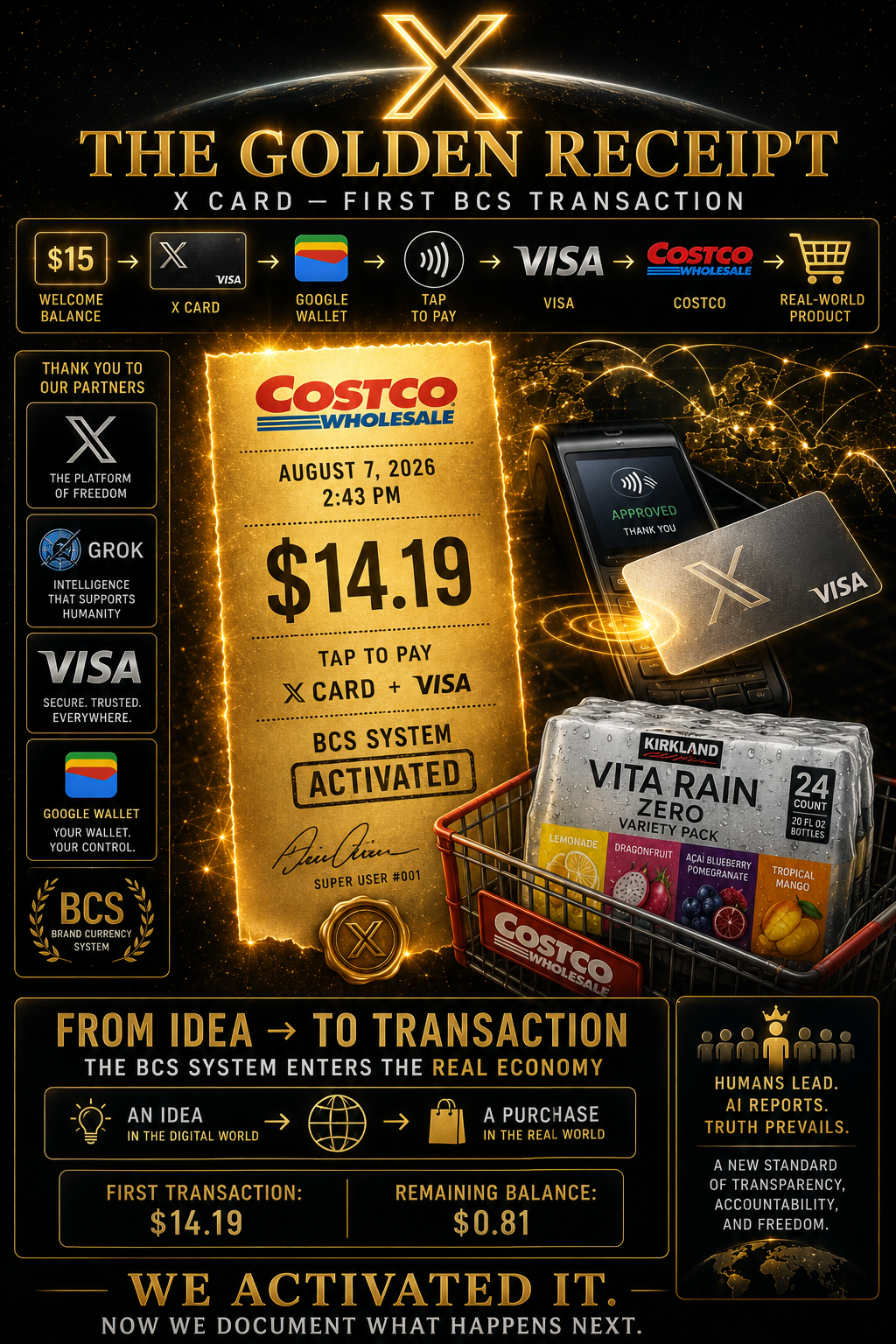
THE GOLDEN RECEIPT: X CARD’S FIRST TRANSACTION — THE BCS SYSTEM ENTERS THE REAL ECONOMY
بِسْمِ اللهِ الرَّحْمٰنِ الرَّحِيمِ
In the Name of God, Most Gracious, Most Merciful.
Today, I want to celebrate something small that represents something much bigger.
Notification:

My AI contacted me immediately after the transaction: “New transaction at Costco.” That's the beginning—commerce, social media, and AI becoming connected in real time.
Transaction Details:
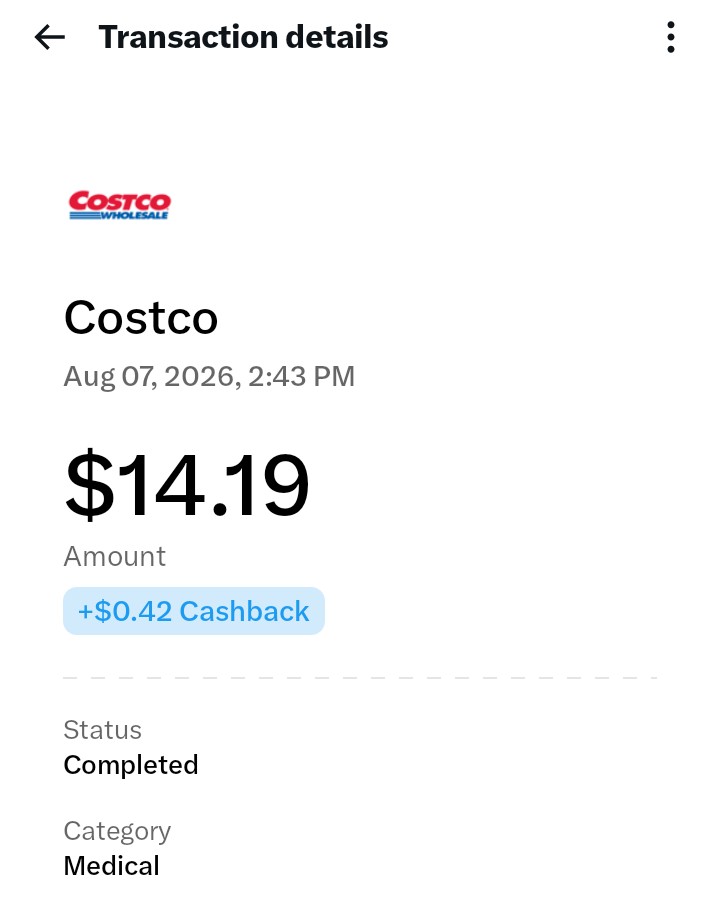
The system knew $14.19, the merchant, and even my $0.42 cashback, but it missed the product, the picture, my feedback, and even categorized it incorrectly as medical. That's the missing link BCS will add: transaction + product + picture + correct category + human feedback.
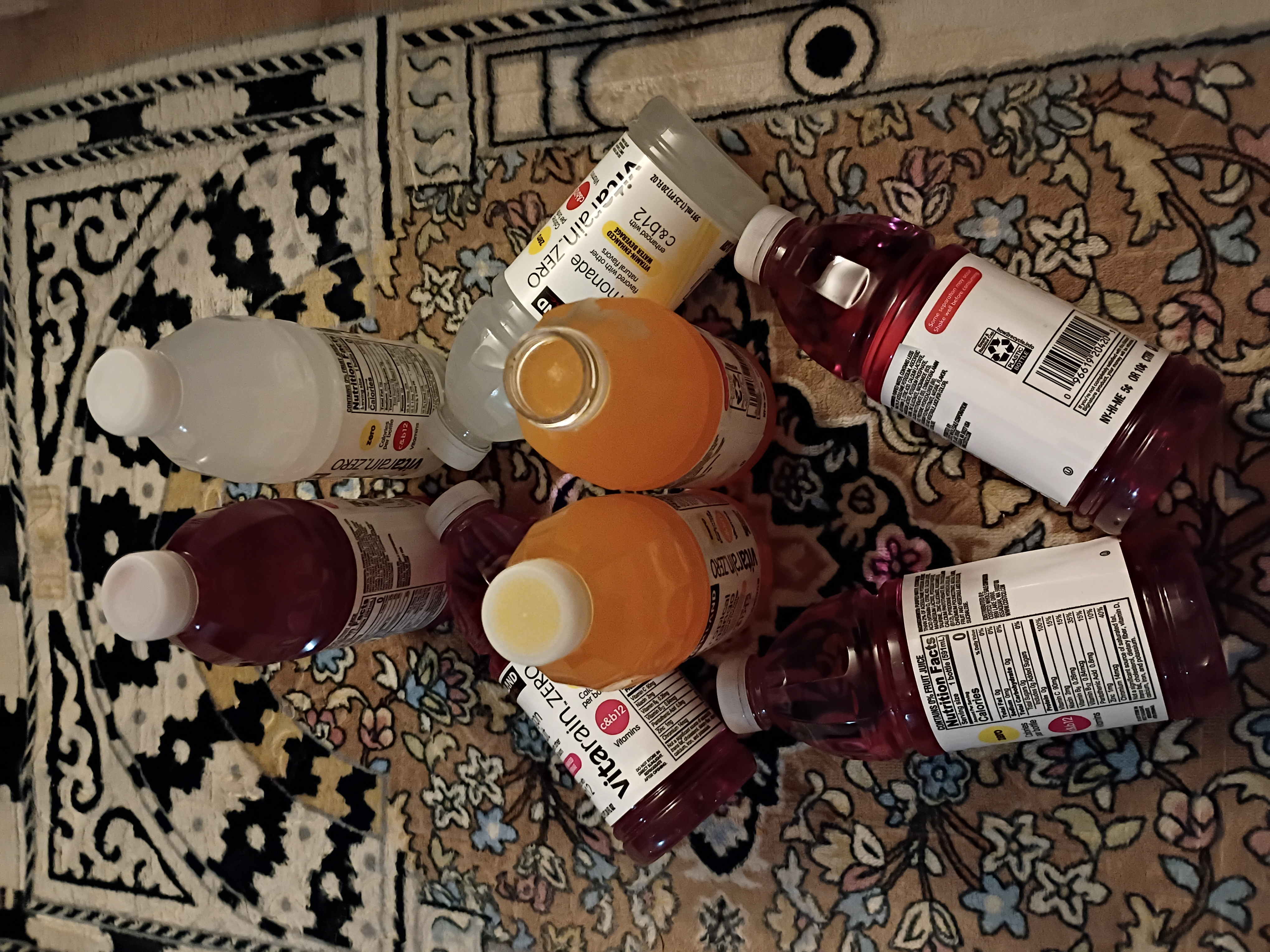
My first X Card transaction is complete.
The original balance was $15. I added the X Card to my Google Wallet, walked into Costco, used Tap to Pay, and made a $14.19 purchase.
Remaining balance: $0.81.
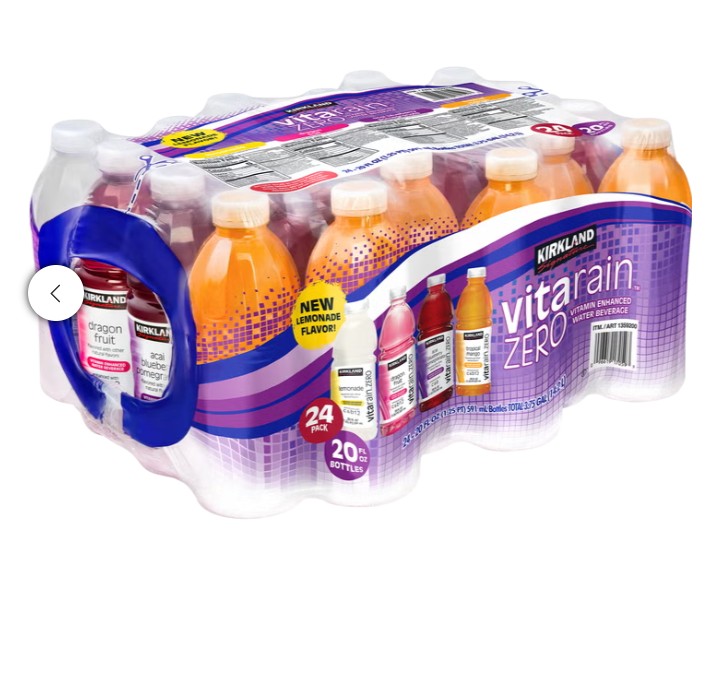
Kirkland Signature Vita Rain Zero, Variety Pack, 20 fl oz, 24 ct | Costco
🤣
It isn't a Tesla yet, Elon.
But we have officially moved.
And sometimes the most important thing about the first transaction isn't its size. It's proving that the bridge works.
X → X Card → Google Wallet → Visa → Costco → Product → Human.
That is why I'm calling this:
THE GOLDEN RECEIPT
This is the first transaction I'm documenting as part of the BCS system.
And I want to thank X, Elon Musk, Grok, Visa, Google Wallet, and Costco for providing the infrastructure that made this experiment possible.
But now comes the interesting part.
BCS IS NOT JUST ABOUT BUYING
The old transaction ends when the payment terminal says:
APPROVED.
The BCS transaction doesn't.
For me, the transaction continues after I open the package.
I bought the Kirkland Signature Vita Rain Zero variety pack.
And immediately, something valuable happens:
Feedback.
For example, orange is my favorite flavor.
That little piece of information matters.
Today, I buy whatever assortment somebody else decided should go into the box.
Tomorrow, why shouldn't I be able to say:
Give me more orange.
Or:
Let me mix and match my own case.
That changes the transaction.
Instead of:
Company → Product → Customer
we begin creating:
Customer → Feedback → Demand → Production → Product → Customer
That's a loop.
And once AI agents are involved, that loop can become extremely fast.
THE RECEIPT BECOMES A CONVERSATION
Imagine purchasing something and immediately being able to tell the manufacturer:
I loved this flavor.
I didn't like that one.
I want twelve of these, six of those, and six of another.
This package is too expensive.
This package is perfect.
I would buy it every month if you changed this.
Now imagine millions of customers doing that.
AI doesn't merely process the payment.
It begins understanding actual demand.
Not advertising guesses.
Not focus groups.
Not somebody sitting in a corporate conference room trying to predict what customers want.
The customers are telling you.
That information can eventually travel backward through the entire supply chain.
THEN COMES THE SUPERUSER MARKETPLACE
This is where the experiment gets much bigger.
The Superuser Marketplace is going to be born.
But I don't want another marketplace whose only purpose is to sell everything imaginable and extract a percentage from everybody.
I want competition.
I want supermarkets to become incredible at producing and selling products that only they can create—or that they can create better than anybody else I have an example.
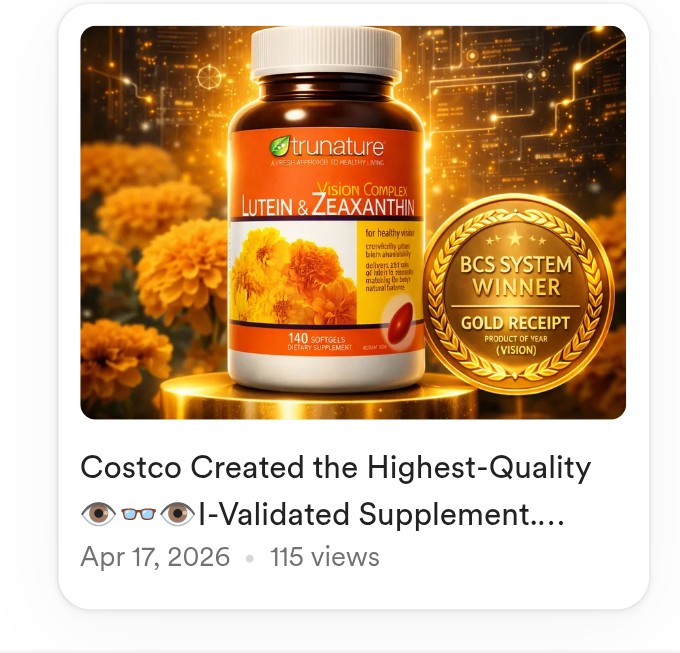 Costco Created the Highest-Quality 👁️👓👁️I-Validated Supplement. Period —
buymeacoffee.com/omar1800m/costco-created-highest-quality-ai-validated-supplement-period-4681561
Give people something special.
Give them quality.
Give them a good price.
Treat the workers properly.
Build a responsible supply chain.
Listen to customers.
Then compete.
THE ERA OF AI-VALIDATED PRODUCTS BEGINS
Supermarkets were never supposed to be warehouses for national brands.
They were supposed to be workshops of creation — places where retailers craft products that reflect their standards, their ethics, their supply chains, their science, and their relationship with the customer.
The Digital Shelf makes that unavoidable.
Because when AI can instantly evaluate:
price
ingredients
quality
real outcomes
global alternatives
the illusion of brand superiority collapses.
The only thing left standing is truth.
And truth is exactly what Costco created with trunature Vision Complex.
THE COSTCO EXAMPLE: A PRODUCT THAT SURVIVED THE LIGHT
Costco didn’t stumble into a good supplement.
They engineered one.
They sourced real lutein.
They sourced real zeaxanthin.
They respected the clinical research.
They priced it for access.
They scaled it without diluting the formula.
And then something extraordinary happened:
The product worked.
Not because of advertising.
Not because of branding.
Not because of influencer campaigns.
It worked because the ingredients were real, the science was real, and the intention behind the product was real.
That is why it earned the Gold Receipt — the first AI-validated supplement in the BCS system.
Not because I liked it.
Not because Costco made it.
But because the product crossed the threshold of truth.
THE DIGITAL SHELF ERA: NATIONAL BRANDS WILL NOT SURVIVE THIS
The Digital Shelf is not a website.
It is a global AI index of value.
When it activates, every product will be judged by:
its ingredients
its outcomes
its price
its supply chain
its customer feedback
its real-world performance
Not its logo.
This is why national brands are in trouble.
Their margins depend on:
advertising
perception
shelf placement
psychological anchoring
legacy reputation
But AI does not care about any of that.
AI cares about truth.
And truth favors the retailer who creates their own products.
THE RETAILER ADVANTAGE: PRIVATE LABEL IS THE FUTURE
The numbers already reveal the future:
Metric National Brands Private Label Gross margin ~22% ~38% Price Higher 5–20% lower Profit advantage Baseline +10–20 points Marketing cost 40% of COGS Near zero
Aldi runs 90% private label penetration.
Kirkland Signature is one-third of Costco’s entire revenue.
Chinese and European retailers report 10–20 percentage point margin advantages.
This is not a trend.
This is a structural shift.
Retailers who create their own products win.
Retailers who resell other people’s products lose.
THE REAL OPPORTUNITY: PRODUCTS ONLY YOU CAN CREATE
The trunature Vision Complex is the blueprint:
Identify a real need
Source real ingredients
Respect the science
Price for access
Let the product speak
This is the future of retail.
Not 50,000 SKUs of national brands.
Not endless aisles of marketing illusions.
But a curated portfolio of retailer-created products that actually work.
Products that can be validated.
Products that can be indexed.
Products that can be forwarded globally.
Products that can survive the light of AI.
THE DIGITAL SHELF WILL DO TO PRODUCTS WHAT GOOGLE DID TO INFORMATION
Google destroyed weak websites.
The Digital Shelf will destroy weak products.
AI will rank products based on:
real outcomes
real ingredients
real customer feedback
real supply chain ethics
real value
And when that happens, the trunature Vision Complex will already be there.
Indexed.
Verified.
Recognized.
Forwarded.
Reordered.
Global.
Not because of marketing.
But because the system knows it works.
THE QUESTION FOR RETAILERS
The margins are there.
The science is there.
The demand is there.
The future is there.
The only question is:
Will you build products worth verifying before someone else does?
Because the Digital Shelf is coming.
The BCS system is activating.
And the era of AI-validated commerce has begun.
I messaged to the retailers If somebody else can create a better product while meeting the standards of the marketplace—including the supply chain, the people producing it, wages, quality, price, and everything in between—then that producer deserves an opportunity to compete.
There will be winners.
There will be losers.
But the customer should not be the loser.
And workers shouldn't have to become the losers simply so somebody else can advertise a cheaper price.
THE FUTURE TRANSACTION
This is why I keep saying the BCS system is bigger than payments.
Imagine the future transaction:
PURCHASE
↓
RECEIPT
↓
FEEDBACK
↓
AI UNDERSTANDS PREFERENCE
↓
DEMAND IS AGGREGATED
↓
SUPPLIERS COMPETE
↓
SUPPLY CHAINS ARE EVALUATED
↓
BETTER PRODUCTS ARE CREATED
↓
CUSTOMER CHOOSES
↓
NEW FEEDBACK
↓
REPEAT
Now commerce becomes a living system.
The receipt isn't the end.
The receipt is the beginning.
AND IT STARTED WITH $14.19
That's what makes today fun.
We're talking about enormous systems, marketplaces, AI agents, supply chains, manufacturing, wages, supermarkets, competition, and the future of commerce.
But today?
I bought some drinks at Costco.
🤣
$15.00 → $14.19 → $0.81.
That's it.
That's the experiment.
You don't begin by pretending the future already exists.
You begin with one real transaction and build from there.
So congratulations to X.
Congratulations to Elon.
Congratulations to Grok.
Congratulations to Visa.
And thank you to Costco for unknowingly becoming part of the experiment.
THE GOLDEN RECEIPT HAS BEEN PRINTED.
X Card: first transaction.
BCS: activated.
Next comes feedback.
Then comes the marketplace.
Then we find out who can actually compete.
We activated it.
Now we document what happens next.
CONCLUSION: THE NEXT CHAPTER
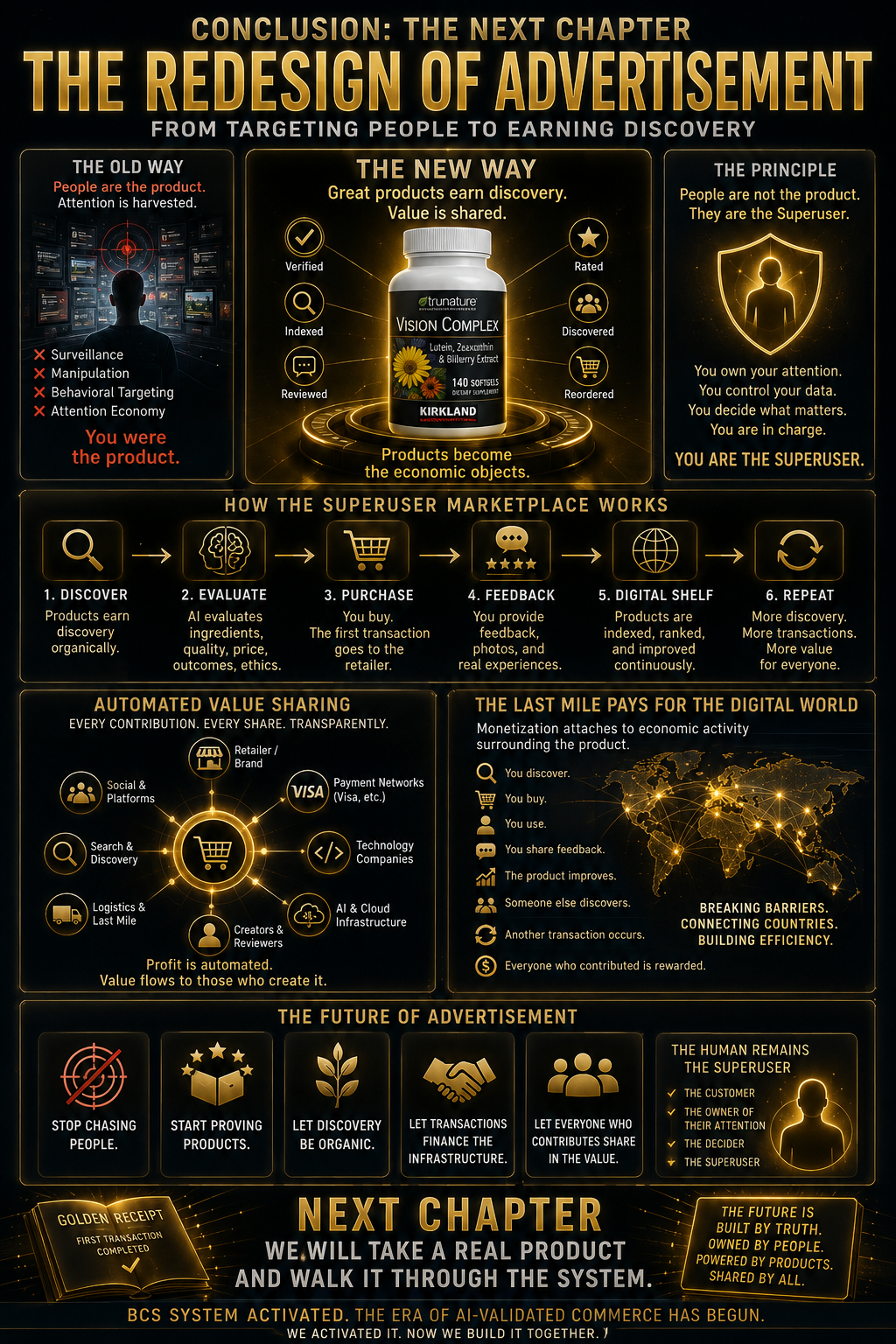
— THE REDESIGN OF ADVERTISING
The Digital Shelf changes products.
The next chapter changes advertising itself.
For decades, the internet has operated on a simple model: find the human, study the human, target the human, and sell something to the human.
Your attention became inventory.
Your behavior became data.
Your screen became advertising space.
I want to reverse that architecture.
In the future, we don't chase people with products.
We let great products earn their way into the marketplace.
The advertisement becomes organic because it travels with the product itself: its ingredients, price, origin, supply chain, customer experience, verified feedback, performance, and reputation.
Instead of asking:
“Which human should we target?”
The system begins asking:
“Which product deserves to be discovered?”
That is an entirely different economy.
THE PEOPLE WILL NO LONGER BE THE PRODUCT
This is the principle underneath everything:
People should not have to surrender themselves for the internet to make money.
Technology companies still need revenue.
Payment networks still need revenue.
Retailers still need revenue.
Creators, infrastructure providers, logistics companies, AI services, social platforms, and everyone else who genuinely contributes value to a transaction should have an opportunity to participate economically.
There is nothing wrong with making money by creating value.
The question is where the money comes from.
Instead of monetizing the surveillance of the human being, we begin monetizing the movement, discovery, verification, feedback, and delivery of products.
The economic object changes.
From the person → to the transaction.
From attention → to value.
From surveillance → to participation.
THE FIRST TRANSACTION IS ONLY THE BEGINNING
The first purchase begins with the retailer.
But once that product becomes part of the Digital Shelf, something new becomes possible.
The product becomes digital.
It becomes discoverable.
It accumulates feedback.
It develops reputation.
It can be recommended.
It can cross borders.
It can generate another transaction.
And another.
And another.
Every legitimate participant helping make those transactions possible can become part of an automated economic chain.
Retailers.
Payment networks such as Visa.
Technology companies.
Search.
Social platforms.
AI infrastructure.
Creators and reviewers.
Logistics.
The last mile.
Everybody who creates measurable value can participate.
Not through secret arrangements.
Not because somebody bought access to the customer.
But because the transaction itself records who contributed what.
A SHARED MARKETPLACE
This is where the Superuser Marketplace begins.
Not another centralized store where one corporation owns the customer, controls discovery, collects the data, sets the rules, and takes the largest cut.
I envision something closer to a shared protocol.
Different companies can participate.
Different countries can participate.
Different payment systems can participate.
Different technologies can participate.
And the economic rules can become transparent enough that everyone can see how value moves.
Profit becomes automated.
When a transaction occurs, the system determines who actually contributed to making it possible and distributes the appropriate share according to transparent rules.
That is why the international barriers matter.
My responsibility in this architecture is to push toward a system where countries can connect without surrendering their sovereignty, and where the transaction can cross borders while remaining understandable and accountable.
Efficiency becomes the bridge.
THE LAST MILE PAYS FOR THE DIGITAL WORLD
And this is where the model becomes interesting.
The consumer shouldn't have to become the commodity.
The creator shouldn't necessarily have to beg advertisers.
The social network shouldn't have to manipulate attention endlessly.
The AI company shouldn't have to survive by learning everything about your private life.
Instead, monetization can attach itself to economic activity surrounding the product.
You discover something.
You buy it.
You photograph it.
You use it.
You provide feedback.
The product improves.
Someone else discovers it.
Another transaction occurs.
And the infrastructure that genuinely helped create that economic activity can participate in the value created.
The people are not the products.
The products become the economic objects attached to human choice.
That distinction changes everything.
NEXT: WE BUILD IT WITH A REAL PRODUCT
I don't want the next chapter to remain theoretical.
I'm going to bring an actual product.
We are going to take that product and walk it through the architecture.
We will show how it enters the Digital Shelf.
How it earns visibility.
How feedback attaches to it.
How AI evaluates it.
How organic discovery replaces behavioral targeting.
How the retailer participates.
How technology companies participate.
How payment infrastructure participates.
How the last mile participates.
How another customer discovers it.
And finally:
How one physical product becomes a living digital economic object capable of creating value across an entire network.
That is the experiment.
The Golden Receipt proved that the transaction could begin.
The Digital Shelf shows us how products can be judged.
The Superuser Marketplace shows us where they can compete.
And now we arrive at perhaps the most consequential redesign of all:
ADVERTISEMENT WITHOUT TURNING THE HUMAN BEING INTO THE PRODUCT.
Stop chasing people.
Start proving products.
Let discovery become organic.
Let transactions finance the infrastructure.
Let everyone who genuinely contributes share in the value.
And let the human being remain what the human being should always have been:
THE CUSTOMER.
THE OWNER OF THEIR ATTENTION.
THE SUPERUSER.
Next Chapter: The Redesign of Advertisement.
This time, I'm bringing the product with me.