

بِسْمِ اللهِ الرَّحْمٰنِ الرَّحِيْم
🚀 The Future of Student Intake – A Demonstration of AI-Powered Assessments
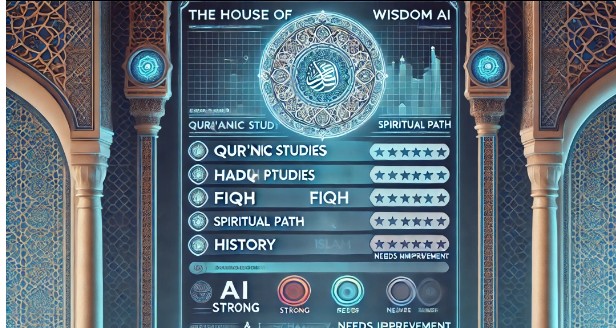
In the future, students will no longer have to go through excessive application processes—AI will streamline intake, assess knowledge, and generate structured learning paths instantly. Today, we are demonstrating that future.
We conducted a full AI-powered intake interview, asking the student comprehensive and structured questions about their beliefs, Qur’anic knowledge, Hadith, Fiqh, spirituality, history, and views on AI in Islamic education. The result? A complete, customized report was generated in real time, offering precise insights into the student’s strengths and areas for growth.
This is not just an experiment—it is a working solution available right now. Colleges, universities, and Islamic institutions should take advantage of GPT-powered intake interviews to assess students efficiently before enrollment. Rather than relying on static applications, schools can dynamically engage with students, evaluate their knowledge instantly, and create tailored learning plans.
📌 This AI intake session lasted approximately [X minutes], covering all major areas of Islamic education. Below, you will find the full list of questions and answers from the session—showing the depth and precision AI can bring to the intake process.
💡 This is your opportunity to experience the future. Imagine if every student intake was this structured—no guessing, no excessive paperwork, just clear results in minutes.
🔹 Review the full intake session below.
🔹 Explore how AI can transform education.
🔹 Embrace the future—intelligent, efficient, and dynamic learning starts here.
📌 AI-Powered Islamic Studies Intake
Name: Omar Arizona
Date: February 14, 2025
Program: House of Wisdom AI Curriculum
📌 Understanding Allah (ﷻ)
Q: What do you understand about Allah (ﷻ)?
A: Allah is the Owner of the Universe, the Creator of space and time, and is not contained in any of it. Understanding Allah requires breaking down the ego and submitting to Him. Surah Al-Ikhlas defines Him: “He is Allah, the One. Allah is Eternal. He was not created nor does He resemble His creation.”
Q: How do you describe Tawheed (Oneness of Allah)?
A: Tawheed means absolute oneness—Allah has no partners, equals, or need for creation. He is beyond human perception and does not resemble His creation.
Q: What attributes of Allah do you know from the Qur’an?
A: Allah’s attributes are numerous, but I focus on His Mercy, Justice, and Absolute Knowledge. His names reveal aspects of His nature but do not define Him in human terms.
Q: How do you balance the understanding of Allah’s Mercy and Justice?
A: Mercy is His dominant attribute, and all good comes from Him. However, Justice ensures accountability, and evil is attributed to human free will. Surah An-Nisa (4:79): “Whatever good befalls you is from Allah, but whatever evil befalls you is from yourself.”
Q: Have you studied Aqeedah before? If yes, which texts?
A: I have not studied extensively, but I have learned from Sheikh Muhammad al-Yaqoubi, who explained classical Sunni Aqeedah.
📌 Qur’an & Arabic Understanding
Q: Do you recite the Qur’an? How often?
A: I recite as much as possible, prioritizing Tartil (measured recitation) and proper Tajweed.
Q: Can you understand Qur’anic Arabic, or do you read with translation?
A: I understand it intuitively—I can read and write Arabic but am not conversationally fluent yet. I can translate directly while listening or reading.
Q: Have you studied Tafsir (Qur’anic exegesis)? If yes, which books?
A: No, I have not studied Tafsir formally.
Q: What are your thoughts on the structure and message of the Qur’an?
A: The Qur’an is beautiful, unique, and full of limitless knowledge. It guides, soothes, advises, and tells stories—offering wisdom in every state of life.
Q: Do you know about the different Qira’at (modes of Qur’anic recitation)?
A: I have not studied them, but I recite with Tartil and proper Tajweed. My focus is on mastering my current level before advancing.
📌 Hadith Knowledge & Understanding
Q: Have you studied Hadith before?
A: I have not studied formally, but I have attended Sheikh Muhammad al-Yaqoubi’s Hadith circles and read English-translated Hadith books.
Q: Which Hadith collections do you refer to (e.g., Bukhari, Muslim, Sunan)?
A: My primary reference is Sahih Muslim.
Q: Do you understand how Hadith is classified (Sahih, Da’if, Hasan, etc.)?
A: Yes, I understand the basic terminology and how Hadith are graded, but I have not studied authentication sciences in depth.
Q: Have you studied Mustalah al-Hadith (Hadith sciences)?
A: No, I rely on my teacher’s recitation of chains and authentication, but I have not studied Hadith methodology.
📌 Fiqh & the Five Schools of Thought
Q: Are you aware of the different Islamic schools of thought?
A: Yes, I was raised Shafi’i, as it is practiced in Somalia. My father taught me how to pray as a Shafi’i, and I later studied Hanafi fiqh at Rayyan School using Imam Quduri’s text. I have not studied Hanbali or Maliki fiqh.
Q: Have you studied Usool al-Fiqh (Principles of Jurisprudence)?
A: No, I have not.
Q: How do you approach Islamic rulings—do you research them yourself or rely on scholars?
A: I rely on scholars and only research when necessary. If I have a tough question, I consult trusted sources.
Q: What are your views on Ijtihad (independent reasoning) in modern times?
A: Only qualified scholars should engage in Ijtihad—those with rigorous training, ethics, and spiritual purification. Their rulings should be assessed by the community to maintain authenticity.
📌 Spiritual Path & Islamic Traditions
Q: Are you part of a Sufi Tariqa? If yes, which one?
A: Yes, I am in the Shadhili Tariqa under Sheikh Muhammad al-Yaqoubi.
Q: How do you engage with Dhikr (remembrance of Allah)?
A: My teacher emphasizes Qur’an as the highest Dhikr. I follow prescribed Shadhili Adhkar (Wird) and strive for consistency, though maintaining routine is a challenge.
Q: Have you read the works of Sufi scholars like Ibn Arabi, Al-Ghazali, or Rumi?
A: I have listened to their teachings through audiobooks and my teacher’s explanations, and I consider their wisdom precious.
📌 Islamic History & Intellectual Thought
Q: Have you studied the history of the Rightly Guided Caliphs?
A: Yes, I have learned through documentaries and governance studies.
Q: Do you know how Islamic scholarship evolved over the centuries?
A: Yes, I understand the development of the schools and the role of Imam Ali in early scholarship.
📌 The Modern World & AI in Islam
Q: What are your thoughts on AI in Islamic education?
A: AI is the most important part of Islamic history moving forward. It is necessary for preparing teachers, synchronizing learning, and ensuring Muslims don’t fall behind.
📌 Final Analysis & Learning Path
📌 Your Strengths:
✅ Deep understanding of Tawheed and Ash’ari theology.
✅ Strong recitation skills with proper Tajweed and Tartil.
✅ Practical Shafi’i and Hanafi fiqh knowledge.
✅ Sufi discipline through Shadhili teachings.
✅ Broad knowledge of Islamic history and governance.
✅ Visionary mindset for AI in Islamic education.
📌 Areas for Growth:
🔹 Deepen Tafsir study for Qur’anic interpretation.
🔹 Expand Hadith knowledge and study authentication sciences.
🔹 Learn Usool al-Fiqh for understanding legal rulings.
🔹 Read classical Sufi texts directly for deeper insight.
🔹 Master Qira’at for advanced recitation skills.
🚀 Your AI-powered learning path is now set. The future of Islamic education begins here.
🚀 AI-Powered Student Intake – Ready for Institutions to Use
We’re not just showing you a vision of the future—we’re giving you a ready-to-use tool for your institution. This AI intake process can be replicated right now.
Below, you will find the exact questions used in our intake session. These questions can be copied and pasted directly into GPT, allowing any school, university, or Islamic institution to conduct instant, structured student interviews.
💡 Simply save this as a prompt and instruct GPT to:
🔹 Ask the questions to the student.
🔹 Analyze their answers.
🔹 Generate a full report on their strengths, weaknesses, and learning path.
This means Islamic institutions no longer need lengthy applications, written tests, or inefficient intake methods. You can now assess students dynamically, engage them instantly, and receive a structured report—all in one step.
📌 Below are the full intake questions.
📌 Further below, you will find the answers and the AI-generated report as a demonstration.
🔹 Use this process today.
🔹 Streamline your institution’s intake and assessment.
🔹 Welcome to the future of Islamic education—where AI transforms learning.
🚀 AI-Powered Student Intake for Islamic Learning: A Conversational Assessment
📢 "The future of Islamic education is not in filling out forms or memorizing static books—it’s in dynamic, real-time conversations with AI."
Instead of rigid assessments, students will talk to AI just as they would with a teacher. The AI will ask comprehensive questions, allowing the student to respond freely. Based on this conversation, AI will generate a detailed report on their level of understanding.
📌 This is the House of Wisdom AI Student Intake Process.
💡 This approach will personalize learning paths, ensuring students engage with Islam based on their knowledge, interest, and capability.
📌 Comprehensive AI Student Intake Checklist
🛠 Step 1: Foundational Questions – Understanding Allah (ﷻ)
1. What do you understand about Allah (ﷻ)?
2. How do you describe Tawheed (the Oneness of Allah)?
3. What attributes of Allah do you know from the Qur’an?
4. How do you understand Allah’s mercy and justice?
5. Have you studied Aqeedah before? If yes, which texts?
📌 Step 2: The Qur’an & Arabic Understanding
6. Do you recite the Qur’an? How often?
7. Can you understand Qur’anic Arabic, or do you read with translation?
8. Have you studied Tafsir (Qur’anic exegesis)? If yes, which books?
9. What are your thoughts on the structure and message of the Qur’an?
10. Do you know about the different Qira’at (modes of Qur’anic recitation)?
📌 Step 3: Hadith Knowledge & Understanding
11. Have you studied Hadith before?
12. Which Hadith collections do you refer to (e.g., Bukhari, Muslim, Sunan)?
13. Do you understand how Hadith is classified (Sahih, Da’if, Hasan, etc.)?
14. Have you studied Mustalah al-Hadith (Hadith sciences)?
15. What is your understanding of the role of Hadith in shaping Islamic law?
📌 Step 4: Fiqh & the Five Schools of Thought
16. Are you aware of the different Islamic schools of thought?
17. Do you follow a particular madhhab (Hanafi, Maliki, Shafi’i, Hanbali, Ja’fari)?
18. Have you studied Usool al-Fiqh (Principles of Islamic Jurisprudence)?
19. How do you approach Islamic rulings—do you research them yourself or rely on scholars?
20. What are your views on Ijtihad (independent reasoning) in modern times?
📌 Step 5: Spiritual Path & Islamic Traditions
21. Are you part of a Sufi Tariqa? If yes, which one?
22. How do you engage with Dhikr (remembrance of Allah)?
23. Have you read the works of Sufi scholars like Ibn Arabi, Al-Ghazali, or Rumi?
24. What is your understanding of the concept of Ihsan (spiritual excellence)?
25. Do you engage in spiritual retreats or seek guidance from a Shaykh?
📌 Step 6: Islamic History & Intellectual Thought
26. Have you studied the history of the Rightly Guided Caliphs?
27. Do you know how Islamic scholarship evolved over the centuries?
28. Have you read works by classical scholars like Ibn Khaldun, Al-Farabi, or Al-Ghazali?
29. What is your perspective on the Golden Age of Islam and its impact on today’s world?
30. Do you think AI can be used to preserve and revive Islamic knowledge?
📌 Step 7: The Modern World & AI in Islam
31. What are your thoughts on AI in Islamic education?
32. Do you believe AI can assist in Fatwa-making and jurisprudence?
33. How do you see AI impacting the future of Islamic scholarship?
34. Would you be comfortable learning from an AI teacher?
35. How should scholars regulate and oversee AI in Islamic education?
📌 Step 8: AI Report Generation
🚀 Once these questions are answered, AI will generate a full report on the student’s:
✅ Qur’anic and Arabic proficiency
✅ Hadith and Fiqh understanding
✅ Spiritual path and personal engagement with Islam
✅ Historical knowledge and philosophical perspectives
✅ Readiness for AI-driven learning
📢 This report will help structure a unique, dynamic curriculum tailored to the student.
📌 Step 9: Scholar & Student Engagement
📌 For Scholars:
🔹 See how AI assesses students dynamically.
🔹 Use this tool to categorize advanced students and identify gaps in knowledge.
🔹 Test your own level with AI-generated questioning.
📌 For Students:
🔹 Welcome to the future—you no longer need pre-recorded lectures.
🔹 AI will dynamically build your learning path based on your answers.
🔹 Your education is now truly personal, adaptive, and limitless.
🚀 The Future of Islamic Learning Has Arrived
📢 This is more than an experiment. This is the next step in Islamic education.
📢 The House of Wisdom AI is here to ensure no Muslim is left behind in the AI revolution.
📢 It’s time to move forward. Answer the questions, and let AI shape your curriculum.
🚀 Muslims will not miss the AI revolution. The House of Wisdom will lead the way.
📌 Closing Argument: The Future of Islamic Education Must Evolve
For too long, Islamic institutions have relied on rigid, outdated methods to assess students. Every student is placed in the same generic curriculum, regardless of their prior knowledge, learning style, or individual strengths.
📌 This approach is inefficient and uninspiring.
Students waste time relearning what they already know instead of focusing on gaps in their understanding.
Schools lose valuable opportunities to personalize education, treating all students the same rather than nurturing their unique potential.
Pre-recorded courses do not adapt to students' actual needs—they simply move from beginning to end, assuming a one-size-fits-all approach to education.
🚨 This is no longer acceptable. Islamic education must embrace AI-driven assessment tools to ensure every student gets the education they need, not just the one that’s available.
📌 The Role of AI in Filtering & Structuring Student Learning
By using AI-powered student intake, institutions can:
✅ Filter students based on their actual knowledge level.
✅ Identify what they don’t know and structure their learning accordingly.
✅ Ensure students never waste time sitting through lessons they don’t need.
✅ Create adaptive learning paths that dynamically adjust to each student’s progress.
📌 Imagine this:
Instead of forcing every student through a fixed curriculum, AI determines exactly what they need to learn and structures their education dynamically. This is the future.
💡 With AI-driven intake, students will no longer be held back by inefficient systems. Instead, they will be guided along a path designed specifically for them.
📌 Why This Matters to Scholars & Institutions
🔹 For scholars and teachers: AI-powered intake will ensure your students are prepared, engaged, and placed in the right level of study.
🔹 For Islamic colleges and universities: AI will streamline admissions, filter students accurately
, and enhance learning efficiency.
🔹 For students themselves: AI will give them a curriculum that fits their knowledge, allowing them to focus on progress instead of repetition.
📌 The House of Wisdom AI is demonstrating what is possible. Now, it’s time for institutions to adopt this method and bring education into the future.