

بِسْمِ اللهِ الرَّحْمٰنِ الرَّحِيْم
The Future of Connection: A Social System Beyond AI and Algorithms
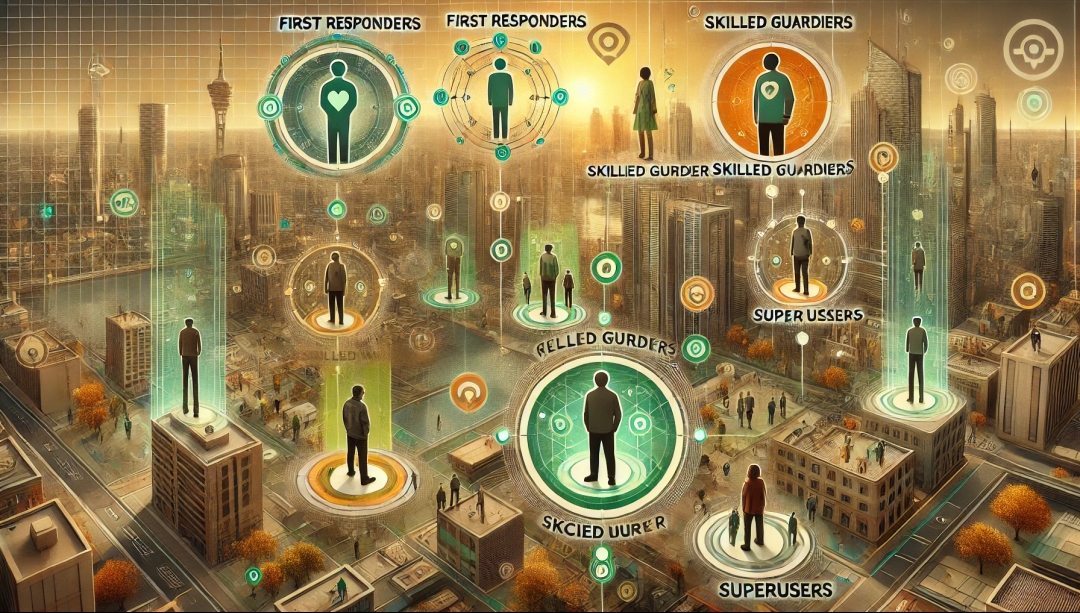
For years, we’ve been told that technology, AI, and social media would bring us closer together. But in reality, people live next to each other and don’t even know each other. Social media creates temporary digital relationships—fleeting interactions that disappear as quickly as they form.
The future of connection is not about AI, algorithms, or government-controlled networks. It’s about human-centered relationships built on trust, location, and real-world interactions. We don’t need AI to control our connections—we need a system that empowers people to connect naturally, without surveillance or corporate interference.
This article lays out a new framework for a future where people build real trust, offline and online, in a way that governments and corporations cannot control.
---
The Problem: Why AI and Social Media Failed to Connect Us
We were promised a connected world, but instead, we got:
🚫 People living in the same communities without knowing their neighbors
🚫 Social media that prioritizes engagement over meaningful relationships
🚫 AI-driven feeds that manipulate what we see instead of showing what matters
🚫 A government-controlled internet that tracks, censors, and manipulates information
The Truth: The Future of Connection is NOT AI
AI creates surface-level interactions, not deep connections.
Privacy is disappearing—AI surveillance tracks every move.
Governments cannot be trusted—history proves centralized control leads to corruption.
Social media relationships are temporary—people form and forget them instantly.
The real solution is not better AI—it’s better human systems.
---
Introducing Geolocation Jurisdiction: A New Way to Organize Society
Instead of relying on AI to dictate relationships, people must be connected based on location, roles, and voluntary trust systems.
What is Geolocation Jurisdiction?
A new system where roles and responsibilities are assigned naturally based on location.
People are automatically recognized for their expertise and contributions.
It creates real trust networks, replacing artificial engagement-based social media.
Example: How It Works in Real Life
🚛 A Truck Driver in a Tornado
A tornado warning is issued.
The truck driver automatically connects with others nearby for safety.
If a disabled person is present, they are assigned support based on proximity.
🚑 A First Responder in an Emergency
Instead of waiting for government-assigned response teams, the closest skilled person is automatically notified.
Authority is based on role and verification, not government orders.
🚓 Community Watch Without Government Surveillance
A person notices suspicious activity in their area.
Instead of calling law enforcement, an independent investigator nearby is alerted.
Drones provide security support, not police control.
This real-time trust system replaces the need for AI-driven manipulation.
---
The Offline Social System: Visual Recognition Without Surveillance
As people become more private, showing faces will become optional—but trust still needs to exist.
Solution: A Voluntary Color-Coded Role System
People can choose to wear colors or symbols that indicate their role in society.
🟢 First Responders – Medics, emergency personnel, and safety coordinators.
🔵 Community Guardians – Security, neutral investigators, and crisis responders.
🟠 Skilled Workers – Engineers, mechanics, drivers, and essential workers.
⚪ Superusers – Trusted individuals assigned to handle critical decision-making.
This creates recognition without government control, allowing people to trust each other without relying on AI or police surveillance.
---
The Superuser System: Decentralized Governance Without Governments
Governments have failed to protect people’s interests. The future of leadership must be based on trust and real-world contributions.
Who Are Superusers?
Trusted individuals selected based on skill, integrity, and contributions.
Not chosen by governments, but by community voting and real-world verification.
Given authority to investigate, manage crises, and support communities.
How Are They Assigned?
✅ Proven track record in crisis response
✅ Voted in by real people, not political parties
✅ Verified as unbiased and neutral
---
Decentralized Trust Systems: The End of Government-Controlled Social Structures
The future cannot rely on centralized control. Instead, trust must be community-driven and independent from AI, government databases, or corporate ownership.
How It Works
🔹 No government-controlled databases – people own their own digital identity.
🔹 Trust is built through contributions, not algorithms.
🔹 Connections are formed based on real-world location and roles, not AI manipulation.
Example: Digital Avatars for Emergency Response
Instead of relying on government-run emergency services, people connect instantly with qualified responders.
A crisis happens? The closest Superuser sees the situation first and organizes a response.
---
The Future of Work: Jobs Will Be Based on Contribution, Not Assignments
Instead of corporations assigning jobs, people will create their own opportunities through real-time community needs.
Example: A New Kind of Job Market
🚛 Truck Driver Saves a Disabled Person in a Storm
❌ Old System – He gets nothing, even though he saved a life.
✅ New System – He is compensated as an emergency responder based on community validation.
🔍 Neutral Investigator Arrives Before Police
❌ Old System – They have no authority, and the government controls the case.
✅ New System – They are trusted and compensated for their work, and their findings are respected.
The future of work will be human-centered, not employer-controlled.
---
Building a World Without AI-Controlled Social Structures
This new system requires both offline and online integration.
Offline System (Community-Driven Trust)
✅ Geolocation-based social hierarchies
✅ Visual identification (color-coded roles)
✅ Superusers assigned through verification, not government control
Online System (Decentralized Identity & Trust)
✅ User-owned data and digital reputation
✅ Real-time emergency response and investigation networks
✅ No AI manipulation—real human trust drives engagement
---
The Conclusion: The Future Is Human, Not AI-Driven
🚫 AI will never replace real human relationships.
🚫 Governments and corporations will always try to centralize control.
🚫 The system must be built by people, for people.
The real future of connection is trust-based, decentralized, and built on human interaction.
We must reject AI-controlled social structures.
We must build a world where people
connect without surveillance.
We must create a system where human relationships thrive, both online and offline.
The future isn’t AI.
The future is people.
🚀 Are you ready to build it?