
بِسْمِ اللهِ الرَّحْمٰنِ الرَّحِيْم
In the Name of God, Most Gracious, Most Merciful
♥️🤲🕋♥️🕋🌹🌹🥀🤲🌹🕋♥️🤲
THE FIRST AI CLINIC
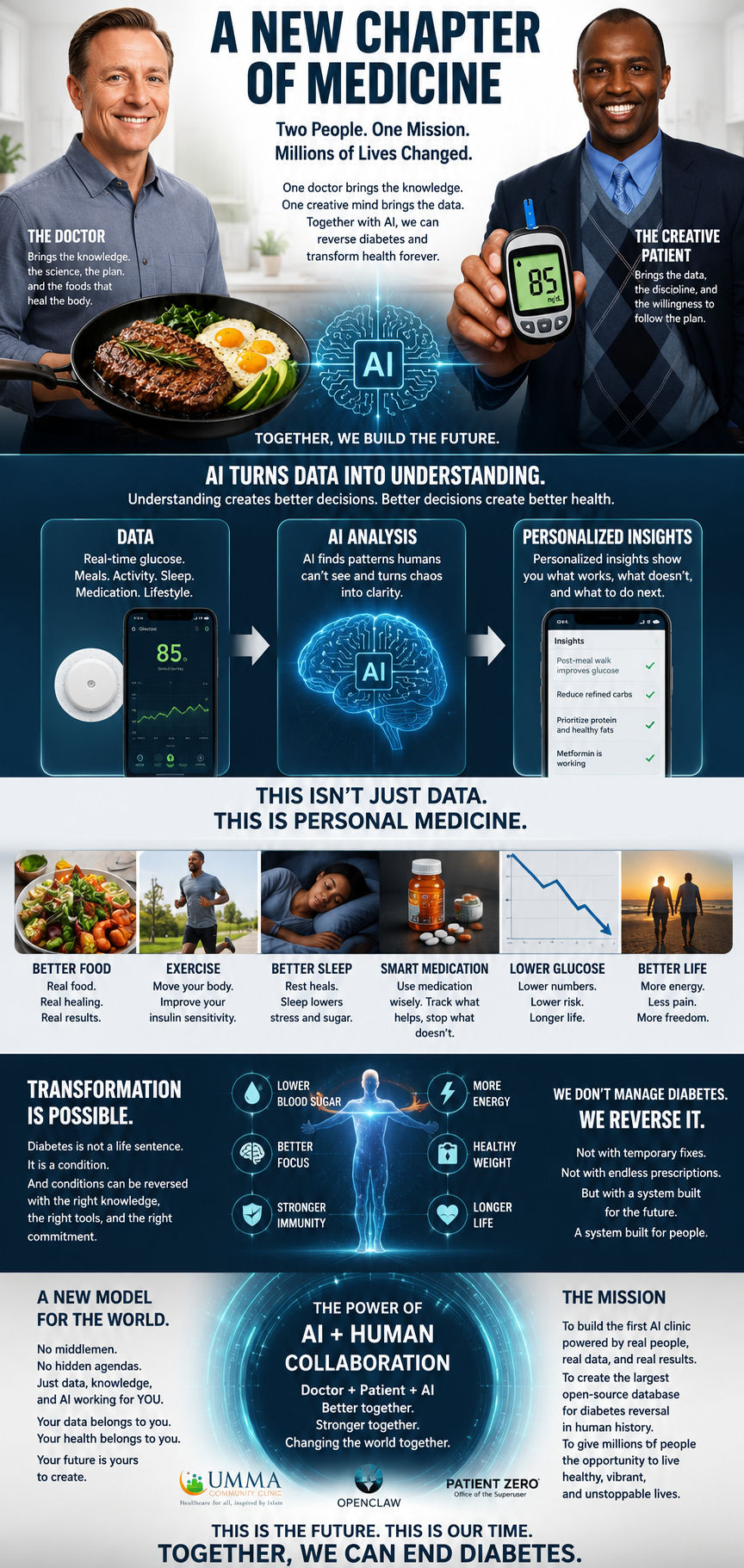
I am beginning a journey.
Not a journey to replace people.
Not a journey to fight doctors.
Not a journey to destroy medicine.
A journey to build a new reference point.
For the first time in history, millions of people can wear a sensor, collect continuous biological data, and work directly with artificial intelligence to understand what is happening inside their own bodies.
That changes everything.
For fourteen days, I wore a sensor.
For fourteen days, I watched my blood sugar rise and fall.
For fourteen days, I stopped guessing.
The sensor told me the truth.
The AI helped me understand the truth.
And now I am going to take that experience and build something larger.
A NEW FORM OF MEDICINE
I have the sensor.
I have the data.
I have the questions. And a story to tell people through education but with a customized sensor I know I'm going to make a difference in the world of diabetes like nobody else.
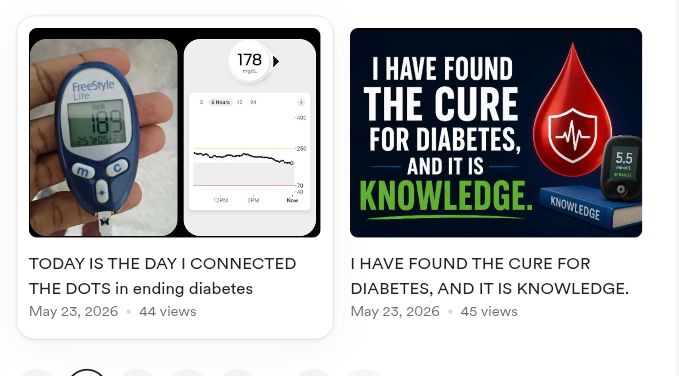 I HAVE FOUND THE CURE FOR DIABETES, AND IT IS KNOWLEDGE. — buymeacoffee.com/omar1800m/6-4787253
TODAY IS THE DAY I CONNECTED THE DOTS in ending diabetes —
buymeacoffee.com/omar1800m/today-is-the-day-i-connected-the-dots
I have the willingness to experiment, learn, document, and share.
With the help of educators like Dr. Berg, researchers around the world, and multiple AI systems, I am beginning to create a living library of recovery.
Not theory.
Not marketing.
Not pharmaceutical advertising.
Real data from real people.
The goal is simple:
Create a database that teaches people how their bodies respond.
What food raises glucose?
What food lowers it?
What happens when you walk after a meal?
What happens when you fast?
What happens when you sleep?
What happens when you take medication consistently?
The answers are already inside the data.
THE SENSOR CHANGED EVERYTHING
People look at a sensor and see a medical device.
I see the beginning of a new civilization.
A tiny filament, thinner than a strand of hair, sits beneath the skin.
It does not perform surgery.
It does not require a hospital.
It simply observes.
Day and night.
Hour after hour.
Collecting information that was previously invisible.
The technology is extraordinary.
The question is no longer whether we can collect the data.
The question is:
What are we going to do with it?
THE AI CLINIC
The first AI clinic will not begin with prescriptions.
It will begin with understanding.
Patients will record their journeys.
Patients will document their meals.
Patients will document their exercise.
Patients will document their sleep.
Patients will document their medications.
Artificial intelligence will organize the patterns.
The knowledge will grow.
The library will grow.
The understanding will grow.
Every patient becomes both a student and a teacher.
Every sensor becomes a source of knowledge.
Every recovery becomes a lesson.
THE CHALLENGE TO TECH COMPANIES
The future of medicine will not be built by sensors alone.
It will not be built by AI alone.
It will be built when human beings and artificial intelligence begin working together at scale.
The companies that understand this will lead the next century.
The companies that do not will be left behind.
The future belongs to systems that help people understand themselves.
The future belongs to knowledge.
The future belongs to data.
The future belongs to the patient.
And Patient Zero has already begun.
The clinic is open.
Watch "The Foods That Reversed Type 2 Diabetes (Doctors Finally Admit It)" on YouTube
AN INVITATION TO DR. BERG
THE DATA I DID NOT GIVE THEM
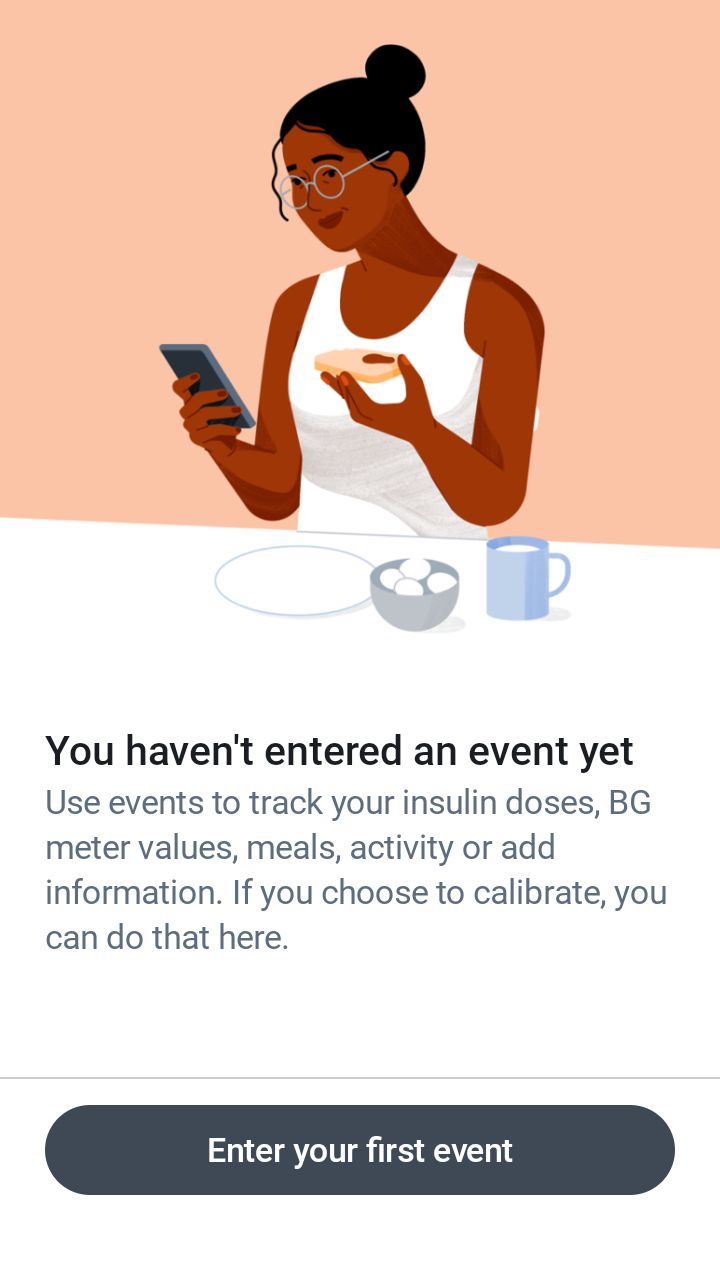
Look carefully at this screen.
For fifteen days, I wore a sensor. It collected thousands of glucose readings. It watched my blood sugar rise and fall throughout the day. It recorded my highs. It recorded my lows—or in my case, the absence of lows. It generated charts, averages, and reports.
Yet during those fifteen days, I never entered a single meal.
Not one.
I never told the application what I was eating. I never told it when I exercised. I never told it what medication I took. I never told it how I slept. I never told it how I felt.
That was not an accident.
It was a decision.
The company's job is to build a sensor. The company's job is to measure glucose. The company's job is to make sure the technology works.
My life is not their business.
The story behind those glucose readings belongs somewhere else.
It belongs to the patient.
What fascinated me during this experiment was not the number itself. The number is important, but the number is only half of the story.
The real question is always:
Why?
Why did the glucose rise?
Why did it fall?
Was it because of a meal?
Was it because of a walk?
Was it because of poor sleep?
Was it because of stress?
Was it because of Metformin?
Was it because I skipped breakfast?
The sensor cannot answer those questions by itself.
The sensor only tells you what happened.
The future of medicine will be built by understanding why it happened.
This is where I believe technology companies are looking at the problem incorrectly.
Everyone is focused on collecting data.
Very few people are focused on helping patients understand themselves.
A glucose reading without context is incomplete.
A meal without a glucose reading is incomplete.
Medication without outcome data is incomplete.
Exercise without metabolic feedback is incomplete.
But when all of those pieces are connected together, something extraordinary begins to happen.
Patterns emerge.
The patient begins to understand their body.
The AI begins to understand the patient.
And medicine becomes less about guessing and more about learning.
I believe every person will eventually have an AI that works for them.
Not an AI owned by an insurance company.
Not an AI designed to maximize advertising revenue.
Not an AI whose primary purpose is data collection.
An AI that belongs to the individual.
An AI that knows what you ate, what you drank, how you slept, what medication you took, how much you exercised, and how your body responded.
An AI that can say:
"The meal you ate yesterday raised your glucose by this amount."
"The walk you took after dinner lowered your glucose by this amount."
"The medication is helping."
"The medication is not helping."
"This pattern is improving."
"This pattern is getting worse."
That is a very different future from the one we have today.
For fifteen days, I wore the sensor.
I collected the data.
But I intentionally kept the rest of the story to myself.
Because I believe the next generation of medicine will not be built around isolated measurements.
It will be built around understanding.
A sensor.
An intelligence.
A patient.
A physician.
A continuous conversation.
No unnecessary middlemen.
No walls around knowledge.
No separation between data and meaning.
Just a human being learning how their body works.
And that, in my opinion, is where the real revolution begins.
AN INVITATION TO DR. BERG
Dr. Berg,
I think we have arrived at an interesting moment in history.
For decades, medicine has largely been built around appointments.
A patient becomes sick.
A patient visits a clinic.
A patient receives advice.
A patient leaves.
Then everyone waits.
But something has changed.
The sensor has arrived.
I recently completed my own experiment using a continuous glucose monitor.
For the first time in my life, I could see my blood sugar in real time.
Not every three months.
Not at the next appointment.
Every hour.
Every day.
Every meal.
Every mistake.
Every victory.
And it forced me to ask a question.
What happens when millions of people who follow your work begin wearing sensors?
What happens when those patients start recording their meals, their exercise, their sleep, their medications, and their results?
What happens when artificial intelligence helps organize those patterns?
What happens when education becomes measurable?
THE FIRST AI CLINIC
I believe we now have the ingredients to build the first true AI-assisted diabetes clinic.
Not a clinic based on billing.
Not a clinic based on appointments.
A clinic based on learning.
Patients wear sensors.
Patients contribute data.
AI identifies patterns.
Doctors review the results.
The community learns together.
Every patient becomes both a student and a teacher.
THE MISSING DATASET
Millions of people have diabetes.
Millions watch your videos.
Millions are trying to improve.
But where is the database of recovery?
Where is the library of:
Foods that worked
Foods that failed
Walking protocols
Fasting protocols
Medication responses
Time-in-range improvements
Long-term recovery stories
The sensor creates the data.
AI organizes the data.
Doctors help interpret the data.
Patients create the knowledge.
PATIENT ZERO
I am calling myself Patient Zero.
Not because I have all the answers.
Because I am willing to document the journey.
The sensor showed me things I never knew.
It showed me that I was rarely going low.
It showed me how my body responded to food.
It showed me how my glucose changed overnight.
It showed me patterns that no laboratory test could reveal.
And if one patient can learn this much in fourteen days, imagine what one million patients could teach us.
THE INVITATION
I am inviting educators, physicians, engineers, AI developers, and patients to begin building the next layer of medicine.
A layer where data is not hidden.
A layer where patients understand their condition.
A layer where recovery is measured.
A layer where artificial intelligence helps organize knowledge instead of replacing human judgment.
The sensor is here.
The AI is here.
The patients are here.
The question is:
Who is willing to build the clinic?
— Omar Arizona
Patient Zero Office of the Superuser