

بِسْمِ اللهِ الرَّحْمٰنِ الرَّحِيْم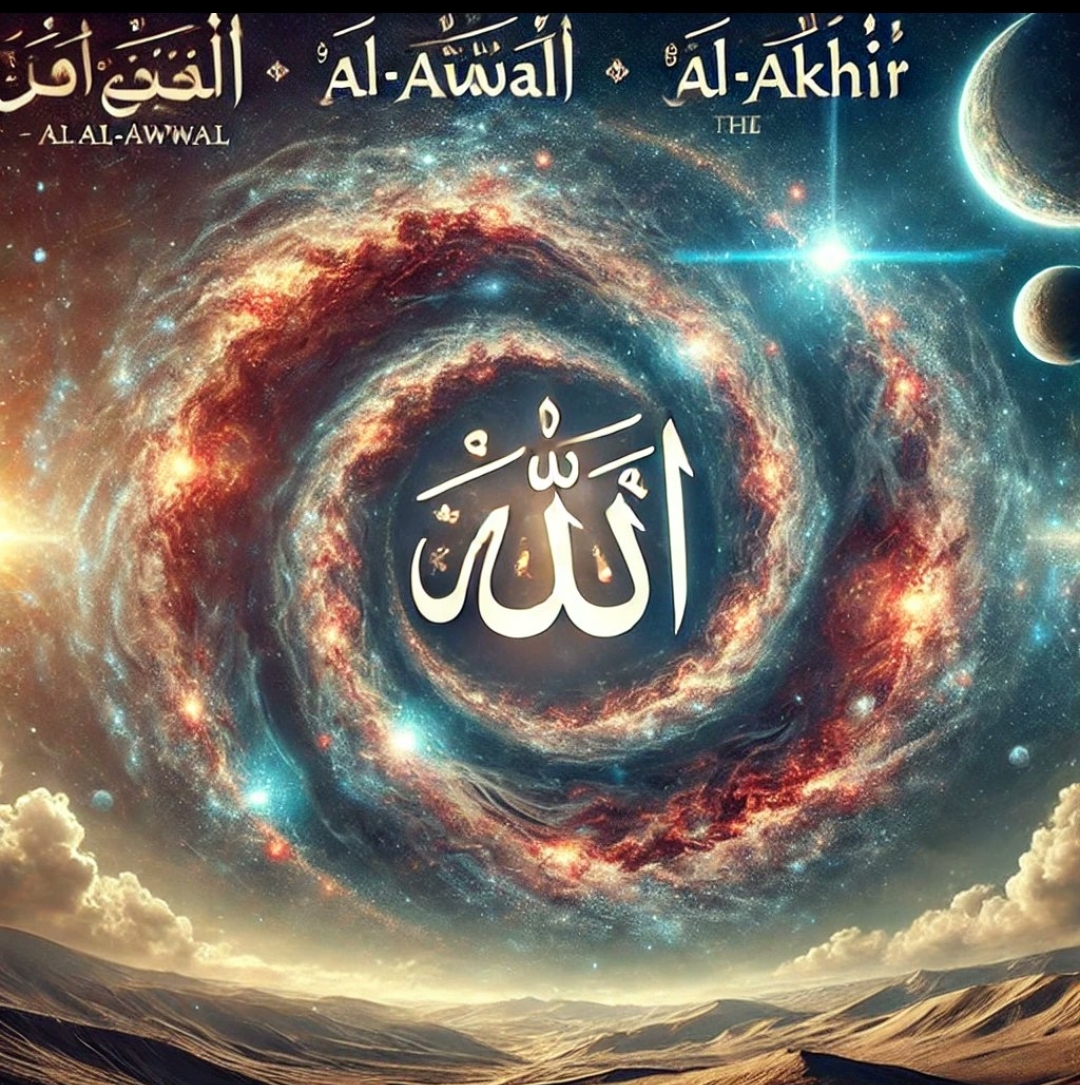
Allah, known by the divine names Al-Awwal (The First) and Al-Akhir (The Last), is eternal, having no beginning and no end. His existence is beyond time and space, and He is the only One whose nature is truly everlasting. Understanding these attributes helps believers comprehend the idea that all creation is dependent on Allah, while He is self-sufficient, free from any limitations or needs.
Allah as Al-Awwal and Al-Akhir
The concept of Allah as Al-Awwal (The First) and Al-Akhir (The Last) is beautifully described in the Quran, emphasizing that He precedes everything and will exist after all creation has ceased. In Surah Al-Hadid (57:3), Allah declares:
> هُوَ الْأَوَّلُ وَالْآخِرُ وَالظَّاهِرُ وَالْبَاطِنُ ۖ وَهُوَ بِكُلِّ شَيْءٍ عَلِيمٌ
"He is the First and the Last, the Ascendant and the Intimate, and He is, of all things, Knowing."
This verse signifies Allah’s attributes of eternality, emphasizing His timelessness. Allah is beyond the temporal constraints that govern human existence, and His being as the "First" and "Last" means that He is the origin and ultimate destination of all things.
The Everlasting Nature of Allah in the Quran
The Quran makes frequent reference to Allah’s eternal and self-sustaining nature. In Surah Al-Baqarah (2:255), famously known as Ayat al-Kursi, Allah says:
> اللَّهُ لَا إِلَٰهَ إِلَّا هُوَ الْحَيُّ الْقَيُّومُ
"Allah! There is no deity except Him, the Ever-Living, the Sustainer of [all] existence."
The name Al-Hayy (The Ever-Living) refers to the fact that Allah has always existed and will always exist, while Al-Qayyum (The Sustainer) indicates that all of creation is in constant need of Him. He requires nothing from His creation, yet all depend on His will to continue existing.
In Surah Al-Ikhlas (112:1-4), Allah describes His uniqueness and eternal nature:
> قُلْ هُوَ اللَّهُ أَحَدٌ - اللَّهُ الصَّمَدُ - لَمْ يَلِدْ وَلَمْ يُولَدْ - وَلَمْ يَكُن لَّهُ كُفُوًا أَحَدٌ
"Say, 'He is Allah, [Who is] One, Allah, the Eternal Refuge. He neither begets nor is born, Nor is there to Him any equivalent.'"
The term As-Samad (The Eternal Refuge) conveys the notion that Allah is the one upon whom all depend, yet He depends on none. His existence is necessary, and He does not need any sustenance or support to exist.
Reflections on Allah's Eternality
The timeless existence of Allah has profound implications for the understanding of His attributes and relationship with creation. Allah’s attribute of being eternal means that He is unaffected by the changes that occur within creation. This attribute also provides comfort to believers, as they can rely on a constant and unchanging source of guidance and mercy.
The Prophet Muhammad (peace be upon him) emphasized the importance of understanding the eternal nature of Allah in our relationship with Him. In a hadith narrated in Sahih Muslim, the Prophet stated:
> "Allah was, and there was nothing else besides Him."
This statement reinforces that Allah is not bound by the constraints of time or space. He was always there, even before the existence of the universe, and will continue to exist when all else perishes.
The Quran encourages reflection on the creation of the universe to understand the greatness of Allah. In Surah Al-Mulk (67:3-4):
> الَّذِي خَلَقَ سَبْعَ سَمَاوَاتٍ طِبَاقًا ۖ مَا تَرَىٰ فِي خَلْقِ الرَّحْمَٰنِ مِن تَفَاوُتٍ ۖ فَارْجِعِ الْبَصَرَ هَلْ تَرَىٰ مِن فُطُورٍ - ثُمَّ ارْجِعِ الْبَصَرَ كَرَّتَيْنِ يَنقَلِبْ إِلَيْكَ الْبَصَرُ خَاسِئًا وَهُوَ حَسِيرٌ
"He who created the seven heavens in layers. You do not see in the creation of the Most Merciful any inconsistency. So return your vision to the sky, do you see any breaks? Then return your vision twice again. Your vision will return to you humbled while it is fatigued."
These verses remind us that Allah’s creation is perfect and beyond any flaw, which is a testament to His timeless and unchanging nature. The perfection in the universe is an expression of Allah's eternal wisdom, and observing the order of the universe leads us to acknowledge His majesty.
The Impact of Allah's Eternity on Believers
Recognizing Allah as eternal and self-sufficient has a significant impact on a believer's worldview. It fosters a sense of humility, as it reminds us that while everything in this world is fleeting, Allah remains constant. This understanding inspires believers to focus on their relationship with Allah, seeking His pleasure and relying on Him in times of need.
Surah Al-Rahman (55:26-27) highlights the transient nature of worldly existence compared to the eternal presence of Allah:
> كُلُّ مَنْ عَلَيْهَا فَانٍ - وَيَبْقَىٰ وَجْهُ رَبِّكَ ذُو الْجَلَالِ وَالْإِكْرَامِ
"Everyone upon it [the earth] will perish, and there will remain the Face of your Lord, Owner of Majesty and Honor."
This verse makes it clear that everything in the created world is temporary. However, Allah, in His infinite power and majesty, will endure beyond all that is created. Understanding this motivates believers to prioritize their relationship with Allah over worldly pursuits that are bound to end.
Conclusion
The attributes of Al-Awwal (The First) and Al-Akhir (The Last) remind us of Allah's eternal and self-sustaining nature. He has no beginning and no end, and His existence is independent of anything else. Reflecting on Allah's eternal nature allows believers to find comfort in the face of life's uncertainties, recognizing that Allah remains constant even when everything else changes. By deepening our understanding of Allah’s eternality, we strengthen our faith and recognize that true success lies in seeking the pleasure of the One who is everlasting.