

بِسْمِ اللهِ الرَّحْمٰنِ الرَّحِيْم
In the Name of God, Most Gracious, Most Merciful
🗳️ The Electors: The Greatest Betrayal of Our Democracy
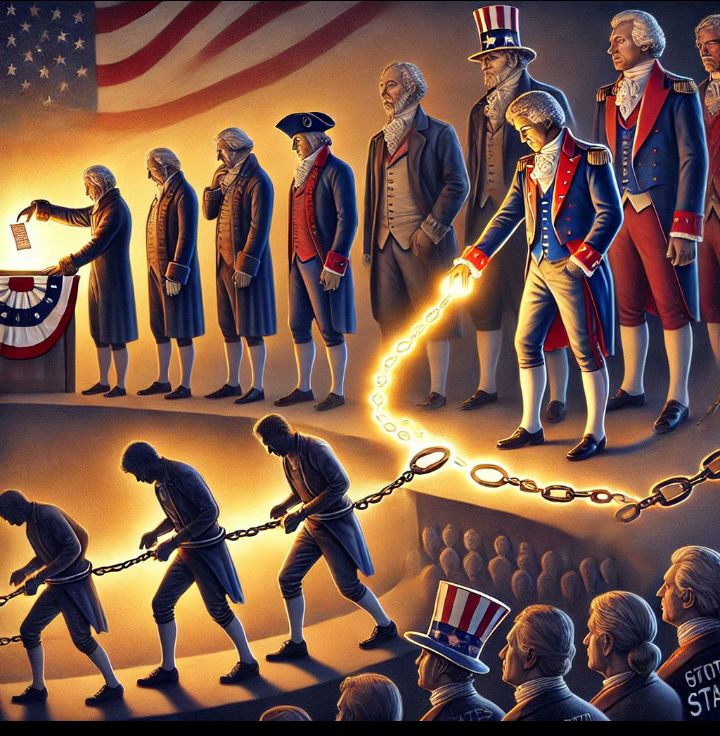
The Founding Fathers envisioned the electors of the Electoral College as the "conscience of the nation." They were meant to be independent, educated individuals, entrusted with the serious responsibility of selecting a president who would protect the interests of the country — even when popular sentiment might be misguided.
However, over time, this crucial role has been stripped away, transforming electors into powerless participants in what was meant to be a robust democratic system of checks and balances. This is the story of how the courts, states, and political parties disarmed the electors, turning them into little more than ceremonial figures — and what we must do to restore their independence.
🏛️ The Creation of the Electoral College and the Role of Electors
When the U.S. Constitution was being drafted in 1787, the Founding Fathers faced a serious dilemma:
How do you elect a president in a way that balances the interests of large and small states, while preventing mob rule or the rise of unqualified candidates?
The answer was the Electoral College.
Electors were intended to be independent actors, chosen by the states, who would deliberate and use their best judgment to select the president. These individuals were seen as a buffer, protecting the country from populism and safeguarding the nation’s long-term stability.
They were supposed to be the “conscience of the nation,” ensuring that unfit or dangerous candidates would never ascend to the highest office.
⚙️ The Rise of Political Parties: The First Betrayal
However, as political parties grew in power, the role of electors began to change.
By the early 1800s, parties had begun to select electors loyal to their candidates rather than individuals who were genuinely independent thinkers. The electors — once a check on factional influence — became instruments of party loyalty.
The rise of the two-party system cemented this shift. Electors were now chosen not for their judgment or wisdom, but for their loyalty to the party line. Rather than casting a vote based on what was best for the country, they were expected to rubber-stamp the choice of the popular vote in their state.
✅ The first betrayal of the Electoral College had begun.
⚖️ State Laws Binding Electors: Stripping Away Independence
As the political landscape evolved, states passed laws binding electors to vote according to the popular vote in their state.
By the 20th century, nearly all states had enacted "winner-take-all" laws, binding electors to cast their votes for the candidate who won the state’s popular vote.
This further reduced their independence and transformed them into mere functionaries.
Originally, electors were expected to use their discretion to vote for the best candidate. These laws disarmed them, binding them to the will of the people rather than their own judgment.
👉 The ability to stop unqualified or dangerous candidates had been taken away.
🏛️ The Role of the Courts: The Final Blow
The final blow to elector independence came from the courts.
In 2020, the U.S. Supreme Court ruled in Chiafalo v. Washington that states have the constitutional right to enforce laws requiring electors to vote according to the state’s popular vote.
While this ruling was framed as protecting democracy, it marked the ultimate betrayal of the Founding Fathers’ vision.
By turning electors into mere mouthpieces for the state’s popular vote, the courts stripped away the last vestiges of the Electoral College’s original purpose.
🛑 Consequences of Stripping Electors of Their Power
The transformation of electors from independent decision-makers to powerless figureheads has profound consequences for American democracy.
The Founding Fathers created the Electoral College to serve as a buffer, ensuring that the president would be chosen based on what was best for the nation, not merely the whims of the electorate.
A stark example is the 2016 election, where Donald Trump won the presidency despite widespread concerns about his qualifications and temperament. The electors had no power to stop his candidacy because they were bound by state laws to vote according to the popular vote.
This system could allow any candidate, regardless of qualification, to win the presidency through sheer popularity.
🔄 Can Elector Independence Be Restored?
The big question is whether independence can be restored, especially in a world where technology — including AI — could play a role in monitoring and evaluating candidates.
Imagine a system where electors are not chosen by political parties but by their real engagement with national and global issues. These electors could be diplomats, scientists, or even ordinary citizens who have demonstrated a deep understanding of governance.
In a future where AI helps identify and analyze global challenges, electors could be selected based on their track record, knowledge, and experience before being entrusted with the responsibility of choosing the president.
✅ This would restore the original purpose of the Electoral College:
To ensure the nation is led by qualified individuals who understand the complexities of leadership.
🏛️ The Spirit of Checks and Balances: Why It Matters
The Founding Fathers’ system of checks and balances was designed to prevent any single branch of government—or any faction—from accumulating too much power.
The Electoral College was a crucial part of this system, ensuring that the presidency could not be captured by unqualified or dangerous individuals.
By stripping electors of their independence, we have weakened one of the most important safeguards in American democracy.
Restoring elector independence would strengthen the Electoral College and revitalize the checks and balances. It would ensure that the president is chosen by those with wisdom and experience, not merely by majority will.
⚠️ Conclusion: The Greatest Betrayal of Our Democracy
The disarming of electors is the greatest betrayal of the democratic system that the Founding Fathers designed.
By stripping away their independence, we have allowed political parties and popular sentiment to dominate the process of selecting a president — leaving the nation vulnerable to the rise of unqualified or dangerous candidates.
The time has come to rethink the role of electors in the 21st century. With the tools of technology and the lessons of history, we can restore their independence and ensure that the president is chosen by those who understand the immense responsibilities of the office.
If we fail to act, we risk further eroding the foundation of American democracy, leaving the nation more divided and less secure than ever before.