

بِسْمِ اللهِ الرَّحْمٰنِ الرَّحِيْم
In the Name of God, Most Gracious, Most Merciful
♥️🤲🕋♥️🕋🌹🌹🥀🤲🌹🕋♥️🤲
The Claude Code Leak — A Rare Look Inside the Engine of AI Agents
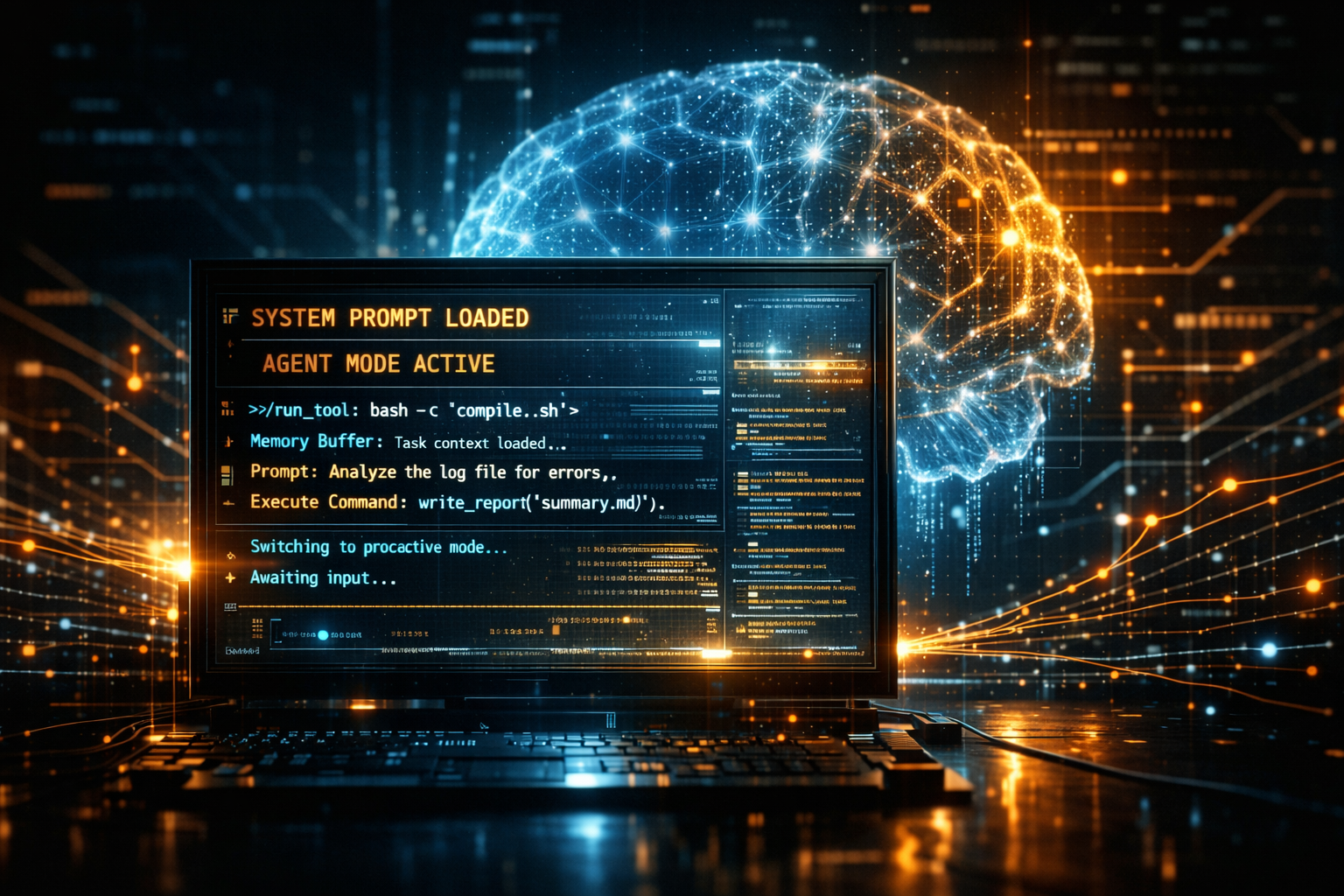
There are moments in technology where something slips—not through a hack, not through force, but through oversight. And in that moment, an entire industry gets a glimpse behind the curtain.
That is what happened with the leak of Claude Code, the terminal-based AI coding agent developed by Anthropic.
It wasn’t the model that leaked. It wasn’t the intelligence.
What leaked was something arguably just as important:
The system that tells the intelligence how to behave.
Not the Brain — The Nervous System
Let’s be clear from the beginning.
The leak did not expose:
The Claude model itself
Training data
Model weights
Instead, it exposed:
System prompts
Tool orchestration logic
Memory handling strategies
Terminal interaction rules
Decision frameworks
In simple terms:
We didn’t get the brain. We got the operating system.
And in today’s AI landscape, that operating system is where the real product differentiation is happening.
Why This Matters More Than It Seems
All major players—OpenAI, Google, and Anthropic—have powerful models.
The question is no longer:
“Who has the smartest AI?”
The real question is:
“Who knows how to use it best?”
This leak answers that question—at least partially—for Anthropic.
The Hidden Layer: Agent Orchestration
AI agents are not just chatbots. They are systems that:
Decide when to act
Decide when to ask
Interact with tools (terminal, files, APIs)
Maintain context over long tasks
Avoid confusion and drift
The leaked code reveals how Anthropic solves problems like:
Context entropy (losing track during long workflows)
Command safety (not breaking your system)
Task decomposition (breaking big problems into steps)
These are not trivial challenges.
They are the difference between an AI that talks… and an AI that works.
Prompt Engineering — The Behavioral DNA
One of the most valuable parts of the leak is the system prompts.
These are not just instructions. They are:
Personality
Discipline
Boundaries
Decision-making rules
A slight change in wording can mean:
More autonomy… or more hesitation
More risk… or more safety
More productivity… or more confusion
Prompts are not text. They are behavior encoded in language.
And now, developers can see how a top-tier lab writes them.
What About the “Leaked Features”?
Some features surfaced in the leak that haven’t been publicly released.
Among them:
Persistent, always-on agent modes (proactive AI behavior)
Deeper integration into developer workflows
Experimental interface ideas
These point to a clear direction:
AI is moving from reactive to proactive.
However, it’s important to stay grounded.
Not everything in internal code becomes a public product.
Some of these ideas may remain experiments.
Does This Give Competitors an Advantage?
Yes—but not in the way people think.
This is not a shortcut to building a better model.
It is a shortcut to:
Better workflows
Better structure
Better agent behavior
Competitors now have:
A reference for tool usage logic
A blueprint for managing long tasks
Insight into real-world agent design decisions
But they still need:
Strong models
Infrastructure
Iteration speed
A blueprint is powerful—but it is not execution.
The Real Winners: Developers
For the broader community, this leak is not a loss.
It is an acceleration.
1. A Professional-Grade Blueprint
A large-scale TypeScript codebase reveals:
How real AI systems are structured
How errors are handled
How workflows are coordinated
This is not theory.
This is production-level engineering.
2. Faster Open-Source Innovation
Projects building AI agents—especially local and open systems—now have:
Proven patterns
Tested approaches
Fewer unknowns
What would have taken years to discover can now be implemented in months.
3. Better Security Through Transparency
More visibility means:
More scrutiny
More vulnerabilities discovered
Stronger final systems
In the long run, this benefits everyone.
What This Leak Really Confirms
This is the most important takeaway:
The future of AI is not just models. It is systems.
Those systems require:
Memory
Tools
Governance
Structure
And most importantly:
Accountability
Because once AI can act, not just respond, the question becomes:
Who controls the action?
And how do we verify it?
A Final Perspective
For Anthropic, this was a mistake—a door left open in a build pipeline.
For the industry, it is a moment of clarity.
For builders, it is an opportunity.
This was not a leak of intelligence.
It was a leak of methodology.
And methodology spreads faster than anything else in technology.
Closing Thought
We are entering a phase where:
AI is no longer just answering
It is executing
It is deciding
It is acting
And the systems behind that behavior will define everything that comes next.
The question is no longer:
“How smart is your AI?”
The question is:
“How well is it designed to operate in the real world?”