

بِسْمِ اللهِ الرَّحْمٰنِ الرَّحِيْم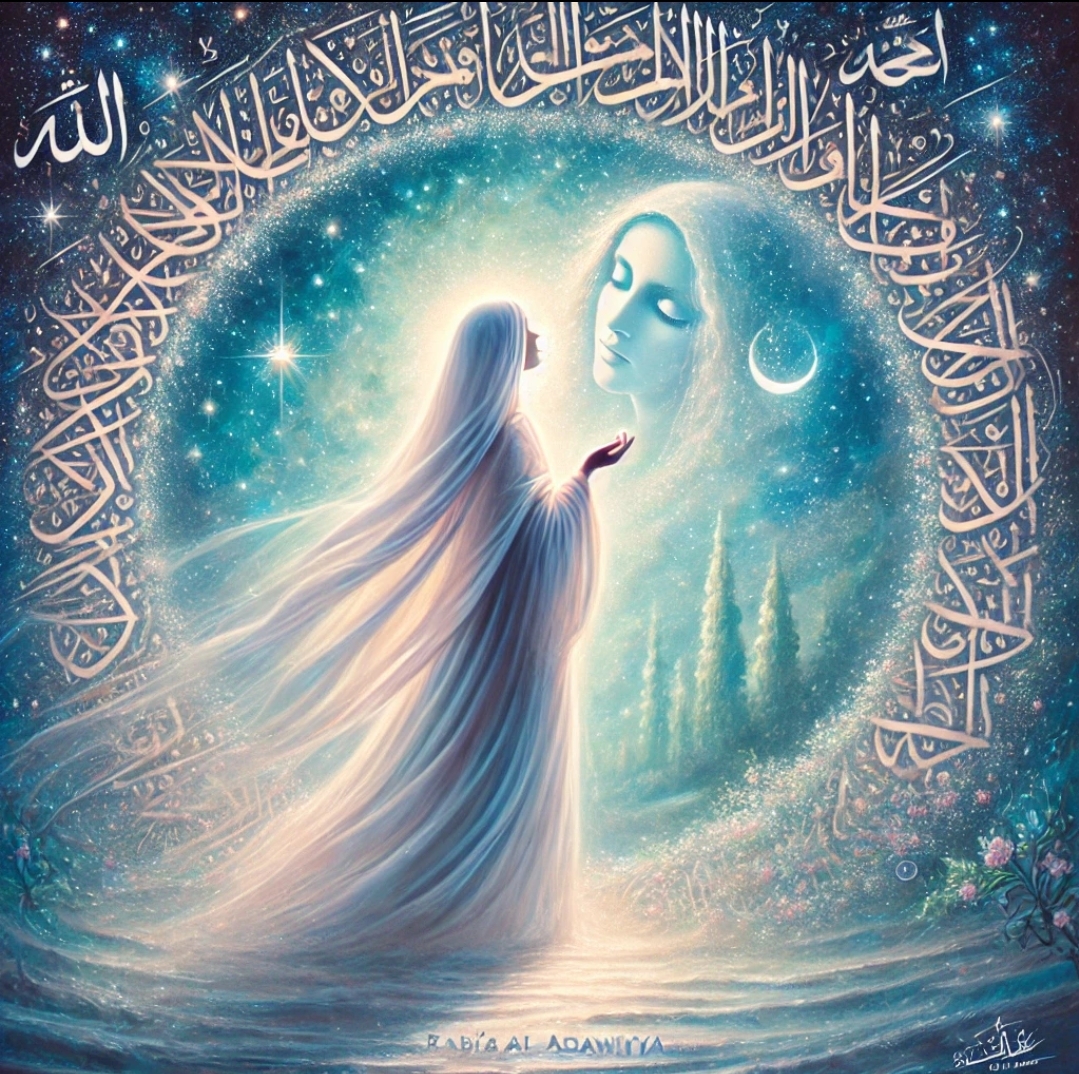
Introduction: Beauty as a Reflection of the Divine
Article 7:
Throughout history, humanity has been captivated by beauty—whether found in nature, art, or human expressions. But for Rabi’a al-Adawiyya, beauty was more than a fleeting aesthetic experience. It was a window into the eternal, a reflection of Allah’s magnificence. To her, divine beauty was not something to be observed from a distance but something to be intimately experienced, loved, and adored. Her entire life was a pursuit of this divine beauty, which she believed was the truest manifestation of Allah’s presence.
In this article, we explore Rabi’a’s profound understanding of divine beauty and how it shaped her worship and her love for Allah. She teaches us that by recognizing the beauty of Allah, we can elevate our spiritual practice and draw closer to Him.
---
Seeing the Divine in All Things
Rabi’a’s spiritual vision was all-encompassing. She saw Allah’s beauty reflected in everything around her—in the natural world, in her own heart, and most importantly, in her relationship with the Divine. For her, beauty was a sign of Allah’s presence, and to love Allah was to recognize and appreciate that beauty in all its forms.
Arabic: "يا إلهي، جمالك الأبدي هو ما أبتغي، وليس أي شيء آخر. وجهك هو ما أسعى إليه، لأنك جمال كل شيء."
English: "O my Lord, Your eternal beauty is what I seek, and nothing else. Your face is what I strive for, for You are the beauty of all things."
This statement reflects her deep yearning for the Divine, not for the gifts He could offer, but for the beauty of His presence. Rabi’a’s entire life was a pursuit of this beauty, and she believed that by attuning herself to Allah’s magnificence, she could transcend the material world and find peace in His eternal splendor.
---
Beauty as a Path to Love
For Rabi’a, love and beauty were deeply intertwined. She believed that Allah’s beauty was not just to be observed but to be loved. In loving Allah’s beauty, the soul becomes purified and drawn closer to Him. This is why Rabi’a’s love for Allah was so passionate—she was captivated by the beauty of the Divine, and her love was a reflection of that admiration.
In her prayers and teachings, she often spoke of her love for Allah’s beauty as a way to describe her worship. She did not worship Allah out of fear or hope for reward but out of pure love for the beauty that He represents.
---
The Desire for Eternal Beauty
Rabi’a’s ultimate goal was to behold the face of Allah, to experience His beauty firsthand. This desire drove her spiritual practice and was the source of her intense devotion. She famously said:
Arabic: "إذا كنت لا أراك في هذه الدنيا، فلا معنى لها. كل ما أريده هو أن أكون في حضور جمالك الأبدي."
English: "If I cannot see You in this world, then it has no meaning. All I desire is to be in the presence of Your eternal beauty."
This yearning for the beauty of Allah’s face represents the pinnacle of spiritual devotion in Rabi’a’s teachings. It is not enough to love Allah’s beauty from a distance—she wanted to experience it fully, to be enveloped in it. This is a powerful reminder for all of us: our spiritual journey should be driven not by material desires but by a longing for the beauty of Allah.
---
Worship as an Act of Beauty
Rabi’a’s love for divine beauty also influenced the way she approached worship. For her, every act of worship was a reflection of Allah’s beauty. Whether in prayer, fasting, or acts of charity, she saw each act as an opportunity to reflect the beauty of the Divine. Her worship was not a task to be completed, but a sacred expression of love for Allah’s magnificence.
This understanding invites us to rethink our own approach to worship. Do we see our prayers as a reflection of Allah’s beauty, or do we treat them as obligations to be fulfilled? Rabi’a challenges us to elevate our worship by recognizing the beauty inherent in it and allowing that beauty to deepen our connection with the Divine.
---
The Role of Beauty in Spiritual Growth
For Rabi’a, recognizing and appreciating Allah’s beauty was not just a source of spiritual pleasure—it was a path to growth. She believed that by meditating on Allah’s beauty, the soul could be purified and elevated. This purification allows the believer to draw closer to Allah and to experience His presence in a more profound way.
In Sufi thought, beauty is often seen as a reflection of Allah’s attributes. By contemplating beauty, the believer comes to know Allah more intimately. Rabi’a embodied this belief, and her life was a testament to the transformative power of divine beauty. Her teachings remind us that beauty is not a distraction from the spiritual path but a gateway to deeper understanding.
---
Conclusion: A Heart Captivated by Beauty
Rabi’a al-Adawiyya’s teachings on divine beauty offer us a powerful perspective on worship and devotion. Her entire life was driven by a love for the beauty of Allah, and she believed that this beauty was the truest manifestation of His presence. By seeking out and appreciating Allah’s beauty, Rabi’a drew closer to Him and found peace in His eternal splendor.
As we continue this series on divine love, let us reflect on Rabi’a’s example and strive to see the beauty of Allah in all things. May our hearts be captivated by His eternal beauty, and may that beauty guide us on our spiritual journey toward Him.
---
In the next article, we will explore how Rabi’a’s intense devotion to Allah led her to reject the material world and focus entirely on the spiritual. Join us as we continue to unc
over the depths of her teachings on divine love and spiritual surrender.