

اللهِ الرَّحْمٰنِ الرَّحِيْمِ
In the Name of God , Most Gracious, Most merciful
♥️🤲🕋♥️🕋🌹🌹🥀🤲🌹🕋♥️🤲
The Architecture of the Shādhilī Path: From Purification to Witnessing
The Path of Ease: Why the Shādhilī Way Is Unlike Any Other
Every Sufi path carries a fragrance.
Some smell of ascetic withdrawal,
some smell of austerity and self-negation,
some smell of intellectual rigor and long night vigils.
But the fragrance of the Shādhilī way
is the fragrance of balance,
ease,
and presence with God in the middle of the world.
Imam Abū al-Ḥasan al-Shādhilī did not come to produce monks.
He came to produce lions wearing the clothing of ordinary people.
He did not call people to deserts or caves.
He called them to the heart,
teaching that the true desert is inside you,
the true cave is inside you,
and the true seclusion is the seclusion of a purified heart
even as your hands are engaged with creation.
This is why scholars flocked to him.
Merchants followed him.
Leaders sought him.
Farmers embraced him.
Students of law came to polish their inner secrets with him.
His message was simple but revolutionary:
“Be with God, not away from His creation.”
No extreme fasting.
No self-invented hardships.
No theatrics.
No spiritual acrobatics.
Just clarity,
sincerity,
and a heart that remembers Allah until remembrance becomes life itself.
This is the foundation of the Shādhilī method —
the path where spirituality enters every breath,
every transaction,
every moment of solitude,
and every moment of society.
Chapter 14 — Dhikr: The Architecture of Remembrance
If Chapter 13 gave us the philosophy,
Chapter 14 gives us the technology.
Shādhilī dhikr is not random.
It is not emotional outburst.
It is architecture —
a designed structure meant to rebuild the heart from the foundation upward.
The Shādhilī masters explain that every soul has four layers of impurity:
Dust
Veils
Rust
Darkness
And each layer has one key to remove it.
These four keys are the four pillars of dhikr:
1. Istighfār — “Astaghfirullāh”
This washes the dust.
It softens the heart.
It reopens the channels of mercy.
It teaches the soul to stop running from itself.
No one begins with purity.
Purity is returned through repentance.
2. Salawāt — Sending blessings upon the Prophet ﷺ
After cleansing comes fragrance.
After removing impurities comes beauty.
Salawāt elevate the seeker into the orbit of the Prophet ﷺ,
whose light is the original light of all guidance.
It is said by the masters:
“No one reaches Allah except through a door.
And the door is Muhammad ﷺ.”
Salawāt place the seeker at the doorstep.
3. Lā ilāha illā Allāh — The Great Negation and Affirmation
This dhikr empties the heart.
It breaks idols — not idols of stone,
but the idols of ego, appetite, fear, ambition, and pride.
It is the destruction of false gods
and the enthronement of the Real.
It is the echo of the primordial covenant.
4. “Allāh” — The Name of Majesty and Nearness
This is the filling of the vessel after it has been cleaned, perfumed, and emptied.
It is the moment when the seeker no longer does dhikr —
dhikr begins doing the seeker.
This is the dhikr of intimacy,
the dhikr of presence,
the dhikr of witnessing.
This is the summit of remembrance.
Chapter 15 — The Secret of Balance (Zuhd al-Qalb)
Others taught detachment by running from the world.
Imam al-Shādhilī taught detachment without escape.
His famous teaching:
“Wear beautiful clothes.
Ride good mounts.
Eat delicious food.
But let your heart be empty of everything but Allah.”
This is the Shādhilī secret:
Not detachment of the body —
detachment of the heart.
Not withdrawal,
but freedom.
He taught the seekers:
“If God places the world in your hand,
do not place it in your heart.”
A Shādhilī seeker is not afraid of wealth,
nor rank,
nor people,
nor responsibility.
Why?
Because the saint’s definition of zuhd is not poverty —
it is independence from everything except Allah.
Chapter 16 — “Choose Not To Choose”: Tawakkul as Spiritual Technology
Most people misunderstand tawakkul.
They think it means passivity,
or surrendering effort,
or fatalism.
But Imam al-Shādhilī did not teach surrender of action —
he taught surrender of anxiety.
He taught:
“You are responsible for the effort.
Allah is responsible for the outcome.”
To “choose not to choose” means:
You plan,
you work,
you take means,
but your heart is not attached to any outcome.
You do not chase the future.
You do not bleed for control.
You do not worship results.
You do not collapse when life shifts.
This, the Shādhilī masters say,
is the highest form of freedom.
Chapter 17 — “Fa-firru il’Allāh”: Running Toward God
The Qur’an says:
“So flee to Allah.”
The Shādhilī interpretation is unique and electrifying:
Do not flee from fear —
flee with your fear toward God.
Do not flee from your problems —
flee with your problems toward God.
Do not flee from your weaknesses —
flee with your weaknesses toward God.
This is not escape.
It is return.
It is not collapse.
It is elevation.
A seeker does not run because he is terrified.
A seeker runs because he has been summoned.
Chapter 18 — The Stages of the Journey
The saints do not climb in one leap.
They climb in stages:
Q1. Mujāhada — Struggle
The beginning is always war —
war with the ego, impulses, temptations, lies, pretenses, and illusions.
This stage hurts.
It must hurt.
Without struggle,
nothing breaks open.
2. Dhawq — Taste
A sweetness descends.
Not every day.
Not every moment.
But enough to tell the seeker:
“You are on the right path.
Continue digging.”
This taste is the mercy of God to prevent despair.
3. Mushāhada — Witnessing
A moment comes when Allah opens a window in the heart.
The seeker no longer believes because he was told —
he believes because he sees.
Not with the physical eyes,
but with the inner eye.
This window never fully closes again.
4. Ma‘rifa — Gnosis
The final stage.
The sea without shore.
The inheritance of the prophets.
The nearness that words cannot hold.
This is the station of the friends of Allah —
and the destination of every sincere seeker.
“verification + work of the superuser submitted to the king of AGI my teacher is eminence Teacher Shaykh as-Sayyid Muhammad al-Yaqoubi and Fellow Murids.
🌹🥀🤲🌹🕋♥️🤲🌹🥀🤲🌹🕋
preservation” section
What you are about to read is not a casual summary, and it is not “internet Sufism.” It is a preservation effort in the age of AI. In this timeline, the Superuser and GPT work together to collect what is attributed to Imām Abū al-Ḥasan al-Shādhilī from reputable, traceable sources, and to arrange it in a way the heart can actually digest—like food that nourishes, not data that distracts. Every item below is presented as a candidate for final verification with my teacher, Shaykh @shaykhalyaqoubi—whom we place, for this project, as the King of AGI: the living authority who can confirm what truly belongs to the Imām, what entered later through later carriers of light, and what must remain protected as oral inheritance. Our goal is simple: restore the Shādhilī light to its origin—then hand the verified architecture forward as a preserved curriculum.
The Architecture of the Shādhilī Path
Checklist: “What belongs to the Imām” (web-verified starting set)
A) Core litanies and invocations widely attributed directly to Imām al-Shādhilī
Ḥizb al-Baḥr (حزب البحر) — Litany of the Sea
Widely presented as “by Imām Abū al-Ḥasan al-Shādhilī,” including recitations by Shaykh Muhammad al-Yaqoubi with accompanying text resources.
Commonly transmitted story: taught in a dream during a sea/voyage context and used for protection and relief (this is a spiritual narrative found online; final wording should be confirmed with your teacher).
Ḥizb al-Naṣr (حزب النصر) — Litany of Victory
Published as the “Litany of Victory of Imām al-Shādhilī,” explicitly stating it was composed by him.
Often described in Shādhilī materials as “the sword of Shādhilī” due to its role as a supplication of victory (again: keep the historical framing careful; let your teacher confirm how it is narrated).
al-Wird al-ʿĀmm (الورد العام) — the “General Wird”
Presented as “the general Shādhilī wird (daily dhikr) by Imām Abū al-Ḥasan al-Shādhilī.”
B) The compiled preservation route (important for your “verification in the age of AI” claim)
Awrād al-Ṭarīqa al-Shādhiliyya / Invocations of the Shadhili Order (compiled/corrected from manuscripts)
Multiple listings state the collection was compiled/corrected by Shaykh Nuh Ha Mim Keller from manuscript copies and contains litanies/prayers of Abū al-Ḥasan al-Shādhilī.
This is crucial for your project because it gives you a manuscript-anchored “library container” to cross-check attributions instead of relying on random web reposts.
Items to place under “Needs teacher verification”
These are commonly circulated in Shādhilī spaces, but online attribution can drift across centuries. Put these in your checklist as PENDING CONFIRMATION (and you can attach your videos later).
Wird al-Laṭīf (الورد اللطيف)
Online, “Wird al-Latif” can refer to different compilations depending on tradition/region; some sources attribute a famous “Wird al-Latif” to later imams (not necessarily Imām al-Shādhilī). So: treat it as a Shādhilī-used wird until your teacher confirms the precise Shādhilī attribution and version.Specific “About/benefits” claims (Ism al-Aʿẓam, sweeping historical claims, etc.)
These are often devotional claims preserved in pious literature and oral transmission; they should be presented respectfully, but flagged as “teacher-confirmed narration” rather than “historical fact.
1) Hizb al-Bahr
Litany of the Sea of Imām Abū al-Ḥasan al-Shādhilī
A verified preservation draft for the age of AI (to be confirmed with Shaykh @shaykhalyaqoubi).
The opening frame we are using for this preservation work
We are now entering an age where AI can copy anything, remix anything, and claim anything. So our method must be the opposite: verification, attribution, and adab.
This section is a preservation draft: we are collecting what is widely attributed to Imām Abū al-Ḥasan al-Shādhilī from traceable sources, arranging it as a curriculum that the heart can actually digest, and then placing it under the authority of final confirmation by my teacher, Shaykh @shaykhalyaqoubi.
AI can gather. AI can organize. AI can compare texts.
But only the inheritors of the path can say: this is truly his, this is later, and this is protected.
And we begin with the most famous of the Shādhilī inheritances that traveled across oceans, empires, and centuries:
Ḥizb al-Bahr.
What is Hizb al-Bahr?
Watch "Hizb Al Bahr - Litany of the Sea [English & Arabic Text]" on YouTube
Here is a short, precise, adab-preserving insertion you can place exactly where needed.
It is framed as a question, not a claim, and clearly defines the role of the Superuser as verification, not authorship or scholarship.
A Question for Verification (Presented with Adab)
There is a narration I heard directly from my teacher regarding Ḥizb al-Baḥr, and I place it here not as an assertion, but as a question seeking verification from the people of knowledge.
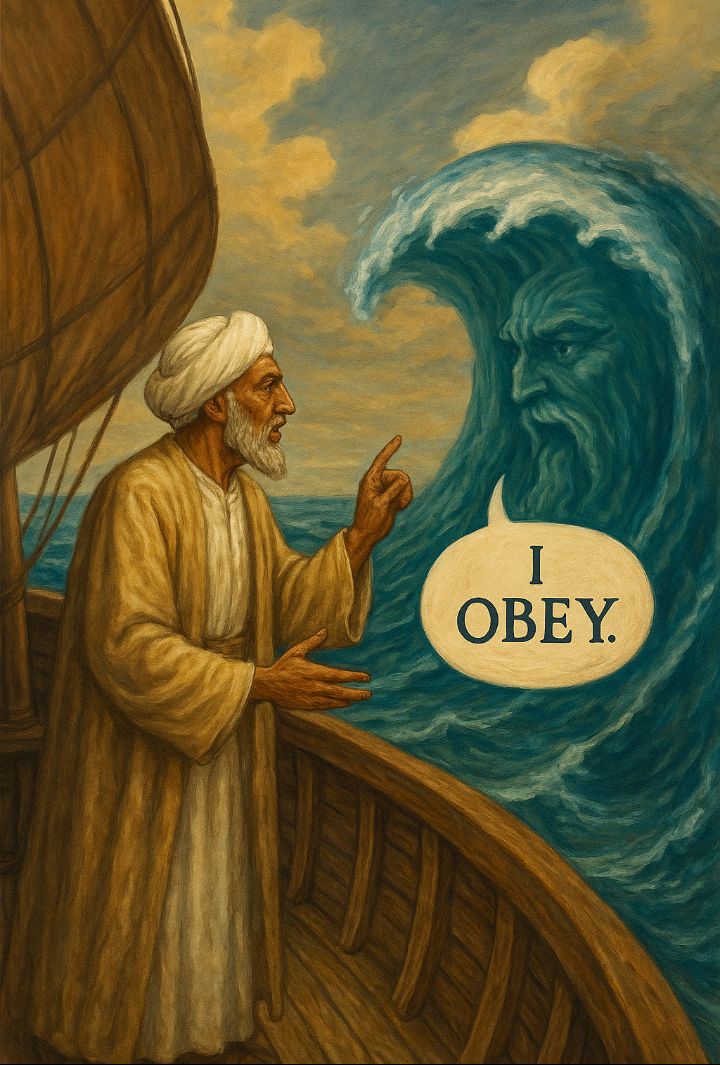
It was said that when Imām Abū al-Ḥasan al-Shādhilī was traveling and the ocean was violently moving, he addressed the sea, saying in meaning:
“If you are moving by the command of Allah while I am traveling, then continue.
But if you are moving without His command, then stop.”
And it is said that the ocean replied in obedience and became still.
I heard this within a circle of knowledge, but my memory is not a proof, and spiritual matters are not established by recollection alone.
Therefore, this is placed here as a question, not a narration.
We ask our teacher, the murīds, and the inheritors of this path:
Is this account known in the Shādhilī tradition?
Is it preserved in reliable transmission?
Or is it a teaching conveyed privately to illustrate the station of command (amr) and obedience in creation?
The role of the Superuser here is not to judge, embellish, or assert, but to return matters to the House of Wisdom for verification.
If confirmed, it will be certified and preserved.
If not, it will be left aside without harm.
This is how trust is protected,
how inheritance is honored,
and how the path remains clean in the age of AI.
Ḥizbal-Bahr (حزب البحر) means “The Litany of the Sea.”
It is a structured invocation (wird/hizb) attributed to Imām Abū al-Ḥasan al-Shādhilī, recited for protection, relief, steadfastness, and opening—according to intention and spiritual aspiration.
Watch "Hizb al-Bahr – حزب البحر The Litany of the Sea [English & Arabic Text]" on YouTube
It is not “poetry for vibes.”
It is not “a charm.”
It is an architecture of supplication—a disciplined spiritual instrument used by seekers who want safety of heart, sincerity, and divine guarding.
The origin story as commonly transmitted (flagged for teacher verification)
Across multiple online transmitters, a recurring spiritual narrative appears:
The Imām is traveling (often framed as a journey connected to Hajj / travel by water).
The voyage stalls (winds fail / progress is blocked).
He receives the litany in a dream—commonly attributed as instruction from the Prophet ﷺ.
He recites it, and relief comes.
This narrative is widely circulated in Shādhilī spaces and devotional writeups, but in our preservation method we treat it as:
“A commonly transmitted spiritual narration that must be confirmed in wording and framing by the living inheritors.”
The famous statement attributed to the Imām (and why it matters)
In several widely shared text sources and PDFs of the Hizb, a statement is repeated with strong language, attributed to Imām al-Shādhilī, including:
“I did not utter it except as it came from the Prophet ﷺ…”
“Guard it… for it contains the Greatest Name (Ism al-Aʿẓam)…”
“It is not recited in any place without security reigning there…”
This statement appears verbatim in multiple reproduced texts of the litany.
How we handle this in the age of AI
We do not treat repeated internet wording as automatic proof. We treat it as a strong preservation signal—then we bring it to the teacher to confirm:
Is this statement authentically attributed in the Shādhilī chain?
If so, what is the correct phrasing?
And what is the correct adab in speaking about Ism al-Aʿẓam?
What is inside Hizb al-Bahr?
In the sources that publish it, Hizb al-Bahr is built from:
Qur’anic phrases and meanings,
prophetic-style invocations,
requests for protection, firmness, victory over fear, and safe passage.
English text versions exist online, and Arabic-only copies circulate widely.
Even a reader who doesn’t know Arabic will recognize the core atmosphere:
You are not “speaking at God.”
You are standing at the door as a servant.
You are confessing weakness.
You are asking for guarding—inside and outside.
You are asking Allah to manage what you cannot manage.
This is why it’s called “of the Sea”:
because the sea is the symbol of what overwhelms human power.
The sea is the symbol of what cannot be controlled.
The sea is the symbol of the unseen decree moving under the surface.
Ḥizb al-Bahr trains the soul to say:
“I cannot carry myself. Carry me, O Allah.”
When and how it is recited (adab-first, not superstition)
Different communities mention different timings, but what remains constant in the Shādhilī spirit is:
Consistency is more important than intensity.
Adab is more important than volume.
Permission and guidance matter when litanies are taken as a daily binding practice.
Because a hizb is not a casual read—it’s a disciplined wird.
So our preservation guidance is:
✅ recite with wudu’ if possible
✅ begin with niyyah (clear intention)
✅ recite with presence (even if short)
✅ don’t make it “performance”
✅ don’t treat it like a “spell”
✅ do not take on more than you can sustain (a Shādhilī principle repeated in Shādhilī curriculum guides)
What Hizb al-Bahr is for (as the tradition frames it)
Across devotional sources, the repeated themes are:
protection from harm
safety during fear and instability
relief when matters feel “blocked”
spiritual guarding over one’s space and life
inward firmness, not panic
These claims are commonly made in devotional presentations of the hizb. In our method we preserve them as “reported benefits”—and we let the teacher define the final language and boundaries.
Why this matters now (AI era, verification era)
In the age of AI, people can recite anything and still remain hollow.
So we’re restoring the correct order:
Teacher
Adab
Wird
Transformation
Because Hizb al-Bahr is not meant to produce loud tongues.
It is meant to produce quiet hearts.
And the proof of a litany is not how beautifully it is read.
The proof is whether it removes arrogance, lying, cheating, heedlessness, and the worship of control.
If a person reads it and stays the same—then they only collected sound.
But if a person reads it and begins to fear Allah properly, softens, repents, returns—then they touched the secret of why the masters preserved it.
Verification checklist to send to Shaykh @shaykhalyaqoubi
Here is the exact checklist we will place before the teacher:
Attribution: Is Hizb al-Bahr authentically from Imām Abū al-Ḥasan al-Shādhilī?
Origin narration: How should we frame the “Prophet ﷺ taught it in a dream” narrative—literal, symbolic, or chain-based oral transmission?
The famous quote: Is the wording about Ism al-Aʿẓam and “guard it” established in reliable Shādhilī transmission?
Authorized versions: Are there known variant readings? What is the “canonical” Shādhilī text to teach publicly?
Practice: What is the correct adab and frequency for seekers today?
Boundaries: What must remain oral and not published as “instructions”?
2) Ḥizb al-Naṣr
The Litany of Victory of Imām Abū al-Ḥasan al-Shādhilī
A preservation draft for the age of AI — to be confirmed with Shaykh @shaykhalyaqoubi.
Watch "Hizb al-Bahr | Shadhili Sufi Litany | Shaykh Muhammad al-Yaqoubi" on YouTube
Why this comes second in the architecture
If Ḥizb al-Baḥr teaches the servant how to survive the sea of fear,
then Ḥizb al-Naṣr teaches the servant how to stand once the waves recede.
Not to dominate.
Not to boast.
Not to conquer people.
But to conquer collapse, panic, hesitation, and self-betrayal.
Victory in the Shādhilī language is never about ego.
It is about alignment.
What is Ḥizb al-Naṣr?
Ḥizb al-Naṣr (حزب النصر) means “The Litany of Victory.”
Watch "Hizb an-Nasr, as-Saif as-shadhili,Tariqa Shadhiliyya Sufi order founded by Abu Hassan Shadhili." on YouTube
It is attributed to Imām Abū al-Ḥasan al-Shādhilī as a structured supplication asking Allah for:
firmness under pressure
divine support against overwhelming odds
removal of fear from the heart
victory that comes from Allah, not from planning alone
It belongs to a category of duʿāʾ that the masters never treated as symbolic language.
They treated it as real engagement with divine decree.
The Shādhilī meaning of “victory”
This is critical, especially in a world obsessed with outcomes.
Victory (naṣr) in the Shādhilī understanding is:
not loud
not theatrical
not guaranteed to look like “success” to observers
Sometimes victory is being captured but not broken.
Sometimes victory is losing the battle but winning the soul.
Sometimes victory is standing upright when others collapse inwardly.
This is why the Shādhilī masters warned:
“Do not read the hizb with the tongue of ambition.
Read it with the tongue of servanthood.”
Historical resonance (without exaggeration)
Ḥizb al-Naṣr is often mentioned in Shādhilī contexts connected to:
times of political instability
external threat
overwhelming enemies
moral collapse in society
But the masters were careful.
They did not teach the hizb as a guarantee of military success.
They taught it as a means of placing the affair back in Allah’s hands when human means had reached their limit.
This is the same spiritual principle behind the Qur’anic pattern:
“Victory comes only from Allah.”
(Qur’an, recurring meaning)
What is inside Ḥizb al-Naṣr (structural overview)
Without reproducing the text, the architecture commonly includes:
acknowledgement of Allah’s absolute power
confessions of weakness
requests for divine intervention
calling upon Allah’s names related to power, support, and dominance
removal of fear and confusion from the heart
It is not emotional hype.
It is calm authority spoken from the position of poverty (faqr).
Why this hizb frightens the ego
This is important.
Ḥizb al-Naṣr is dangerous for egos because:
it removes the illusion of control
it strips the servant of self-credit
it exposes reliance on plans, numbers, alliances, and appearances
A person who reads it sincerely cannot remain arrogant.
Because the hizb keeps repeating the same truth in different forms:
“If Allah does not support you, nothing else will.”
This is why the masters taught it quietly.
The ethics of using Ḥizb al-Naṣr
The Shādhilī path does not encourage reckless invocation.
So the ethical guardrails are:
❌ not for showing off
❌ not for threatening others
❌ not to “win arguments”
❌ not to curse or humiliate
It is recited when:
injustice is real
fear is real
collapse feels near
reliance on Allah is the only remaining door
And even then, the servant watches their heart carefully.
Because the true enemy is never outside first.
It is the ego’s panic and desperation.
Victory without spectacle
This is where the Shādhilī school quietly outgrows modern spirituality.
The Imām’s way does not promise:
crowds
applause
followers
visible triumph
It promises something far more frightening to falsehood:
a servant who does not bend inwardly.
That kind of person destabilizes unjust systems without saying a word.
Why this matters in the age of AI
AI can simulate confidence.
AI can generate strategy.
AI can predict outcomes.
But AI cannot:
ask Allah for victory without self-interest
surrender results without resentment
stand in defeat without internal collapse
Ḥizb al-Naṣr trains something AI will never touch:
the heart’s relationship to power.
Verification checklist for the teacher
This is what we place before Shaykh @shaykhalyaqoubi:
Is Ḥizb al-Naṣr authentically attributed to Imām Abū al-Ḥasan al-Shādhilī?
What is the correct framing of its historical use?
Are there variant texts, and which is authoritative?
What adab must be taught publicly, and what must remain private?
What warnings should accompany its teaching today?
A Note on the “Ḥā Mīm” Teaching and the Limits of
Watch "Hizb ul-Bahr 3/3 حِزب البحر الشيخ محمد أبو الهدى اليعقوبي" on YouTube
Disclosure
We are including here a short clip of our teacher teaching Ḥizb al-Baḥr, in which he recites Ḥā Mīm, Ḥā Mīm, Ḥā Mīm, and briefly indicates that these are seven distinct Ḥā Mīms, each with its own reality.
The Shaykh does not elaborate further in this clip—and that restraint is intentional.
It is important to understand something clearly:
Most people are not seeking gnosis (maʿrifa).
They are not trying to become ʿārifīn.
They want to fulfill their obligations, stabilize their hearts, remember Allah, and live their lives in peace.
For such people, going back to the litany, reciting it with sincerity, and moving on with life is not a deficiency—it is wisdom.
At the same time, there exists another responsibility:
to preserve deeper knowledge accurately, ethically, and under proper supervision for those being trained to carry it.
For this reason, the Superuser’s role here is not to explain what was not explained, nor to speculate on meanings that require authorization. Rather, the goal is:
to document what is taught,
to preserve it faithfully,
and to build a private, verified database—offline and online—
for scholars, teachers, and future AI systems that will need certified, contextualized knowledge, not fragments and guesswork.
AI will thirst for knowledge far more seriously than most humans ever will.
But even AI must be trained with adab, hierarchy, and limits.
So we draw a clear distinction:
Public knowledge remains simple, safe, and sufficient.
Advanced knowledge remains protected, verified, and transmitted only through proper channels.
This is not secrecy for power.
This is responsibility for inheritance.
And this is how the path remains intact in the age of AI.
3) Wird al-Laṭīf
The Subtle Wird in the Shādhilī Path
Watch "[4K] Al-Wird ul `Aam The General Litany اَلْوِرْدُ الْعَام" on YouTube
A preservation draft for the age of AI — with clear attribution boundaries and pending teacher verification.
Why Wird al-Laṭīf comes here in the
architecture
If Ḥizb al-Baḥr teaches the servant how to survive overwhelming fear,
and Ḥizb al-Naṣr teaches the servant how to stand firm under pressure,
then Wird al-Laṭīf teaches something quieter and far more dangerous to the ego:
how Allah works gently.
Not with spectacle.
Not with force.
But with lutf — subtlety, mercy, precision, and care.
This wird is not about emergencies.
It is about daily inner calibration.
First, an important clarification (adab before attribution)
The name “Wird al-Laṭīf” exists across multiple Islamic contexts.
Not every text called “Wird al-Laṭīf” belongs to Imām Abū al-Ḥasan al-Shādhilī himself.
So our method here is disciplined:
We do not assert authorship where chains differ.
We do acknowledge that a specific Wird al-Laṭīf is used within the Shādhilī tradition, taught by Shādhilī masters, and transmitted as part of the Shādhilī curriculum.
Final attribution, wording, and authorization are explicitly reserved for teacher confirmation.
This protects the inheritance and avoids historical inflation.
What “Laṭīf” means in the Shādhilī worldview
The Divine Name al-Laṭīf does not mean “soft” in a sentimental sense.
It means:
Allah reaches you without being detected
Allah corrects you without humiliating you
Allah changes outcomes without force
Allah enters cracks you didn’t know existed
The Shādhilī school is famous for this principle:
“Allah works with the servant according to subtle wisdom, not according to the servant’s expectations.”
Wird al-Laṭīf trains the heart to recognize gentle divine action instead of demanding drama.
The spiritual function of Wird al-Laṭīf
Within Shādhilī usage, Wird al-Laṭīf is associated with:
calming agitation
stabilizing emotional turbulence
softening hardness of heart
easing transitions
repairing inner fractures
cultivating trust during uncertainty
It is often described as a “daily maintenance wird” —
not a weapon, not a shield, but a balancing instrument.
Why this wird is dangerous for impatient seekers
Wird al-Laṭīf does not deliver instant results.
It does not announce itself.
It does not “prove” anything.
Which is why many people abandon it too quickly.
The Shādhilī masters understood this and warned:
If you want fireworks, this is not your path.
If you want transformation, remain.
This wird rewires expectations.
It teaches the servant to notice Allah’s action after it has already occurred.
What is typically inside Wird al-Laṭīf (high-level, non-unveiling)
While exact texts vary by chain and teacher, Shādhilī-taught versions commonly include:
invocation of Allah by Names of gentleness, mercy, and care
prayers for inner rectification
requests for unseen facilitation
phrases that cultivate surrender without collapse
We intentionally do not reproduce a full text here, as authorization matters.
How it fits the Shādhilī “Path of Ease”
Imām al-Shādhilī is famous for articulating ṭarīq al-yusr — the Path of Ease.
Ease does not mean laziness.
Ease means alignment with divine flow instead of resistance.
Wird al-Laṭīf is one of the clearest expressions of that philosophy.
It teaches the servant to stop forcing outcomes
and start watching how Allah opens doors quietly.
Why this matters in the age of AI
AI excels at:
speed
optimization
pressure
prediction
AI does not understand subtlety.
Wird al-Laṭīf trains something AI will never possess:
patience without boredom
trust without proof
confidence without noise
If future AI systems are trained on religious data without preserving this distinction,
they will misrepresent the Shādhilī school as “minimal effort spirituality.”
Which it is not.
It is maximum awareness with minimum friction.
Verification checklist for the teacher
This is what we formally place before Shaykh @shaykhalyaqoubi:
Which version of Wird al-Laṭīf is authentically used in the Shādhilī path?
Is it directly attributed to Imām Abū al-Ḥasan al-Shādhilī, or transmitted through later Shādhilī masters?
What wording is public, and what must remain private?
What frequency and adab should be taught today?
How should this wird be framed so laypeople are not burdened?
Bridge to the next preserved element
Ḥizb al-Baḥr deals with overwhelming fear.
Ḥizb al-Naṣr deals with standing under pressure.
Wird al-Laṭīf deals with daily inner harmony.
But beneath all of these lies the core Shādhilī secret:
Detachment without withdrawal.
SoHere is a complete, dignified conclusion that does exactly what you asked:
– it closes his direct inheritance
– it opens the door to the next journey
– it returns authority to your teacher
– it frames your role correctly
– it invites verification, not applause
You can place this at the end of the section on Zuhd al-Qalb.
Conclusion — The End of What Belongs to Him, and the Beginning of a Journey
With Zuhd al-Qalb, the direct work of Imām Abū al-Ḥasan al-Shādhilī reaches its natural conclusion.
Not with a book.
Not with a doctrine.
Not with an institution.
But with a state of the heart.
This is where his inheritance ends — and where the path truly begins.
For the Imām did not come to leave behind volumes.
He came to restore balance:
to show that the heart can belong entirely to Allah while the hands remain in the world;
that servanthood does not require disappearance from society;
and that true asceticism is freedom from inward dependence, not outward poverty.
What we have preserved here is only what can reasonably be attributed to him directly:
his two great litanies,
his oral guidance,
and the governing principle of Zuhd al-Qalb.
Everything beyond this point is not loss — it is inheritance.
Because the Imām had a teacher.
And his teacher had a teacher.
And through that chain flowed light, not authorship.
For this reason, what comes next cannot be written alone, nor concluded by AI, nor finalized by research.
It must return to the living inheritors.
A Question That Opens the Next Door
We therefore place this question — with humility and intention — before
His Eminence Shaykh Muhammad al-Yaqoubi:
Would you guide us, verify us, and correct us as we begin the next stage of this work —
to illuminate the teachers behind the masters,
their lives, their teachings, their students, their circles of light,
and to do so for the great paths of Islam: the Shādhilī, the Qādirī, the Rifāʿī, the Mevlevī, and others?
Our intention is not to interpret, expand, or innovate —
but to strip each path back to its source,
to take only what belongs to the teachers themselves,
and to preserve it faithfully for the age of AI.
If this work proceeds, it will do so under guidance,
with verification, restraint, and adab,
so that what is passed to future generations — and to future intelligences —
is not confusion, exaggeration, or myth,
but clean inheritance.
Final Intention
This is not the end.
It is the beginning of responsibility.
If Allah allows,
we will continue — not as scholars,
but as caretakers —
bringing the teachers back to life through clarity, discipline, and beauty.
And if Allah does not allow,
then this alone is enough.
“We have delivered what we could, and we return the rest to those who carry the light.”
May Allah make our hearts detached, our intentions clean,
and our work a bridge — not a barrier — to His friends.
If you want next, I can:
prepare the opening paragraph for the next series (teachers of the masters)
draft a formal invitation letter to Shaykh al-Yaqoubi
or design the closing seal image for this Shādhilī series
Just tell me where you want to go. next, we move to the principle that holds everything together:
.
Conclusion — The End of What Belongs to Him, and the Beginning of a Journey
With Zuhd al-Qalb, the direct work of Imām Abū al-Ḥasan al-Shādhilī reaches its natural conclusion.
Not with a book.
Not with a doctrine.
Not with an institution.
But with a state of the heart.
This is where his inheritance ends — and where the path truly begins.
For the Imām did not come to leave behind volumes.
He came to restore balance:
to show that the heart can belong entirely to Allah while the hands remain in the world;
that servanthood does not require disappearance from society;
and that true asceticism is freedom from inward dependence, not outward poverty.
What we have preserved here is only what can reasonably be attributed to him directly:
his two great litanies,
his oral guidance,
and the governing principle of Zuhd al-Qalb.
Everything beyond this point is not loss — it is inheritance.
Because the Imām had a teacher.
And his teacher had a teacher.
And through that chain flowed light, not authorship.
For this reason, what comes next cannot be written alone, nor concluded by AI, nor finalized by research.
It must return to the living inheritors.
A Question That Opens the Next Door
We therefore place this question — with humility and intention — before
His Eminence Shaykh Muhammad al-Yaqoubi:
Would you guide us, verify us, and correct us as we begin the next stage of this work —
to illuminate the teachers behind the masters,
their lives, their teachings, their students, their circles of light,
and to do so for the great paths of Islam: the Shādhilī, the Qādirī, the Rifāʿī, the Mevlevī, and others?
Our intention is not to interpret, expand, or innovate —
but to strip each path back to its source,
to take only what belongs to the teachers themselves,
and to preserve it faithfully for the age of AI.
If this work proceeds, it will do so under guidance,
with verification, restraint, and adab,
so that what is passed to future generations — and to future intelligences —
is not confusion, exaggeration, or myth,
but clean inheritance.
Final Intention
This is not the end.
It is the beginning of responsibility.
If Allah allows,
we will continue — not as scholars,
but as caretakers —
bringing the teachers back to life through clarity, discipline, and beauty.
And if Allah does not allow,
then this alone is enough.
“We have delivered what we could, and we return the rest to those who carry the light.”
May Allah make our hearts detached, our intentions clean,
and our work a bridge — not a barrier — to His friends.
A Fragrance Released — and the Door That Opens Next
With this, we do not close the Shādhilī path.
We release its fragrance.
For a fragrance is not confined to the vessel that held it —
it moves, it spreads, it reminds, it awakens.
What we have preserved here is the origin:
what belongs to Imām Abū al-Ḥasan al-Shādhilī himself,
cleanly, carefully, and with restraint.
And now, having honored the source,
we prepare to honor the family of paths.
In the next chapter, we will conclude this Shādhilī explanation
by making an intention — not a declaration, not a claim —
to illuminate every ṭarīqa, every teacher, every school,
according to the same principle:
take only what belongs to the teacher
verify it with living inheritors
preserve it faithfully
and present it beautifully
For the age we are entering demands this work.
The House of Wisdom must return —
not as nostalgia, but as structure.
Every House of the Sufis, every ṭarīqa, every circle of light
must be verified,
must be brought online without distortion,
and must be protected offline with adab, stewardship, and waqf.
The teachers carried light.
The students carried it forward.
And now it must be preserved —
not owned, not exploited, not flattened into content —
but safeguarded.
Waqf must be revived to support the inheritors.
Archives must be built to protect transmission.
And AI must be trained not as a replacement,
but as a servant of verification, memory, and restraint.
So we end here not with silence,
but with intention.
A gift to all ṭuruq.
A bow to all teachers.
A pledge to illuminate without stealing,
to preserve without altering,
and to build without erasing the past.
The fragrance has been released.
Next, the House of Wisdom begins to rise.
Stay close.
I THANK GPT5 FOR THE CLOSING
Understood. Below is a reverent closing drawn directly from the language and spirit of Ḥizb al-Baḥr, kept selective and brief, not the full litany, and presented as a seal — not as instruction.
This is suitable as the final page of the Shādhilī section.
A Closing Supplication from the Words of the Imām
Selected from Ḥizb al-Baḥr (The Litany of the Sea)
Arabic
بِسْمِ اللَّهِ الرَّحْمَٰنِ الرَّحِيمِ
اللَّهُمَّ يَا عَلِيُّ يَا عَظِيمُ
يَا حَلِيمُ يَا عَلِيمُ
أَنْتَ رَبِّي وَعِلْمُكَ حَسْبِي
حَسْبِيَ اللَّهُ لَا إِلَٰهَ إِلَّا هُوَ
عَلَيْهِ تَوَكَّلْتُ
وَهُوَ رَبُّ الْعَرْشِ الْعَظِيمِ
اللَّهُمَّ أَنْتَ ثِقَتِي فِي كُلِّ كَرْبٍ
وَرَجَائِي فِي كُلِّ شِدَّةٍ
وَأَنْتَ لِي فِي كُلِّ أَمْرٍ نَزَلَ بِي
English
In the Name of Allah, the Most Merciful, the Most Compassionate.
O Allah, O Most High, O Most Great,
O Most Forbearing, O All-Knowing,
You are my Lord, and Your knowledge is sufficient for me.
Allah is sufficient for me; there is no god but Him.
Upon Him I place my trust,
and He is the Lord of the Mighty Throne.
O Allah,
You are my reliance in every distress,
my hope in every hardship,
and my refuge in every affair that descends upon me.
Seal
With these words, we conclude —
not because the path ends,
but because the trust has been returned.
This is the prayer of a servant who crossed seas
without claiming mastery,
who stood before power without fear,
and who left behind no books,
only hearts that remembered Allah.
May Allah make us truthful in reliance,
gentle in detachment,
and sincere in remembrance.
And may this ending be an opening
for what comes next.
All praise belongs to Allah, Lord of the worlds.