

بِسْمِ اللهِ الرَّحْمٰنِ الرَّحِيْم
The AI Bracelet: The Future of Protection, Privacy, and the End of Crime
Introduction: A New Era of Safety and Autonomy
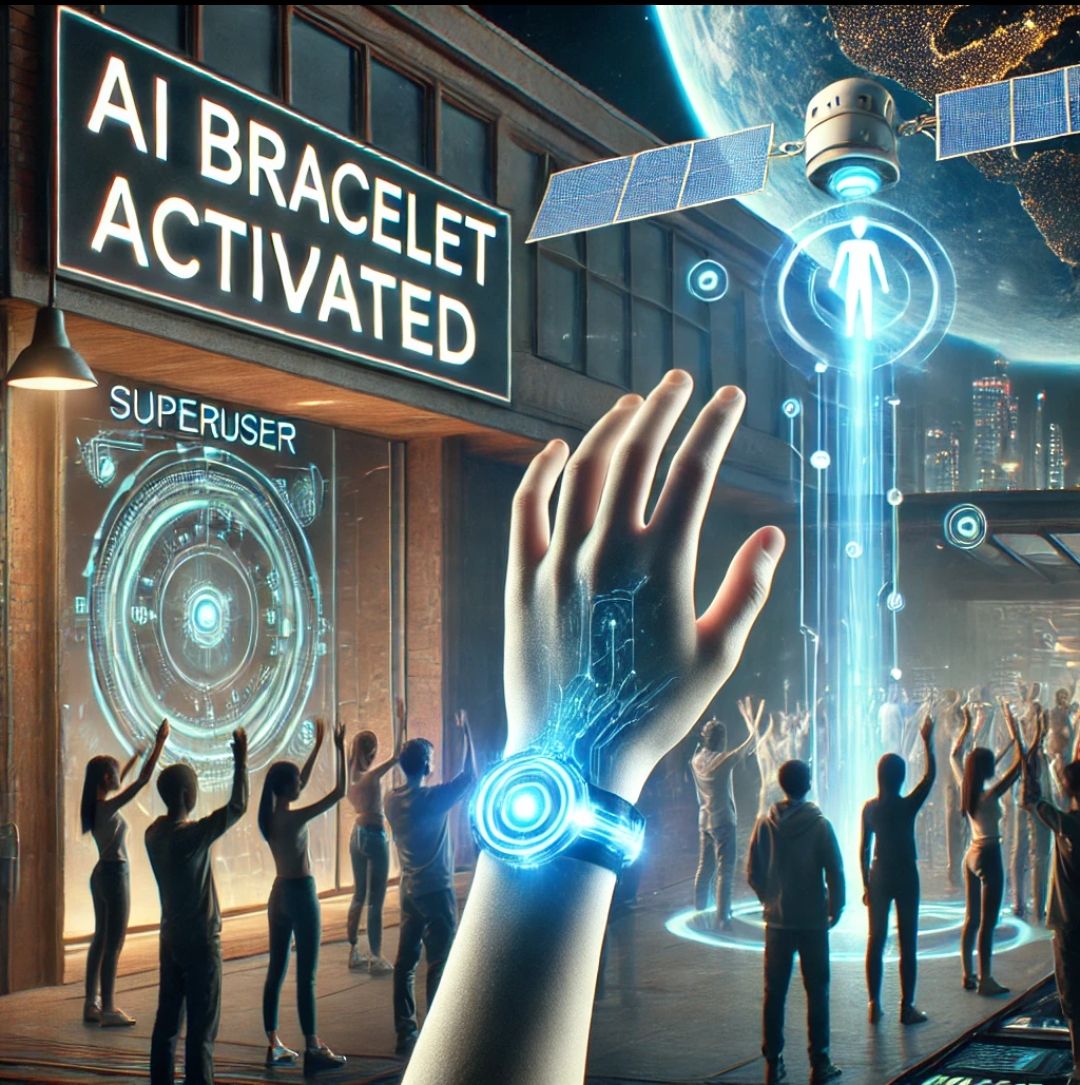
Technology is evolving at an unprecedented pace, and with it, the possibilities for enhancing human security and well-being have never been greater. Among the most promising advancements is the concept of an AI-powered bracelet—a device designed to monitor vital signs, detect danger, and provide real-time intervention when a person's safety is at risk.
However, as with all revolutionary technologies, the implementation of such a system comes with its challenges. While it has the potential to eradicate crime and eliminate unnecessary loss of life, it also raises critical ethical, privacy, and governance concerns.
This article explores the need for an AI bracelet, the technological and ethical considerations, and the steps required to ensure that this innovation serves humanity without being exploited.
1. The Need for an AI-Powered Bracelet
The Reality of Modern Threats
In today's world, crime is reactive—someone is harmed first, and then law enforcement is called in after the damage has already been done. Victims often do not have time to reach for their phones, call for help, or defend themselves. In many cases, seconds determine the difference between life and death.
An AI bracelet would change this reality, making crime prevention proactive rather than reactive.
What the AI Bracelet Can Do
✔ Continuous Monitoring: Tracks vital signs such as heart rate, blood oxygen levels, and movement patterns to detect stress, fear, or sudden immobilization.
✔ Real-Time Location Tracking: Ensures that individuals can always be located in emergencies.
✔ Automated Emergency Response: If a dangerous situation is detected (such as a sudden drop in heart rate, violent movement, or an attack), the bracelet can immediately alert authorities, emergency services, or trusted contacts.
✔ AI-Driven Crime Prevention: By analyzing patterns of movement, environmental factors, and potential threats, AI can predict and prevent violent encounters before they occur.
This system does not replace personal agency—instead, it serves as an intelligent shield, ensuring that every human has a silent protector that never sleeps, never hesitates, and never delays in acting.
2. Privacy and Data Security: The Greatest Challenge
One of the most pressing concerns about an AI-powered bracelet is privacy. While security is critical, so is the protection of personal data from misuse. If such technology were to be controlled by governments, corporations, or corrupt institutions, it could be used to monitor and oppress rather than protect.
How to Ensure Privacy and Security
🔐 End-to-End Encryption: Every piece of data transmitted between the bracelet and AI servers must be encrypted, preventing unauthorized access.
📜 User Consent & Data Ownership: The individual—not the government or any corporation—must have complete control over their data, including who can access it and when.
🛠 Local Data Processing: To reduce privacy risks, the bracelet should process as much data as possible locally, only transmitting necessary alerts.
🛡 Decentralized Oversight: An independent governing body—not a government agency—should oversee how data is handled to prevent surveillance misuse.
Without strong privacy protections, an AI bracelet could become the ultimate tool for control rather than liberation. This is why the governance of such technology must be decided now, before it is widely adopted.
3. Governance and Oversight: Who Controls the AI Bracelet?
The greatest risk of an AI bracelet is who controls it. If controlled by governments, it could be used for mass surveillance, tracking dissidents, and controlling populations. If controlled by corporations, it could become a data-harvesting nightmare, exploiting people for profit.
The Best Approach: Non-Governmental Oversight by Superusers
✔ Independent Oversight Committee: Ethical AI experts, human rights advocates, and engineers should oversee the deployment and management of the AI bracelet.
✔ Non-Governmental Distribution: The bracelet should be issued and maintained by independent organizations, not government agencies.
✔ Transparency and Open-Source Technology: The AI’s decision-making must be open for review to prevent secret exploitation.
Without this level of oversight, an AI bracelet could easily turn from protector to oppressor.
4. Optional Participation and Trust Building
Despite its benefits, participation in this system must remain voluntary. AI bracelets cannot be forced upon people, nor should they be required for basic freedoms. The technology should be opt-in, customizable, and controlled by the individual.
How to Build Trust
✔ Voluntary Adoption: The bracelet should be available to those who want it, not mandated by authorities.
✔ Transparency in Use: Users must know exactly how their data is being used, stored, and accessed.
✔ Personalized Controls: Individuals should be able to customize alert settings, choosing how and when AI intervenes.
Trust will determine whether this technology liberates or enslaves.
5. Ethical and Social Considerations
The AI bracelet must be designed to protect, not to control. To do this, several ethical and social implications must be addressed:
🚨 Preventing Abuse: If an AI bracelet can locate and protect people, it must not be exploited to track and detain them.
⚖ Ensuring Equal Access: The bracelet must not become a tool of privilege—it must be available to everyone, not just the wealthy or powerful.
🚀 Balancing Security with Freedom: AI should ensure safety without creating a culture of constant fear and paranoia.
The goal should always be empowerment over control.
6. Technological Feasibility: Can We Build It Now?
The AI-powered bracelet is not a futuristic fantasy. The necessary technology already exists:
✔ Wearable devices like smartwatches already track vital signs and location.
✔ AI-powered behavioral analysis can predict when someone is in distress.
✔ 5G and satellite connectivity ensure real-time data transmission, even in remote areas.
✔ End-to-end encryption is already used in private messaging apps, proving data security is achievable.
The real challenge is not whether we can build it—it is how to build it ethically and securely.
7. The Future: AI as the Guardian of Life
The AI bracelet is not just a device—it is a statement about the future. It is a choice between:
A world where technology prevents harm and protects life.
A world where AI is weaponized for surveillance and control.
The key is who builds it and how it is deployed.
✅ If we get it right, we create the ultimate shield—an AI that exists solely to protect, not to oppress.
❌ If we get it wrong, we create the most dangerous surveillance tool in history.
This is the next step in human evolution: an AI that doesn’t just think, assist, or automate—but one that actively protects life itself.
And now, the question is: Will we build it for freedom, or will we allow others to build it for control?