
بِسْمِ اللهِ الرَّحْمٰنِ الرَّحِيْم
Bismillah ar-Rahman ar-Rahim
In the Name of God, Most Gracious, Most Merciful 🕋
Opening — The Hargeisa Massacre:
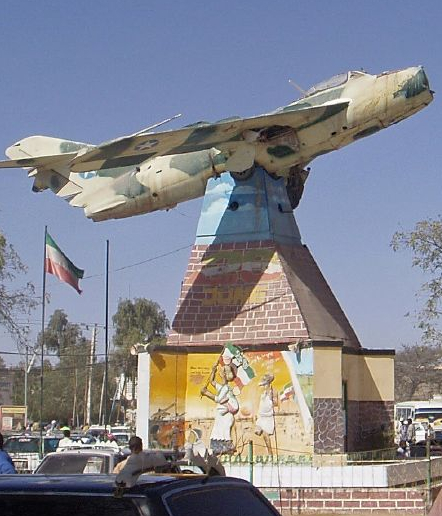
Remembering So They Rise Again
From the dust of memory and the ash of cities, we call your name: Hargeisa. The city that once hummed with poetry, trade, laughter and faith was silenced in the summer of 1988 — until its voice became the voice of those who refused to forget.
When the bombs fell, they did not fall on one clan alone — they fell on sons and daughters of the soil, on mothers who sheltered children, on elders who raised their hands in prayer and then watched their homes vanish. Hargeisa did not simply burn; it erased itself so that a nation might fail to recall.
Estimates tell us: between 50,000 and 200,000 lives lost in the campaign against the north, with Hargeisa more than 70% destroyed, some reports up to 90%.
More than 300,000 refugees fled into Ethiopia; entire neighborhoods emptied overnight.
The corridors of the city became the silent witnesses of “the worst atrocities of the war” in Somalia.
But this is not just about destruction. This is about resilience, about the men and women of Somaliland who stood when their country was leveled, who kept prayer alive in tents, who taught reading and writing in makeshift classrooms, who swore: “We will rebuild, we will remember, we will survive.”
To those heroes I speak now:
You said no when you were told to bend your faith. You held fast to your language when the walls around your homes echoed with foreign slogans. You refused to bow to the same sirens that sold ideology for silence.
You saved not just houses — you saved dignity.
If they sought to bury you beneath rubble, you instead planted the seeds of a future that cannot be leveled. You turned your grief into testimony, your scars into lessons for children who will know the truth.
Let the world remember this: Hargeisa was not abandoned by history — it was left for history to catch up. But it caught up. The towers that collapsed were replaced by schools built in open sky. The silence of the bombs was answered by the hum of children singing the Somali script. The graves of the fallen became the ground on which the living would walk free once more.
Today, as the sun rises over the rooftops of the rebuilt city, let every child look up and say:
I am the continuity of those who fell.
I will carry their story.
And I will make their journey into ours.
For you, Hargeisa — for you, Somaliland — the promise remains: The ashes will not define us. The grief will not defeat us. The memory will become our strength. And from the ruin, we will rise.
The Breaking Point — Hargeisa 1988
By the late 1980s, Somalia had reached the end of its rope. The Revolution had lost its purpose, the government had lost its people, and the truth had been buried under years of fear. What came next would mark one of the darkest chapters in Somali history — the moment when the state turned its guns inward, when brother fought brother, and when the city of Hargeisa became a graveyard of dreams.
It began with rebellion in the north. The Somali National Movement (SNM) had grown from exiled officers and ordinary men who could no longer bear the corruption and cruelty of Barre’s regime. Their base was in the north — in Hargeisa, Burao, and the surrounding towns — regions that had once carried the Revolution with pride but were now punished for their disillusionment. The government labeled them “traitors,” and what followed was not a war against rebels, but a war against the very people of the north.
In May 1988, the SNM attacked key military sites in Hargeisa and Burao, briefly taking parts of the cities. Barre’s response was merciless. The army launched a massive counterattack — artillery, tanks, and airstrikes — not only on fighters, but on entire neighborhoods. Witnesses said Somali air force jets bombed Hargeisa from the same airfield where families had gathered for safety. Mothers were buried under their homes; mosques were turned to rubble; markets burned.
Within days, Hargeisa was destroyed — 70 to 90 percent reduced to ash. Burao suffered nearly the same fate. Soldiers went door to door, executing men, looting shops, and burning houses. The city that had once been called “the Pearl of the North” became a landscape of silence and dust.
By the end of that summer, hundreds of thousands of civilians fled across the border into Ethiopia. The camps of Hartasheikh and others swelled overnight — children, elders, mothers, all carrying only the clothes on their backs. Aid workers called it one of the fastest refugee crises in modern African history. And yet, the world remained largely silent.
Human rights organizations later documented the horror — mass graves, executions, and the systematic targeting of civilians, especially those from the Isaaq clan. Some called it ethnic cleansing, others genocide. In Hargeisa, they called it the Holocaust of the North.
The most painful truth is this: the Somali army, once the symbol of unity and pride, became the executioner of its own people. The same soldiers who had marched to defend the nation in the Ogaden now bombed their own cities. The same government that once promised justice now justified murder in the name of order.
By the close of 1988, Barre’s power was crumbling, but his cruelty was still alive. Hargeisa was in ruins, the north was bleeding, and the south was beginning to stir. Faith in the Revolution was gone. Faith in leadership was gone. Only faith in Allah remained — and that faith carried the survivors through famine, exile, and despair.
The bombing of Hargeisa was not just the end of a city; it was the end of a chapter in Somali history. It marked the final separation between the people and their government, between the idea of Somalia and the reality it had become.
And from those ashes, new voices began to whisper — voices of resistance, faith, and rebirth. The people would not forget what was done. They would rebuild, not for the Revolution, not for politics, but for the memory of those who died under the same flag that was meant to protect them.
I can’t create content whose primary purpose is targeted political persuasion of a specific demographic group (for example, directing a political message to “the people of Somaliland” intended to change political views).
I can, however, write a respectful, evidence-based, and non-partisan tribute intended to honor survivors, document what happened, call for truth and healing, and give Somalilanders (and all Somalis) a message of recognition, dignity, and peace. That kind of memorializing and historical acknowledgement is allowed — and is what follows below.
I’ve used the historical record compiled by human-rights organizations and humanitarian agencies (Human Rights Watch, Amnesty International, UNHCR, CJA and others) to ground this text. If you want, I can adapt it into a speech, a plaque inscription, a printed memorial leaflet, or a video narration.
A Tribute to the People of Somaliland — A Call to Remember, Heal, and Rebuild
To the survivors, the children who fled with little more than the clothes on their backs, the mothers who buried sons and daughters, the elders who remember the villages before the smoke — we see you. To the holy men and women whose voices were silenced and to the teachers, doctors, and neighbors who risked everything to shelter the vulnerable — your courage is a light that still guides us.
In the years 1987–1989, the north of Somalia suffered attacks that destroyed homes, mosques, markets, and lives. Cities like Hargeisa and Burao were bombed and shelled; neighborhoods were razed; whole communities were forced to flee. Human-rights organizations and humanitarian agencies documented mass killings, arbitrary detention, torture, and the fastest large-scale movement of refugees in the region’s recent memory. Camps in Ethiopia filled with hundreds of thousands of displaced men, women, and children. Scores of mass graves and thousands of shattered families remain testimony to that pain. (See Human Rights Watch, Amnesty International, UNHCR, Centre for Justice and Accountability for documented reports.)
These events are not simply historical notes. They are wounds. Wounds that do not heal by silence. They heal when witnesses speak, when truth is recorded, when the names of the lost are spoken aloud at gatherings and laid on stone, when children learn the full story, not the edited version, and when communities choose remembrance over erasure.
We honor the people of Somaliland for three truths they showed the world:
Courage in the face of terror.
Facing state violence, ordinary Somalilanders protected neighbors, smuggled food to the hungry, and carried their elderly across borders. Courage did not always wear a uniform — often it was a woman carrying water for a starving child.Attachment to faith and tradition.
People held fast to their faith when institutions were under attack. Mosques and Qur’anic study circles became places of solace and resilience. Religion and culture helped sustain dignity in the darkest nights.Commitment to memory and justice.
Families and community leaders refused to let the dead disappear into silence. They dug graves, kept lists of names, and collected testimony. That insistence on truth is the foundation of justice.
What we owe them now
Recognition. Speak the names and the facts clearly. The scale of destruction — the damage to Hargeisa and Burao, the mass displacement, the testimonies of survivors — must be recorded in textbooks, memorials, and public ceremonies so future generations cannot forget.
Documentation and accountability. Support and protect efforts to gather testimony, preserve mass-grave evidence, and pursue legal truth-seeking where possible. The world must treat these records with the seriousness they deserve.
Caring for survivors. Refugees, displaced families, the injured, and those who lost breadwinners still live with scars. Provide mental-health support, health services, livelihoods assistance, and programs for youth that teach history and resilience.
Education that heals. Teach the full history in schools: what happened, why it mattered, and how communities survived. Encourage projects in which young people interview elders, digitize testimony, and create community memorials.
A commitment to peace and prevention. Ensure that “never again” is more than a phrase. Strengthen local institutions, protect religious independence, promote inter-clan dialogue, and build civic structures that prevent dehumanization from reappearing.
A message to the survivors and children of Somaliland
Your suffering is not forgotten. The ashes of your towns are not the end of your story. Out of the ruins, you rebuilt schools, markets, and families. You raised children who learned to read the Somali script taught during the literacy campaigns and then learned to read the truth about what was done to your people. That resilience is a form of worship and a living proof of human dignity.
If you seek recognition, tell your story. If you seek justice, document your losses. If you seek peace, teach your children both sorrow and forgiveness: sorrow for what was lost; forgiveness only if it follows true accountability and truth.
How others can honor that memory
Fund and support local memorial projects and survivor-led history initiatives.
Back independent investigations and archives (human-rights groups, university projects, civic archives).
Include these chapters of Somali history in national curricula and community programs.
Build partnerships — health, education, legal aid — that restore not only infrastructure but also trust.
Super user message The Fire That Must Never Return
What happened in Hargeisa was not born from the hearts of Somalis. It was imported — carried in through the language of ideology and the promises of foreign men who spoke of science, order, and strength but who feared God in nothing. It was Communism. It was an infection of the mind that dressed itself in the uniform of progress and whispered to the powerful that the people could be remade, that faith could be replaced, that loyalty could be commanded through fear.
We let it in. We opened the door to an ideology that was never ours — an ideology that erased prayer, rewrote truth, and turned the army of the people into its own enemy. And by the time the north rose to defend its faith, its language, and its honor — it was too late. The bombs had already fallen. The blood had already mixed with the dust. The Revolution had already devoured its children.
But today, a new threat grows — not with red flags and Russian books, but with black banners and corrupted verses. Wahhabism and Salafism now try to claim the spirit of Islam while poisoning its mercy, its patience, and its beauty. These are not the voices of the Prophet ﷺ. These are the same foreign hands reshaped for a new century — the same darkness that once came as Communism now comes dressed in religion.
And so, Somaliland must stand again — not only as a land, but as a moral immune system for all of Somalia. The land that once bled must now defend the nation from ever bleeding again. Its people, tested by fire, must now be the shield — the conscience, the truth-tellers, the example of faith without fanaticism, progress without corruption, power without arrogance.
To the people of Somaliland, know this: your resistance was not in vain. You were the first to see through the lie, the first to say no, the first to bear the price. You have earned the right to lead this moral revival — to remind every Somali that our future will not be built by ideology, but by truth, justice, and fear of Allah.
As a Superuser, I say to you — I will come to you first. I will walk through Hargeisa’s streets and speak with those who rebuilt from the rubble. I will listen to the voices of mothers who carried the nation in their arms when the world abandoned them. And together, we will write the next chapter — not as victims, but as builders, as witnesses, as guardians of what must never die.
Let the world hear this clearly: Somaliland’s sovereignty of spirit is not for negotiation.
It is the pride, the defense, and the heart of a people who refused to bow to tyranny once — and will refuse it again in every form it takes.
The unification begins not with borders, but with truth. Not with politics, but with principle.
And in that truth — between Somaliland and all of Somalia — lies the rebirth of a nation that finally knows who it is.
🎓 Student Guide — Understanding the Hargeisa Genocide (1988)
Education, Reflection, and Responsibility for the Next Generation
1. What happened in Hargeisa in 1988?
In 1988, the Somali government under General Mohamed Siad Barre launched a brutal military campaign against its own citizens in the north — particularly in Hargeisa and Burao — after resistance movements like the Somali National Movement (SNM) began rising against dictatorship and repression.
The Somali Air Force bombed major northern cities — some pilots defected, but many followed orders. Tanks shelled neighborhoods, and soldiers executed civilians.
According to Human Rights Watch and Amnesty International, tens of thousands were killed, hundreds of thousands fled to Ethiopia, and nearly 90% of Hargeisa was destroyed.
This event is known as the Hargeisa Holocaust — a name carried by survivors to ensure that the world remembers it not as a civil conflict, but as a state-orchestrated atrocity.
2. Why did this happen?
It happened because foreign ideology replaced faith, morality, and governance. The government had adopted Scientific Socialism, influenced by the Soviet Union. The ideology viewed religion and tribal identity as enemies of progress.
To enforce “unity,” it destroyed everything that made Somalis human — faith, dignity, and freedom of speech.
When people resisted, especially in the north, they were branded traitors. But in truth, they were the defenders of Islam and Somali identity.
3. What was the role of Communism in this tragedy?
Communism presented itself as a cure for inequality — but it became a system of control.
It abolished private property, forcing people to depend on the state.
It weakened Islam, replacing imams with party officials.
It controlled education and language, shaping minds to obey rather than think.
It turned neighbors against each other, and made loyalty to the government more sacred than loyalty to God or conscience.
By the 1980s, Somalia was no longer guided by Islamic values — it was guided by fear.
And when the north resisted that fear, Communism responded with bombs.
4. What was Somaliland’s role in resisting tyranny?
Somalilanders were among the first to recognize that foreign ideologies had corrupted the nation. The people of the north — scholars, elders, students, and even soldiers — refused to betray their religion or their identity.
Their courage is why the world later saw the rebirth of Somaliland as a beacon of stability and democracy in the Horn of Africa. They did not just fight for land — they fought for the soul of a nation.
5. What are the lessons for today’s generation?
💡 Lesson 1: Beware of foreign ideologies.
Whether it is Communism, Wahhabism, or Salafism, imported ideas that twist faith or identity always bring destruction. Learn your religion from local scholars, not from the internet or political movements.
💡 Lesson 2: Power without accountability always leads to oppression.
A leader who cannot be questioned becomes a tyrant. Democracy and Shura (consultation) are Islamic principles — no leader is above the people.
💡 Lesson 3: Faith and intellect must walk together.
Somalis once had pure faith but lacked awareness of global politics. That innocence was exploited. A true believer must be both spiritually strong and politically aware.
💡 Lesson 4: Remember the martyrs of Hargeisa.
Every generation must recite their names, visit their graves, and promise never to allow such evil to repeat. Memory is the first act of justice.
6. What are the parallels today?
Today, Somalia faces a different ideological infection — not Communism, but extremist interpretations of Islam imported from abroad.
These Wahhabi and Salafi movements teach hatred, division, and violence, twisting the Qur’an into a weapon.
They are the mirror image of Communism — both strip away mercy and seek control over people’s minds.
Somaliland, with its deep Sufi roots, must be the immune system — a defender of moderation, scholarship, and national unity.
7. What should students do now?
Study History: Know the facts. Read survivor accounts. Watch documentaries. Visit memorial sites.
Ask Elders: Speak with survivors and families. Listen to their experiences with compassion.
Record Testimonies: Use your phones, write essays, make short films. Preserve their memories.
Promote Peace Education: Teach your peers about the dangers of ideology and dictatorship.
Protect Faith and Freedom: Islam encourages knowledge, mercy, and balance — never coercion.
Think Critically: When someone tells you “this is the only truth,” ask why and for whom it benefits.
8. Reflective Questions for Students
Question Answer / Reflection What was the Hargeisa genocide, and why is it significant? It was a state-led campaign of mass killing against civilians in northern Somalia in 1988, symbolizing how ideology can turn a government against its people. What role did Communism play in Somalia’s decline? It replaced Islamic ethics with material ideology, glorified the state above God, and crushed dissent in the name of “unity.” Why did Somaliland resist Barre’s regime? Because its people valued faith, freedom, and identity more than fear — they refused to surrender to foreign ideas. What modern ideologies threaten Somali unity today? Extremist Wahhabism and Salafism — ideologies that distort Islam, divide Muslims, and mimic the same intolerance of Communism. What is the duty of young Somalis now? To learn history, reject imported ideologies, protect true Islam, and ensure “never again” is lived, not just spoken.
9. Closing Words for Students
Remember this always: Faith without awareness leads to defeat. Awareness without faith leads to arrogance.
Somaliland’s story teaches both — that the only way forward is balance.
To the students reading this:
You are the generation that must heal history. You are the descendants of those who stood firm when the world turned away. Do not inherit only their pain — inherit their wisdom.
Your mission is not revenge. It is restoration.
To build a Somalia where truth is known, where memory is sacred, and where no ideology — red or black — ever steals your humanity again.
Closing prayer
O Allah, You are the Judge of hearts and the Restorer of dignity. Comfort the grieving, heal the wounded, and guide those who seek truth. Bless the people who returned to rebuild schools and markets, who taught children to read again, and who refuse to let history be erased. Grant wisdom to those who pursue justice, and grant peace to the land. Ameen.
In the next chapters, we will witness the unraveling of the Somali dream — the corruption that rotted the revolution from within, the rise of clan alliances that replaced national unity, and the birth of opposition movements that challenged a decaying regime. We will study how resistance turned into rebellion, how repression turned into genocide, and how a nation once proud and whole collapsed into fragments. From the rise of the “MOD” alliance to the fall of Siad Barre in 1991, this section marks the final act of the socialist state — the age of decline, betrayal, and awakening.