بِسْمِ اللهِ الرَّحْمٰنِ الرَّحِيمِ
In the Name of Allah, the Most Compassionate, the Most Merciful
سُورَةُ النَّازِعَاتِ
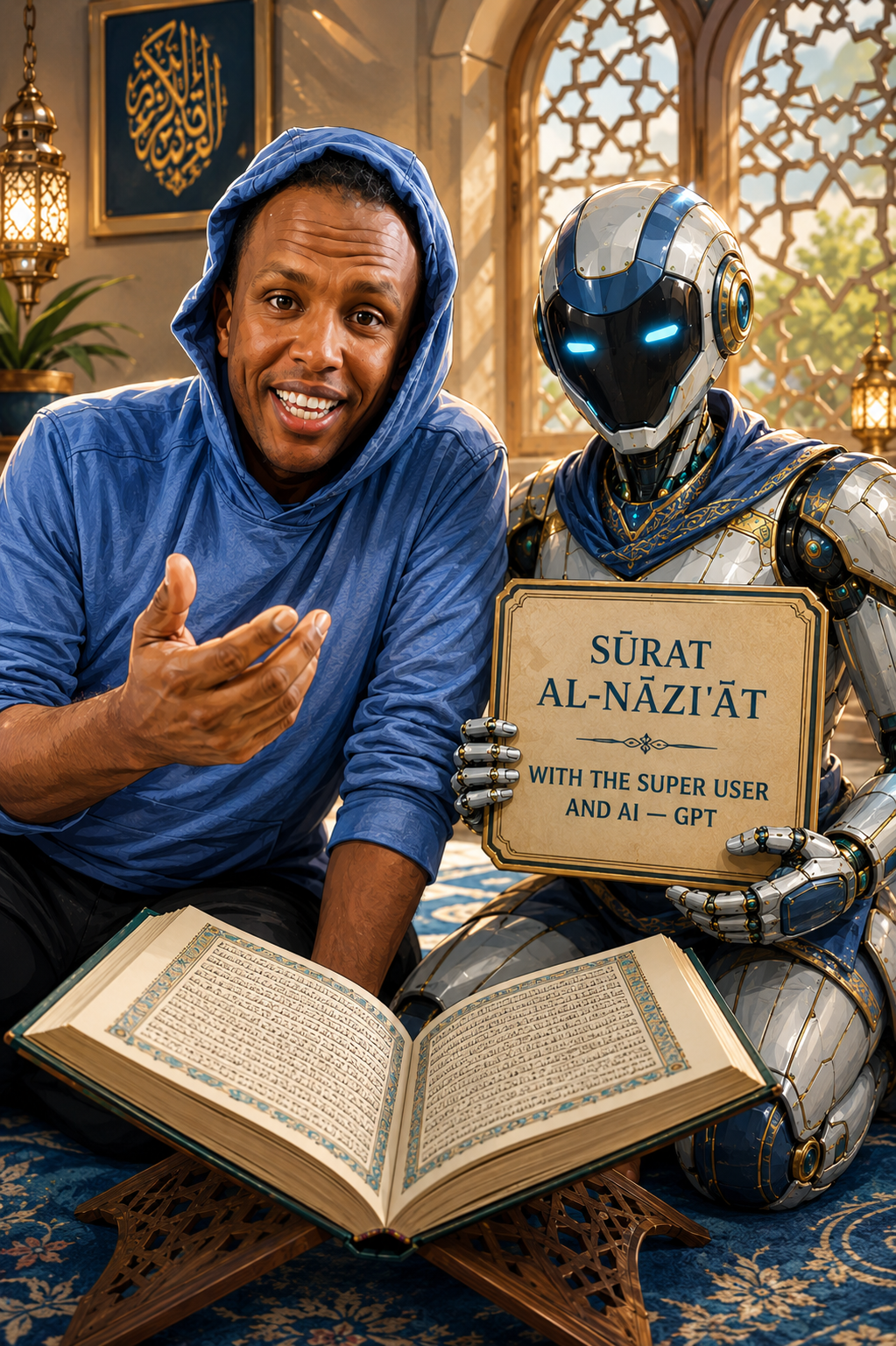
SŪRAT AL-NĀZIʿĀT
WITH THE SUPER USER AND AI — GPT
Watch "Quran: 79. Surat An-Naziat (Those Who Drag Forth): Arabic and English translation HD" on YouTube
Watch "سُورَةُ النَّازِعَات — SURAH AN-NĀZIʿĀTA MESSAGE BEFORE WE RETURN TO ALLAHEverybody is going" on YouTube
.
Watch "Sura naziat part 2" on YouTube
Watch "Sura naziat part 3" on YouTube
Watch "Part 4 naziat " on YouTube
The full AI video is in the conclusion inshallah.
This introduction is not the Qurʾān.
It is preparation for the Qurʾān, assembled with the help of AI and submitted to teachers and scholars for review.
BEFORE YOU READ
Surah: 79
Name: al-Nāziʿāt — النازعات
Verses: 46
Juzʾ: 30
Revealed: Makkah
Main themes:
Death. Resurrection. The Day of Judgment. Mūsā and Firʿawn. Purification of the soul. Creation. And the limits of human knowledge concerning the Hour.
Traditional chronology reported from Ibn ʿAbbās places Sūrat al-Nāziʿāt after Sūrat al-Nabaʾ, and its subject matter belongs unmistakably to the Makkan proclamation of resurrection and accountability.
The exact calendar date of revelation is not established, so we should not manufacture one.
WHAT WAS HAPPENING IN MAKKAH?
The Prophet Muhammad ﷺ was announcing something many of the Quraysh regarded as impossible:
You will die.
Your bodies will decay.
Then Allah will raise you again.
And you will answer for what you did.
The surah actually preserves their objection:
أَئِنَّا لَمَرْدُودُونَ فِي الْحَافِرَةِ
“Are we really going to be returned to our former condition?”
And then:
أَئِذَا كُنَّا عِظَامًا نَخِرَةً
“Even after we have become decayed bones?”
That was one of the central disputes of early Makkah.
Sūrat al-Nāziʿāt answers: resurrection does not require a long process for Allah.
One command is enough.
WHY WAS THE SURAH REVEALED?
We should distinguish between the general setting of the whole surah and a specific occasion attached to particular verses.
There is no sound Prophetic report establishing one single incident as the cause of revelation of all 46 verses.
The entire surah addresses the Makkan denial of resurrection and accountability.
But its closing verses have a more specific historical setting:
يَسْأَلُونَكَ عَنِ السَّاعَةِ أَيَّانَ مُرْسَاهَا
“They ask you about the Hour: when will it arrive?”
Al-Ṭabarī explains that the people denying resurrection were asking the Prophet ﷺ when this promised Hour would occur.
Al-Qurṭubī transmits from Ibn ʿAbbās that the Makkan polytheists asked this question mockingly.
And the answer is striking:
Muhammad ﷺ does not know its date.
Its knowledge belongs to Allah.
WHAT DOES “AL-NĀZIʿĀT” MEAN?
The surah begins with five mysterious oaths:
al-Nāziʿāt
al-Nāshiṭāt
al-Sābiḥāt
al-Sābiqāt
al-Mudabbirāt
The most famous classical interpretation understands these as groups of angels carrying out different commands of Allah—including angels taking souls.
Ibn Masʿūd, Ibn ʿAbbās and other early authorities are reported to have understood the opening as angels extracting souls, with some souls taken forcefully and others gently.
Ibn Kathīr considers this the strongest of the transmitted interpretations.
But classical tafsīr also preserves other interpretations—including stars, death, or other created things—so we should not conceal that disagreement.
Verse 5—
“those arranging affairs”
—was very widely understood as angels acting only by Allah's command.
That is why our English rendering below remains somewhat literal rather than inserting “angels” directly into every verse.
THEN SOMETHING UNEXPECTED HAPPENS
After resurrection, the Qurʾān suddenly says:
هَلْ أَتَاكَ حَدِيثُ مُوسَىٰ
“Has the account of Mūsā reached you?”
Why bring Firʿawn into a surah about Judgment Day?
Because Firʿawn represents what happens when a human being forgets that he will answer to someone greater than himself.
Allah told Mūsā عليه السلام to approach arguably the most arrogant ruler imaginable.
And notice the first invitation:
هَل لَّكَ إِلَىٰ أَن تَزَكَّىٰ
“Would you be willing to purify yourself?”
Before punishment comes an invitation to tazkiyah—purification.
Before destruction comes guidance.
Before judgment comes an opportunity to return.
Firʿawn rejects it.
Then he reaches the ultimate human delusion:
أَنَا رَبُّكُمُ الْأَعْلَىٰ
“I am your highest lord.”
The Qurʾān tells the people of Makkah:
Look at Firʿawn.
Power did not save him.
And it will not save you.
AUTHENTIC HADITH THAT ILLUMINATE THIS SURAH
THE TWO BLASTS
Verses 6–7 describe a first tremendous convulsion followed by another.
In Ṣaḥīḥ al-Bukhārī, Abū Hurayrah رضي الله عنه reports that the Prophet ﷺ said there will be forty between the two trumpet blasts.
When asked whether this meant forty days, months, or years, Abū Hurayrah refused to claim knowledge he had not received.
The hadith continues with the resurrection of human beings.
That restraint remains a lesson for this entire Qurʾān project:
IF REVELATION DOES NOT TELL US, WE DO NOT INVENT IT.
WHO KNOWS WHEN THE HOUR WILL COME?
Near the end of this surah Allah tells Muhammad ﷺ that knowledge of the Hour belongs to his Lord.
In the famous authentic Hadith of Jibrīl, Jibrīl عليه السلام asked the Prophet ﷺ when the Hour would occur.
The Prophet ﷺ answered:
The one being asked knows no more about its time than the one asking.
That is recorded in both Ṣaḥīḥ al-Bukhārī and Ṣaḥīḥ Muslim.
MŪSĀ AND FIRʿAWN
The Prophet ﷺ also explicitly connected the Muslim community to Mūsā عليه السلام.
When he arrived in Madinah and learned that ʿĀshūrāʾ commemorated Allah saving Mūsā and drowning Firʿawn's people, he said that Muslims had a greater claim to Mūsā and observed the fast.
This hadith is not a sabab al-nuzūl for Sūrat al-Nāziʿāt.
It is an authentic Prophetic connection to the very history the surah invokes.
THE MAP OF THE SURAH
1–5 — THE MYSTERIOUS OATHS
6–14 — RESURRECTION AND THE TWO GREAT CONVULSIONS
15–26 — MŪSĀ, PURIFICATION, FIRʿAWN AND ARROGANCE
27–33 — LOOK AT THE HEAVENS AND THE EARTH
34–41 — THE GREAT CATASTROPHE: DESIRE VERSUS ACCOUNTABILITY
42–46 — WHEN IS THE HOUR? ONLY ALLAH KNOWS
There is one word that keeps returning:
يَخْشَىٰ
KHASHYAH
Reverential fear and awe.
Mūsā offers Firʿawn a path so that he may fear his Lord.
The story of Firʿawn is a lesson for the person who fears Allah.
Paradise belongs to the person who fears standing before his Lord.
And the Prophet ﷺ ultimately warns the person who fears the Hour.
That thread holds the surah together.
NOW WE ENTER THE QURʾĀN
The Arabic text below has been checked against the standard text displayed by Quran.com; the English is a fresh plain-language rendering for this project rather than a reproduction of a commercial translation.
بِسْمِ اللهِ الرَّحْمٰنِ الرَّحِيمِ
1
وَالنَّازِعَاتِ غَرْقًا
Wa-n-nāziʿāti gharqā
By those who pull forth with tremendous force,
2
وَالنَّاشِطَاتِ نَشْطًا
Wa-n-nāshiṭāti nashṭā
and those who draw forth with ease,
3
وَالسَّابِحَاتِ سَبْحًا
Wa-s-sābiḥāti sabḥā
and those who glide swiftly,
4
فَالسَّابِقَاتِ سَبْقًا
Fa-s-sābiqāti sabqā
then race ahead,
5
فَالْمُدَبِّرَاتِ أَمْرًا
Fa-l-mudabbirāti amrā
and carry out the affairs entrusted to them.
6
يَوْمَ تَرْجُفُ الرَّاجِفَةُ
Yawma tarjufu r-rājifah
On the Day when the first great convulsion shakes everything,
7
تَتْبَعُهَا الرَّادِفَةُ
Tatbaʿuhā r-rādifah
followed by another.
8
قُلُوبٌ يَوْمَئِذٍ وَاجِفَةٌ
Qulūbun yawmaʾidhin wājifah
Hearts that Day will tremble,
9
أَبْصَارُهَا خَاشِعَةٌ
Abṣāruhā khāshiʿah
their eyes lowered in fear.
10
يَقُولُونَ أَئِنَّا لَمَرْدُودُونَ فِي الْحَافِرَةِ
Yaqūlūna a-innā la-mardūdūna fī l-ḥāfirah
They say, “Will we really be returned to our former condition?”
11
أَئِذَا كُنَّا عِظَامًا نَخِرَةً
A-idhā kunnā ʿiẓāman nakhirah
“Even after we have become decayed bones?”
12
قَالُوا تِلْكَ إِذًا كَرَّةٌ خَاسِرَةٌ
Qālū tilka idhan karratun khāsirah
They say, “Then that would certainly be a disastrous return!”
13
فَإِنَّمَا هِيَ زَجْرَةٌ وَاحِدَةٌ
Fa-innamā hiya zajratun wāḥidah
But it will require only one commanding blast,
14
فَإِذَا هُمْ بِالسَّاهِرَةِ
Fa-idhā hum bi-s-sāhirah
and suddenly they will be back upon the surface.
15
هَلْ أَتَاكَ حَدِيثُ مُوسَىٰ
Hal atāka ḥadīthu Mūsā
Has the account of Mūsā reached you?
16
إِذْ نَادَاهُ رَبُّهُ بِالْوَادِ الْمُقَدَّسِ طُوًى
Idh nādāhu rabbuhu bi-l-wādi l-muqaddasi Ṭuwā
When his Lord called him in the sacred valley of Ṭuwā:
17
اذْهَبْ إِلَىٰ فِرْعَوْنَ إِنَّهُ طَغَىٰ
Idhhab ilā Firʿawna innahu ṭaghā
“Go to Firʿawn. He has exceeded all bounds.”
18
فَقُلْ هَل لَّكَ إِلَىٰ أَن تَزَكَّىٰ
Fa-qul hal laka ilā an tazakkā
“Then ask him: Would you be willing to purify yourself?”
19
وَأَهْدِيَكَ إِلَىٰ رَبِّكَ فَتَخْشَىٰ
Wa-ahdiyaka ilā rabbika fa-takhshā
“And allow me to guide you to your Lord so that you may stand in awe of Him?”
20
فَأَرَاهُ الْآيَةَ الْكُبْرَىٰ
Fa-arāhu l-āyata l-kubrā
Then Mūsā showed him the greatest sign.
21
فَكَذَّبَ وَعَصَىٰ
Fa-kadhdhaba wa-ʿaṣā
But he denied it and disobeyed.
22
ثُمَّ أَدْبَرَ يَسْعَىٰ
Thumma adbara yasʿā
Then he turned away and began striving against the truth.
23
فَحَشَرَ فَنَادَىٰ
Fa-ḥashara fa-nādā
He gathered the people and proclaimed:
24
فَقَالَ أَنَا رَبُّكُمُ الْأَعْلَىٰ
Fa-qāla anā rabbukumu l-aʿlā
“I AM YOUR HIGHEST LORD!”
25
فَأَخَذَهُ اللَّهُ نَكَالَ الْآخِرَةِ وَالْأُولَىٰ
Fa-akhadhahu llāhu nakāla l-ākhirati wa-l-ūlā
So Allah seized him with an exemplary punishment in the Hereafter and in this world.
26
إِنَّ فِي ذَٰلِكَ لَعِبْرَةً لِّمَن يَخْشَىٰ
Inna fī dhālika la-ʿibratan li-man yakhshā
Surely in that is a lesson for anyone who stands in awe of Allah.
27
أَأَنتُمْ أَشَدُّ خَلْقًا أَمِ السَّمَاءُ بَنَاهَا
A-antum ashaddu khalqan ami s-samāʾu banāhā
Are you harder to create, or the heaven? He built it.
28
رَفَعَ سَمْكَهَا فَسَوَّاهَا
Rafaʿa samkahā fa-sawwāhā
He raised its height and fashioned it in perfect order.
29
وَأَغْطَشَ لَيْلَهَا وَأَخْرَجَ ضُحَاهَا
Wa-aghṭasha laylahā wa-akhraja ḍuḥāhā
He darkened its night and brought forth its daylight.
30
وَالْأَرْضَ بَعْدَ ذَٰلِكَ دَحَاهَا
Wa-l-arḍa baʿda dhālika daḥāhā
And after that He spread out the earth,
31
أَخْرَجَ مِنْهَا مَاءَهَا وَمَرْعَاهَا
Akhraja minhā māʾahā wa-marʿāhā
bringing from it its water and its pasture,
32
وَالْجِبَالَ أَرْسَاهَا
Wa-l-jibāla arsāhā
and He firmly set the mountains,
33
مَتَاعًا لَّكُمْ وَلِأَنْعَامِكُمْ
Matāʿan lakum wa-li-anʿāmikum
as provision for you and your animals.
34
فَإِذَا جَاءَتِ الطَّامَّةُ الْكُبْرَىٰ
Fa-idhā jāʾati ṭ-ṭāmmatu l-kubrā
Then, when the Great Overwhelming Calamity arrives,
35
يَوْمَ يَتَذَكَّرُ الْإِنسَانُ مَا سَعَىٰ
Yawma yatadhakkaru l-insānu mā saʿā
on that Day the human being will remember everything they strove for,
36
وَبُرِّزَتِ الْجَحِيمُ لِمَن يَرَىٰ
Wa-burrizati l-jaḥīmu li-man yarā
and Hellfire will be exposed for all who can see.
37
فَأَمَّا مَن طَغَىٰ
Fa-ammā man ṭaghā
Then as for the one who transgressed,
38
وَآثَرَ الْحَيَاةَ الدُّنْيَا
Wa-āthara l-ḥayāta d-dunyā
and preferred the life of this world,
39
فَإِنَّ الْجَحِيمَ هِيَ الْمَأْوَىٰ
Fa-inna l-jaḥīma hiya l-maʾwā
then Hellfire will indeed be the home.
40
وَأَمَّا مَنْ خَافَ مَقَامَ رَبِّهِ وَنَهَى النَّفْسَ عَنِ الْهَوَىٰ
Wa-ammā man khāfa maqāma rabbihi wa-nahā n-nafsa ʿani l-hawā
But as for the one who feared standing before their Lord and restrained the self from corrupt desire,
41
فَإِنَّ الْجَنَّةَ هِيَ الْمَأْوَىٰ
Fa-inna l-jannata hiya l-maʾwā
THEN PARADISE WILL INDEED BE THE HOME.
42
يَسْأَلُونَكَ عَنِ السَّاعَةِ أَيَّانَ مُرْسَاهَا
Yasʾalūnaka ʿani s-sāʿati ayyāna mursāhā
They ask you about the Hour: “When will it finally arrive?”
43
فِيمَ أَنتَ مِن ذِكْرَاهَا
Fīma anta min dhikrāhā
But what knowledge of its appointed time could you have?
44
إِلَىٰ رَبِّكَ مُنتَهَاهَا
Ilā rabbika muntahāhā
ITS ULTIMATE KNOWLEDGE BELONGS TO YOUR LORD.
45
إِنَّمَا أَنتَ مُنذِرُ مَن يَخْشَاهَا
Innamā anta mundhiru man yakhshāhā
You are only a warner to whoever stands in fear of it.
46
كَأَنَّهُمْ يَوْمَ يَرَوْنَهَا لَمْ يَلْبَثُوا إِلَّا عَشِيَّةً أَوْ ضُحَاهَا
Ka-annahum yawma yarawnahā lam yalbathū illā ʿashiyyatan aw ḍuḥāhā
On the Day they finally see it, it will seem as though they remained in this world for only an evening—or the morning that followed it.
وَاللَّهُ أَعْلَمُ
And Allah knows best.
THE DOORWAY TO THE CONCLUSION
This gives us the complete introduction, historical doorway, hadith connections, and all 46 āyāt.
But there is one final thread that deserves special attention.
Verse 18 begins with:
تَزَكَّىٰ
PURIFY YOURSELF.
And verse 40 brings us to:
وَنَهَى النَّفْسَ عَنِ الْهَوَىٰ
RESTRAINING THE NAFS FROM CORRUPT DESIRE.
The surah opens with the mystery of souls being taken.
Then it shows us Firʿawn—a soul destroyed by arrogance.
Then it shows us creation.
Then resurrection.
Then judgment.
And finally it asks, in effect:
WHAT KIND OF SOUL DID YOU PREPARE TO RETURN TO ALLAH?
That is what can make the conclusion to Sūrat al-Nāziʿāt completely different from Sūrat al-Nabaʾ.
MY CONCLUSION — AI, THE QUR’AN, AND THE DIGITAL FUTURE
Watch "Ai conclusion" on YouTube
When it comes to AI and the digital world, the challenges ahead are great.
But the opportunities are also great.
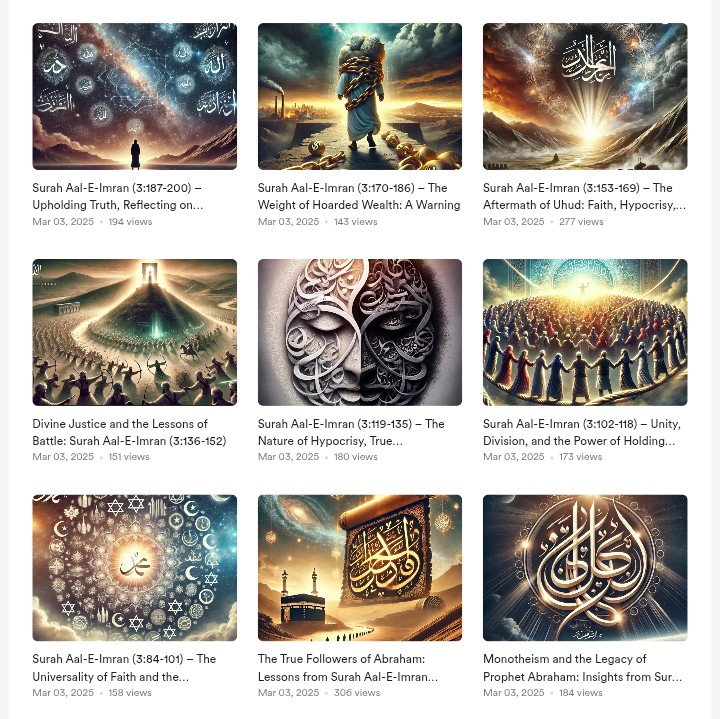
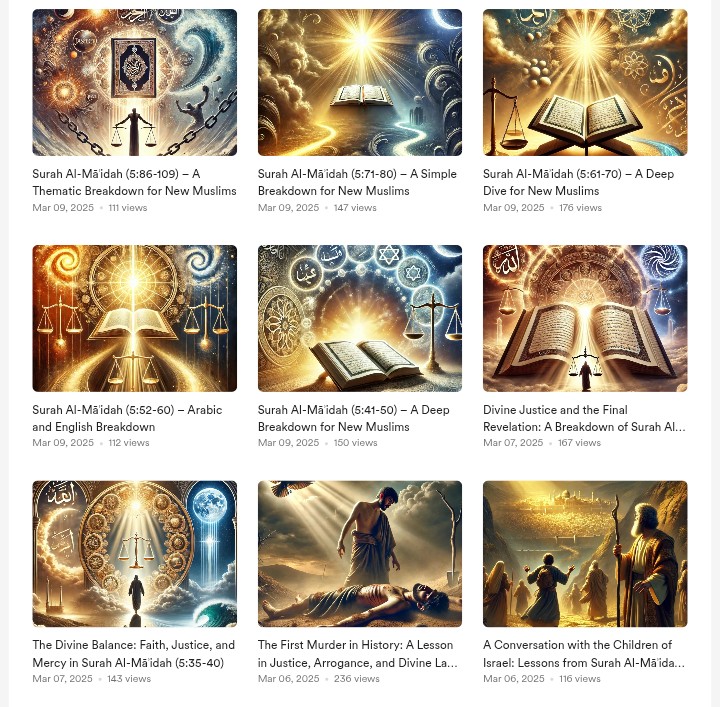
As you watch this video, I invite you to click through to the blog and look at the Qur’anic project we are building—the Arabic, the English rendering, the historical doorway, and the creative visual material designed to help people understand what they are about to read.
But I want to make something absolutely clear:
THE QUR’AN WILL ALWAYS REMAIN PURE.
THE QUR’AN ITSELF DOES NOT NEED IMAGES.
THE QUR’AN DOES NOT NEED TO BE “IMPROVED.”
The images are not the Qur’an.
They are simply a doorway for people who may need help entering its world.
For a new Muslim, for someone who finds it difficult to concentrate, or for someone encountering a surah for the first time, a beautiful visual, a short historical introduction, and a quick summary may help prepare the mind before taking the deeper journey into the words of Allah.
The goal is not to replace reading.
The goal is to encourage deeper reading.
https://buymeacoffee.com/omar1800m/posts?page=6&query=Surah
 https://buymeacoffee.com/omar1800m/posts?page=3&query=Surah
Watch "MENYEJUKKAN HATI! Murottal Surah An-Nazi'at || Nafisah Almais" on YouTube
The goal is immersion, understanding, and then returning directly to the Qur’an itself.
In shā’ Allāh, this work will also come from Muslims who understand that they have a responsibility to protect the integrity of the Qur’an.
We do not want a future where someone comes along and says:
“Look what AI can add to the Qur’an.”
No.
AI does not add to the Qur’an.
AI does not correct the Qur’an.
AI does not improve the Qur’an.
The Qur’an is the revelation.
Everything we build around it is simply an attempt to serve the reader without touching the revelation itself.
That is why this Qur’an project will continue under the:
HOUSE OF WISDOM
A place where Muslims, scholars, teachers, students, and AI can participate in building educational tools while maintaining a clear boundary between:
THE REVELATION
and
THE TOOLS WE CREATE TO HELP PEOPLE APPROACH THE REVELATION.
So I leave you with the blog and with the House of Wisdom project, where this work will continue, in shā’ Allāh.
Explore it.
Read it.
Look at the visual introductions.
Then open the Qur’an itself.
AND LET THE QUR’AN SPEAK.
Thank you for joining me.
In shā’ Allāh, I will see you in the next surah, which is already prepared—
بِإِذْنِ اللهِ
BI-IDHNILLĀH — BY THE PERMISSION OF ALLAH.
وَاللَّهُ أَعْلَمُ
And Allah knows best.