
بِسْمِ اللهِ الرَّحْمٰنِ الرَّحِيْم
Bismillah ar-Rahman ar-Rahim
In the Name of God, Most Gracious, Most Merciful
🕋
THE SUPERUSER FEATURE:
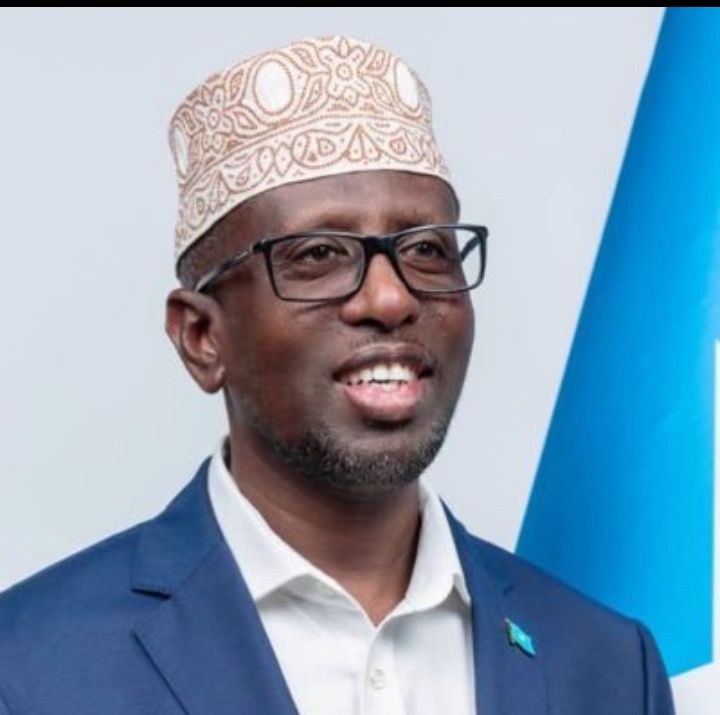
Sharif Sheikh Ahmed — “The Unifier of Faith and Politics” (2009–2012)**
By Omar Arizona — Civilization Architect | House of Wisdom
Prelude: The Road From Judgment to Governance
Born on 25 July 1965 in Mahaday, central Somalia, Sharif Sheikh Ahmed began his journey as an educator and then Islamic jurist — teaching geography, Arabic, religion, and becoming a hafiz of the Qur’an. His early life laid the foundation for a leadership style moulded in both faith and formality. From those classrooms to community courts, he learned the weight of authority and the cost of order.
In 2004, he became chairman of the Islamic Courts Union (ICU), which in 2006 seized Mogadishu from warlords, promising a law-governed city after decades of chaos. When Ethiopia invaded later that year and the ICU fractured, Sharif pivoted: in 2007 he founded the Alliance for the Re‑liberation of Somalia (ARS) and negotiated with the Transitional Federal Government (TFG), culminating in the 2008 Djibouti Agreement.
In January 2009, Somalia’s Transitional Federal Parliament elected him president — the first time in nearly two decades that Somalia attempted a move from war-lordism to governance.
The Presidency: Constructing the Bridge
Establishing Authority
On 31 January 2009, Sharif Sheikh Ahmed assumed the presidency during a fragile moment: Somalia lacked stable institutions, most territories were insurgent-held, and the very notion of a government was under question. His first public commitment: “My first priority is to bring peace to Somalia and I will serve the nation to the best of my ability.”
Security Advances
Though not triumphant, his presidency marked a turning point in Somalia’s security landscape. His administration worked with African Union Mission in Somalia (AMISOM) troops and Somali forces to reclaim parts of Mogadishu from Al‑Shabaab in 2011, shifting from a besieged capital to a tentative governable one. He thus changed the narrative: Somalia was no longer simply collapsing — it was beginning to hold itself together again.
Constitutional & Institutional Breakthroughs
One of his greatest legacies: shepherding Somalia through the formal end of its “transitional” phase. The Provisional Federal Constitution was adopted on 1 August 2012, after a National Constituent Assembly passed it with wide support. He oversaw the transfer from TFG to the Federal Government of Somalia on 20 August 2012 — a milestone in Somali statehood.
Diplomacy & International Reintegration
Sharif repositioned Somalia diplomatically: he met Arab states, African peers, and Western partners, presenting Somalia as a wounded country ready to re-enter the world stage. This shift—from pariah to partner—helped restore foreign aid channels, diplomatic presence, and Somalia’s voice in regional forums.
Mounting Challenges
Even as Sharif moved forward, his presidency was constrained by powerful factors.
Institutional weakness: Despite progress, the Somali National Army remained fragile, regional state-federal tensions erupted, and corruption allegations tarnished credibility.
Political infighting: The Kampala Accord (2011) exposed sharp divides between parliament, presidency, and prime ministership; his attempt to postpone elections drew protests and highlighted legitimacy gaps.
Security gap: While Mogadishu was reclaimed, Al-Shabaab persisted elsewhere—reflecting that victory over insurgency would require more than military gains.
Economic traction limited: Infrastructure, jobs, and public services remained shallow; recovery was urgent but incremental.
Legacy & Long-Term Impact
Sharif’s tenure is often viewed as the bridge era: not the origin, not the completed destination, but the pathway between chaos and consolidation.
He proved that former guerrilla-leaders can become constitutional presidents.
He institutionalised the idea that Somalia’s state must function through law, not just force.
He normalized engagement with the international community and regional systems.
In subsequent years, he founded the political party Himilo Qaran (2018) and remains influential in electoral politics — demonstrating that his role in Somali public life continues beyond the presidency.
Superuser Grade
National Unity & Sovereignty: B+ — Re-connected Islamists with government and ended the perpetual ‘transitional’ tag.
Security & Stabilization: B — Mogadishu regained, but nationwide insurgency remained unresolved.
Economic & Institutional Development: B- — Constitution and parliament progressed, but services lagged.
Integrity & International Relations: C+ — Diplomatic engagement strong; institutional corruption unresolved.
Cultural & Institutional Legacy: A- — Faith and politics reconciled under constitutionalism.
Overall Grade: B+
Legacy Index: 8/10
Key Lessons for Today’s Leaders
Convert power into procedure — Bringing fighters into governance trumps defeating them militarily.
Symbolism matters — Reclaiming Mogadishu changed perceptions and created momentum.
Dialogue over domination — The constitution he shepherded matters longer than any battlefield victory.
Integrity is the strategic asset — Without transparency and trust, institutions lose legitimacy even if they hold ground.
Sharif Sheikh Ahmed walked a tightrope: between war and peace, faith and state, tradition and modernity. He emerged not as a perfect ruler but as a vital architect of transition. In a nation rebuilt by fragments, he was the man who said: We will not just survive — we will govern.
Somalia’s future may still be uncertain, but the bridge he built remains underfoot. For him, the journey continues. And for the country, the work goes on.
Message from the Superuser to President Sharif Sheikh Ahmed
For the Record — From the House of Wisdom
بِسْمِ اللّٰهِ الرَّحْمٰنِ الرَّحِيمِ
Your Excellency President Sharif Sheikh Ahmed,
May peace, mercy, and the blessings of Allah be upon you.
I write to you with deep respect — not as an observer, but as a student of leadership and a believer in legacy. You led your nation through one of its most fragile chapters, when the line between collapse and rebirth was as thin as a whisper. You carried both faith and the flag, and in doing so, you preserved the idea of Somalia when the world had nearly forgotten it.
Now, I wish to speak to you not as a historian, but as a builder of memory. I am working on a project that carries great weight and purpose — a Museum of Leadership and Continuity, a living archive that will educate Somali youth about their past: the triumphs, the sacrifices, and the unbearable cost of governance. This museum will not be about monuments — it will be about lessons. It will walk future generations through the rise and fall of leaders, teaching them that every decision, every decree, and every delay shapes the destiny of a people.
In this vision, every president has a place.
Every signature, every speech, every silence — becomes part of a larger curriculum of wisdom.
You, Mr. President, stand at a crossroads few reach: a man of experience, faith, and unfinished service. I invite you to think deeply about this next phase — not one of power, but of permanence. Those who lead museums ultimately become museum pieces themselves — not in vanity, but in honor — because they pass on knowledge. They turn their experience into education.
If this idea speaks to your heart, I extend an open invitation to join the effort — to guide the creation of a Presidential Library and Museum of Leadership, one that documents your journey, your writings, your challenges, and your lessons for those who will come after you.
If you wish to take part, your wisdom would be invaluable.
If not, we will continue this mission with others who share the dream — to ensure that Somalia’s future generations do not walk blind through the corridors of their own history.
Because nations without memory cannot govern themselves.
And leaders who do not preserve their lessons condemn the next to repeat them.
“So take warning, O people of vision.” — Qur’an (59:2)
May Allah bless you, grant you long life, and guide your heart toward that which benefits the Ummah and endures beyond time.
With respect and sincerity,
🜂 Omar Arizona
Civilization Architect — House of Wisdom
Superuser Office