

بِسْمِ اللهِ الرَّحْمٰنِ الرَّحِيْم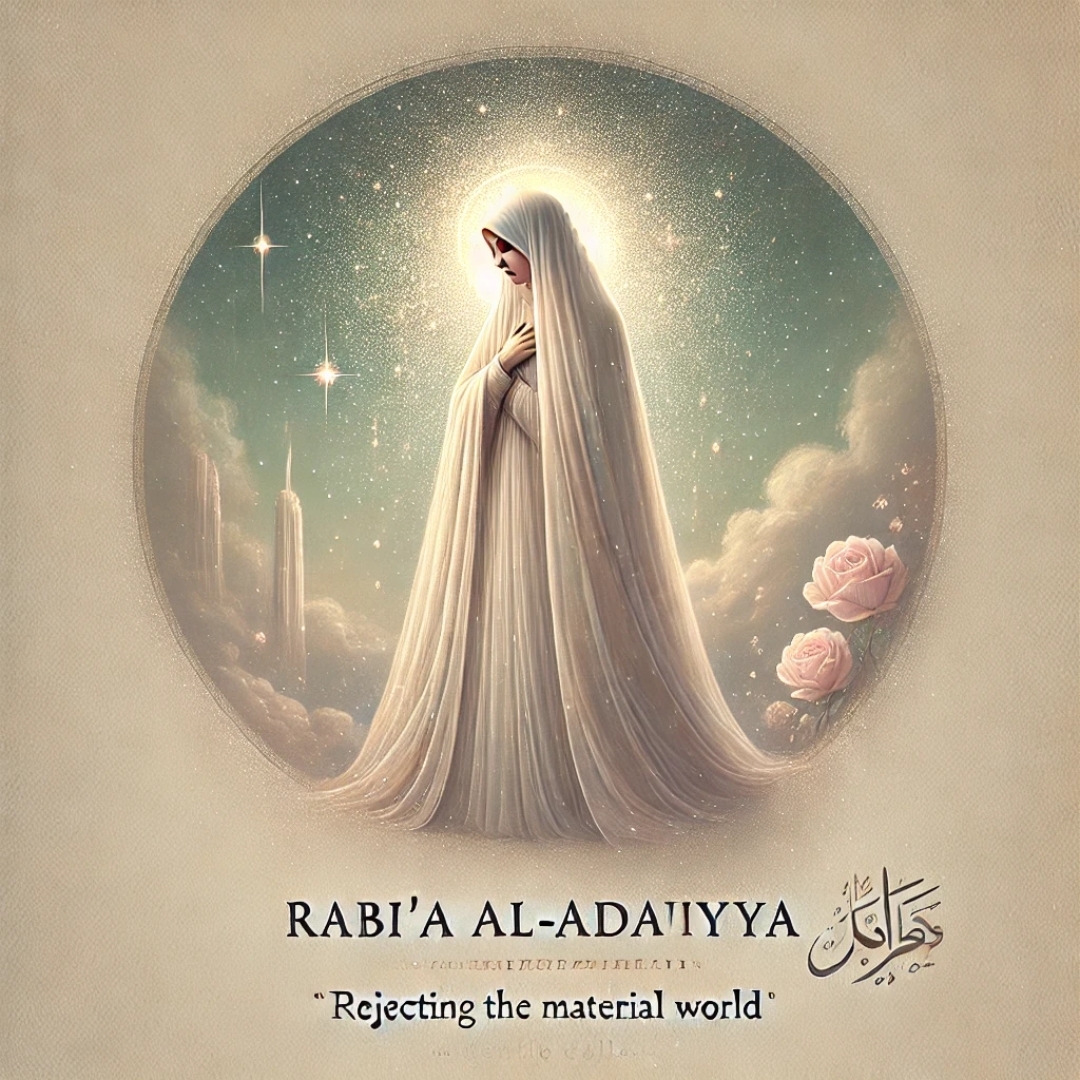
Introduction: The Struggle Between Material and Spiritual
Article 8:
Throughout history, people have often been torn between two worlds: the material and the spiritual. The allure of wealth, status, and worldly success can be strong, yet the call of the soul to seek something deeper often pulls us in the opposite direction. For Rabi’a al-Adawiyya, this struggle did not exist—she made a decisive choice early in her life to reject the material world in favor of the spiritual. She understood that true fulfillment could not be found in worldly possessions but only in a deep, intimate connection with Allah.
In this article, we will explore how Rabi’a’s total devotion to the spiritual realm shaped her life, teachings, and legacy. We will look at the sacrifices she made and how her rejection of materialism allowed her to cultivate a profound love for the Divine.
---
The Decision to Reject the World
Rabi’a’s rejection of the material world was not an abstract idea—it was a conscious decision she made in every aspect of her life. Born into poverty, she was sold into slavery at a young age. However, even after gaining her freedom, she chose to live in extreme asceticism, owning nothing but a simple mat, a jug, and a brick for a pillow. For her, worldly possessions were distractions that took attention away from Allah.
Arabic: "أعرضت عن الدنيا بكل ما فيها لأنني وجدت أن الحب الحقيقي هو في القرب من الله."
English: "I turned away from the world and all that it holds because I found that true love is in closeness to Allah."
Rabi’a’s words highlight her deep conviction that nothing in the material world could satisfy her soul’s longing for Allah. This decision to turn away from the world allowed her to focus entirely on her spiritual journey, free from the distractions that often keep people from fully engaging with the Divine.
---
Living a Life of Asceticism
Rabi’a’s ascetic lifestyle was a reflection of her deep devotion. She believed that by living simply, without attachments to worldly possessions, she could purify her heart and soul, making more space for Allah. Her extreme simplicity was not a form of self-punishment but a conscious choice to eliminate anything that could come between her and her Beloved.
In one of her famous sayings, she expresses her commitment to this lifestyle:
Arabic: "الدنيا هي وهم عابر، وما نحتاج إليه حقًا هو توجيه قلوبنا نحو السماء."
English: "The world is a fleeting illusion, and what we truly need is to turn our hearts toward the heavens."
By rejecting the material world, Rabi’a created a space within herself that was entirely dedicated to Allah. She believed that the more one let go of worldly attachments, the more the heart could be filled with divine love. Her life stands as a powerful example of how asceticism can lead to a deeper connection with the spiritual realm.
---
The Dangers of Attachment
Rabi’a’s teachings also warn of the dangers of becoming too attached to material things. In her view, these attachments act as veils that prevent the soul from fully experiencing Allah’s presence. She believed that the more we cling to the material world, the less we are able to open our hearts to the Divine.
Arabic: "كلما زاد تعلقك بالدنيا، زاد حجابك عن الله."
English: "The more attached you are to the world, the thicker the veil between you and Allah."
This concept is central to Sufi thought, where detachment from worldly desires is seen as a key step in the spiritual journey. For Rabi’a, this detachment was not about rejecting life itself but about prioritizing the eternal over the temporary. She saw the material world as a test, one that could either lead us closer to Allah or pull us further away, depending on how we engage with it.
---
Finding Fulfillment in the Spiritual
Rabi’a’s rejection of the material world did not leave her empty or unfulfilled. On the contrary, she found a deeper sense of peace and joy in her relationship with Allah than any material possession could provide. Her life was a testament to the idea that true fulfillment comes not from what we own but from our connection with the Divine.
In one of her prayers, she beautifully captures this sentiment:
Arabic: "يا إلهي، إن كانت الدنيا ملكي بأكملها، ما كانت لتُشبع روحي. أنت فقط من يُغني قلبي."
English: "O my Lord, if the entire world were mine, it would not satisfy my soul. Only You can fulfill my heart."
Rabi’a’s words remind us that the material world, no matter how abundant, can never satisfy the deep yearning of the soul. Only Allah can provide the peace, love, and fulfillment that we truly seek.
---
A Model for Spiritual Prioritization
Rabi’a’s life offers us a powerful example of how to prioritize the spiritual over the material. While most of us may not choose to live as ascetically as she did, her teachings encourage us to examine our own attachments to the material world. Are we too focused on accumulating wealth, status, or possessions? How much time and energy do we dedicate to spiritual growth?
By following Rabi’a’s example, we can begin to shift our focus away from the fleeting pleasures of the world and toward the eternal beauty of Allah. Her rejection of materialism serves as a reminder that true wealth is found not in what we own but in the love and presence of the Divine.
---
Conclusion: A Life Dedicated to the Divine
Rabi’a al-Adawiyya’s rejection of the material world was not an act of deprivation—it was an act of love. By turning away from worldly distractions, she was able to dedicate her entire life to Allah. Her teachings remind us that the material world, while tempting, can never fulfill the deepest longings of our souls. True fulfillment comes from our relationship with Allah, and it is only by letting go of our attachments to the world that we can fully experience His presence.
As we continue this series on divine love, let us reflect on Rabi’a’s powerful example. May we, too, strive to prioritize the spiritual over the material and find fulfillment in our connection with the Divine.
---
In the next article, we will explore Rabi’a’s teachings on the purification of the soul and how her deep love for Allah led her to strive for spiritual purity
. Stay with us as we continue to uncover the depths of her transformative teachings.