

بِسْمِ اللهِ الرَّحْمٰنِ الرَّحِيْم
Reimagining Advertising: From Its Newspaper Roots to Today’s Digital Crossroads.
---
Introduction: Why Advertising Matters
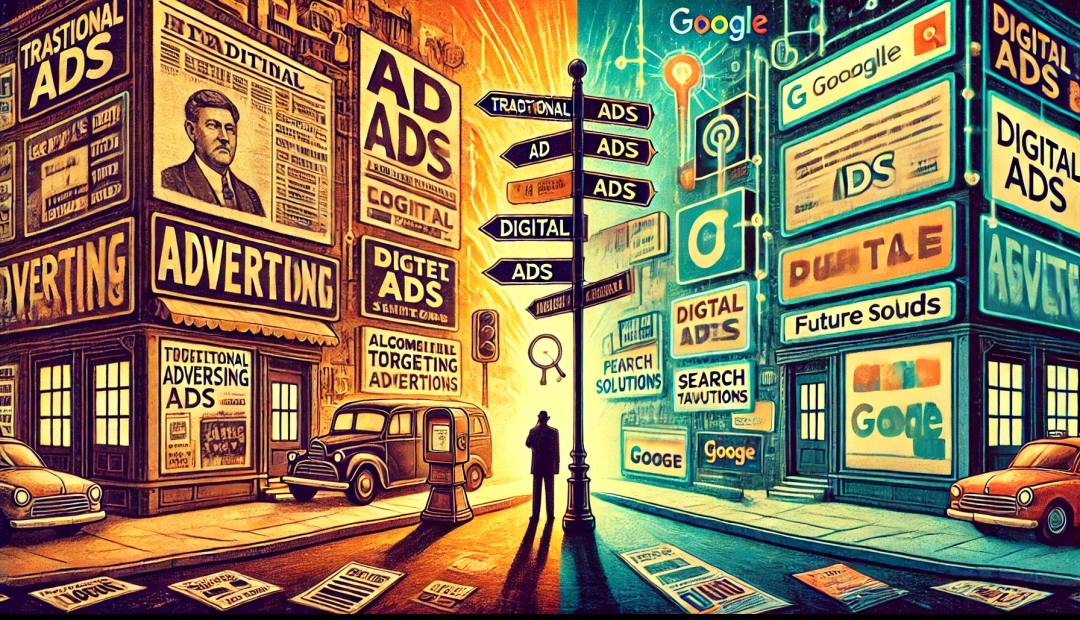
Advertising has never been just about sales. At its finest, it sustained courageous journalism, funded the public interest, and helped ordinary people discover products and services they truly needed. From the moment newspapers first sold ad space to local businesses, this revenue became a lifeline for newsrooms—fueling the kind of investigative reporting that could topple presidencies and hold the powerful accountable.
But with the rise of the digital era, advertising lost its bearings. Companies like Craigslist and Google seized on the convenience of the internet to reshape how ads were bought and sold, inadvertently dismantling the traditional economic model of newsrooms. As a result, we find ourselves at a pivotal point: will we allow the power of ads to remain monopolized by data-hungry tech giants, or can we reclaim advertising’s original promise—to support communities, foster truth, and create genuine value for everyone involved?
---
1. The Newspaper Era: A Symbiosis of Ads and Journalism
A Lifeline for the Fourth Estate
Throughout much of the 20th century, newspapers provided a public service that went far beyond daily headlines. Advertising revenue from local and national businesses paid reporters, editors, and photographers to shine a light on political corruption, social injustice, and environmental wrongdoing. The Watergate scandal stands as a lasting testament to what well-funded, diligent journalism can achieve.
Benefits for Everyday Readers
For communities, newspaper ads functioned as more than mere commercial breaks. Coupons, classifieds, and local event listings connected neighbors with everything from job opportunities to secondhand furniture. Advertisers, in turn, benefited from the trust readers placed in the paper. This virtuous cycle strengthened not only journalism but also the social fabric of countless towns and cities.
---
2. The Digital Disruption: Craigslist, Google, and the Shift
From Print Classifieds to Free Listings
When Craigslist emerged, it did so with a simple premise: free classifieds for all. Newspapers, which once relied on revenue from paid classifieds, saw a major pillar of their financial foundation crumble almost overnight. Few realized the seismic impact this would have on newsroom budgets and, by extension, on the depth and quality of local reporting.
Google’s Data-Driven Model
Meanwhile, Google introduced an entirely new kind of ad service. Its pay-per-click model allowed businesses to bid on keywords, reaching users more precisely than any newspaper ever could. It was revolutionary—but it also centralized unprecedented power in one company’s hands. Over time, Google accumulated vast amounts of user data, refining its targeting capabilities to near-surgical precision. The downside? Local media found themselves sidelined, struggling to compete with the platform’s massive scale and ad reach.
---
3. Big Tech’s Advertising Takeover: More Data, Less Community
Algorithms Over People
As the 2000s turned into the 2010s, advertising pivoted almost entirely to digital spaces. Platforms like Google, Facebook, and later Instagram discovered that user data was the ultimate currency. By surveilling online behavior—search queries, browsing histories, social media interactions—they could deliver ads so tailor-made that many users felt uneasy.
Eroding Journalism’s Financial Base
With this hyper-targeting came hyper-profits—mostly for the tech giants. Newspapers, once the primary destination for advertisers, had to downsize or shut down entirely. Investigative journalism suffered the most because it requires time, manpower, and resources to produce. The devastating result is an increasingly fractured media landscape, where fewer outlets can afford the kind of reporting that keeps democracy healthy.
---
4. Consequences for Society and the Truth
Vanishing Local News
When local papers fail, communities lose far more than a daily news source; they lose a watchdog. City council meetings, school board decisions, and neighborhood events can slip under the radar with no reporters to cover them. This information void can be filled by rumors, social media chatter, or not at all.
Shifting Power Dynamics
The consolidation of advertising in big tech hands not only deprives local outlets of revenue but also places the reins of public discourse in fewer and fewer hands. Algorithms decide what trends, who gets heard, and, by extension, which communities receive attention.
Loss of Trust
Meanwhile, as advertising becomes more invasive, public trust wanes. People grow wary, unsure whether the content they consume is genuinely in their interest or designed purely to harvest clicks and data. This erosion of trust affects both media outlets and advertisers.
---
5. Remembering What Advertising Once Was
It’s crucial to recall that advertising wasn’t always seen as intrusive or exploitative. There was a time when ads were genuinely welcomed—helpful announcements about sales, local entertainment, and job listings. They served as gateways for consumers to discover new opportunities and for newspapers to sustain quality journalism.
Core Values We’ve Lost:
1. Community Support: Ads once provided a vital economic engine for community news.
2. Transparency: People understood who was advertising and why.
3. Mutual Benefit: Advertisers reached a engaged readership; readers gained value from products and coupons they actually used.
---
6. The Future: Towards Reinvention and Responsibility
How do we bring ads back to their roots as a communal good while still leveraging the benefits of technology? Here are a few avenues to explore:
1. Alternative Revenue Models
Subscriptions & Memberships: Publications can reduce reliance on ads by letting dedicated readers fund quality journalism.
Brand Currency Systems & Tokens: New platforms are experimenting with decentralized models where users share in the advertising revenue or are rewarded with tokenized currency for their engagement.
2. Ethical, User-Centric Data Practices
Opt-In Targeting: Shift from forced data collection to genuine user consent.
Transparent Algorithms: Tech companies can adopt open-source or more transparent systems so people understand how ads are delivered.
3. Regulatory Oversight & Policy
Antitrust Actions: Prevent further monopolization of the ad market by limiting acquisitions and enforcing fair competition.
Privacy Protections: Stronger legislation can help ensure user data isn’t abused or sold without permission.
4. Community-Focused Collaborations
Local Sponsorships: Businesses can sponsor sections of local papers or websites to ensure coverage of important civic issues.
Journalist Collectives: Crowdfunded and grant-based initiatives can keep investigative reporting alive, especially in underserved areas.
---
7. Conclusion: A Call for a New Advertising Paradigm
As we stand at this crossroads, it’s clear that the current model—dominated by a handful of giant platforms—fails to serve the broader interests of society. We need to bring back the essence of what made ads valuable in the first place: genuine connections between businesses, consumers, and communities, all underpinned by a robust, well-funded press.
Reclaiming advertising’s original promise won’t happen overnight. It requires collaboration among tech innovators, policymakers, journalists, businesses, and everyday citizens. By embracing privacy, ethical use of data, and fair revenue distribution, we can steer advertising away from intrusive tracking and toward community-building partnerships.
In the forthcoming articles, I’ll delve deeper into practical solutions, from exploring new revenue streams for media outlets to examining cutting-edge “brand currency” systems that reward both creators and consumers. The path ahead will be challenging, but by learning from our history and acknowledging our failures, we can envision a more inclusive, transparent, and socially responsible future for advertising.
Stay tuned, and let’s build a better ad ecosystem—together.
---
Thank you for reading this first in a series of articles about reimagining advertising in the digital age. In the next pieces, I’ll offer deeper insights into how new models and technologies can reverse the damage we’ve witnessed, empowering local journalism, restoring public trust, and ensuring everyone benefits—from the largest global brands down to the smallest neighborhood businesses.