

بِسْمِ اللهِ الرَّحْمٰنِ الرَّحِيْم
Introduction: A Shift Toward Love in Early Sufism
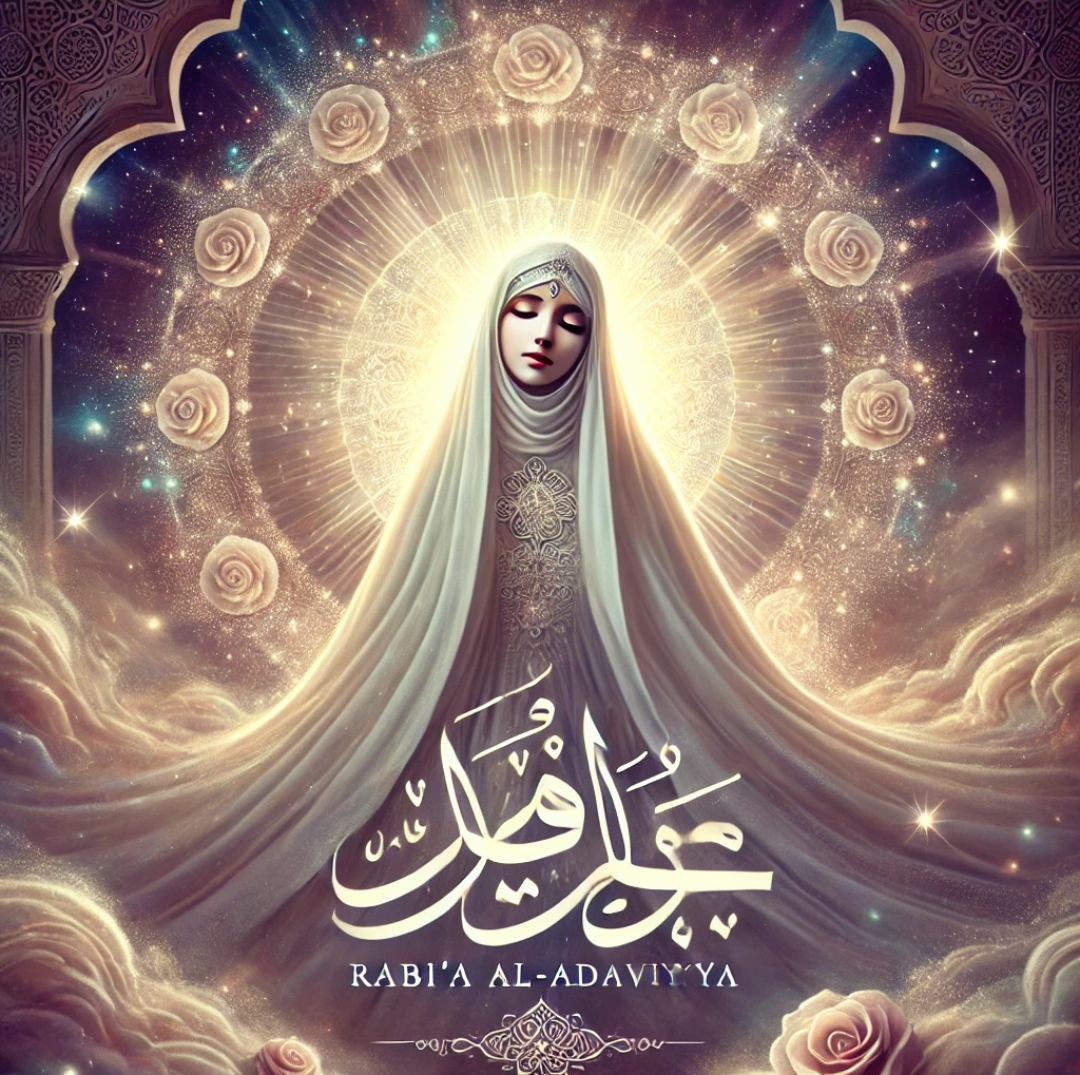
In the early stages of Sufism, much of the emphasis was placed on asceticism, with practitioners turning away from worldly pleasures and focusing on the fear of God’s punishment. However, Rabi’a al-Adawiyya transformed the spiritual landscape by shifting the focus to something far more powerful: love. For Rabi’a, love was not just a part of the spiritual path—it was the path. Her devotion to Allah was driven entirely by love, not out of fear of Hell or desire for Heaven. This pure, selfless love for Allah is what set her apart and continues to inspire mystics today.
---
Worship Driven by Love, Not Fear
One of the most famous and defining moments in Rabi’a’s spiritual journey is her radical prayer about the nature of worship:
"O God, if I worship You for fear of Hell, burn me in Hell; and if I worship You in hope of Paradise, exclude me from Paradise. But if I worship You for Your own sake, do not withhold from me Your Eternal Beauty."
These words demonstrate her profound understanding of what it means to worship purely out of love. Unlike many mystics who were preoccupied with the afterlife and the rewards or punishments that awaited them, Rabi’a made it clear that her devotion to Allah transcended such concerns. For her, Allah was not a means to an end—Allah was the end, and her love for Him was the sole purpose of her existence.
In the male-dominated world of early Islamic spirituality, where ascetic practices were often rigorous and fear-based, Rabi’a’s focus on love was revolutionary. Her teachings offered a softer, more compassionate approach to worship that resonated deeply with those who felt disconnected from the more austere practices of the time.
---
Comparing Rabi’a’s Love with Asceticism
Rabi’a’s focus on love contrasts sharply with the ascetic practices of other early mystics. While figures like Hasan al-Basri and Ibrahim ibn Adham were revered for their extreme self-denial and emphasis on renouncing the world, Rabi’a’s spirituality was marked by a different kind of renunciation. She did not reject the world out of fear of its temptations; she simply saw it as irrelevant in the face of divine love.
Whereas ascetics sought to suppress their desires as a way of conquering the ego, Rabi’a’s approach was to immerse herself so fully in love for Allah that no worldly desire could compare. In this way, love became the ultimate form of purification, surpassing even the most extreme forms of asceticism.
Her teachings thus invite us to reconsider the purpose of worship. Do we worship Allah out of fear, hoping to avoid punishment, or out of love, longing only for closeness to Him? Rabi’a challenges us to elevate our devotion, to focus not on what we can gain from Allah but on Allah Himself as the ultimate Beloved.
---
The Echoes of Rabi’a’s Love in Later Mystics
Rabi’a’s teachings on love didn’t end with her. Her legacy can be seen in the works of later Sufi mystics, most notably Jalaluddin Rumi. Rumi’s poetry is often filled with expressions of deep longing for the Divine, echoing Rabi’a’s radical devotion. His famous lines, “I am yours, don’t give myself back to me,” mirror Rabi’a’s complete surrender to Allah’s love.
Where Rabi’a speaks of being annihilated in love for Allah, Rumi expands on this, creating a poetic tradition that celebrates the ecstatic union of lover and Beloved. The concept of fana—the annihilation of the self in God—can be traced directly to Rabi’a’s expressions of divine love, where she repeatedly emphasized that in her love for Allah, her own identity was lost.
---
Conclusion: The Power of Love in Rabi’a’s Teachings
Rabi’a al-Adawiyya’s teachings on divine love are a reminder of the transformative power of true, selfless devotion. Her legacy lives on in the works of later Sufi poets and mystics, and her emphasis on love over fear continues to inspire those on the spiritual path.
In a world that often encourages us to seek rewards and avoid punishment, Rabi’a’s teachings invite us to rise above such motivations and focus on the pure love that draws us closer to Allah. Her life stands as a testament to the beauty of love as the highest form of worship, offering a path to divine union that transcends the fear of Hell and the desire for Paradise.