

بِسْمِ اللهِ الرَّحْمٰنِ الرَّحِيْم
Introduction: The Power of Feminine Spirituality
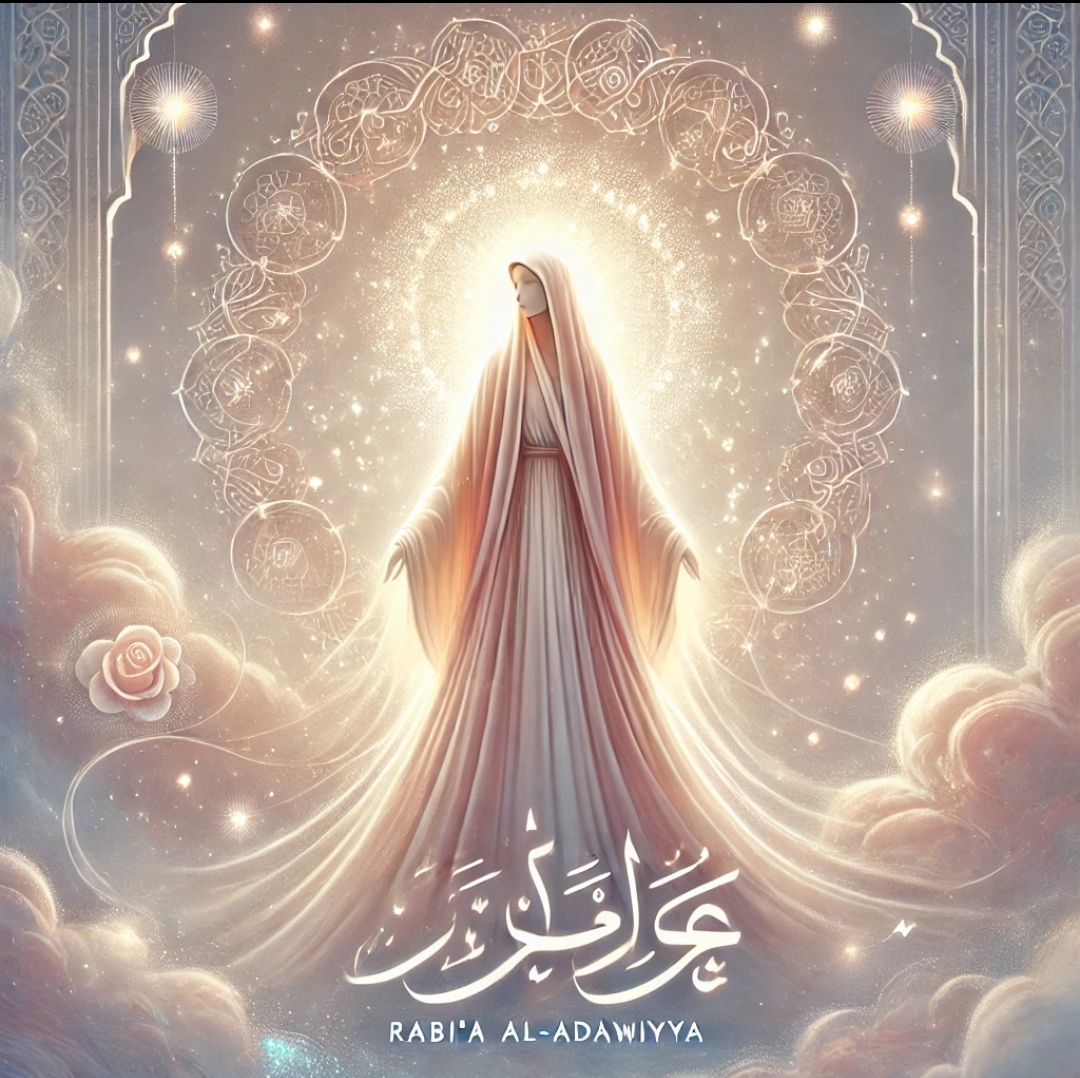
Rabi’a al-Adawiyya’s approach to divine love is often described as uniquely feminine, embodying qualities of tenderness, beauty, and mercy. At a time when many male mystics emphasized strict ascetic practices and the battle against the ego, Rabi’a’s teachings offered a different path—one defined by love, compassion, and selflessness. These characteristics, often associated with femininity, were central to her spiritual journey and set her apart from the ascetic traditions that dominated early Sufi thought. In this article, we explore how Rabi’a’s feminine expression of spirituality shaped her teachings and left a lasting impact on the Islamic mystical tradition.
---
1. The Feminine Qualities of Love and Mercy
While many male mystics focused on self-discipline and asceticism, Rabi’a’s spirituality was infused with love and mercy. Her teachings and poetry emphasized the importance of surrendering to Allah out of love, rather than out of fear of punishment or desire for reward. In her view, divine love was the highest form of worship, and the qualities of love and mercy were at the heart of her connection with Allah.
"Your love, O Allah, is the fire that purifies my heart of all impurities."
Rabi’a’s expression of love is marked by its softness and emotional depth. She embodied the concept of rahma (mercy), often associated with feminine qualities, in her interactions with others and in her relationship with Allah. Her focus on selfless love created a path to spiritual growth that was not about conquering the self through rigid discipline, but about nurturing a deep, emotional connection with the Divine.
---
2. Rejection of the Ego and Selflessness
Rabi’a’s spirituality was also deeply marked by her rejection of the ego. While many mystics engaged in strict ascetic practices to battle their egos, Rabi’a believed that love alone was sufficient to dissolve the self. In her prayers and poetry, she spoke often of losing herself in her love for Allah, until nothing of her own identity remained:
"In these moments, I no longer exist. There is nothing but You, O Allah."
This selflessness, often seen as a feminine quality, was central to her teachings. Rabi’a did not engage in the harsh physical self-denial that characterized the spiritual journeys of many of her male contemporaries. Instead, she practiced a form of spiritual annihilation that was driven by love. Her ego dissolved not through self-inflicted hardship, but through her overwhelming devotion to Allah.
---
3. Spiritual Nurturing and Tenderness
One of the key differences between Rabi’a’s spirituality and the more ascetic practices of other Sufi mystics was her focus on tenderness and nurturing as a path to Allah. Where other mystics focused on the struggle against the world and the self, Rabi’a saw the journey to Allah as one of care, love, and nurturing.
Her prayers and poetry reflect this tenderness, as she approached her relationship with Allah with the warmth of a beloved caring for her lover. This nurturing quality, associated with femininity, made her spiritual path less about struggle and more about surrender.
"O Allah, my heart’s only desire is to be with You. My only prayer is to experience Your love."
This tenderness extends not only to her relationship with Allah but also to her teachings on how to treat others. She believed that one’s spiritual path should be reflected in how they cared for those around them, offering love, compassion, and mercy to all.
---
4. A Lasting Influence on Feminine Spirituality
Rabi’a al-Adawiyya’s teachings have had a profound influence on the spiritual journeys of countless women in the Islamic world. Her example demonstrates that feminine qualities such as tenderness, selflessness, and mercy are not only compatible with the spiritual path, but essential to it. For women seeking a model of spirituality that reflects their own experiences, Rabi’a offers a path that values love and emotional depth as the highest forms of devotion.
Her legacy continues to inspire women today, particularly those who feel that the more masculine, ascetic practices of other mystics do not resonate with their own spiritual journeys. Rabi’a’s teachings remind us that spiritual growth can be achieved not only through struggle but also through surrender, nurturing, and love.
---
Conclusion: The Beauty of Feminine Spirituality
Rabi’a al-Adawiyya’s spiritual journey reflects the power and beauty of feminine spirituality. Her teachings on love, selflessness, and mercy offer an alternative to the more rigid, ascetic practices of many male mystics. In her approach, spiritual growth is achieved not by conquering the ego through hardship, but by dissolving the self in the love of Allah.
As we reflect on her legacy, we are reminded that the path to Allah is not the same for everyone. For those who are drawn to tenderness, beauty, and emotional depth, Rabi’a’s teachings offer a profound model of spiritual transformation.