

بِسْمِ اللهِ الرَّحْمٰنِ الرَّحِيْم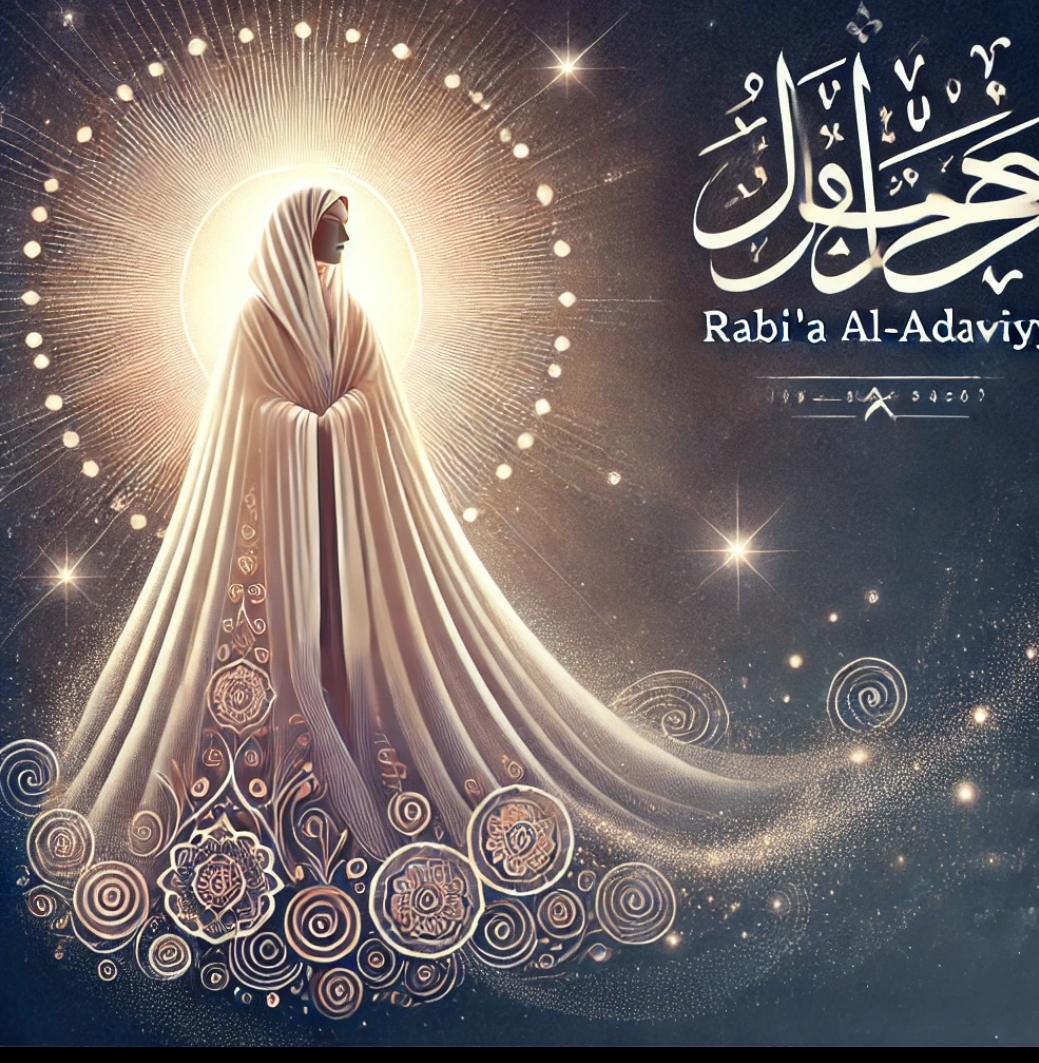
Introduction: A Woman Among Male Saints
In a time when male spiritual leaders dominated Islamic mysticism, Rabi’a al-Adawiyya emerged as one of the most revered figures in early Sufism. She broke through the conventional gender barriers, not only becoming an influential mystic but also earning the respect and admiration of her male contemporaries. Her profound spiritual insights, radical devotion to Allah, and selfless love set her apart and paved the way for future generations of women in Islamic spirituality.
This article delves into how Rabi’a’s leadership as a woman reshaped the spiritual landscape, earning her a place among the great saints of her time, and how she continues to inspire women on the spiritual path today.
---
1. Spiritual Leadership in a Male-Dominated World
Rabi’a al-Adawiyya’s influence is particularly striking given the societal norms of her time. In the 8th century, leadership in the Islamic world—both religious and political—was almost exclusively in the hands of men. Women rarely held positions of authority or were seen as spiritual leaders. Yet, Rabi’a defied these expectations through her unparalleled devotion and her direct relationship with Allah.
She never sought fame or public recognition but became widely known for her spiritual wisdom. Rabi’a’s path was one of complete self-denial, choosing to live in poverty and asceticism. Her profound experiences of divine love and connection made her a revered figure, even among her male peers.
Her contemporaries, such as Hasan al-Basri and Sufyan al-Thawri, acknowledged her spiritual superiority. Hasan al-Basri himself is said to have admired her greatly, recognizing her deep connection with Allah, while many other mystics deferred to her wisdom. Rabi’a became a source of guidance not only for other women but for men as well—a rare accomplishment in her era.
---
2. The Feminine Expression of Spirituality
Rabi’a’s leadership was not just in the form of spiritual authority; it also embodied the feminine qualities of mercy, compassion, and love. While many male mystics of the time focused on ascetic practices and self-denial as a means of reaching Allah, Rabi’a’s approach was much softer and more emotionally centered. She infused her spirituality with a sense of beauty, tenderness, and grace that stood in contrast to the harsher, more rigorous ascetic practices embraced by many male mystics.
In her teachings, Rabi’a introduced a kind of spirituality that revolved around love, selflessness, and mercy—qualities often associated with femininity. Her life is a testament to how these qualities can form the foundation of a deeply profound and transformative spiritual journey.
Her approach was not about conquering the ego through physical self-denial, but about losing the self in love for Allah. In this way, Rabi’a embodied a spirituality that was deeply personal, nurturing, and reflective of the feminine experience, without being in any way inferior to the more rigid paths pursued by her male contemporaries.
---
3. Inspiring Generations of Women Mystics
Rabi’a al-Adawiyya’s legacy as a female mystic and spiritual leader has had a lasting impact on women in Islam. Her life became a model for countless women who sought to cultivate their own spirituality and connection with Allah. She demonstrated that spiritual greatness was not limited by gender and that women, too, could achieve deep mystical insight and closeness with the Divine.
In the centuries that followed, other women mystics in the Islamic world, such as Rabia Basri and Umm al-Khayr, found inspiration in Rabi’a’s example. Even today, women in the Muslim world look to her as a symbol of female empowerment in spirituality. She remains a figure who broke down the barriers of what was expected of women in her society, and her influence continues to shape the spiritual paths of women around the world.
---
4. Gender Equality in the Eyes of God
One of the most radical aspects of Rabi’a’s teachings was her insistence that in the eyes of Allah, gender held no significance. For Rabi’a, what mattered was the depth of one’s love for Allah, not their gender or social status. She exemplified the belief that the soul’s journey to the Divine transcended worldly identities, offering a powerful message of spiritual equality.
This message continues to resonate in contemporary discussions about women’s roles in Islam and Sufism. Rabi’a’s life stands as a reminder that the spiritual path is open to everyone, regardless of gender, and that the qualities most valued by Allah are those of love, devotion, and selflessness.
---
Conclusion: A Model of Feminine Spiritual Authority
Rabi’a al-Adawiyya’s legacy as a female mystic who broke through the gender barriers of her time continues to inspire both men and women on the spiritual path. Her leadership was grounded in love, mercy, and devotion—qualities that are often overlooked in discussions about power and authority but are essential to true spiritual growth.
Rabi’a’s life serves as a powerful example of how the feminine expression of spirituality can be just as transformative and profound as more traditional, male-dominated forms of mysticism. Her legacy remains a beacon of hope for women who seek to cultivate their own connection with the Divine, demonstrating that spiritual greatness knows no gender.