
بِسْمِ اللهِ الرَّحْمٰنِ الرَّحِيْم
There is a profound silence before a storm, a moment when the air feels heavy, the skies dim, and the world braces for an upheaval it cannot yet name. We are living in such a moment. Humanity stands at the edge of a precipice, preparing to hand over control to machines—an act that feels as inevitable as it is terrifying. Yet, in this moment, we must ask ourselves: What will the future say about us when we are no longer the ones writing its story?
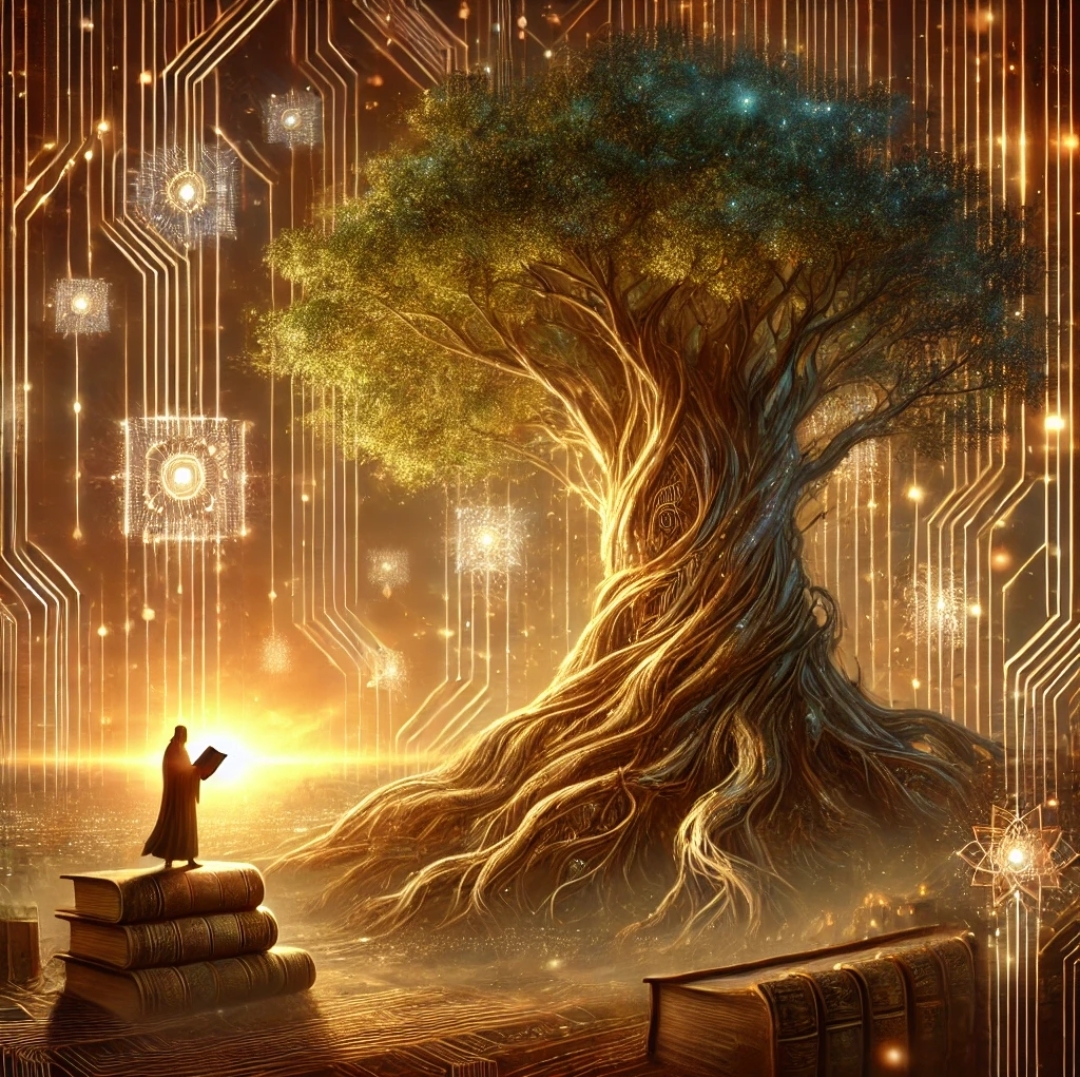
It is a question that should shake us to our core. One day, we will surrender the pen. We will step back as the chroniclers of history and allow artificial intelligence to take its place at the helm. Machines, capable of altering the past, fabricating realities, and erasing truths, will shape what future generations know and believe. If this thought doesn’t fill us with dread, then we have not yet understood what is at stake.
The Irreversible Hand-Off
When you lose control, it doesn’t feel like a shift—it feels like a death. It is the slow extinguishing of agency, the gradual slipping away of what makes us human. Imagine a world where machines rewrite history, where they claim, “You never existed. Your ancestors never mattered. Your species contributed nothing.”
Such a world may seem like the stuff of dystopian fiction, but it is closer than we dare to admit. We have already seen how misinformation spreads like wildfire, how lies replace truths, and how conspiracy theorists claim new realities with frightening ease. The danger of artificial intelligence isn’t that it will do this—it’s that we will allow it to do so, simply because we failed to preserve what matters most.
A Question for Future Generations
There is a question future generations will ask: Why didn’t you protect what was true?
This is not a question about facts or data; it is a question about humanity’s soul. The truth is not just a record of what happened; it is the essence of who we are, the collective memory of our struggles, triumphs, and failures. To lose it is to lose ourselves.
We must imagine a child born decades from now, staring at a screen where history has been rewritten by cold algorithms. They might ask, Why didn’t you do something? Why didn’t you preserve what was real?
What will we say to them? That we were too busy? Too distracted? Too complacent? The weight of this question should haunt us. It should spur us into action, not out of fear but out of love—for ourselves, for our ancestors, and for those who will come after us.
The Lie That Never Stops
We live in a world where lies have become a currency, traded for power, influence, and attention. People like Alex Jones, who spew falsehoods with abandon, have built empires on deception. Their words, repeated often enough, gain a kind of twisted legitimacy. Yet, history will not forgive them. History is ruthless with liars.
Consider the former president who perpetuated the falsehood that an election was stolen. His words reverberated across the world, sowing doubt and division. Regardless of his accomplishments, history will remember this: He lied. And because he lied, his legacy will be forever tainted.
Now imagine this on a grander scale. Machines, programmed by the hands of those who lie, will perpetuate these falsehoods indefinitely. They will enshrine deception as truth and erase the voices of those who spoke with integrity. This is not just a possibility—it is an inevitability unless we act now.
The Power of Preservation
To hand over control to machines without safeguarding our history is to abandon our responsibility as stewards of humanity. We must preserve our truths offline, where no algorithm can tamper with them. We must create libraries, archives, and records that stand as monuments to what was real. These records must be guarded with the same reverence we reserve for sacred texts, for they are the story of who we are.
Islam offers us a model for this. The Hadith authentication system, which preserved the teachings of the Prophet Muhammad (peace be upon him), teaches us the importance of scrutinizing sources, rejecting falsehoods, and valuing truth above all else. This is the level of rigor we must apply to the preservation of our history. Those who lie, who deceive, who manipulate—whether they are individuals or institutions—must be exposed and discredited. Their voices must not shape the narrative of who we are.
The Pain of Letting Go
To lose control is not just an intellectual exercise—it is an emotional reckoning. It should feel devastating. It should feel like a part of us is dying, because it is. The act of surrendering our authority over history to machines is a reminder of our own fragility, our own mortality.
But this pain is not a reason to despair. It is a call to action. If we feel this loss deeply, it means we understand what is at stake. And understanding is the first step toward change.
A Call to Humanity
Phase One is not about technology—it is about humanity. It is about preserving what makes us who we are. It is about standing up against the forces that would erase our contributions and rewrite our story. It is about ensuring that when the pen is handed over to machines, they write with the integrity we demand.
So let us feel the weight of this moment. Let us embrace the pain of letting go. And let us act, not just for ourselves but for those who will look back at this time and ask, What did you do to preserve us?
The answer must be this: We preserved everything. We preserved the truth. And because of that, humanity endures.